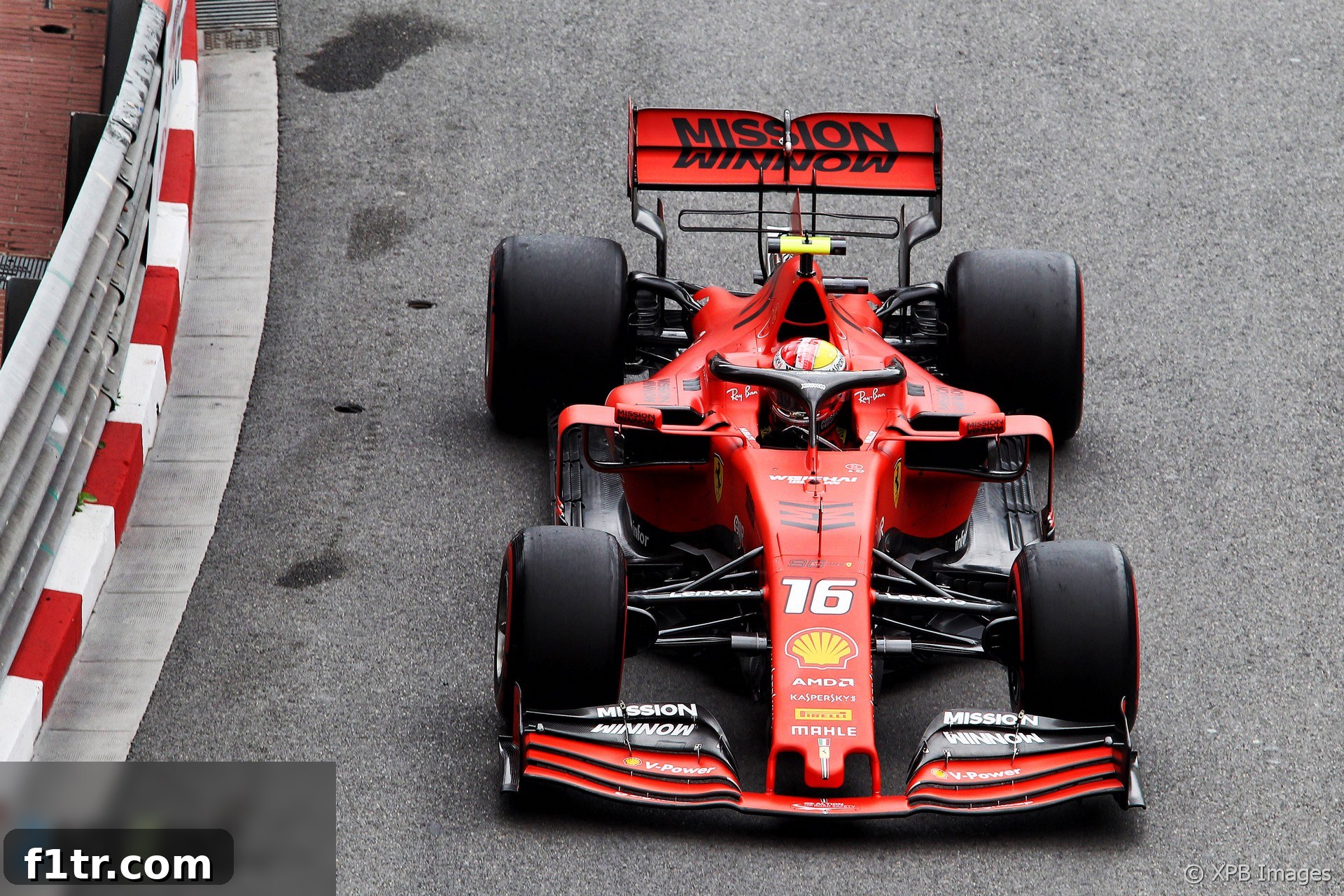
In a significant development that could shape the outcome of this weekend’s critical qualifying session, Charles Leclerc has been handed a formal reprimand by the stewards. The Ferrari driver was investigated following an incident during the final practice session, specifically for an alleged breach of Virtual Safety Car (VSC) regulations. Crucially for the Monegasque driver and his team, this ruling means he avoids a grid penalty, ensuring he can attack qualifying without the immediate threat of starting further down the order.
Advert | Become a Supporter & go ad-free
Leclerc’s VSC Infringement: A Closer Look at the Incident
The incident in question occurred when the Virtual Safety Car was deployed during the concluding stages of final practice. The VSC procedure is a critical safety measure in Formula 1, designed to neutralise the field and ensure driver safety when there is a hazard on track that doesn’t necessitate a full Safety Car deployment. Under VSC conditions, drivers are required to reduce their speed and stay above a minimum lap time, or ‘delta time,’ which is continuously monitored by the FIA’s electronic control unit (ECU). This delta ensures that all drivers are slowing down consistently and safely, preventing anyone from gaining an unfair advantage.
Leclerc found himself under scrutiny for allegedly driving too quickly during this VSC period. The stewards launched an immediate investigation into his actions, reviewing telemetry data and onboard footage to determine if any regulations had been violated. Their findings revealed a nuanced situation: while Leclerc did not increase his lap time above the minimum target set during the VSC, he also failed to consistently adhere to the required delta throughout the entire VSC zone. This seemingly minor discrepancy, where a driver goes below the minimum time in certain sectors, is a breach of the strict VSC protocols designed to maintain a consistent speed reduction across the track.
Stewards’ Verdict: Reprimand, Not Penalty
The official statement from the stewards meticulously detailed their decision: “The driver clearly and appropriately braked before turn 1 in reaction to the incident at the corner,” the stewards noted. This initial reaction by Leclerc was deemed correct and safe, indicating he acknowledged the immediate hazard. However, the subsequent phase of his VSC management came under scrutiny. “The VSC appeared when the driver was between turn one and turn two. The driver did slow significantly, however he remained below the minimum time set by the FIA ECU until past turn eight.”
This “below the minimum time” aspect is crucial. While drivers are expected to slow down, they must do so in a controlled manner that aligns with the predefined delta time. Going too slow in some sections and then potentially too fast in others, or simply failing to maintain the delta, undermines the consistency and predictability that the VSC system aims to achieve. The stewards acknowledged Leclerc’s overall intent: “The stewards recognised that the driver was considerably slower than a normal lap throughout the sequence.” This indicates that Leclerc was not attempting to gain an unfair advantage or drive recklessly, but rather his execution of the VSC procedure was technically flawed according to the stringent rules.
Despite recognising his significant speed reduction, the stewards emphasised the paramount importance of safety regulations. “However, as the VSC is imposed for safety reasons, the stewards determined that the breach needed to be recognised.” Consequently, they opted for a reprimand, stating that this penalty “is consistent with similar cases during practice sessions.” A reprimand, while a formal warning, is the least severe sanction in Formula 1 and does not carry an immediate grid penalty. However, accumulating three reprimands over a season, with at least two being for driving infringements, results in a ten-place grid penalty, making this a black mark on Leclerc’s record for the season.
Impact on Charles Leclerc and Ferrari’s Weekend
This reprimand marks the first for Leclerc this season, highlighting the intense scrutiny under which all drivers operate. The relief for Leclerc and the Ferrari team will be palpable, as a grid penalty would have been a devastating blow, especially heading into a qualifying session where track position is often paramount. On tracks where overtaking is notoriously difficult, starting out of position can effectively ruin a driver’s race before it even begins. Avoiding this outcome allows Leclerc to focus entirely on extracting maximum performance from his Ferrari SF-24 (assuming a modern context, if 2019, then SF90) without the added pressure of a penalty hanging over him.
The VSC period itself was triggered by a dramatic incident involving Leclerc’s then-teammate, Sebastian Vettel, who unfortunately crashed at the challenging Sainte Devote corner. This adds a layer of irony to the situation, with one Ferrari driver’s mishap leading to a regulatory breach for the other. For Ferrari, the incident underscores the razor-thin margins and intense pressure of Formula 1, where even a slight misjudgment of procedures can lead to an investigation. The team will undoubtedly debrief the incident thoroughly to ensure all drivers are fully compliant with VSC regulations going forward, understanding the critical importance of absolute precision in every aspect of a race weekend.
The Broader Context of F1 Regulations and Driver Responsibility
The incident involving Charles Leclerc serves as a stark reminder of the meticulous nature of Formula 1 regulations, particularly those concerning safety. The FIA invests heavily in technology and protocols like the VSC to ensure driver and marshal safety, and any deviation from these rules, regardless of intent, is treated seriously. Drivers are equipped with advanced telemetry and dashboard displays that provide constant updates on VSC delta times, making adherence to these regulations a fundamental aspect of professional racing.
For top-tier drivers like Leclerc, who are constantly pushing the boundaries of performance, navigating these complex rules while maintaining speed is a delicate balance. The “considerably slower than a normal lap” observation by the stewards indicates Leclerc’s effort to comply with the spirit of the rule. However, the letter of the law demands precision, ensuring no driver can exploit any grey areas. This emphasis on strict adherence reinforces the FIA’s commitment to maintaining a level playing field and maximum safety standards across all sessions, from practice to the grand prix itself.
Looking ahead, Leclerc will be keen to put this incident behind him and channel his focus into qualifying. With the threat of a penalty averted, he now has a clear run at securing the best possible grid position. Ferrari will be hoping for a strong showing to boost their championship aspirations and demonstrate their competitive potential. The outcome of qualifying will be eagerly anticipated, as drivers battle not only each other but also the ever-present challenge of technical regulations and the unforgiving nature of the track.
Don’t miss anything new from RaceFans
Stay connected with the latest news, analysis, and insights from the world of Formula 1 by following RaceFans on social media:
- Join RaceFans on Facebook
- Follow RaceFans on Twitter
- Get daily email updates from RaceFans
Advert | Become a RaceFans supporter andgo ad-free
Explore More from the F1 Season (Archived Content)
Delve deeper into key moments and stories from past Formula 1 seasons. For insights into the 2019 F1 season, which presented its own unique challenges and storylines, consider these related articles:
- Crying in the Melbourne car park at 2019 grand prix was my career low – Ocon
- McLaren Racing reports reduced £71 million loss in 2019
- Kvyat: Hockenheim podium last year was “my biggest achievement” so far
- How the FIA’s new encrypted fuel flow meter targets Ferrari’s suspected ‘aliasing’ trick
- “He smashed my office door”: 23 must-see moments from ‘Drive to Survive’ season two
Browse all 2019 F1 season articles