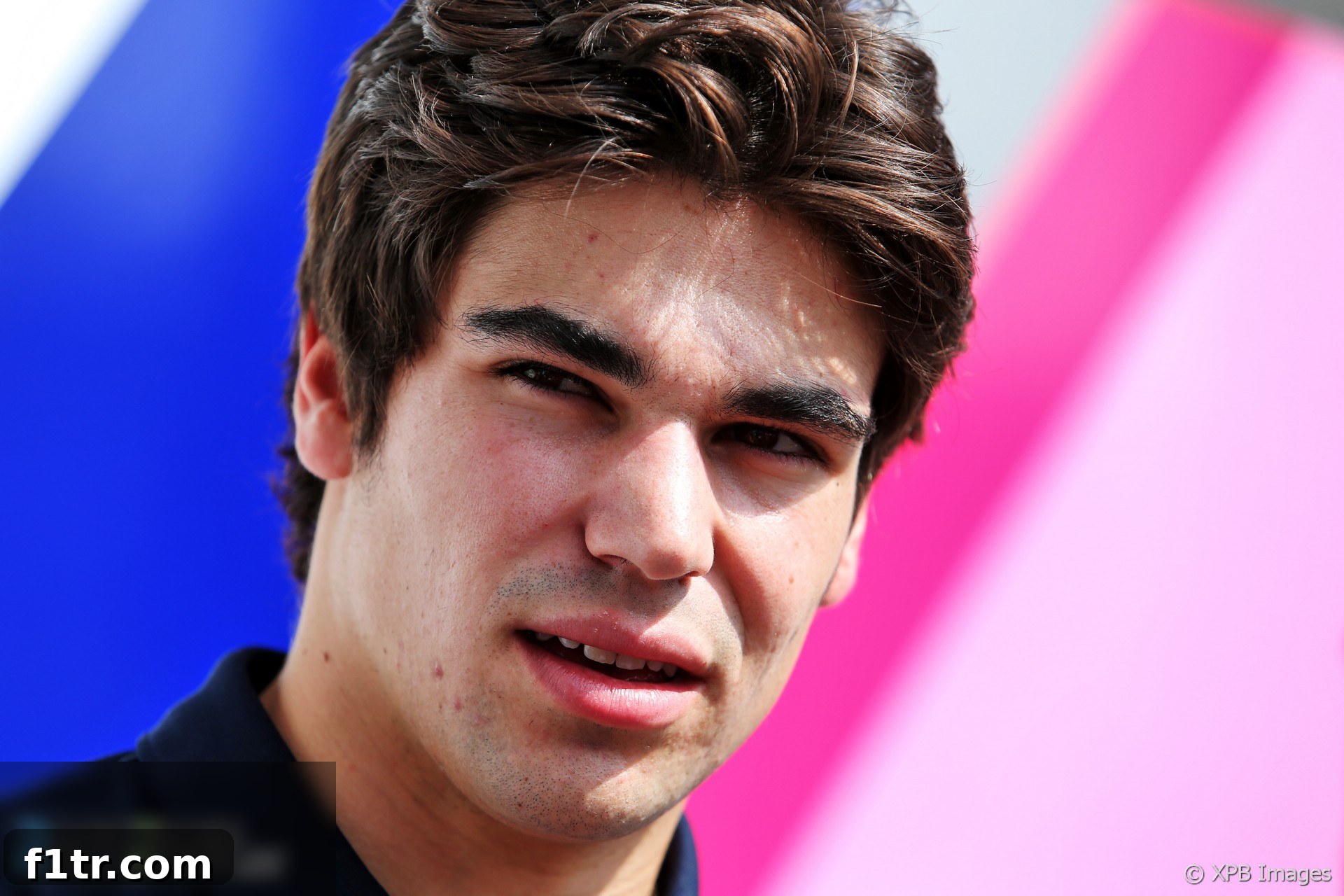
Lance Stroll’s Formula 1 Journey: Navigating Challenges and Unlocking Potential
Lance Stroll’s presence in the world of Formula 1 has always been a topic of interest, not least due to his unique position within the sport. His journey with Racing Point, a team acquired by his father in 2018, places him under a distinctive spotlight. While some perceive him through the lens of a ‘pay driver,’ Stroll has consistently demonstrated glimpses of raw talent and resilience throughout his career. His 2019 season, however, provided a mixed bag of results, sparking discussions about his consistency and development trajectory in the highly competitive environment of Formula 1.
The 2019 Season: A Foundation for Growth at Racing Point
The 2019 Formula 1 season saw Lance Stroll navigate a challenging year with Racing Point. Stepping into a team that had recently undergone a significant transformation from its Force India days, adapting to new dynamics and a fiercely competitive grid was no small feat. While his performance was, at times, described as lacklustre, particularly when compared to his experienced teammate, Sergio Perez, it’s crucial to contextualize his results within the broader narrative of the team’s evolution and the inherent difficulties of F1.
Stroll often found himself out-qualified by Perez, a consistent performer known for his Saturday prowess, and this disparity naturally led to a significant gap in their end-of-season points tally. However, amidst these challenges, Stroll delivered a standout performance that hinted at his underlying capabilities: a remarkable fourth-place finish at the German Grand Prix. This atypical result, which accounted for a substantial portion of his points, showcased his opportunistic driving and ability to capitalize on chaotic race conditions – a critical skill for any successful F1 driver. It was a clear demonstration that, given the right circumstances and strategic calls, Stroll could punch above his weight.
The Invaluable Teammate Dynamic: Learning from Sergio Perez
In Formula 1, the most direct and often most telling comparison for a driver’s performance comes from their teammate. For Lance Stroll, having a seasoned veteran like Sergio Perez in the garage proved to be an invaluable asset. Despite the competitive nature of their pairing, Stroll openly acknowledged the profound benefits of measuring himself against a driver of Perez’s calibre and experience.
“It always helps,” Stroll remarked, emphasizing the learning opportunity. “I think at the end of the day, you have to be your own artist on the race track, drive the car as you want to drive it and set up the car accordingly. But of course, it’s always good to have a benchmark and someone with experience like him has been great to have alongside me. Someone I can view and understand how it can be better. I was very fortunate to have that this year, to have someone like him that I can look alongside and understand where I can be better, what I can do better.”
This perspective highlights a mature approach to self-improvement. While every driver must forge their own path and tailor the car to their style, the ability to analyze a teammate’s data, driving lines, and setup preferences provides a crucial learning curve. Perez, with years of F1 experience and a reputation for extracting maximum performance from challenging machinery, offered Stroll a high bar against which to measure his progress. This internal competition, far from being purely adversarial, can accelerate a driver’s development, pushing them to identify and refine their own strengths and mitigate weaknesses.
Qualifying: The Pursuit of Raw Single-Lap Pace
The lower the lines, the better the driver performed
An undeniable area where Stroll acknowledged the need for significant improvement was qualifying performance. Throughout the 2019 season, Sergio Perez consistently demonstrated superior single-lap pace, regularly outperforming Stroll on Saturdays, with only a couple of exceptions late in the season. In Formula 1, qualifying is often half the battle, dictating grid position and heavily influencing race strategy. Starting further down the order can make even a strong race pace ineffective, as drivers contend with traffic and dirty air.
“In general with team mates you pick up on little details, different driving styles,” Stroll observed, delving into the intricacies of their comparison. “There’s a difference in how we set up the car and then it’s taking away the pros and cons from every weekend: What I do, what my strengths are, what his strengths are, how I can build on my strengths and how I can improve my weaknesses.” This insight underscores the highly technical and nuanced challenge of F1 qualifying, where fractions of a second can separate positions. It’s not just about raw speed but also about understanding tyre operating windows, maximizing car setup for a single lap, and executing a faultless run under immense pressure.
Stroll posited that there isn’t “one general thing” that explains the gap in their results, suggesting it’s more about “the trend throughout the year with team mates.” This reflects the continuous adaptation required in F1, where track characteristics, weather conditions, and car development constantly shift the optimal approach. “Different team mates have different strengths and weaknesses. It’s just been about learning what his strengths are and how I can apply that to what I do and how I drive the car and how I set up the car,” he concluded, highlighting the ongoing process of learning and refinement that defines a driver’s career at the pinnacle of motorsport.
Race Day Dynamics: Converting Grid Position to Points
While qualifying often presented a hurdle, Stroll frequently demonstrated a commendable ability to make progress on race day. Often starting from the lower end of the midfield, he faced an uphill battle, requiring shrewd race craft, effective tyre management, and opportunistic decision-making. Similar to drivers like Daniil Kvyat, when Stroll managed to break into the top 10, it was typically in the lower scoring positions, with the German Grand Prix serving as a notable, high-scoring exception.
“As long as you’re in the mix, 12th and above I think is important,” said the driver, who started higher than 12th only once during the entire season, illustrating the consistent challenge he faced. The first half of the year, despite qualifying struggles, saw Stroll consistently find ways to score points on Sundays. However, a run of bad luck in the latter half of the season sometimes prevented him from converting improved qualifying performances into more significant points hauls. This underscores the brutal nature of F1, where a strong start can be undone by unforeseen incidents or reliability issues.
His impressive fourth-place finish in Germany, yielding 12 points, stands as a testament to his ability to seize opportunities. In chaotic, changing conditions, Stroll made an audacious switch to slick tyres at a crucial moment, which saw him briefly leading the field. Although he didn’t officially lead a lap at the start/finish line, this bold strategic gamble paid off handsomely, highlighting his opportunistic decision-making and willingness to take risks when the stakes are highest. Such moments are what often define a driver’s potential for future success.
Points Accumulation: The Impact of Key Results
Lance Stroll concluded the 2019 season with a total of 21 points, accumulated across six top-10 finishes. The distribution of these points clearly highlights the outsized impact of his German Grand Prix result. The 12 points from that single race represented more than half of his total season’s tally, effectively a windfall that significantly bolstered his championship standing. While consistency is the ultimate goal in Formula 1, the ability to deliver these ‘big’ results, especially in challenging conditions, speaks volumes about a driver’s capacity for strategic thinking and capitalizing on chaos.
Beyond Germany, his other points-scoring finishes were in the lower positions, showcasing a pattern of fighting for the marginal points that are so crucial in the tight midfield battle. These individual points, though less dramatic, are equally important as they represent the consistent effort to extract performance from the car and navigate the complexities of a Grand Prix, day in and day out. For a driver in a developing team, every point scored contributes not only to their personal standing but also to the team’s morale and financial health through the Constructors’ Championship.
Head-to-Head: Stroll vs. Other Drivers
The Power of Experience and Consistency in Formula 1
Lance Stroll has consistently emphasized the transformative power of experience in Formula 1, a sentiment widely shared among drivers and pundits alike. As he looked beyond his inaugural season with Racing Point, the anticipation for improved performance was palpable, driven by the significant advantage of continuity. “Just coming back for a second season in the same environment with more experience, it’s a big, big benefit that’s for sure,” Stroll stated, highlighting a critical factor for driver development.
Formula 1 is a sport where adaptation is key. Every track presents unique challenges, every car has its quirks, and every new regulation demands a fresh approach. However, the most profound gains often come from stability. A second year with the same team, the same engineers, and the same teammate allows a driver to move past the initial learning curve of unfamiliarity. Instead of focusing on simply getting up to speed with a new environment, they can concentrate on refining their technique, understanding the car’s nuanced behaviour, and optimizing their setup for every condition.
Stroll articulated this progression clearly: “I can only tell you next year, but I do believe that if I could do every weekend over again this year, I could do it a lot better, just unlocking the full potential of the car in many ways. It’s tricky in Formula 1. I think experience will definitely help.” This self-assessment reflects a deep understanding of the complexity involved in extracting the absolute maximum from an F1 machine. It’s not just about raw talent but also about the iterative process of learning, applying that knowledge, and continually pushing the boundaries of what’s possible.
He drew parallels to his second year at Williams in 2018, where he felt he made significant personal gains despite the car’s inherent deficiencies masking those improvements. Now, having adjusted to a new team and integrated with a new teammate in 2019, Stroll anticipated enjoying unprecedented consistency in both respects for the first time in his F1 career. This stability is expected to be a major catalyst for his development, allowing him to build a stronger rapport with his engineering team, refine his driving style to suit the car, and, crucially, consistently benchmark himself against Perez, translating that learning into tangible on-track improvements. Appreciable gains in both qualifying pace and race consistency are therefore the logical expectation as he matures into a more complete Formula 1 driver.
2019 Season: Key Incidents and Learnings
While the 2019 season saw Lance Stroll earn crucial points, it was not without its share of setbacks. Two notable retirements punctuated his year:
| Race | Retirement |
|---|---|
| Spain | Collision with Norris |
| Abu Dhabi | Brakes |
The collision with Lando Norris at the Spanish Grand Prix was a race incident that curtailed his progress. The mechanical failure due to brakes in Abu Dhabi, on the other hand, was a stark reminder that even flawless driving can be undermined by reliability issues, often beyond a driver’s control. Each incident, though unfortunate, provides valuable data and learning opportunities for both the driver and the team, feeding into future development and strategic planning.
Related Articles on the 2019 F1 Season
- Crying in the Melbourne car park at 2019 grand prix was my career low – Ocon
- McLaren Racing reports reduced £71 million loss in 2019
- Kvyat: Hockenheim podium last year was “my biggest achievement” so far
- How the FIA’s new encrypted fuel flow meter targets Ferrari’s new fuel flow tricks
- “He smashed my office door”: 23 must-see moments from ‘Drive to Survive’ season two
Browse all 2019 F1 season articles