F1’s Half-Points Rule Under Intense Scrutiny After Chaotic Belgian Grand Prix
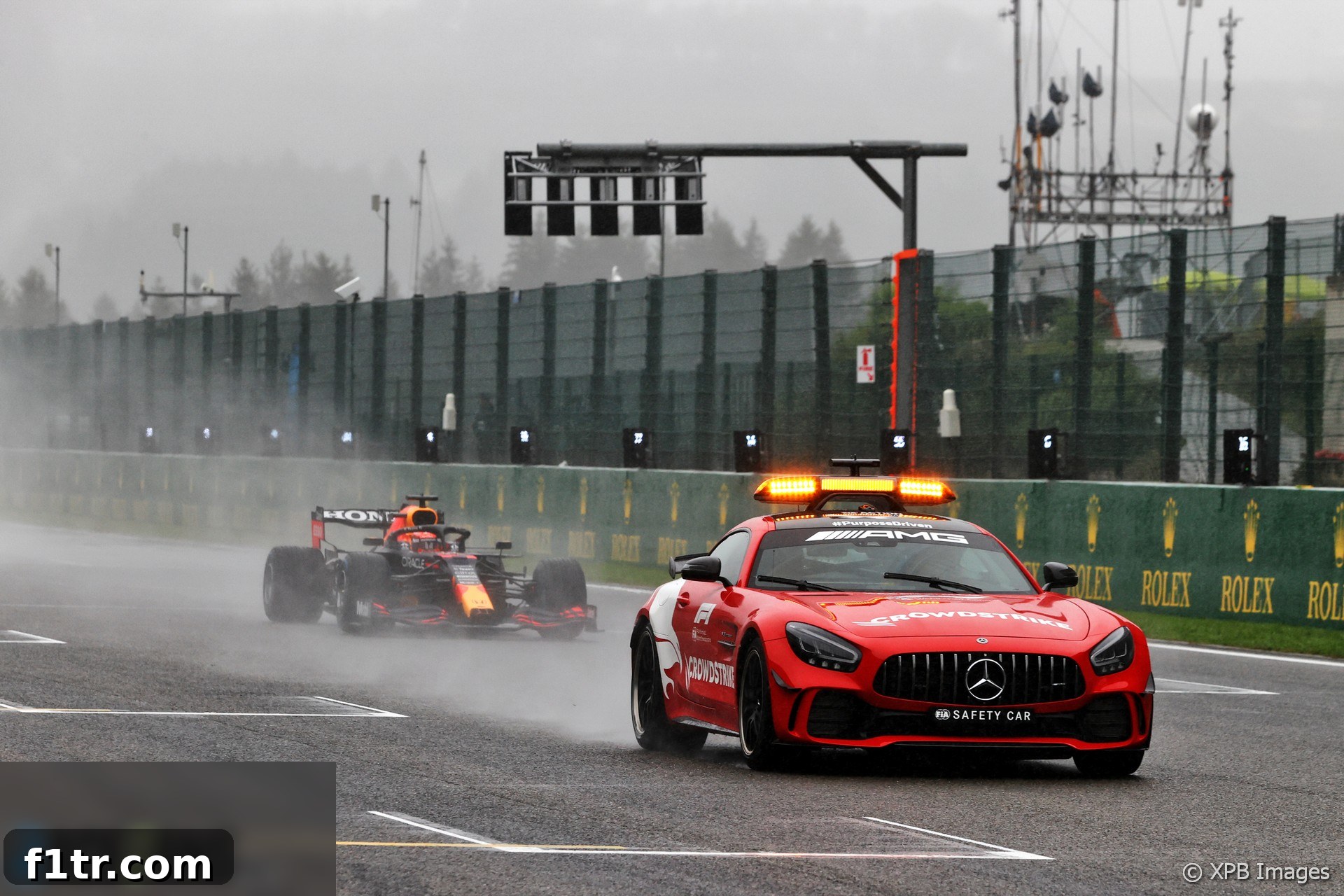
The aftermath of Formula 1’s extraordinarily bizarre 2021 Belgian Grand Prix at Spa-Francorchamps continues to spark debate, with Haas team principal Guenther Steiner vocally questioning the relevance and fairness of the sport’s half-points rule for drastically shortened races. The controversial decision to award championship points after drivers completed only three laps behind the Safety Car, with results based on the first of these non-racing laps, has ignited calls for a comprehensive review of F1’s rulebook.
Steiner admitted he was genuinely puzzled by the existing regulation, which dictates that half championship points can be awarded even after such minimal on-track activity. The Spa event, marred by incessant rain and multiple delays, saw drivers navigate the iconic circuit in treacherous conditions, culminating in a classification based on a technicality rather than genuine competition. This outcome left many, including Steiner, questioning the very essence of sporting fairness.
The Controversial Half-Points Regulation: An Outdated Vestige?
“I think we need to look at the rulebook because I honestly haven’t found out why this rule is in place, that after two laps of racing half points are awarded,” Steiner stated, reflecting a sentiment shared by many within the paddock and among fans. “I have no idea where this comes from and I don’t know how long it is in for.” His comments underscore a broader concern that certain regulations, while perhaps conceived with good intentions or to address historical circumstances, may no longer serve the best interests of modern Formula 1.
The rule in question mandates that if a race cannot be completed but has run more than two laps, half points are awarded, provided that less than 75% of the scheduled race distance has been covered. At Spa, drivers completed just over 6.8 kilometers of the intended 308-kilometer race, a mere fraction that felt far removed from any definition of a ‘race’. This specific application of the rule felt particularly jarring, as the competitive element was entirely absent, with positions dictated by qualifying performance rather than actual racing prowess. Steiner intends to delve into the rule’s origins, believing there must have been a historical justification. However, he hypothesizes that “Maybe times have moved on and we just didn’t change it,” suggesting that an evolution in thinking and technology necessitates a re-evaluation.
Advert | Become a Supporter & go ad-free
A Call for Future Solutions and Fan Empathy
Beyond critiquing the current rule, Steiner emphasized the sport’s responsibility to find more equitable and satisfactory ways to handle similar situations in the future. He acknowledged that while such extreme weather-affected weekends are rare, they are an undeniable part of motorsport and must be prepared for more effectively.
“I saw the fans which stuck with it and I think they have been great,” Steiner noted, highlighting the extraordinary patience and dedication of the spectators who braved the elements at Spa-Francorchamps, hoping for a spectacle that never truly materialized. Their unwavering support, despite the lack of racing, profoundly impacted team principals like Steiner. “They wanted a race, we all wanted a race and in the end nobody did anything which was malicious, everybody tried to do a race and it was just not possible. We put the best effort in and then it ended badly.”
This statement reflects a collective frustration, where all parties – teams, drivers, and organizers – genuinely attempted to stage a race, only to be defeated by the overwhelming weather conditions. The outcome was deeply unsatisfying, particularly for the thousands of fans who spent money and time to attend. “So we just need to find the solution [to] how do we deal with this one better next time when it comes around,” Steiner urged. He foresaw the inevitability of similar scenarios, even if they occur infrequently. “It will come around maybe in 10, 20 years, maybe some of us will not be working F1 anymore, but it will come again. There will be a weekend where there will be three days of rain, that will happen again.” This forward-thinking perspective underscores the need for proactive measures to safeguard the sport’s integrity and ensure a more fulfilling experience for fans in unavoidable circumstances.
Advert | Become a RaceFans supporter andgo ad-free
Team Reactions: Alfa Romeo’s Significant Frustration
The sentiments expressed by Steiner were not isolated. Other teams, particularly those in the midfield, also voiced their strong disapproval of the Spa outcome and its implications. Alfa Romeo Racing, in particular, issued a public statement criticising Formula 1’s handling of the stoppage and the subsequent points allocation. Steiner recounted a conversation with his rival team principal, Frederic Vasseur, after the race, noting Vasseur’s considerable distress.
“He was, in general, pretty upset at how it happened,” Steiner revealed. For Alfa Romeo, the half-points distribution carried significant weight in their ongoing battle for championship positions. “Fred is a racer, obviously to lose this many points to Williams, they could still have fought for eighth place but now I think it is going to be very difficult for them. So I’m sure that they’re not happy about that one.” The points lost or gained in such an unexpected manner can have profound effects on a team’s financial standings and competitive prospects, especially for smaller outfits where every single point is fiercely contested and contributes significantly to year-end prize money distributions. Vasseur’s frustration, however, extended beyond just the points loss; “But as much as Fred explained it to me, he was not only upset about that one, he was also upset about generally what happened on the weekend,” indicating a broader dissatisfaction with the entire event management.
Addressing Speculation: No Immediate Formal Meeting
Despite the widespread discontent and the intensity of discussions within the paddock, Steiner denied reports circulating elsewhere that a formal meeting involving all teams had already been called to discuss the Spa episode. While conversations are indeed taking place, these are currently informal and exploratory.
“Obviously we all speak and I don’t want to say who and what we spoke about,” Steiner confirmed, acknowledging the ongoing dialogue among team principals. “But I would just say that there is a lot of things going on in the moment to – I say now avoid, you never can avoid a weather situation we are not this strong to do that – but that we find a better solution next time it happens.” This clarifies that the primary objective of these informal discussions is to collaboratively brainstorm potential improvements and solutions for future instances, rather than to lay blame or protest past decisions.
Crucially, Steiner reiterated the official channel for such significant policy changes: “But there was no big meeting. Anything, as the president said, will be discussed in the next F1 Commission meeting in October.” This statement aligns with the established governance structure of Formula 1, where major rule adjustments are deliberated and approved by the F1 Commission, involving representatives from the FIA, Formula 1 Management, and the teams themselves.
Advert | Become a RaceFans supporter andgo ad-free
The Broader Implications for Formula 1
The 2021 Belgian Grand Prix controversy highlights fundamental questions about Formula 1’s sporting integrity and its responsibilities to both competitors and fans. Awarding points for what was effectively a procession behind a Safety Car raises concerns about the very definition of a “race” and whether such outcomes genuinely reflect sporting merit. For teams, especially those in the highly competitive midfield, every point is vital, influencing their championship standing, future development budgets, and overall financial health. The arbitrary nature of the Spa points allocation, therefore, had tangible and potentially long-lasting consequences.
The incident also underscores the delicate balance between driver safety and the desire to deliver a spectacle. While safety must always be paramount, the rules governing shortened races need to ensure that when points are awarded, they are earned through a genuine competitive effort, even if abbreviated. The current rule, in its application at Spa, failed to meet this expectation, leading to widespread dissatisfaction and a perceived diminishment of the sport’s credibility.
Ensuring Sporting Integrity and Fan Engagement
Moving forward, the discussions within the F1 Commission will be crucial in shaping the future of how such extraordinary circumstances are handled. The objective must be to establish a revised framework that is fair, transparent, and upholds the competitive spirit of Formula 1, even in the face of extreme weather. This could involve revised minimum distance requirements for points, alternative scoring systems for significantly shortened events, or even clear protocols for race cancellations without points allocation if a competitive event simply isn’t possible.
Ultimately, the long-term health and appeal of Formula 1 depend on maintaining the trust of its global fanbase. The fans who endured the rain at Spa are the lifeblood of the sport, and their experience must be considered paramount. A robust and equitable rulebook is essential not only for the teams and drivers but also for preserving the integrity and excitement that define Formula 1 as the pinnacle of motorsport.
2021 Belgian Grand Prix
- Spa spectators who saw no racing offered prize draw for 2022 tickets
- ‘Wrong to award points for a couple of laps behind the Safety Car’ – Horner
- Hamilton offers “exclusive gift” to fans who attended Belgian GP wash-out
- Change rules to give points for qualifying if race can’t happen – Seidl
- “I apologised to the entire team for my mistake” – Perez
Browse all 2021 Belgian Grand Prix articles