IndyCar’s Dramatic 2024 Season Finale Shift: Nashville Street Circuit Replaced by Superspeedway
Less than a month before the roar of engines signals the start of its highly anticipated 2024 season, IndyCar has announced a significant and dramatic change to its championship calendar: the final race of the year will no longer be held on the streets of Nashville, but rather at the Nashville Superspeedway. This unexpected alteration marks a pivotal moment for the series, impacting everything from championship strategy to fan experience and local logistics.
A Sudden Change for the Championship Decider
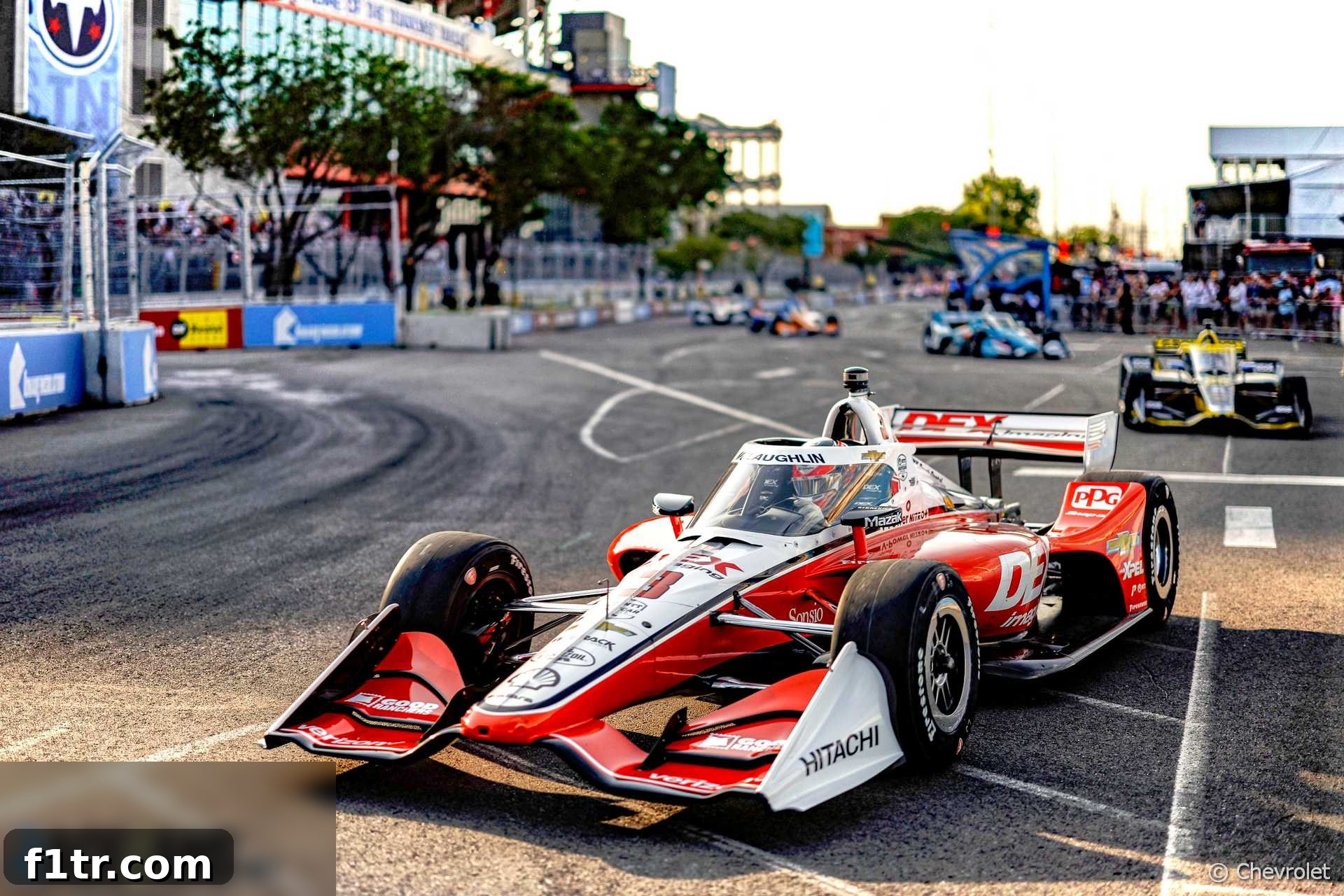
The original plan for the 2024 NTT IndyCar Series season finale was to return to the vibrant, urban landscape of Nashville, Tennessee, utilizing its distinctive street circuit. Since its debut in 2021, the Nashville street race quickly established itself as a fan favorite, known for its unique layout, including the iconic dash across the Korean War Veterans Memorial Bridge. It was envisioned as a spectacular conclusion to the championship, set against the backdrop of the city’s downtown skyline, promising high-stakes drama and a celebratory atmosphere.
The street circuit had already undergone planned revisions for 2024, aiming for a shorter, simpler configuration to enhance the racing while retaining its signature bridge crossing. This highly anticipated urban showdown was set to crown the next IndyCar champion, building on the excitement and unpredictability that street courses often deliver. However, the complexities of staging such an event in a rapidly developing urban environment proved to be insurmountable for the current year.
The New Home: Nashville Superspeedway Takes the Helm
In a swift and decisive move, IndyCar confirmed that the season-ending championship battle will instead take place at the Nashville Superspeedway. This 2.09-kilometer (1.33-mile) concrete oval circuit, located just outside the city in Lebanon, Tennessee, presents a stark contrast to the temporary downtown layout. While the series has enjoyed a rich history with oval racing, concluding the championship on a superspeedway introduces an entirely different dynamic to the season finale. It promises a high-speed, strategic contest where drafting and precision will be paramount, potentially leading to a thrilling, unpredictable conclusion to the title fight.
The Superspeedway previously hosted IndyCar races between 2001 and 2008 and returned to the schedule in 2021. Its permanent infrastructure offers a robust solution to the logistical challenges faced by the street circuit, ensuring that Nashville remains a crucial host city for the championship. This shift underscores IndyCar’s commitment to delivering a full and compelling schedule, even when faced with unforeseen obstacles, and highlights the series’ adaptability in securing suitable venues for its premier events.
Unpacking the Reasons: Logistics, Construction, and NFL Uncertainty
The decision to relocate the season finale was not made lightly and stems from a complex web of logistical hurdles, as detailed by Scott Borchetta, chairman of race sponsor Big Machine Label Group, who assumed leadership of the event project in December. His candid assessment revealed the mounting challenges that ultimately rendered the street race “untenable” for 2024.
The Tenacity of Urban Development
A primary factor contributing to the change was the ongoing and extensive construction work surrounding the new Tennessee Titans National Football League stadium, adjacent to the proposed street circuit. Borchetta highlighted how this significant urban development severely impacted the footprint available for the temporary racing facility. Critical areas needed for team operations, essential infrastructure, and spectator amenities were simply unavailable or too constrained due to the construction zone. The sheer scale of the stadium project meant that key logistical spaces, such as team garages, paddock areas, and hospitality zones, could not be adequately established, compromising the operational viability of the event.
Scott Borchetta’s Candid Assessment
“Once we really started digging down into it over the last seven, eight weeks and trying to understand how we could make the new footprint work,” Borchetta explained, “we realized that we flat-don’t have all the lots that we need to house all the teams. We don’t have room for team hospitality.” These practical limitations extended beyond just the racing teams, impacting the overall fan experience and the ability to stage a world-class event. The constrained environment posed significant challenges for creating a comfortable and accessible experience for all stakeholders involved, from participants to partners and spectators.
The NFL Factor: A Major Unforeseen Obstacle
Another critical, and perhaps unavoidable, impediment was the uncertainty surrounding the NFL schedule. The league typically doesn’t release its full schedule until May, creating a significant planning vacuum for any event hoping to utilize shared urban space. Borchetta pointed out, “We don’t have a very specific answer from the NFL in regard to a Titans home game that could be on September 15th.” The potential for a direct conflict with an NFL home game on the proposed race date posed an unacceptable risk, as it would lead to massive traffic congestion, overstretched city services, and a host of other logistical nightmares. Without firm dates, it became impossible to proceed with the intricate planning required for a street race.
The “Untenable” Reality and Avoiding Failure
Borchetta further emphasized the broader impact on the city, stating, “We don’t have the type of access that I’m happy to present to downtown businesses and residents as far as a proper flow through deliveries, et cetera.” The disruption to daily life and commerce for downtown businesses and residents is a significant consideration for any street race, and the inability to guarantee smooth operations added to the mounting pressure. For Borchetta, the writing was on the wall: the plan for a revamped street race in 2024 had become “untenable.”
Reflecting on the timeline, he noted, “Now, if we had started a year ago on all of this stuff, when I was not in a leadership position – I was simply the sponsor at that point – some of these things could have been addressed. You might say ‘it’s not for eight months’ [but] eight months is nothing with all the things that have to be done for a street race.” His ultimate motivation was to avoid a complete cancellation: “The last thing that we were going to do on my watch is fail, and that means fail to have an IndyCar race in Nashville when we’ve had that luxury to be able to do so,” he concluded, highlighting the dedication to maintaining IndyCar’s presence in the city, even if it meant a venue change.
Impact on the Championship and Racing Dynamics
The switch from a street circuit to an oval for the season finale fundamentally alters the complexion of the championship battle. Street courses demand pinpoint precision, aggressive braking, and an unforgiving environment where even minor errors can end a driver’s day. Ovals, particularly superspeedways like Nashville, require a different skillset: sustained high speeds, expert drafting, nuanced car setups for aerodynamic efficiency, and the ability to manage tire wear over long runs. This change means teams will need to adjust their final race preparations, car specifications, and driver strategies significantly.
For championship contenders, it introduces an element of unpredictability. A driver who excels on street circuits might find the oval a tougher challenge, while an oval specialist could see this as an opportunity to gain crucial points. The fast, relentless nature of the Superspeedway could lead to a dramatic, photo-finish conclusion to the season, where fractions of a second and strategic pit stops could decide who hoists the Astor Challenge Cup. This pivot underscores IndyCar’s diverse schedule, which tests drivers across all types of tracks, making the ultimate champion a truly versatile racer.
The Broader Schedule Shuffle: Laguna Seca’s New Role
The Nashville venue change also has implications for other races on the IndyCar calendar. The Nashville street circuit was originally slated to replace WeatherTech Raceway Laguna Seca as the host of the 2024 season finale. However, with Nashville moving to the Superspeedway, Laguna Seca will still feature on the schedule but in a different slot, now set to host an earlier race in June. This preserves Laguna Seca’s iconic presence as a challenging road course, famed for its “Corkscrew” turn, offering a mid-season test for drivers and teams on a classic natural terrain circuit.
This re-arrangement demonstrates the intricate dance of scheduling professional motorsport, balancing venue availability, logistical feasibility, and the desire to present a diverse and engaging championship narrative throughout the season. The flexibility shown by IndyCar and its partners ensures that fans will still experience a full calendar of world-class racing, albeit with some unexpected adjustments.
Nashville’s Racing Heritage: From Streets to Ovals and Back?
Nashville has a rich, albeit varied, history in American motorsport. The Nashville Superspeedway itself has hosted numerous high-profile events across various series, including NASCAR and IndyCar, solidifying its place as a significant racing venue in the region. Its return to the IndyCar calendar in 2021 was welcomed, and its new role as the season finale host for 2024 elevates its prominence.
The street circuit, despite its relatively short lifespan, quickly carved out a niche with its unique blend of urban excitement and competitive racing. The hope among fans and organizers is that this shift to the Superspeedway is a temporary measure, and that the logistical challenges facing the downtown street race can be resolved for future seasons. IndyCar has a strong tradition of bringing racing to the people in city centers, and the allure of a downtown Nashville race remains powerful, suggesting potential efforts to revive the street circuit in years to come, once the urban development landscape settles.
The Future of Street Racing in IndyCar
This episode highlights the growing complexities of hosting street races in major metropolitan areas. While incredibly popular with fans and offering unparalleled urban backdrops, these events require immense planning, cooperation from city officials, and significant financial investment. Construction, traffic management, infrastructure demands, and local resident concerns are constant challenges. IndyCar, along with other global motorsport series, continually navigates these factors to bring racing closer to city populations.
Despite these difficulties, IndyCar’s commitment to a diverse schedule—featuring challenging road courses, thrilling ovals, and engaging street circuits—remains unwavering. This variety is a hallmark of the series, testing drivers in every discipline and ensuring a comprehensive championship. The Nashville saga serves as a reminder of the dynamic nature of motorsport event planning and the series’ dedication to finding solutions to deliver exhilarating racing, regardless of the venue type.
Anticipation Builds for the 2024 IndyCar Season
As the countdown to the 2024 NTT IndyCar Series season begins, the unexpected venue change for the finale only adds another layer of intrigue. While disappointing for those who eagerly awaited the street circuit spectacle, the move to Nashville Superspeedway guarantees a robust conclusion to the championship. The adaptability of IndyCar, its teams, and its passionate fanbase ensures that the series will continue to deliver the high-speed drama and unpredictable racing for which it is renowned. All eyes will now turn to the Superspeedway in September, ready to witness who will be crowned the 2024 IndyCar champion on its high-banked turns.