[gmsabu]
Lewis Hamilton’s Championship Prudence: Avoiding Collision with Charles Leclerc at Monza
In the high-octane world of Formula 1, every millisecond and every strategic decision can mean the difference between victory and defeat, or even securing a coveted world championship title. During a particularly tense moment at the Italian Grand Prix, Mercedes-AMG Petronas driver Lewis Hamilton revealed a pragmatic approach to racing that underscores the immense pressure of a championship battle. Hamilton openly stated that he would not have flinched from a collision with Ferrari’s rising star, Charles Leclerc, if the drivers’ championship wasn’t a significant factor in his decision-making process.
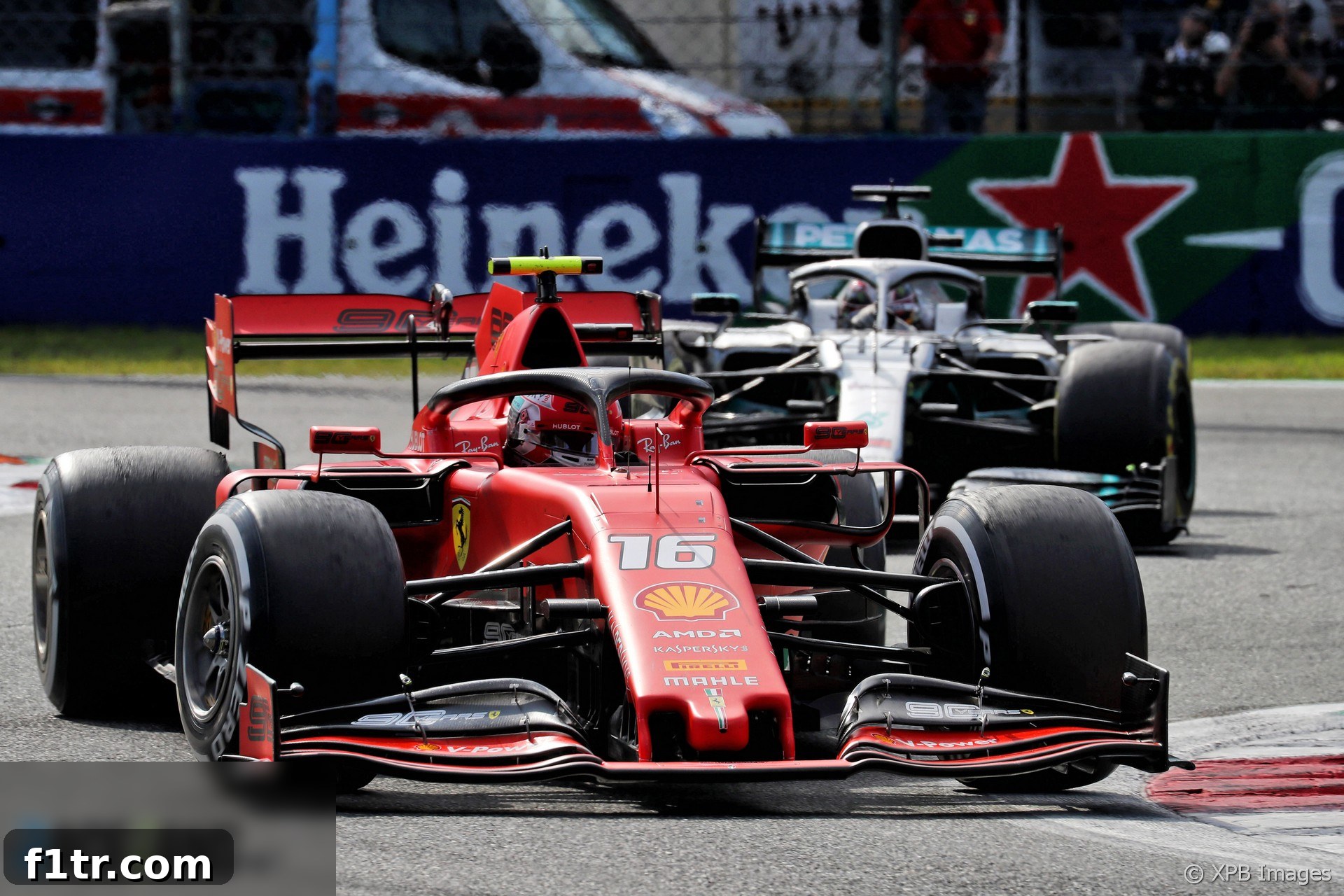
The incident unfolded dramatically as the two formidable competitors navigated the iconic Monza circuit, specifically approaching the demanding Roggia chicane. As they went wheel-to-wheel, Leclerc’s assertive maneuver saw him squeeze Hamilton perilously close to the very edge of the track. To avoid what seemed like an inevitable impact, Hamilton was forced to drive onto the kerb and subsequently onto the surrounding grass. This evasive action necessitated cutting across the run-off area, costing him time but critically preserving his car and his championship hopes.
Reflecting on the near-miss after the race, Hamilton elaborated on his strategic choice. He asserted that had the championship already been secured, or if he were not contending for the title at that moment, his reaction would have been entirely different. “I wouldn’t have moved,” he declared, emphasizing that a direct collision would have been the probable outcome. This powerful statement highlights the profound influence of championship stakes on a driver’s aggression and calculated risk-taking during a race.
At the time of the Italian Grand Prix, Hamilton arrived with a commanding 65-point lead in the drivers’ championship standings. This substantial advantage positioned him as the overwhelming favourite to clinch the title that year. His cautious yet decisive action at Monza was a clear testament to his awareness of this lead and his commitment to securing the championship without unnecessary risks.
The Dynamics of Respect and Aggression on Track
Immediately following the incident, Hamilton communicated to his Mercedes team, stating unequivocally that Leclerc had “pushed me off.” However, his tone softened when speaking to the media post-race, where he was quick to dispel any notions of animosity or disrespect between the two drivers. “We don’t have a problem,” Hamilton affirmed, highlighting the professional camaraderie that often exists even amidst fierce on-track rivalries. “I congratulated him when I got straight out of the car.”
Hamilton went on to express his high regard for Leclerc, recognizing the young Monegasque driver’s talent and respectful conduct. “I think Charles is one of the most respectful drivers,” he remarked. The Italian Grand Prix marked a significant moment for Hamilton, as it was “the first time I’ve really come wheel-to-wheel with him.” This experience, he explained, offered valuable insights into Leclerc’s racing style. “When you arrive at a new driver you learn how they approach different scenarios and maybe position your car differently, maybe I’ll do a better job next time.” This speaks to the continuous learning curve even for a multi-world champion like Hamilton, constantly adapting to new competitors and evolving racing dynamics.
Advert | Become a Supporter & go ad-free
Toto Wolff on Hamilton’s “Self-Preservation” Instinct
The strategic decision made by Lewis Hamilton did not go unnoticed by his team principal, Toto Wolff. The head of Mercedes-AMG Petronas lauded Hamilton’s actions, attributing them to a profound “sense of self-preservation,” a quality he deemed essential given the delicate championship situation. Wolff’s comments shed light on the calculated approach that defines top-tier motorsport, where the immediate thrill of a duel must often be weighed against the broader objective of a season-long campaign.
Wolff elaborated on the contrasting driving styles observed in Formula 1, particularly between seasoned champions and emerging talents. “You’ve seen in the last years that the young ones that came into Formula 1 they’re maybe a little bit more aggressive and these moves can end up in the wall if not one gives up,” Wolff explained. He pointed out that Hamilton, as the driver contending for the coveted world championship, made the mature and strategic choice to back out. “Today the driver that goes for the drivers’ world championship bailed out of it and saved Charles and saved himself.”
This perspective underscores the delicate balance between aggressive racing and sensible risk management. For Wolff, Hamilton’s decision was not a sign of weakness but rather a demonstration of superior strategic intelligence. “Lewis perfectly knew what he was doing, he saved it, he didn’t lose any parts in that incident. He could have equally decided ‘no, I’m not going to let this happen’ and put the two cars out.” This commentary highlights the sheer power a championship leader wields – the ability to dictate the terms of engagement and avoid unnecessary confrontations that could derail their title aspirations.
The stewards reviewed the incident, ultimately issuing Charles Leclerc a black-and-white warning flag for his aggressive driving. This non-punitive warning served as a caution, indicating that his move was on the limit of acceptable racing conduct. However, Wolff raised an intriguing point regarding the potential consequences had the outcome been different. “The interesting thing is what would have been the penalty if it would have ended in Lewis losing a front wing or both cars being in the wall,” he mused. This question touches upon a recurring debate in Formula 1: the inconsistent application of penalties based on the consequence of an action rather than the action itself.
Monza: The Temple of Speed and Aggressive Racing
Monza, often dubbed the “Temple of Speed,” is renowned for its long straights and challenging chicanes, which invariably lead to close-quarters racing and intense braking duels. The circuit’s characteristics naturally foster an environment where drivers push the limits, especially at Ferrari’s home race, the Italian Grand Prix, where the ‘tifosi’ (Ferrari fans) create an electrifying atmosphere. This pressure cooker environment undoubtedly contributed to Leclerc’s assertive driving, as he sought to maximize every opportunity on home soil.
The Roggia chicane, where the incident occurred, is a prime example of Monza’s demanding nature. Drivers arrive at incredibly high speeds, requiring precise braking and quick changes of direction. It’s a natural overtaking spot, but also one where contact is a high risk. Leclerc’s move, while aggressive, was likely fuelled by the desire to defend his position vigorously and capitalize on his car’s strengths, particularly coming out of the slipstream.
For Hamilton, the decision to yield was a calculated move rooted in his vast experience and understanding of championship mechanics. He recognized that a minor gain in track position, or even proving a point, was not worth the potential loss of valuable points or significant damage to his car. A DNF (Did Not Finish) or even a minor repair could have had ripple effects on his championship charge, providing an opportunity for his rivals to close the gap. This incident serves as a perfect case study in driver psychology and strategic racing at the highest level of motorsport.
Advert | Become a RaceFans supporter andgo ad-free
The Ever-Evolving Narrative of F1 Championships
The encounter between Lewis Hamilton and Charles Leclerc at the Italian Grand Prix was more than just a fleeting moment of on-track drama; it was a microcosm of the entire Formula 1 championship narrative. It showcased the strategic brilliance and pragmatic wisdom of a seasoned champion like Hamilton, who understands the long game required to win a title. It also highlighted the raw talent, ambition, and youthful aggression of a rising star like Leclerc, eager to make his mark and challenge the established order.
Such incidents are crucial in shaping the story of an F1 season, offering fans a glimpse into the minds of the drivers and the intricate decision-making processes that occur at speeds exceeding 300 km/h. They remind us that Formula 1 is not just about raw speed but also about intelligence, calculated risks, and a deep understanding of the sport’s complex dynamics. The respect between Hamilton and Leclerc, despite the on-track tensions, also underscores the sportsmanship that underpins even the most intense rivalries in Grand Prix racing. This particular moment at Monza will be remembered as a pivotal strategic decision in Hamilton’s championship journey, a choice that undeniably helped pave his way towards yet another illustrious title.
2019 F1 season
- Crying in the Melbourne car park at 2019 grand prix was my career low – Ocon
- McLaren Racing reports reduced £71 million loss in 2019
- Kvyat: Hockenheim podium last year was “my biggest achievement” so far
- How the FIA’s new encrypted fuel flow meter targets Ferrari’s suspected ‘aliasing’ trick
- “He smashed my office door”: 23 must-see moments from ‘Drive to Survive’ season two
Browse all 2019 F1 season articles