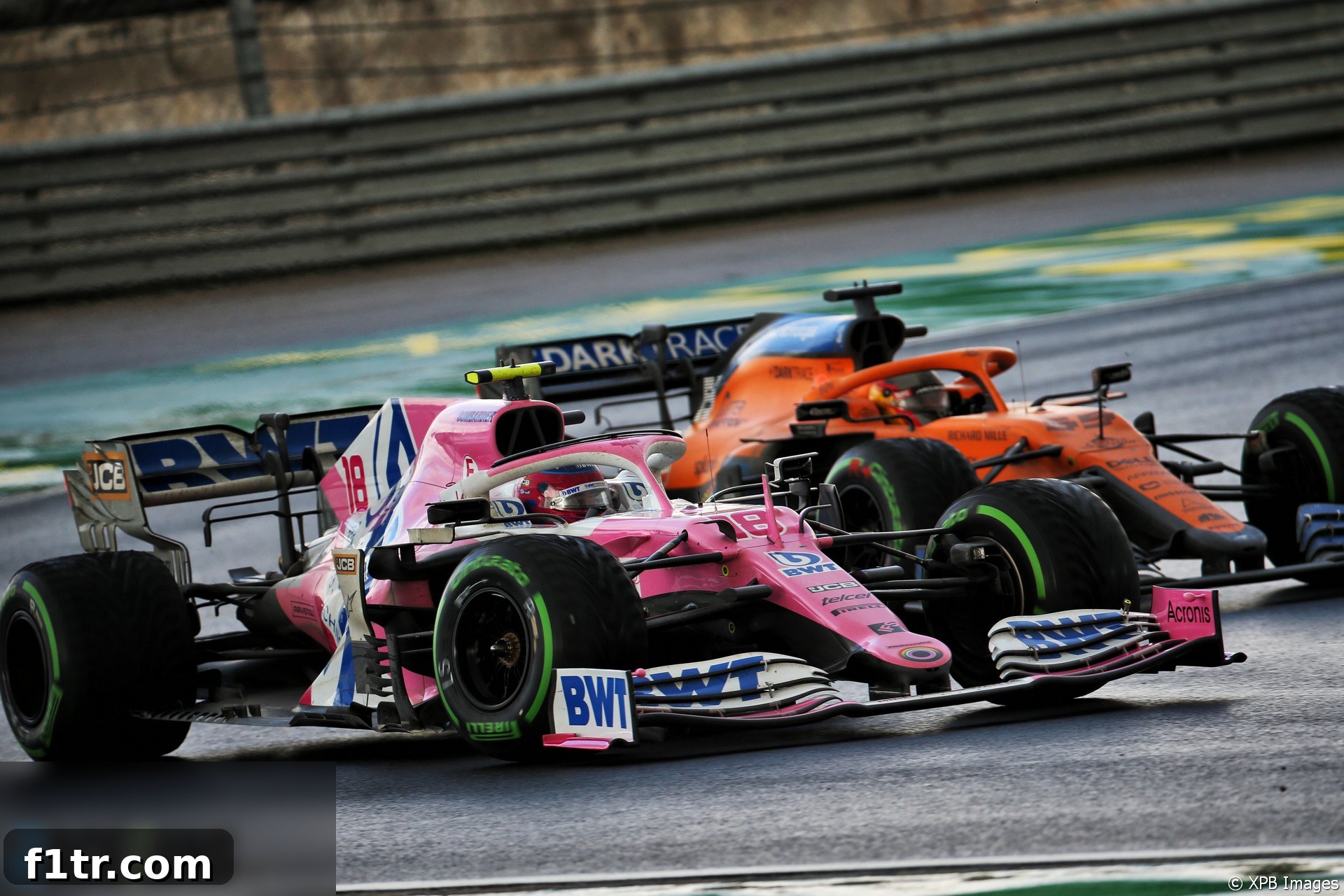
Lance Stroll’s Turkish Grand Prix Dream Unravels: The Unseen Front Wing Damage That Cost a Maiden F1 Victory
The 2020 Formula 1 Turkish Grand Prix was an event etched into memory for its dramatic and unpredictable conditions, but for Lance Stroll and the Racing Point team, it became a race of what-ifs. A promising lead, forged through a sensational pole position and brilliant early race pace, slipped agonizingly away, leaving many to wonder what had gone wrong. The mystery was eventually solved post-race: critical damage to Stroll’s front wing was discovered, identified as the primary culprit behind the severe tyre graining that cost him a potential maiden Grand Prix victory.
Advert | Become a Supporter & go ad-free
From Pole Position to Pits: A Race of Contrasting Fortunes
Lance Stroll had enjoyed a career-defining Saturday at Istanbul Park, expertly navigating the treacherous, wet conditions to secure a stunning pole position – his first in Formula 1. This put him in a prime position for Sunday’s race, a rare opportunity for the Canadian driver and a significant morale boost for the Racing Point outfit, rebranded as Aston Martin the following season. As the lights went out on race day, Stroll immediately capitalised on his advantage, driving flawlessly and building a substantial lead over the chasing pack, including his experienced teammate Sergio Perez. For 32 laps, Stroll appeared to be in complete control, demonstrating impressive pace and composure on the intermediate tyres, which were crucial given the persistent dampness of the track.
However, as the race approached its halfway point, a palpable shift occurred. Stroll’s lap times began to inexplicably deteriorate. His seemingly effortless lead started to shrink, and he reported significant issues with his tyres. The dreaded phenomenon of “graining” had set in – a condition where the tyre surface becomes rough and loses grip, severely hampering performance. This rapid degradation of his intermediate tyres saw him lose pace dramatically, allowing his teammate Sergio Perez and other competitors to close in and eventually overtake him.
The On-Track Struggle: Graining and Loss of Control
Stroll’s team, Racing Point, closely monitored the developing situation. Faced with their lead driver’s fading performance, and the growing threat from rivals, they made the strategic decision to pit him on lap 36 for a fresh set of intermediate tyres. The hope was that this change would alleviate the severe graining and restore his earlier pace, allowing him to rejoin the fight at the front. Yet, to the team’s and Stroll’s dismay, the fresh rubber did not provide the anticipated relief. Instead, the problem persisted, and in some aspects, worsened. His lap times remained uncompetitive, and he continued to slide down the order, ultimately finishing a disappointing ninth place – a stark contrast to his dominant early performance.
The frustration was palpable, both in the cockpit and on the pit wall. Stroll reported consistent poor tyre performance and a significant increase in understeer from as early as lap 17. Understeer, where the front wheels lose grip before the rear, makes the car difficult to turn into corners and exacerbates tyre wear, especially on the front axle. This combination of understeer and graining proved insurmountable, transforming what began as a dream scenario into a frustrating battle for survival.
Post-Race Revelation: The Hidden Damage Uncovered
It was only after the chequered flag, during the routine post-race inspection and car set-down procedures at the Racing Point garage, that the true cause of Stroll’s woes was finally brought to light. The team discovered significant damage to the underside of Lance Stroll’s front wing. This wasn’t a superficial scratch or a minor scuff; it was a structural issue with profound aerodynamic consequences.
A detailed statement from the Racing Point team clarified the exact nature of the damage: “One of the strakes on the underside of the front wing came loose and lodged itself in such a way that the blockage caused a significant loss of front downforce.” Strakes are small, fin-like elements meticulously designed into the front wing’s complex architecture to guide airflow, generate downforce, and direct air to other aerodynamic components of the car. When one of these crucial elements became dislodged and created a blockage, the intricate airflow over the front wing was severely disrupted.
The Aerodynamic Cascade: How a Small Fault Caused a Big Problem
The loss of front downforce had a cascading effect on the car’s overall balance and tyre performance. Downforce is the aerodynamic force that pushes the car down onto the track, increasing grip and stability. A reduction in front downforce specifically means less pressure on the front tyres, leading directly to the significant understeer that Stroll reported. When a car understeers, the driver must apply more steering angle and often push the front tyres harder to get the car to turn, which in turn generates excessive heat and friction. This intensified stress on the front tyres is a primary catalyst for severe graining, as the rubber tears and wears unevenly.
Racing Point confirmed this technical diagnosis: “The resultant loss of front downforce contributed to increased levels of graining.” This explains why the problem persisted even after a tyre change; the underlying aerodynamic imbalance caused by the damaged front wing was still present, meaning any new set of tyres would quickly succumb to the same graining issues under the altered load conditions.
The Challenge of Real-Time Diagnosis in Formula 1
The team also shed light on the immense difficulty of diagnosing such a subtle yet critical issue during the heat of the race. They revealed that “data during the race confirmed there was a significant loss of front downforce,” indicating that their telemetry systems picked up on the aerodynamic discrepancy. However, without any visible damage to the *top* side of the front wing – the part readily observable by marshals or TV cameras – and compounded by the inherently low-grip conditions of the wet Turkish track, it was incredibly challenging to definitively confirm the data’s accuracy or pinpoint the exact cause.
In the high-stakes, fast-paced world of Formula 1, teams rely on a combination of driver feedback, telemetry data, and visual inspections. In this instance, the visual evidence was misleading, and the low-grip environment made it harder to distinguish between handling issues caused by the track itself and those caused by car damage. “It was only after the race, when the car returned to the garage, that the damage and blockage to the underside of the front wing was discovered,” the team stated, underscoring the complexities of real-time problem-solving in F1.
Reflecting on a Missed Opportunity and Future Implications
For Lance Stroll, the discovery of the front wing damage offered a bitter form of vindication. His struggles were not due to a sudden drop in performance or an inability to manage his tyres, but rather an unforeseen mechanical failure that was beyond his control. This revelation undoubtedly provided some solace, explaining what had appeared to be a dramatic collapse in performance. However, it doesn’t diminish the sting of a truly missed opportunity for a maiden F1 victory, an achievement that seemed so close for a significant portion of the Turkish Grand Prix.
For Racing Point, this incident served as a stark reminder of the incredibly fine margins in Formula 1. A single, small component dislodging can have catastrophic consequences for performance, turning a dominant lead into a frustrating P9 finish. It also highlights the relentless pursuit of perfection in F1 aerodynamics, where every millimeter and every airflow path is critical. The team’s ability to diagnose and understand such complex issues, even if post-race, is vital for continuous improvement and ensuring such an occurrence is mitigated in the future. The Turkish Grand Prix will long be remembered as the race where Lance Stroll’s dream unravelled, not by driver error or strategic misstep, but by an unseen flaw beneath the surface.
Advert | Become a RaceFans supporter andgo ad-free
Related F1 News & Analysis
- Grosjean to make F1 test return tomorrow for first time since Bahrain horror crash
- Pictures: Wrecked chassis from Grosjean’s Bahrain fireball crash to go on display
- Bottas vs Rosberg: Hamilton’s Mercedes team mates compared after 78 races each
- F1 revenues fell by $877 million in Covid-struck 2020 season
- Hamilton and Mercedes finally announce new deal for 2021 season
Browse all 2020 F1 season articles