Lewis Hamilton Sounds Alarm Over New Eau Rouge Bump at Spa
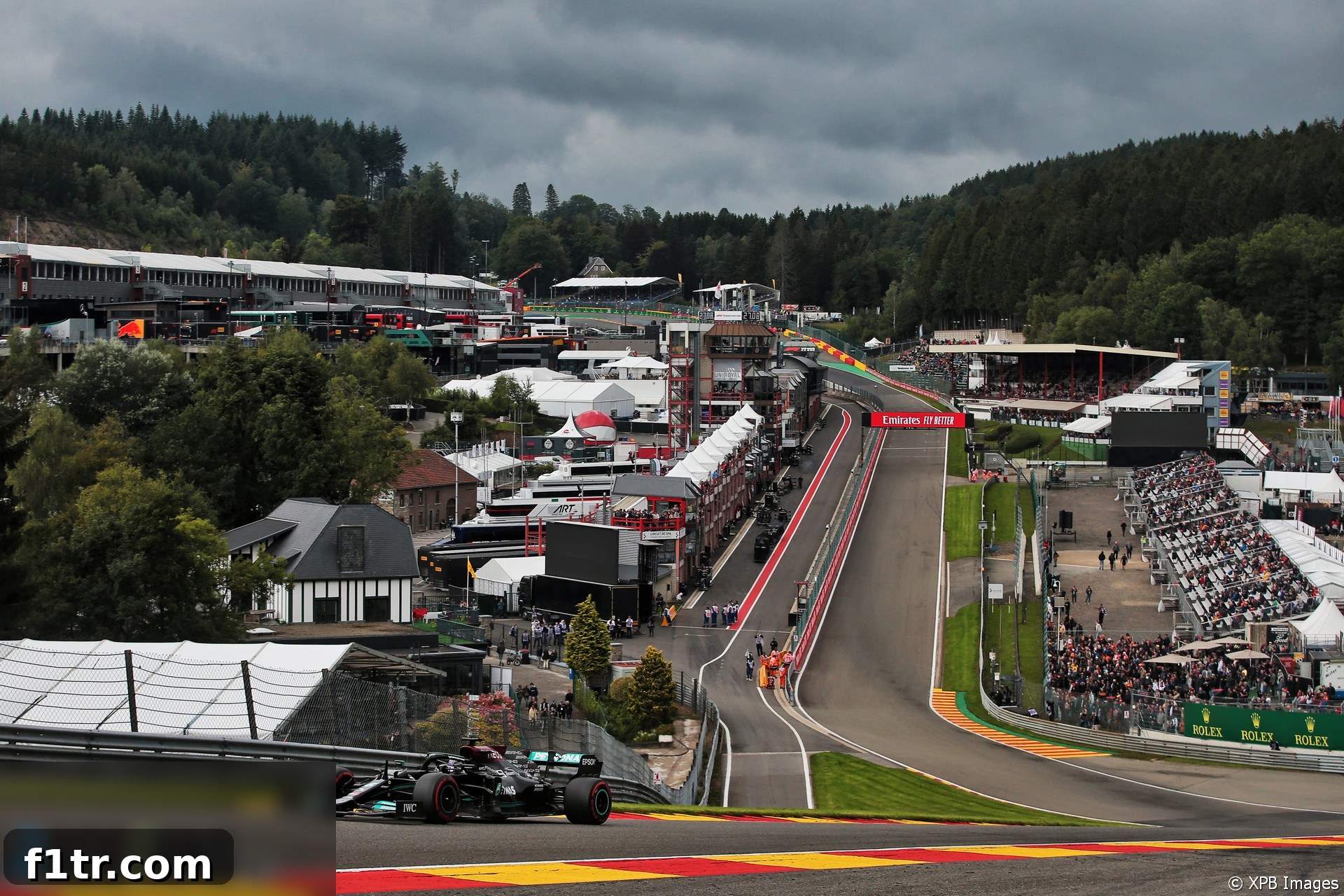
Lewis Hamilton, the seven-time Formula 1 world champion, has voiced concerns over a newly formed and unusually severe bump in the legendary high-speed Eau Rouge sequence at Spa-Francorchamps. The Mercedes-AMG Petronas F1 Team driver suspects that recent heavy rain and extensive flooding in the region are responsible for this significant alteration to one of motorsport’s most iconic corners. This unforeseen change presents an additional layer of complexity and challenge for all competitors as they navigate the demanding Belgian circuit.
The Iconic Eau Rouge and Its Unprecedented Challenge
Eau Rouge, immediately followed by Raidillon, is arguably the most famous corner in Formula 1. It’s a breathtaking uphill left-right-left sweep that demands immense courage and precision, testing both car and driver to their absolute limits. The sequence is renowned for its intense compression at the bottom, followed by a dramatic ascent, which makes any alteration to its surface a matter of serious concern. Hamilton, a veteran of countless laps around Spa, noted a much more pronounced and sharp bump at the lowest point in the corner before the rapid climb towards Raidillon. This observation highlights the delicate balance and precise engineering required to tackle this part of the track safely and efficiently.
“It’s very bumpy now through Eau Rouge,” Hamilton stated after Friday’s practice sessions, his tone reflecting genuine surprise. He further elaborated, “Something’s happened and they’ve kind of ruined it a little bit. I don’t know if they got a new patch there, but there’s a massive bump right at the compression point, which we’ve never had there before. It’s really sharp, you feel it on the backside.” His description paints a vivid picture of a track surface that has undergone a substantial and unexpected transformation. Such a significant change in a corner that drivers take flat out, or very nearly so, can have profound implications for car stability, tyre wear, and ultimately, driver safety and lap times. The sheer force of the compression at this point of the track means even a small imperfection can become greatly amplified, affecting the car’s aerodynamic platform and balance.
Connecting the Bump to Recent Weather Events
Hamilton’s immediate suspicion points towards the severe weather events that had affected the Ardennes region prior to the Grand Prix weekend. “But I’m sure they’ll fix it. I think it’s something to do with the mudslides, the rain or something like that,” he speculated. The heavy rainfall and subsequent flooding could have undermined the track’s substructure or shifted tarmac sections, leading to the formation of this unprecedented bump. The circuit, nestled within the natural undulations of the Ardennes forests, is inherently susceptible to environmental factors. Any degradation of the track surface, particularly in such a critical and high-speed section, demands immediate attention and could necessitate corrective measures to ensure the integrity of the racing line and the safety of the competitors.
Mercedes’ Setup Dilemma and Hamilton’s Performance
The practice sessions saw Mercedes actively experimenting with various downforce levels on their W12 cars, a common strategy at Spa given its unique blend of long straights and technical sectors. The circuit demands a tricky compromise: high downforce for optimal grip through the twisty middle sector, particularly through Pouhon and Blanchimont, versus low downforce for maximum straight-line speed on the run to Les Combes and the long Kemmel Straight. This inherent challenge was compounded by the new bump, forcing teams to reconsider their established setup philosophies.
Hamilton’s performance graph reflected these setup struggles and adaptations. He found himself languishing in 18th place during the morning session (FP1), indicating that the initial setup was far from ideal for the evolving track conditions. However, the afternoon session (FP2) saw a marked improvement, with Hamilton ending within a tenth of a second of the pace-setter, his championship rival Max Verstappen. This turnaround underscores the intense work undertaken by the Mercedes engineers and Hamilton himself to dial in the car. “It’s a massively challenging circuit,” Hamilton commented, highlighting the constant search for the perfect balance. “Trying to find that balance this morning we had it one way, we changed it this afternoon. It’s very similar: You go faster in the first and third sector but you go slower in the middle or you go quicker in the middle and slower in the other two. So trying to find that balance is quite tricky.” This continuous iterative process is fundamental to success at Spa, and the new bump likely added an unexpected variable to their calculations.
The Unpredictable Spa Weather and Data Collection
Spa-Francorchamps is infamous for its microclimates and notoriously unpredictable weather, often seeing different parts of the track experiencing vastly different conditions simultaneously. With forecasts suggesting the weekend would get progressively wetter, Hamilton expressed his gratitude for the dry running experienced during FP2. This dry window was crucial for data collection, allowing teams to gather vital information on tyre performance, aerodynamic efficiency, and car balance without the additional complexities of a wet track.
“It’s been an okay day. The sessions are very short, so there’s not a lot of knowledge you’re gaining from the short time that you have. We’re trying to navigate the best way we can,” Hamilton reflected. The condensed nature of Friday practice sessions means every lap is precious, and unexpected track changes like the Eau Rouge bump demand even greater efficiency in data acquisition. Despite the improved pace in FP2, Hamilton acknowledged that the car wasn’t yet fully dialed in. “At least it was dry for [second practice] so we’ve got some laps in. But the car wasn’t underneath me today so I’ve got to do some work tonight and try and figure that out.” This commitment to detailed analysis and adjustments overnight is typical of top-tier F1 drivers striving for perfection ahead of qualifying and the race.
Implications for the Championship Battle
The 2021 Formula 1 season was characterized by an enthralling and fiercely contested championship battle between Hamilton and Verstappen. Every detail, every tenth of a second, and every factor influencing car performance held immense significance. A significant and unexpected track alteration like the Eau Rouge bump could potentially tip the scales, forcing teams to adapt rapidly and introducing an element of unpredictability that could favour one driver or team over another. The ability to quickly understand, adapt to, and exploit these new track conditions would be paramount in securing a competitive advantage in a season where margins were razor-thin.
Conclusion: A New Variable at a Legendary Circuit
Lewis Hamilton’s observation of a new, severe bump in Eau Rouge adds a fascinating and challenging new variable to the already demanding Belgian Grand Prix weekend. While the exact cause and potential remedies remain to be fully understood, it underscores the dynamic nature of motorsport and the constant need for adaptation from both drivers and engineers. As the weekend progresses, all eyes will be on how teams and drivers manage this altered characteristic of the iconic Spa-Francorchamps circuit, particularly with the looming threat of more wet weather. The legendary track continues to live up to its reputation for delivering unexpected thrills and tests.
Related Reads: 2021 Belgian Grand Prix
- Spa spectators who saw no racing offered prize draw for 2022 tickets
- ‘Wrong to award points for a couple of laps behind the Safety Car’ – Horner
- Hamilton offers “exclusive gift” to fans who attended Belgian GP wash-out
- Change rules to give points for qualifying if race can’t happen – Seidl
- “I apologised to the entire team for my mistake” – Perez
Browse all 2021 Belgian Grand Prix articles