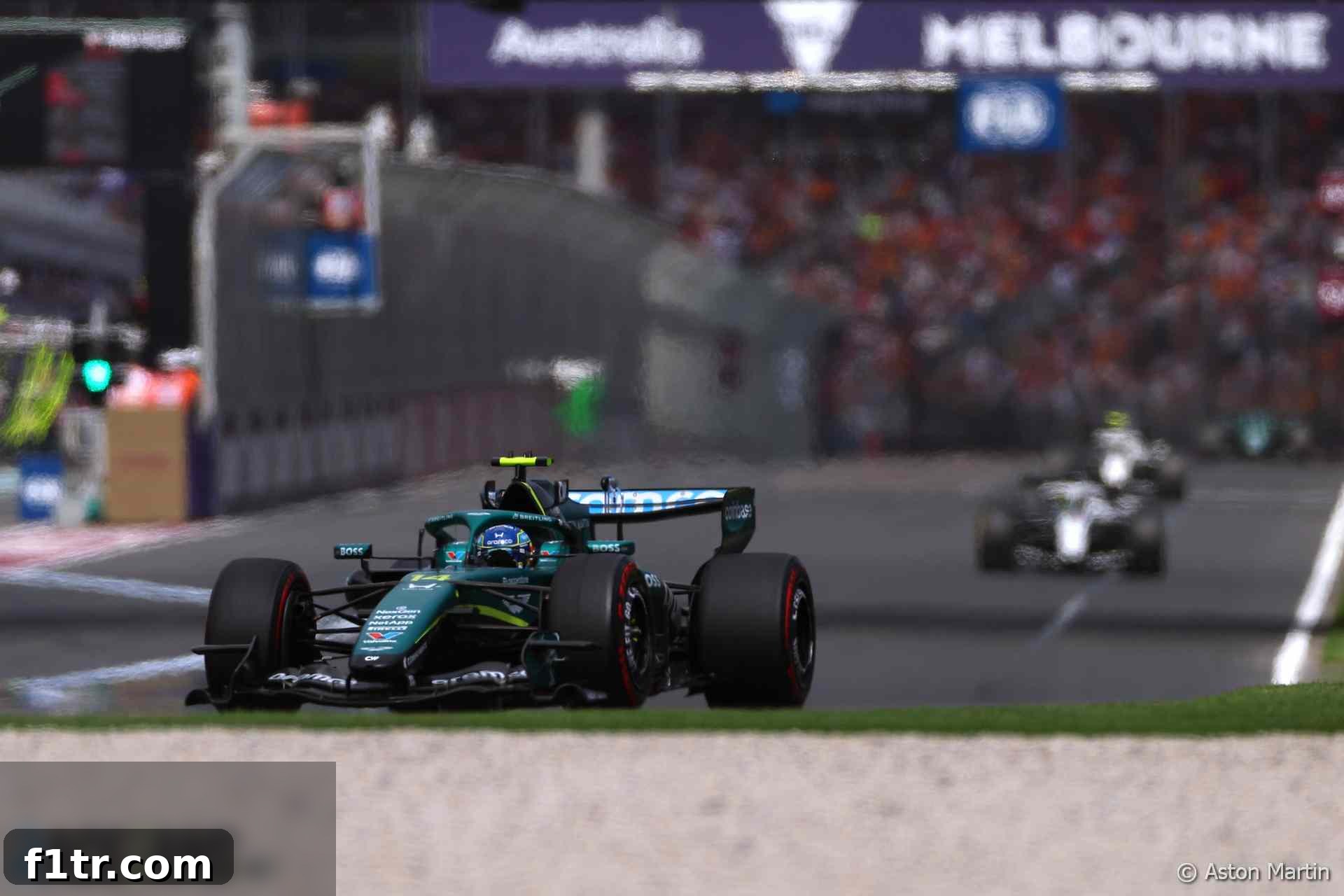
Honda’s Breakthrough: Conquering Power Unit Vibrations at the Australian Grand Prix
Honda has confirmed a significant leap forward in resolving the persistent power unit vibration problems that plagued its engines earlier in the season. Following a series of targeted modifications implemented before the Australian Grand Prix weekend, the Japanese manufacturer reported a substantial and positive impact on the issue, signaling a crucial improvement in performance and reliability for its partner teams.
Advert | Become a Supporter & go ad-free
The pervasive vibration issue had been a cause for serious concern within the Formula 1 paddock, particularly for teams utilizing Honda power units. Aston Martin, one of the affected teams, had openly expressed its challenges even before the Australian race commenced. Their drivers, including seasoned campaigner Fernando Alonso and young talent Lance Stroll, were reportedly forced to limit their lap counts during practice sessions. This drastic measure was necessitated by the severity of the vibrations, which posed a tangible risk of nerve damage to the drivers, compromising their safety and long-term health – an unacceptable situation in modern motorsport.
Aston Martin’s Struggle: A Glimpse into the Severity of the Problem
Beyond the immediate risk to driver well-being, Aston Martin faced additional operational hurdles. The team was grappling with a critical shortage of crucial components, further compounding their difficulties. While they managed to bring four batteries for their power units to Melbourne, a staggering fifty percent of these were deemed unusable. Only two batteries were fully functional, leaving neither Fernando Alonso nor Lance Stroll with a single spare unit. This precarious situation underscored the fragility of their power unit setup and the immense pressure on the available components to perform without faltering.
Despite these daunting constraints, the Australian Grand Prix provided a vital testbed. Lance Stroll admirably completed 43 laps during the race, showcasing a commendable resilience and managing to keep his car running until the checkered flag. Fernando Alonso, though ultimately retiring after 21 laps, also contributed valuable data during his stint. These laps, while not constituting full race distances, offered critical insights into the efficacy of Honda’s recent modifications. Shintaro Orihara, Honda’s trackside general manager and chief engineer, was quick to acknowledge the clear signs of improvement emanating from their power unit data.
Honda’s Engineering Resilience: A Step in the Right Direction
Orihara’s assessment painted an optimistic picture of Honda’s ongoing development efforts. “In Melbourne, we made another significant step in the right direction,” he stated, emphasizing the progress made. He further elaborated, “We were able to clearly observe that our power unit countermeasures worked effectively under actual race conditions, allowing us to compete in the grand prix without encountering any reliability issues stemming from the vibrations.” This statement highlights a crucial turning point, moving from a state of concern to one of increasing confidence in their engineering solutions.
The extent of this progress was not lost on Orihara. He drew a stark contrast between their performance in Melbourne and the earlier struggles. “This improvement has been truly significant, especially when you compare where we were in Bahrain to our current standing. It’s a testament to the hard work and dedication of our entire team.” The comments from Honda’s chief engineer underscore the iterative nature of Formula 1 development, where every race serves as a learning opportunity and a chance to validate engineering changes.
Towards Full Race Distance: A Data-Driven Approach
While Stroll’s 43 laps were impressive given the circumstances, they still fell short of a full race distance by 15 laps. However, Orihara expressed firm confidence in achieving this benchmark in the near future, although he refrained from specifying an exact timeline. He affirmed that the team is firmly on course to reach this critical milestone, driven by continuous data analysis and targeted improvements.
“Our telemetry data clearly indicates that the battery vibrations have continued to decrease consistently,” Orihara explained, revealing the empirical basis for their optimism. “Based on this trend, we are now confident that we are on the right track to complete a full race distance reliably. In this critical aspect of power unit performance, we are undoubtedly on the right trajectory, and it is imperative that we maintain this positive momentum in our development process.” This data-driven approach is fundamental to success in modern Formula 1, allowing engineers to precisely diagnose and address complex technical challenges.
The pursuit of perfection in Formula 1 is a relentless endeavor, and every lap completed on track yields invaluable data. Orihara underscored this critical point: “Every single lap we can complete on track is absolutely vital for gathering comprehensive data on our power unit’s performance and behavior. Therefore, the intensive hard work and maximum effort from our engineering and technical teams will not only continue but intensify as we move forward through the season.” This commitment to continuous improvement is what sets successful teams apart in the cutthroat world of F1.
Implications for Performance and the Championship Battle
The resolution of severe power unit vibrations has far-reaching implications beyond mere reliability. For drivers like Fernando Alonso and Lance Stroll, an engine free from debilitating vibrations translates directly into enhanced comfort, improved car control, and significantly reduced physical strain. This newfound stability allows them to push the car harder, explore the limits of its performance more safely, and maintain focus throughout a grueling race distance without the distraction and discomfort of excessive vibrations. Ultimately, this directly contributes to better on-track performance and more consistent lap times.
For the teams utilizing Honda power units, particularly Aston Martin, this breakthrough can be a game-changer. A reliable and predictable power unit enables strategists to implement more aggressive race plans, knowing that the engine will withstand the demands. It also allows engineers to fine-tune car setups more effectively, without having to compromise performance to mitigate engine issues. This positive development can boost team morale, instill greater confidence in the package, and potentially elevate their competitive standing in the constructors’ championship.
Looking ahead, Honda’s success in addressing these complex engineering challenges reinforces its reputation as a leading power unit supplier in Formula 1. The commitment to innovation, rapid problem-solving, and continuous improvement is crucial in the fiercely competitive environment of F1. As the season progresses, the ability to deliver consistent and reliable performance will be paramount for any team aspiring to challenge at the front of the grid.
This achievement at the Australian Grand Prix serves as a powerful reminder that Formula 1 is as much an engineering battle as it is a driving spectacle. The dedication to analyzing data, implementing countermeasures, and relentlessly pursuing mechanical and electronic optimization is what defines success. Honda’s latest stride represents not just a fix for a problem, but a robust step forward in the ongoing evolution of their cutting-edge Formula 1 power unit technology, promising exciting developments for the remainder of the racing calendar.
Advert | Become a RaceFans supporter andgo ad-free
Miss nothing from RaceFans
Get a daily email with all our latest stories – and nothing else. No marketing, no ads. Sign up here:
2026 Australian Grand Prix
- Briatore “not happy at all” with Alpine’s “very weak” performance
- Drivers want rules changes to cut “dangerous” risk of crash at start
- Russell becomes the 68th different Formula 1 driver to lead the world championship
- Hadjar told Red Bull his car’s performance was “embarrassing” and “just c***”
- “How did you not call the pit?” Ups and downs in Hamilton’s first race with new engineer
Browse all 2026 Australian Grand Prix articles