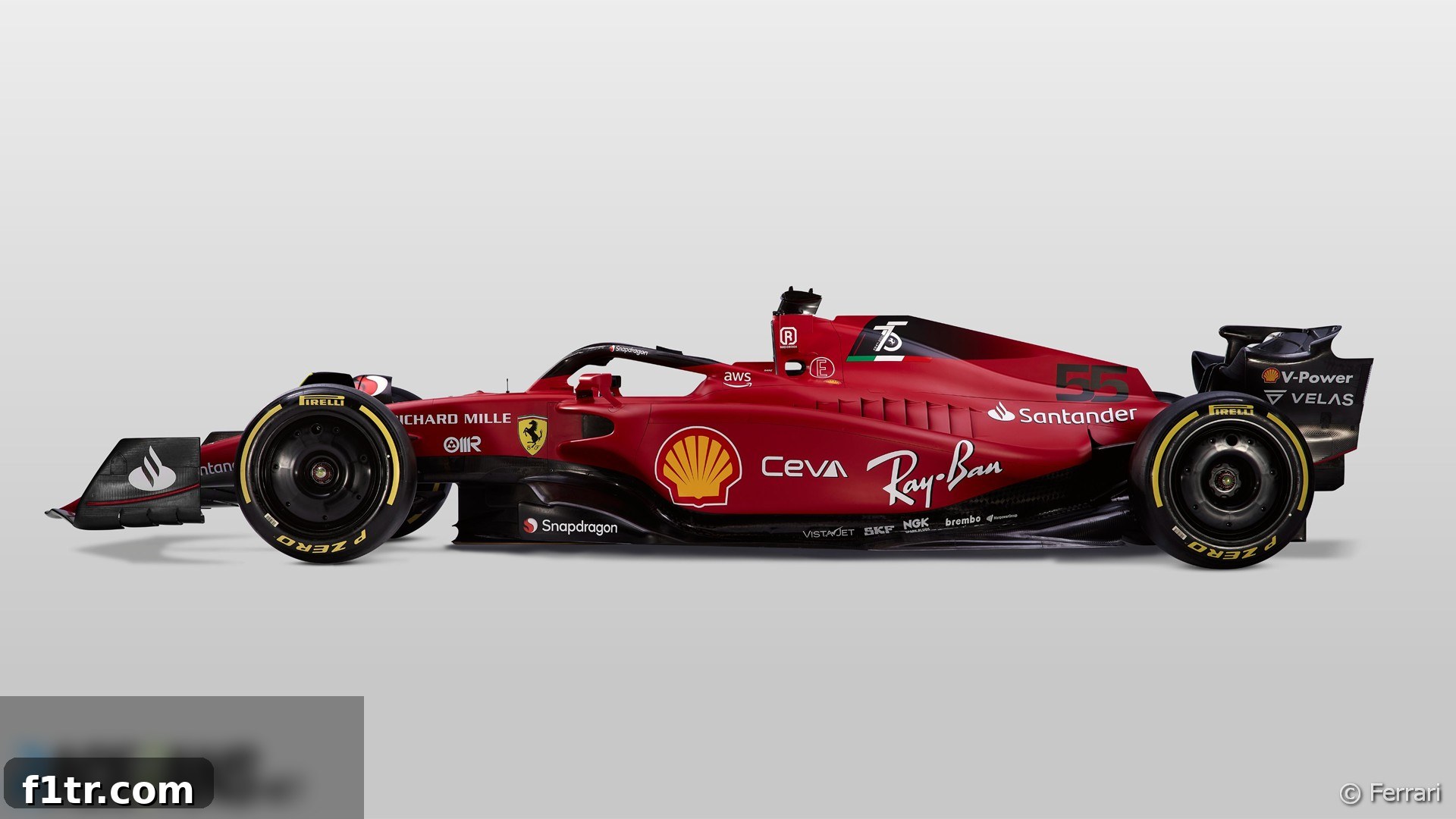
Ferrari F1-75: A Masterclass in Creative Engineering Under Radical New Regulations
Ferrari’s F1-75, unveiled for the 2022 Formula 1 season, immediately captured attention with its unconventional and distinctive design. This bold aesthetic was not merely a stylistic choice but the tangible outcome of a deeply ingrained “creative” mindset that permeated every facet of the car’s development, according to the team’s technical leadership. Faced with the most extensive overhaul of technical regulations in decades, the Scuderia embraced a philosophy of innovation and fearless exploration, resulting in a machine engineered to exploit every nuanced opportunity presented by the new rulebook.
The 2022 season heralded a monumental shift in Formula 1’s technical landscape. Designed to promote closer racing and greater competition, the new regulations effectively reset the competitive playing field, forcing every team to rethink their fundamental design philosophies. For Ferrari, this represented a unique opportunity to break free from past constraints and embark on a journey of pure engineering creativity. Instead of incrementally improving upon existing concepts, the team had the freedom – and the necessity – to approach car design with a blank slate, fostering an environment where daring ideas could flourish.
The Genesis of Innovation: Navigating the 2022 F1 Regulations
The introduction of the 2022 Formula 1 technical regulations marked a pivotal moment for the sport, signaling the most radical transformation in car design in over 40 years. These comprehensive changes mandated a complete overhaul of vehicle architecture, primarily centered around the reintroduction of ground-effect aerodynamics. This wasn’t merely an update; it was a revolution, compelling engineering teams across the grid to delve into uncharted territory. For Ferrari, this presented both an immense challenge and an unparalleled opportunity to demonstrate their engineering prowess and innovative spirit.
Unlike previous seasons where development often revolved around iterative improvements and optimization of known quantities, 2022 demanded a foundational rethink. Every component, every system, and every aerodynamic surface had to be re-evaluated against a completely new set of parameters. This meant abandoning conventional wisdom and embracing a truly open-minded approach. The F1-75 became a testament to this philosophy, embodying a design ethos that dared to challenge established norms and explore promising, albeit unconventional, solutions.
Unprecedented Design Lead Time: A Foundation for Deep Exploration
Fabio Montecchi, Ferrari’s head of chassis project development, shed light on a crucial element behind the F1-75’s distinctive genesis: an exceptionally long design lead time. Unlike the typical development cycle for a new Formula 1 car, which often builds upon the preceding season’s foundations, the 2022 regulations necessitated a dramatically extended period of conceptualization and detailed engineering. “The first key factor for the design of a car that is so different from its predecessors is time management,” Montecchi explained. This extended timeframe was not merely a luxury but a strategic imperative, allowing Ferrari’s engineers to delve into an unprecedented depth of research and development.
During this elongated design phase, the team meticulously scrutinized every aspect of the new rulebook. Montecchi elaborated, stating, “We allowed much more time than usual for the design phase, examining in depth all the rule changes in order to squeeze out every ounce of performance, exploring a large number of solutions through studies, simulations and bench tests.” This intensive period of analysis involved running countless digital simulations, constructing numerous physical prototypes for wind tunnel testing, and subjecting components to rigorous bench testing. This exhaustive process enabled engineers to identify potential performance gains in areas that might have been overlooked in a more constrained timeline, ultimately shaping a car born from profound understanding rather than rushed adaptation.
Empowering Engineering Talent: The Collective Creative Force
Beyond meticulous planning and extended timelines, a defining characteristic of the F1-75’s development was Ferrari’s proactive fostering of individual talent and collaborative empowerment. Montecchi emphasized the critical role of human ingenuity in navigating such a radical regulatory shift. Ferrari actively embraced “the involvement and empowerment of each individual designer,” ensuring that “everyone feels the excitement and uniqueness of the challenge posed by these massive changes.” This approach cultivated an environment where engineers at all levels were encouraged to contribute their unique perspectives and innovative ideas, transforming the design process into a truly collective endeavor.
The absence of historical data or established benchmarks for the new ground-effect era meant that conventional solutions were no longer guaranteed to be optimal. In this vacuum of reference, human creativity became the most potent tool. Montecchi highlighted this by stating, “With no reference points available from previous seasons what makes the difference is the creativity and talent of each designer, the excellence of our analysis tools, the lucidity and courage to choose the most promising solution, even if it is not the most conventional one and in this, we believe we have done a good job.” This philosophy underscored a belief that in times of radical change, the collective brilliance and individual daring of a dedicated team would yield the most innovative and competitive results.
Reimagining Aerodynamics: The Return of Ground Effect
The reintroduction of ground-effect aerodynamics to Formula 1, after a 40-year hiatus, presented the most significant challenge and opportunity for aerodynamicists. Enrico Cardile, Ferrari’s head of chassis area, described the 2022 rule changes as “undoubtedly the most radical of the last 40 years.” This shift demanded an entirely fresh approach to airflow management, moving away from reliance on complex front wing and bargeboard elements to generating downforce primarily through sophisticated underbody channels that interact with the track surface.
Ferrari adopted an “open-minded” approach to interpreting these new regulations, which proved crucial in exploring novel design avenues. Cardile elaborated on this, stating, “Aerodynamics was definitely our number one priority. We approached it with an open mind and seized the opportunity of the rule changes to go in many different directions, bucking the trends of recent years.” This meant not being constrained by what had worked in previous high-downforce, conventional aero eras. Instead, the team explored a vast array of possibilities, resulting in the F1-75’s distinctive sidepod and floor designs, which were among the most talked-about elements of any 2022 car.
Beyond Aero: Suspension System Overhaul
The ripple effect of the new ground-effect aerodynamics extended far beyond just the visible bodywork, necessitating a fundamental rethinking of the car’s suspension system. The way the car interacts with the track, maintains a stable ride height, and manages tire behavior became critically dependent on a highly adaptable suspension setup. Cardile confirmed this comprehensive overhaul: “This open-mindedness has extended to the development of the suspension: the new rules have imposed a general rethink, with the aim of giving us the flexibility to manage a brand-new car concept and tyres with different properties to those used up until now.”
The demands placed on the suspension in the ground-effect era are immense. Maintaining a consistent distance from the ground is paramount for optimal aerodynamic performance, meaning the suspension must be incredibly precise and responsive. Furthermore, the 2022 season also introduced new 18-inch wheels and different tire compounds, fundamentally altering the dynamic characteristics of the car. Ferrari’s engineers understood that a truly optimized package required the suspension to be designed in complete synergy with the aerodynamics and the new Pirelli tires, providing the necessary mechanical grip and stability to complement the innovative aero concepts.
The Heart of the Beast: Power Unit Evolution for E10 Fuel
The pursuit of performance and innovation extended even to the car’s power unit, a critical component that also faced significant regulatory changes for 2022. Formula 1 mandated a switch to E10 fuel, a blend containing 10% ethanol, which presented a fresh challenge for engine manufacturers. This change required a substantial re-evaluation and redesign of internal combustion engine components to maintain, and ideally improve, efficiency and power output.
Enrico Gualtieri, Ferrari’s head of power unit, described the process as an “intense and exciting challenge.” He explained, “All components have been re-evaluated. Some have been optimised, while others were decidedly innovative.” The primary objective for the power unit team was to maximize efficiency in the energy transformation process. This meant focusing on every stage, “from the chemical one in terms of combustion to the mechanical one, to the crankshaft. Everything else has been designed with this goal in mind.” This holistic approach ensured that even with the new fuel, Ferrari’s power unit would deliver optimal performance.
Furthermore, the power unit’s design was not developed in isolation but was intimately influenced by the overarching car concept and the new technical regulations. Gualtieri added, “We defined a power unit layout that best meets the needs of our colleagues on the chassis side, in view of the new technical regulations.” This emphasis on seamless integration between the power unit and the chassis highlights Ferrari’s commitment to a cohesive, high-performance package, where every element is optimized to work in harmony. The result was a power unit engineered not just for raw power, but for efficiency, reliability, and perfect integration within the F1-75’s innovative chassis.
Strategic Vision and Courageous Choices
The Ferrari F1-75 stands as a powerful testament to a strategic vision characterized by courage and a willingness to defy conventional wisdom. In an era where imitation often follows success, Ferrari chose a path of differentiation, actively “bucking the trends of recent years” as Cardile noted. This approach wasn’t reckless; it was a calculated risk born from extensive research, simulation, and a profound trust in their engineering capabilities. The lucidity to identify the most promising solutions, even when unconventional, and the courage to commit to them, were key drivers behind the F1-75’s unique identity.
The car’s development was a masterclass in inter-departmental collaboration, where the chassis, aerodynamic, and power unit teams worked in lockstep, influencing and adapting to each other’s requirements. This integrated approach ensured that every component contributed optimally to the overall performance envelope. From the initial conceptual drawings to the final track validation, the F1-75 represents a holistic design, a product of rigorous analysis, creative problem-solving, and a shared ambition to redefine what a competitive Formula 1 car could be under the new regulations.
Conclusion: Ferrari’s Resurgent Spirit
The Ferrari F1-75 is more than just a racing car; it is a declaration of intent, a physical manifestation of a team embracing radical change with a creative and open-minded spirit. The narratives from Fabio Montecchi, Enrico Cardile, and Enrico Gualtieri collectively paint a picture of an organization that skillfully navigated the complexities of unprecedented regulatory shifts. By investing in extended design lead times, empowering individual talent, adopting an open approach to ground-effect aerodynamics, meticulously re-engineering its suspension, and optimizing its power unit for new fuel regulations, Ferrari laid a robust foundation for competitive success.
This commitment to innovation, coupled with the courage to pursue unconventional solutions, positioned the F1-75 as one of the most intriguing and promising cars on the 2022 grid. It reflected a resurgent spirit within the Scuderia, signaling their determination not only to adapt to the new era of Formula 1 but to lead it. The F1-75 serves as a compelling example of how a “creative mindset” and strategic risk-taking can unlock significant performance gains, reminding the world that the pursuit of excellence in Formula 1 remains a thrilling blend of engineering precision and artistic vision.