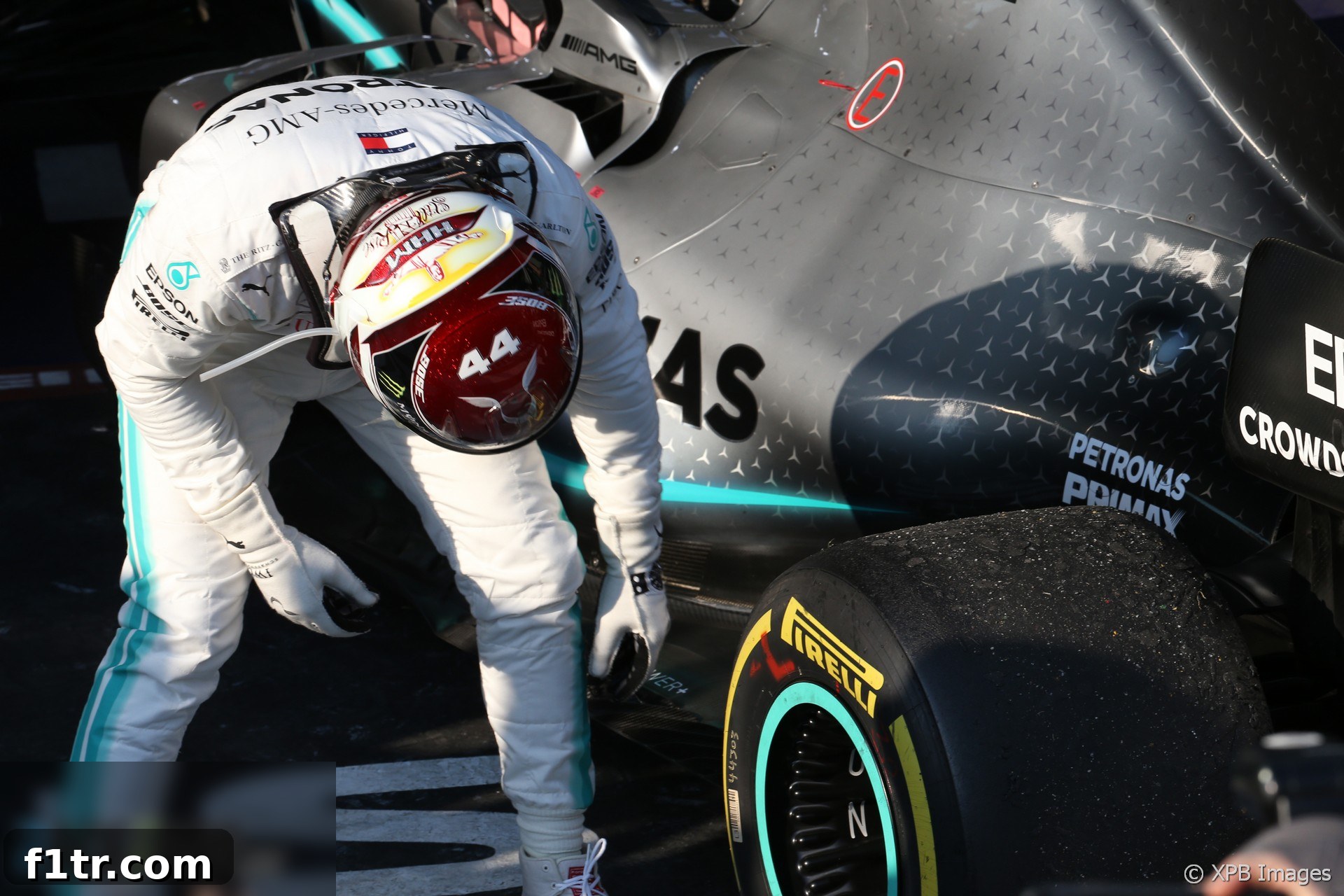
In a candid revelation following the thrilling opening race of the 2019 F1 season, six-time world champion Lewis Hamilton expressed a sense of relief and encouragement upon discovering that his Mercedes W10 car had sustained damage during the Australian Grand Prix. This crucial finding provided a definitive explanation for his unexpected struggles with the car’s balance and overall performance throughout the event, a race where he ultimately finished second to his teammate Valtteri Bottas.
Advert | Become a Supporter & go ad-free
The Unforeseen Challenge in Melbourne
The 2019 Australian Grand Prix was poised to be a dominant start for Mercedes, with Hamilton securing pole position. However, from the early laps, Hamilton reported an unsettling lack of grip and a persistent imbalance that plagued his race pace. This was particularly puzzling given the team’s rigorous preparation and the highly optimized setup achieved during practice and qualifying. The initial confusion and frustration stemmed from the stark contrast between his car’s behavior in the race compared to its performance in the formation laps and long runs leading up to Sunday.
Hamilton admitted that throughout the grand prix, he remained unaware of the precise nature of the problem, only that “something didn’t feel right.” He recounted the difficulty of trying to manage a car that was behaving unpredictably. His immediate focus was on adapting to the changing dynamics and extracting whatever performance was possible under the circumstances. The mystery deepened as he had not experienced any clear incident, such as running wide or making contact, that would typically account for such a significant shift in the car’s handling characteristics.
Lap Four: A Critical Turning Point
The champion pinpointed lap four as the approximate moment his pace began to deteriorate noticeably. It was around this time that his gap to team mate Valtteri Bottas, who was enjoying a faultless run at the front, started to widen significantly. While Hamilton initially managed to keep pace with Bottas, a sudden decline in rear grip made it increasingly challenging to maintain his rhythm and defend his position. He communicated this loss of rear grip to his team by the tenth lap of the race, but without any immediate diagnostics available, the team and driver were left to speculate on the root cause.
The post-race inspection, however, unveiled the truth: a section of the left-rear portion of the floor on his Mercedes W10 had suffered damage. This discovery was a significant moment for Hamilton, as it validated his race-long struggles. “I had no way of knowing it was the floor,” he stated, emphasizing the internal struggle of driving a car with an invisible, yet performance-crippling, ailment. The realization that there was a tangible, physical reason for his unexpected performance deficit brought a degree of closure and understanding to an otherwise perplexing race experience.
The Enigmatic Cause of Damage
The exact circumstances leading to the floor damage remain somewhat unclear to Hamilton. Despite his meticulous driving and adherence to track limits, he couldn’t recall any specific moment where contact or an aggressive maneuver might have caused the issue. This led to the plausible theory that the damage was inflicted by debris left on the track from earlier incidents. The opening lap of the Australian Grand Prix was indeed eventful, with both Daniel Ricciardo and Robert Kubica suffering damage to their front wings following separate incidents. Such debris, particularly carbon fiber fragments, can be incredibly sharp and pose a significant threat to the delicate underbelly of an F1 car when driven over at high speed.
The F1 car’s floor is not merely a flat surface; it is an intricately designed aerodynamic component that plays a monumental role in generating downforce. Even minor alterations or damage to this structure can have profound effects on the car’s overall balance and grip. For a team like Mercedes, whose car designs are optimized to the nth degree, any deviation from the intended aerodynamic profile can dramatically compromise performance. The fact that the damage occurred to “quite a sensitive part of the floor” underscores the severity of the issue and why it had such a disproportionate impact on Hamilton’s race.
Aerodynamic Implications of Floor Damage
Understanding the critical role of the floor in modern Formula 1 aerodynamics sheds light on why this damage was so detrimental. The underside of an F1 car is meticulously sculpted to create intricate airflow patterns that generate massive amounts of downforce – essentially sucking the car to the track. The diffuser, a key component at the rear of the floor, accelerates air passing beneath the car, creating a low-pressure area that pulls the car downwards. Any damage, particularly to the edges or crucial turning vanes of the floor, disrupts this carefully managed airflow. This disruption can lead to a significant loss of downforce, especially at the rear, resulting in the “loss of rear grip” that Hamilton reported.
Moreover, damaged floor sections can cause turbulent air to interact with other aerodynamic elements, creating instability and an unpredictable balance. This makes precise cornering and high-speed maneuvers incredibly difficult, leading to increased tire wear and a constant battle for the driver to keep the car on the optimal line. For a driver like Hamilton, renowned for his ability to push the limits, this kind of compromised handling would have been a continuous mental and physical challenge, explaining the gap in performance to his teammate who was operating with an intact, fully functional aerodynamic package.
From Confusion to Clarity: Hamilton’s Encouragement
Despite the setback, Hamilton viewed the discovery with a surprising degree of encouragement. “It’s great to see there’s a reason for the unexpected,” he stated. This sentiment highlights the competitive mindset of a top athlete and team: understanding the problem is the first step towards resolving it. If the performance deficit had been due to a fundamental flaw in the car’s design or a significant underperformance by the team, it would have been a far more concerning outcome. Instead, the damage presented a clear, external factor that accounted for the anomaly.
The fact that the team had put in extensive effort to achieve a perfect balance and setup, only for the car to feel “completely different” on race day, made the damage explanation particularly reassuring. It confirmed that their preparatory work had been sound and that the underlying performance potential of the W10 was still intact. This clarity allows Mercedes to move forward, learn from the incident, and ensure similar issues are mitigated in future races, reinforcing their formidable approach to continuous improvement and problem-solving.
Valtteri Bottas’s Untroubled Dominance
The stark contrast between Hamilton’s race and that of his teammate Valtteri Bottas further emphasized the impact of the floor damage. Bottas, starting from second on the grid, enjoyed a relatively unchallenged run to victory. His car performed flawlessly, allowing him to demonstrate the true pace of the Mercedes W10 without any hindering factors. This provided Mercedes with crucial data points for comparison and underscored that the team’s package was indeed dominant when operating at its peak. Bottas’s strong performance, while a personal victory for him, also served as a clear indicator of the potential Hamilton was prevented from unlocking due to the unforeseen damage.
Broader Implications for the 2019 Season
While the Australian Grand Prix was just the first race of the 2019 season, this incident served as an early reminder of the razor-thin margins and delicate nature of Formula 1 machinery. Even a minor piece of debris can dramatically alter a race outcome, affecting not just individual drivers but potentially impacting championship dynamics. For Mercedes, it highlighted the importance of track cleanliness, debris monitoring, and the robustness of aerodynamic components. Moving forward, the team would undoubtedly conduct a thorough analysis to understand how the damage occurred and explore potential preventative measures. The season was long and challenging, but starting with a clear understanding of what went wrong, rather than lingering doubts, was a crucial psychological advantage for Hamilton and his team as they embarked on their quest for another world championship title.
Advert | Become a RaceFans supporter andgo ad-free
Moving Forward: A Champion’s Perspective
Ultimately, Hamilton’s reaction was one of a seasoned competitor. The initial frustration of a sub-par performance quickly gave way to a pragmatic understanding once the cause was identified. “We’ll just move forward and go from there,” he concluded, signaling his characteristic resilience. This incident, while a minor blip in a season that would eventually see him claim another world title, underscored the myriad challenges even the most dominant teams and drivers face in the cutthroat world of Formula 1. It was a testament to the unpredictable nature of the sport and the unwavering commitment to understanding every detail that defines a championship-winning team.
2019 F1 season
- Crying in the Melbourne car park at 2019 grand prix was my career low – Ocon
- McLaren Racing reports reduced £71 million loss in 2019
- Kvyat: Hockenheim podium last year was “my biggest achievement” so far
- How the FIA’s new encrypted fuel flow meter targets Ferrari’s suspected ‘aliasing’ trick
- “He smashed my office door”: 23 must-see moments from ‘Drive to Survive’ season two
Browse all 2019 F1 season articles