The Unprecedented 2021 Belgian Grand Prix: A Race That Never Was
The 2021 Formula 1 season delivered a spectacle unlike any other at the iconic Spa-Francorchamps circuit. What transpired on that fateful Sunday afternoon in Belgium was less a Grand Prix and more a surreal, rain-soaked procession that etched several peculiar new lines into the sport’s illustrious history books. This event sparked widespread debate, redefined the concept of a ‘race,’ and left fans, drivers, and teams grappling with its unprecedented outcome.
A Record-Breaking Non-Event: The Shortest Grand Prix in F1 History
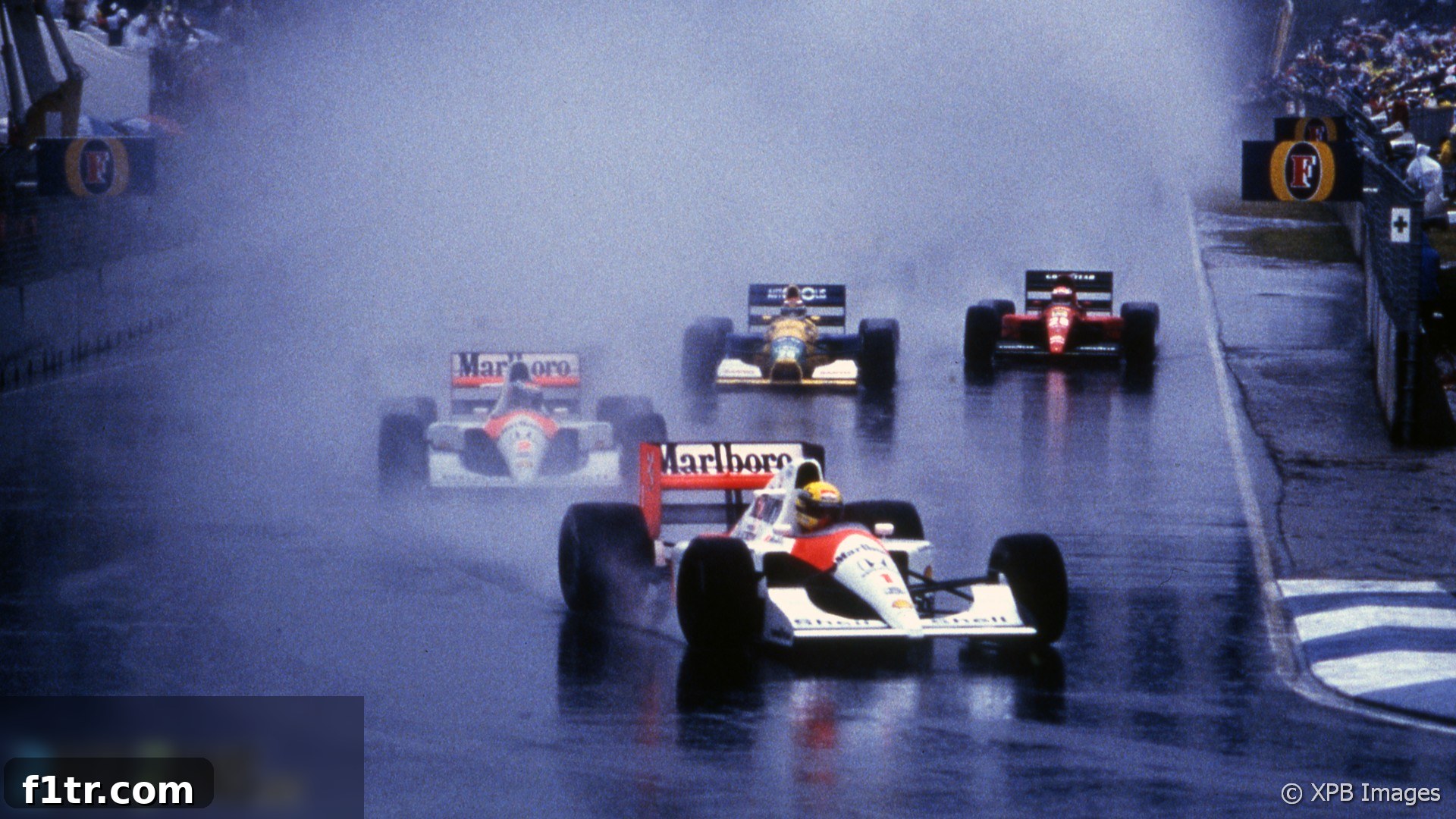
For nearly three decades, the record for the shortest Formula 1 Grand Prix belonged to the 1991 Australian Grand Prix. That race, held in treacherous conditions, was started, red-flagged after just 14 laps due to escalating chaos and debris across the track, and never resumed. Even then, an incandescent Ayrton Senna famously waved his arms in fury as he passed the pits, imploring officials to halt the proceedings for safety reasons. Its distance of 52.92 kilometers was once considered an anomaly, a testament to the dangers of extreme weather.
However, the 2021 Belgian Grand Prix at Spa redefined ‘short’ in a way no one could have predicted. The drivers spent the entirety of the classified ‘race’ behind the Safety Car, never truly competing. The decision-making process for its classification was intricate and controversial: following a formation lap and an initial lap behind the Safety Car, the start procedure was aborted due to torrential rain and worsening track conditions. After a lengthy delay and much anticipation from the drenched spectators, the cars eventually returned to the track, completing two more laps behind the Safety Car. Crucially, these additional laps were deemed necessary to meet the minimum distance requirements for a race result to be officially declared under Formula 1 regulations.
According to the rules, the final classification must be taken from the lap before the race was suspended. In this unique scenario, that meant the final standings were based on a single lap of effective running. Thus, the 2021 Belgian Grand Prix officially became the shortest F1 race of all time, with a classified length of just one lap. To be even more precise, the official race classification documented a final race distance of 6.88 kilometers, slightly less than the full 7.004-kilometer lap length of Spa-Francorchamps. This minute difference accounts for the 124-meter offset between the start and finish lines, confirming that the race barely covered a lap, literally.
The Controversial Half-Points: A Rare Occurrence
Despite the minimal running, points were contentiously awarded. As the event did not reach 75% of its scheduled race distance (falling short by a staggering 32 laps), half-points were distributed to the top ten finishers. This was only the sixth time in the 1,047 F1 World Championship rounds held up to that point that such a scenario had occurred, highlighting the extraordinary nature of the Spa weekend.
The allocation of points for what many considered a mere parade lap generated significant debate among teams, drivers, and fans. Many argued that awarding points for a race without genuine competition undermined the integrity of the championship. However, the FIA stood by its interpretation of the regulations, asserting that safety considerations necessitated the approach taken. This decision had tangible implications, especially in a closely fought championship battle, as both Max Verstappen and Lewis Hamilton received significant half-points, effectively preserving their existing points gap rather than seeing it dramatically altered.
Historical Precedents: Other Half-Points Races in F1 History
To understand the rarity of the 2021 Belgian Grand Prix’s outcome, it’s essential to look back at the handful of other races where half-points were awarded:
| Race | Circuit | Laps | Distance | Winning driver | Winning team | Points |
|---|---|---|---|---|---|---|
| 1975 Spanish Grand Prix | Montjuich Park | 29 | 109.91km | Jochen Mass | McLaren | 4.5 |
| 1975 Austrian Grand Prix | Osterreichring | 29 | 171.419km | Vittorio Brambilla | March | 4.5 |
| 1984 Monaco Grand Prix | Monaco | 31 | 102.672km | Alain Prost | McLaren | 4.5 |
| 1991 Australian Grand Prix | Adelaide | 14 | 52.92km | Ayrton Senna | McLaren | 5 |
| 2009 Malaysian Grand Prix | Sepang International Circuit | 31 | 171.833km | Jenson Button | Brawn GP | 5 |
| 2021 Belgian Grand Prix | Spa-Francorchamps | 1 | 6.88km | Max Verstappen | Red Bull | 12.5 |
The first two instances of half-points being awarded occurred in 1975. The Spanish Grand Prix that year was a tragic affair, halted when Rolf Stommelen’s car crashed into spectators, resulting in four fatalities. Later in the season, heavy rain led to an early cessation of the Austrian Grand Prix. Significantly, every subsequent instance of half-points, including Spa 2021, has been primarily caused by adverse weather conditions.
Remarkably, of these six races, half were won by McLaren drivers. Jochen Mass in 1975, Alain Prost in 1984, and Ayrton Senna in 1991 all piloted McLarens to these unique victories. Had Lando Norris managed to convert his audacious qualifying performance on Saturday into a pole position for McLaren, the team could have added a fourth such win to their tally. While Niki Lauda famously won the 1984 world championship by the minuscule margin of half a point due to his teammate’s score in Monaco, the 2021 Belgian Grand Prix did not have a similar impact on the title fight in terms of creating such a differential, as both title protagonists, Verstappen and Hamilton, gained half-points.
Statistical Anomalies and Driver Milestones
Beyond the classification and points, the 2021 Belgian Grand Prix introduced several other statistical quirks. For the first time in Formula 1 history, no driver was officially credited with the fastest lap. This unique situation arose because the only lap that was officially completed commenced from the pit lane and was entirely run behind the Safety Car, making it impossible for any driver to set a representative competitive lap time. This detail underscores the profound abnormality of the event, marking it as a race where competitive driving was entirely absent.
Despite the anticlimactic nature of his victory, Max Verstappen’s ‘win’ marked his 16th career Grand Prix victory. This significant achievement put him level with the legendary Sir Stirling Moss, with both drivers now sharing the unfortunate record for the most Grand Prix victories without a World Championship title. Additionally, Verstappen’s pole position, secured in a challenging qualifying session the day before, was his ninth and put him on par with Charles Leclerc for career poles.
Perhaps one of the most heartwarming stories to emerge from the chaos was the performance of George Russell. His sensational qualifying lap in the Williams, securing a front-row start, was a remarkable feat for both himself and the struggling team, marking their first front-row appearance since 2017. In the bizarre conditions of the race, Russell’s second-place finish also ended Williams’ four-year wait for a podium finish, a moment of immense pride and relief for the historic outfit. This result cemented Russell’s growing reputation as a future star and validated his incredible talent in challenging circumstances, even if the race itself was unconventional.
The Aftermath and Lingering Questions
The 2021 Belgian Grand Prix ignited a fiery debate within the Formula 1 community regarding the sport’s regulations, particularly concerning extreme weather conditions and minimum race distances. Many questioned the fairness to the thousands of fans who braved the elements at Spa, paying full price for what amounted to a few laps behind a safety car. The event led to calls for rule changes to prevent similar scenarios in the future, with suggestions ranging from returning spectator money if a certain race distance isn’t met, to altering how points are awarded in such curtailed events, or even utilizing qualifying results as a fallback for classification.
Ultimately, the 2021 Belgian Grand Prix will forever be remembered not for thrilling overtakes or strategic masterclasses, but for its sheer unprecedented nature. It served as a stark reminder of Formula 1’s vulnerability to the elements and the constant tension between safety, sporting integrity, and the entertainment value expected from a World Championship event. Its legacy is a complex one, pushing the boundaries of what constitutes a ‘race’ and ensuring that the discussions it sparked will continue to influence the sport’s future evolution.
Related Articles: 2021 Belgian Grand Prix
- Spa spectators who saw no racing offered prize draw for 2022 tickets
- ‘Wrong to award points for a couple of laps behind the Safety Car’ – Horner
- Hamilton offers “exclusive gift” to fans who attended Belgian GP wash-out
- Change rules to give points for qualifying if race can’t happen – Seidl
- “I apologised to the entire team for my mistake” – Perez
Browse all 2021 Belgian Grand Prix articles