Renault Challenges Racing Point Over RP20 Legality After Styrian Grand Prix
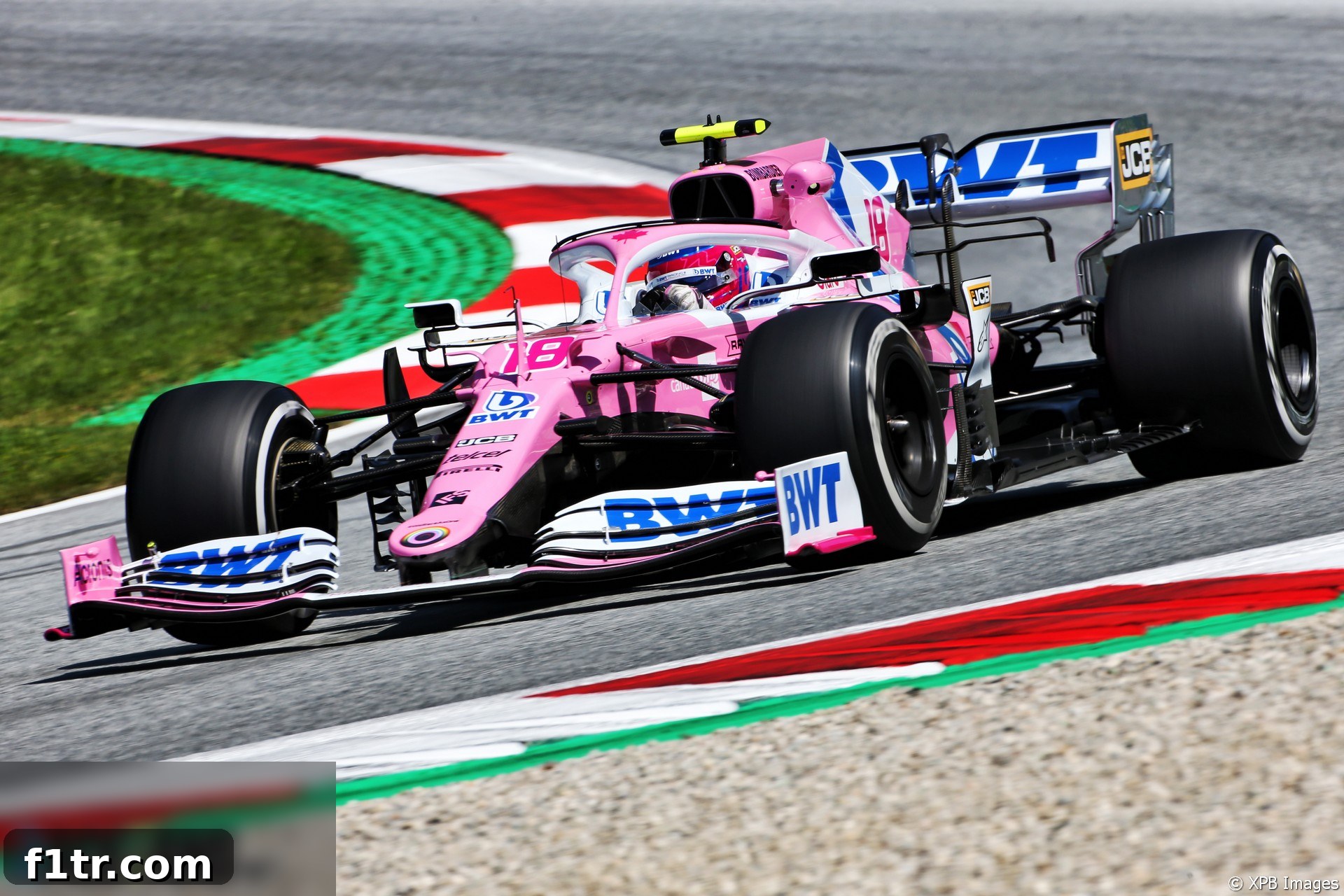
A significant controversy has erupted in the Formula 1 paddock, with the Renault DP World F1 Team lodging a formal protest against the two Racing Point cars, driven by Sergio Perez and Lance Stroll, following the Styrian Grand Prix. The protest centers on the legality of Racing Point’s RP20 challenger, a car that has colloquially earned the moniker ‘pink Mercedes’ due to its striking resemblance to the championship-winning 2019 Mercedes W10.
The move by Renault has intensified scrutiny on Racing Point’s design philosophy, raising fundamental questions about the interpretation and enforcement of Formula 1’s sporting regulations, particularly those governing the design and intellectual property of critical car components. Representatives from Racing Point were promptly summoned to appear before the FIA stewards to address the allegations.
The Heart of the Matter: The ‘Pink Mercedes’ Controversy
From the moment the Racing Point RP20 debuted in pre-season testing, it sparked widespread debate and suspicion across the F1 grid. Its aerodynamic surfaces, particularly the nose cone, bargeboards, and sidepod designs, bore an undeniable and profound resemblance to the previous year’s all-conquering Mercedes W10. This visual similarity was so pronounced that rivals and media alike quickly christened it the ‘pink Mercedes’, a nod to Racing Point’s distinct livery and its clear design inspiration.
Racing Point operates as a Mercedes customer team, meaning they purchase their power units and gearboxes from the German manufacturer. While this practice is perfectly legitimate and common in Formula 1, the extent of the RP20’s design parallels with the W10 pushed the boundaries of what many considered permissible under the sport’s “listed parts” regulations. These regulations are designed to ensure that each team acts as an independent constructor, designing and owning the intellectual property for specific, performance-critical components of their cars.
The debate isn’t just about aesthetics; it strikes at the core of what it means to be a Formula 1 constructor. The spirit of the rules has always been that each team should develop its own unique solutions, fostering innovation and a diverse array of design approaches. The RP20’s apparent ‘copying’ has led to discomfort, with some questioning whether it undermines the integrity of the constructor principle.
Renault’s Formal Allegations and Regulatory Citations
In a concise statement, Renault confirmed their action: “We confirm that Renault DP World F1 Team has submitted a request to the stewards of the event for clarification on the legality of the Racing Point RP20. We have no further comment on this matter until the stewards have arrived at a decision.” This request, however, is a formal protest alleging a direct contravention of the FIA Formula 1 Sporting Regulations.
Specifically, Renault alleges that Racing Point has violated Articles 2.1 and 3.2, along with Appendix 6 paragraphs 1, 2(a), and 2(c) of the regulations. These articles and appendices collectively outline the stringent requirements for teams regarding the design and intellectual property of what are termed “listed parts.”
The key tenets of these regulations state that:
- “A competitor shall, in respect of the listed parts to be used in its cars in Formula 1, only use listed parts which are designed by it.” This rule mandates self-design for critical components.
- The team must “retain the exclusive right to use the listed parts in Formula 1 so long as it competes in Formula 1.” This emphasizes the intellectual property ownership.
- Crucially, “in the case of the outsourcing of design, such third party shall not be a competitor or a party that directly or indirectly designs listed parts for any competitor.” This clause aims to prevent larger teams from designing parts for smaller teams, or even sharing designs indirectly, thus preserving competitive independence.
The “listed parts” typically encompass components vital to a car’s performance and identity, such as the monocoque, survival cell, roll structures, frontal impact absorbing structures, bodywork (including wings and floor), and brake ducts. Renault’s protest specifically targets Racing Point’s compliance with these particular stipulations, implying that the RP20’s design, particularly relating to aerodynamic elements, might not have originated solely within Racing Point’s own design department or that intellectual property rights have been improperly managed.
The Performance Context: Why the Protest Now?
While the RP20’s design similarities were evident during pre-season testing, the timing of Renault’s protest, immediately after the Styrian Grand Prix, is no coincidence. Racing Point’s exceptional performance at the Red Bull Ring undoubtedly served as the catalyst.
Sergio Perez delivered a spectacular drive, climbing from a challenging 17th place on the grid to finish an impressive sixth. His race was characterized by aggressive overtaking and sustained pace, even challenging Alexander Albon for fourth place in the closing stages before a late collision. His teammate, Lance Stroll, also demonstrated strong form, securing seventh place. These results saw both Racing Point cars finish ahead of Daniel Ricciardo, who was the only Renault driver to score points, finishing eighth.
The sheer pace and racecraft displayed by the ‘pink cars’ did not go unnoticed by rivals. Red Bull team principal Christian Horner publicly commented on their formidable speed, stating that “everyone should be worried by speed of Racing Point.” This remarkable leap in performance for what was traditionally a midfield team, combined with the ongoing whispers about their car’s design origins, intensified the pressure and ultimately prompted Renault to take formal action.
The Styrian Grand Prix marked a stark display of the RP20’s potential, transforming Racing Point from a contender for occasional points to a consistent threat for top-six finishes. This sudden and significant competitive advantage, perceived by rivals as potentially illicit, pushed the simmering controversy to a boiling point, culminating in Renault’s official challenge to the FIA.
The FIA Stewards’ Role and Potential Outcomes
Following the protest, the FIA stewards, the ultimate arbiters of sporting regulations, summoned Racing Point representatives for a hearing. Their role is critical: to thoroughly investigate the allegations, interpret the intricate regulations surrounding listed parts and intellectual property, and deliver a fair and reasoned judgment.
The stewards will examine evidence presented by both Renault and Racing Point, which could include design blueprints, manufacturing processes, and internal documentation related to the RP20’s development. The outcome of such an investigation can vary widely, ranging from no action being taken if Racing Point is found to be compliant, to severe penalties. These penalties could include a reprimand, a fine, points deductions, or, in the most extreme scenario, the disqualification of the cars from the Styrian Grand Prix results, and potentially even future races if a fundamental breach is confirmed.
Beyond the immediate race results, the stewards’ decision holds immense weight for the future of Formula 1 car design. A ruling in Renault’s favor could set a precedent that fundamentally alters how customer teams interact with their engine suppliers, potentially leading to stricter guidelines on technology transfer and shared design philosophies. Conversely, a ruling in Racing Point’s favor would affirm their approach, possibly encouraging other teams to explore similar design strategies, risking a grid populated by ‘cloned’ cars and diminishing the unique identities of constructors.
A History of Technical Disputes Between the Teams
This incident is not the first time Racing Point and Renault have found themselves at loggerheads in the stewards’ room over a technical dispute, underscoring an intense rivalry that extends beyond the track. A notable precedent occurred during the 2019 Japanese Grand Prix.
In that instance, it was Racing Point that lodged a protest against Renault’s cars. The complaint centered on Renault’s alleged use of an automated brake bias adjustment system, which Racing Point argued contravened regulations prohibiting driver aids. Following an extensive investigation, the FIA stewards found Renault guilty of breaching the regulations concerning technical assistance for drivers. Consequently, both of Renault’s cars were disqualified from the Japanese Grand Prix results, costing them valuable championship points.
This history adds another layer to the current protest. It demonstrates a pattern of vigilance and a willingness from both teams to challenge technical interpretations aggressively. It also highlights the high stakes involved in F1’s technical battles, where even minor perceived advantages can lead to significant consequences, affecting championship standings and team reputations. The previous ruling against Renault set a clear precedent for the severity with which technical infringements are treated, and Racing Point will be acutely aware of this as they face the stewards once more.
Wider Implications for Formula 1’s Future
The ‘pink Mercedes’ saga extends far beyond the immediate dispute between Renault and Racing Point; it touches upon critical aspects of Formula 1’s future regulatory framework and competitive landscape. As the sport moves towards a new era with a budget cap and revised technical regulations, the interpretation of listed parts and independent design becomes even more crucial.
If teams are permitted to effectively copy large portions of successful designs from other teams, it could stifle innovation and homogenize the grid. The essence of Formula 1 lies in its engineering brilliance and the unique solutions each constructor brings to the track. Overly lenient rules on ‘cloning’ could undermine this ethos, potentially transforming smaller teams into mere assemblers of parts developed by larger, wealthier entities, rather than independent constructors pushing their own design boundaries.
Moreover, the controversy raises questions about the definition of ‘design’ itself. In an age of advanced digital scanning and reverse engineering, distinguishing between independent inspiration and direct copying without original thought becomes increasingly complex. The FIA faces the challenge of adapting its regulations to keep pace with technological advancements, ensuring that the spirit of fair competition and genuine constructor effort is preserved.
The outcome of this protest could influence discussions around the 2022 regulations and beyond, potentially leading to clearer, more prescriptive rules regarding technology transfer and shared intellectual property to prevent similar controversies from arising. It underscores the constant tension between achieving cost-efficiency through component sharing and maintaining the integrity of independent car design in the pinnacle of motorsport.
Conclusion: Awaiting the Stewards’ Verdict
Renault’s protest against Racing Point’s RP20 at the Styrian Grand Prix has brought a simmering controversy to the forefront of Formula 1. The striking similarities between the ‘pink Mercedes’ and the championship-winning W10 have ignited a crucial debate about the interpretation of “listed parts” regulations, intellectual property, and the very definition of an independent constructor in the sport.
With Racing Point’s impressive performance serving as the immediate trigger, the FIA stewards are now tasked with the responsibility of dissecting complex technical regulations and delivering a verdict that will have profound implications. This decision will not only determine the immediate fate of Racing Point’s results but will also cast a long shadow over future car design philosophies, the relationship between customer and supplier teams, and the overarching sporting integrity of Formula 1. The motorsport world eagerly awaits a resolution that will provide much-needed clarity on these vital issues.