Unpacking the Future: A Day in the Paddock at the 2019 United States Grand Prix
The 2019 Formula 1 season delivered thrilling racing, but beneath the excitement, a seismic shift was brewing: the agreement of new technical and sporting regulations for the 2021 F1 season. While this news brought a wave of relief and cautious optimism to the paddock, it also signaled the dawn of the next contentious battleground: the fierce negotiations over F1 team payments. As the roar of engines filled the air at the Circuit of the Americas, the discussions among team principals, engineers, and journalists were dominated not just by lap times, but by the financial future of the sport. This diary from Austin captures the pulse of a pivotal weekend where the sport’s destiny was being shaped, both on and off the track.
8:30 am: Morning Commute and the Paddock’s Verdict on 2021
The morning began with a surprisingly smooth drive along the I-35 from New Braunfels to the Circuit of the Americas. Despite it being rush hour, the traffic flowed effortlessly, allowing for a swift arrival and prompt entry into the media centre within the hour. With the first practice session scheduled for 11 am, I took the opportunity to stroll through the bustling paddock. The atmosphere was charged, and the primary topic of conversation was, without a doubt, the newly unveiled 2021 regulations.
Most individuals had had a night to digest the comprehensive package of rules, and a general consensus of approval was evident. There was a palpable sense of relief that the prolonged uncertainty had finally ended, even if some lingering reservations remained. The broad strokes of the regulations – aimed at fostering closer racing, enhancing sustainability, and creating a more level playing field – were largely welcomed. Teams appreciated the clarity, allowing them to begin detailed planning and resource allocation. However, this preliminary agreement was merely the opening act. The real challenge, and the source of potential acrimony, lay ahead: the intricate negotiations concerning both the future governance process of Formula 1 and the colossal, billion-dollar ‘prize pot’ distribution.
Having observed three previous iterations of these money wrangles during my tenure in F1, I can attest to their invariably acrimonious nature. The 1998-2007 Concorde Agreement, for instance, saw prominent teams like Williams, McLaren, and Tyrrell threatening legal action before a settlement was finally reached. Its successor, the 2010-12 deal, was plagued by breakaway threats and a three-year delay in ratification, highlighting the deep divisions that often arise when significant financial stakes are on the table. Even the most recent 2013-20 agreement was not immune, subjected to a formal complaint filed by Sauber and Force India with the European Union Commission. This complex dispute was only resolved after Liberty Media acquired F1’s commercial rights from CVC Capital Partners. The vulture fund, in its fervent haste to list F1’s commercial rights, had inadvertently crafted the current dysfunctional governance process, only to then abort the offering at the final hurdle, leaving a legacy of complicated financial structures. History, unfortunately, suggests that these commercial processes are rarely peaceful, and I see little reason why the upcoming 2021-25 negotiations will deviate from this hostile pattern.
1:00 pm: FIA Press Conference – The Unspoken Half of the Story
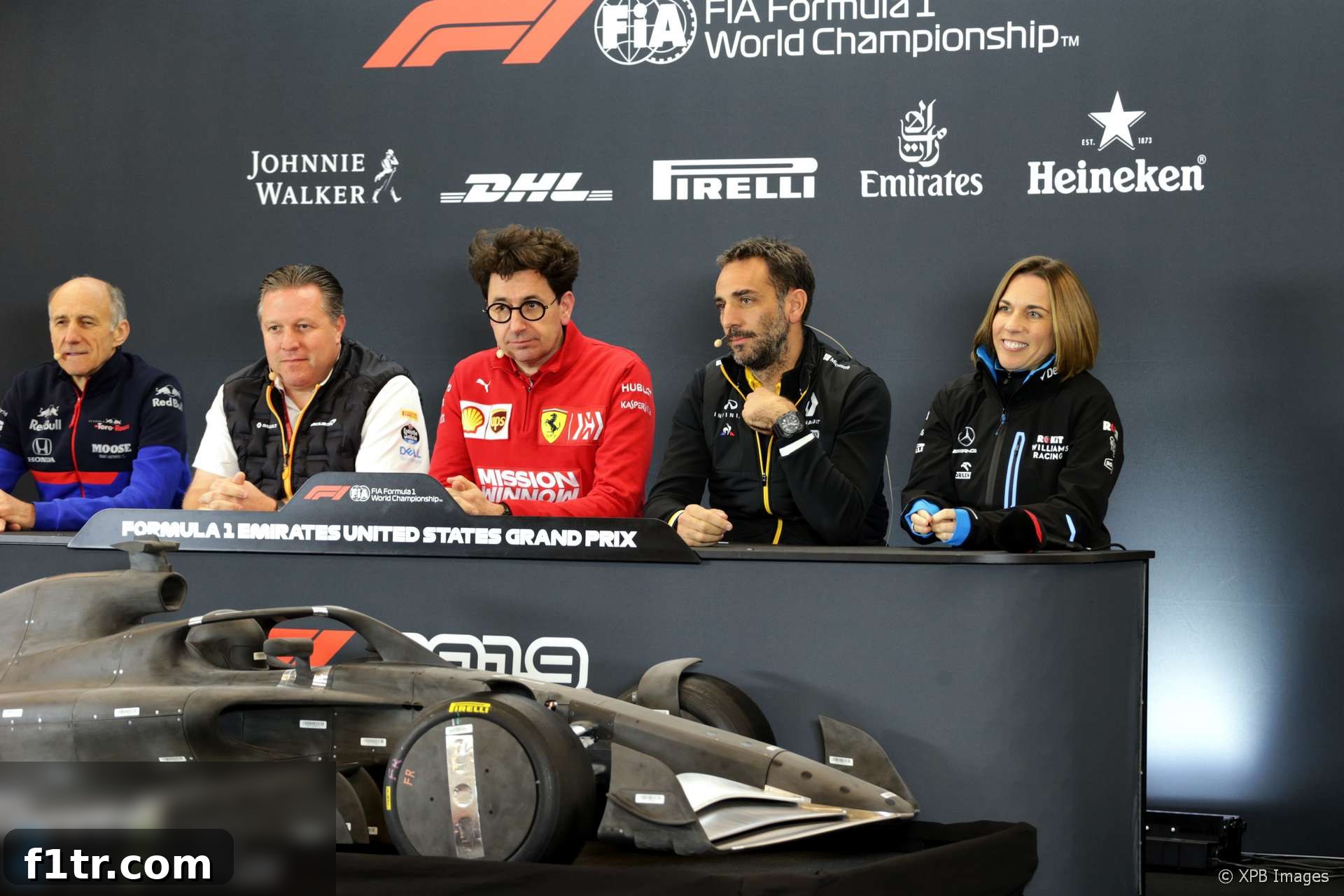
The FIA’s customary Friday press conference predictably centered on the 2021 regulations. Ferrari team boss Mattia Binotto, a key figure in the discussions, hinted at the “lots of work to be done,” an understated phrase that conveyed the immense technical and financial challenges still facing the teams. His peers echoed concerns, particularly regarding the governance structure of the sport. While the public presentation on Thursday outlined the vision for 2021, many in the know understood that it represented only a fraction of the full picture. The true intricacies of implementing these rules, the compromises required, and the power dynamics at play were far more complex and potentially more contentious than the official announcements suggested.
The concerns about governance were paramount. Effective governance is the bedrock of a stable and fair sport, ensuring equitable decision-making, transparent processes, and the long-term health of Formula 1. When teams voice concerns about governance, it often points to anxieties over representation, voting rights, and the perceived fairness of future rule-making and commercial negotiations. Binotto’s remarks, alongside those of other team principals, served as a stark reminder that the journey to 2021 was far from over; indeed, the tamest part might have just concluded, with the real battles yet to be fought behind closed doors.
- Binotto explains why Ferrari voted to pass 2021 F1 rules
2:30 pm: McLaren’s Strategic Vision with Zak Brown
Later in the afternoon, I attended an invitation-only media session with McLaren’s CEO, Zak Brown. Brown offered a candid explanation for the team’s decision to drop the popular James Hinchcliffe from their 2020 IndyCar line-up. This move, while tough, underscored McLaren’s clear strategic direction: a relentless focus on the future and the cultivation of emerging talent. It mirrored their successful approach in Formula 1, where the pairing of Carlos Sainz Jnr and Lando Norris had injected youthful energy and strong results into the team. McLaren’s motorsport philosophy under Brown is characterized by long-term planning, identifying and nurturing drivers with potential, and building a cohesive team culture across all its racing endeavors.
Brown also dropped a hint that shouldn’t surprise anyone keeping a close eye on McLaren’s driver development pipeline: don’t be surprised if either Oliver Askew or Pato O’Ward are granted F1 rookie tests in 2020. This indicates McLaren’s proactive approach to evaluating talent and potentially laying the groundwork for future F1 opportunities. It reinforces the idea that McLaren is not just competing in the present but meticulously building a foundation for sustained success in the years to come, meticulously assessing its next generation of potential stars.
3:30 pm: Driver Reactions to COTA’s Bumpy Ride
As the drivers returned from the second practice sessions, the primary topic on their minds was the Circuit of the Americas’ notoriously bumpy track surface. The undulating tarmac drew a variety of comments, with some expressing genuine concern. Max Verstappen, known for his aggressive driving style, highlighted the risks: “You have to be careful in some places if you go a bit off-line and you want to out-brake someone. I’m always a little bit afraid to maybe damage your back or whatever.” His remarks underscored the physical toll and potential safety hazards posed by the rough surface, particularly in high-speed maneuvers.
However, Verstappen’s Red Bull teammate, Alexander Albon, offered a contrasting perspective. Having raced in Formula 2 just the previous year – a category Verstappen never competed in – Albon found the F1 cars remarkably compliant in comparison. He noted that the F2 cars rode much worse on similar surfaces, suggesting that for drivers accustomed to less sophisticated machinery, the F1 experience was relatively smoother. This divergence in opinion highlighted the different backgrounds and expectations of the drivers. It also brought to mind the perpetual paradox of driver feedback: in Russia, F1 drivers complained about the Sochi circuit being too smooth, offering insufficient challenge, yet in the USA, the complaint was about excessive bumps. It seems that finding a perfectly balanced track that satisfies all F1 drivers is an elusive goal, prompting the common refrain among seasoned observers: sometimes, you just have to get on with it, guys.
- COTA’s bumps are “too much” for some F1 drivers, “pretty cool” for others
5:30 pm: Christian Horner’s Insights and Red Bull’s Fuel Secrets
The evening brought an exclusive interview with Christian Horner, the ever-insightful Team Principal of Red Bull Racing, as part of our monthly team boss series. Horner consistently provides valuable perspectives, balancing team interests with a broader understanding of the sport’s landscape, and I eagerly anticipate sharing his candid observations with our readers. What emerged as particularly intriguing from our discussion were his thoughts on the 2021 draft commercial proposals. Horner reckoned that under these new terms, the two Red Bull-owned teams – Red Bull Racing and Toro Rosso (which would become AlphaTauri the following year) – would collectively be marginally better off than their current financial standing.
This suggestion points to a significant shift in F1’s financial ecosystem. It implies that the hefty bonuses traditionally paid to the sport’s top-tier teams, often criticized for creating a vast disparity in resources, would instead be partially redirected to their midfield rivals. Such a move is designed to create a more equitable distribution of wealth, fostering greater competition and sustainability across the grid. Red Bull, uniquely positioned with a “foot in both camps” by operating both a front-running team and a mid-table outfit, stands to potentially benefit from this restructuring, ensuring financial viability for both entities as the sport moves into a new era.
Following the interview, I headed to Red Bull’s garage for a fascinating guided tour of Exxon Mobil’s trackside laboratory and their advanced fuel support facility. This glimpse behind the scenes revealed the meticulous effort and technological sophistication that goes into every drop of fuel powering an F1 car. The company transports an astonishing twice the amount of fuel required for a race weekend – 1,500 litres compared to the typical 750 litres needed – as a crucial safeguard. This redundancy ensures they never run dry, even if a batch were to be contaminated or a drum damaged during transit. Fuel, in Formula 1, is not merely a commodity; it’s a meticulously engineered performance enhancer, containing precious secrets that can yield crucial tenths of a second on track. Consequently, the security protocols are stringent: fuel is kept under lock and key throughout its entire journey from Exxon’s UK base to circuits worldwide. Even empty drums are carefully secured and returned to prevent any residual vapours – and their proprietary chemical compositions – from falling into the hands of competitors. This level of secrecy underscores the immense competitive advantage held within these highly advanced fuel formulations.
7:00 pm: Departing Chaos – The F1 Traffic Nightmare
The day concluded with an unexpected, yet unfortunately familiar, challenge: traffic chaos. As I packed up to depart the Circuit of the Americas, I drove straight into a monstrous traffic jam. The local police, in their wisdom, had converted all access roads into a giant one-way system to facilitate the entry of concert-goers for Friday evening’s music events. While seemingly logical for incoming traffic, this unilateral decision rendered motorway on-ramps inaccessible for those trying to leave the circuit. It was evident that the authorities had not considered the needs of F1 personnel and race fans who required access in the opposite direction.
The net effect was a scene of utter confusion and frustration. F1 staff and fans, immediately after exiting the designated one-way system, were forced to execute U-turns on congested roads, creating a potentially hazardous situation for both drivers and concert attendees navigating the area. My commute, which had been smooth in the morning, now took over 30 minutes longer than yesterday’s journey. The prospect of Saturday evening’s traffic looms even worse unless a more comprehensive and balanced traffic management plan is implemented. It was a stark reminder that even at world-class events, logistical planning, especially around egress, can often fall short, leaving a lasting impression of frustration despite an otherwise captivating day of motorsport.
2019 United States Grand Prix Related Articles
- Gasly: Toro Rosso in the hunt for points every weekend
- Vettel praises “very good job” by Leclerc after losing qualifying battle
- Drivers’ salaries should be included in budget cap – Brown
- Grosjean: Hard to maintain motivation at end of tough year
- F1’s US audience continuing to grow in third year under Liberty
Browse all 2019 United States Grand Prix articles