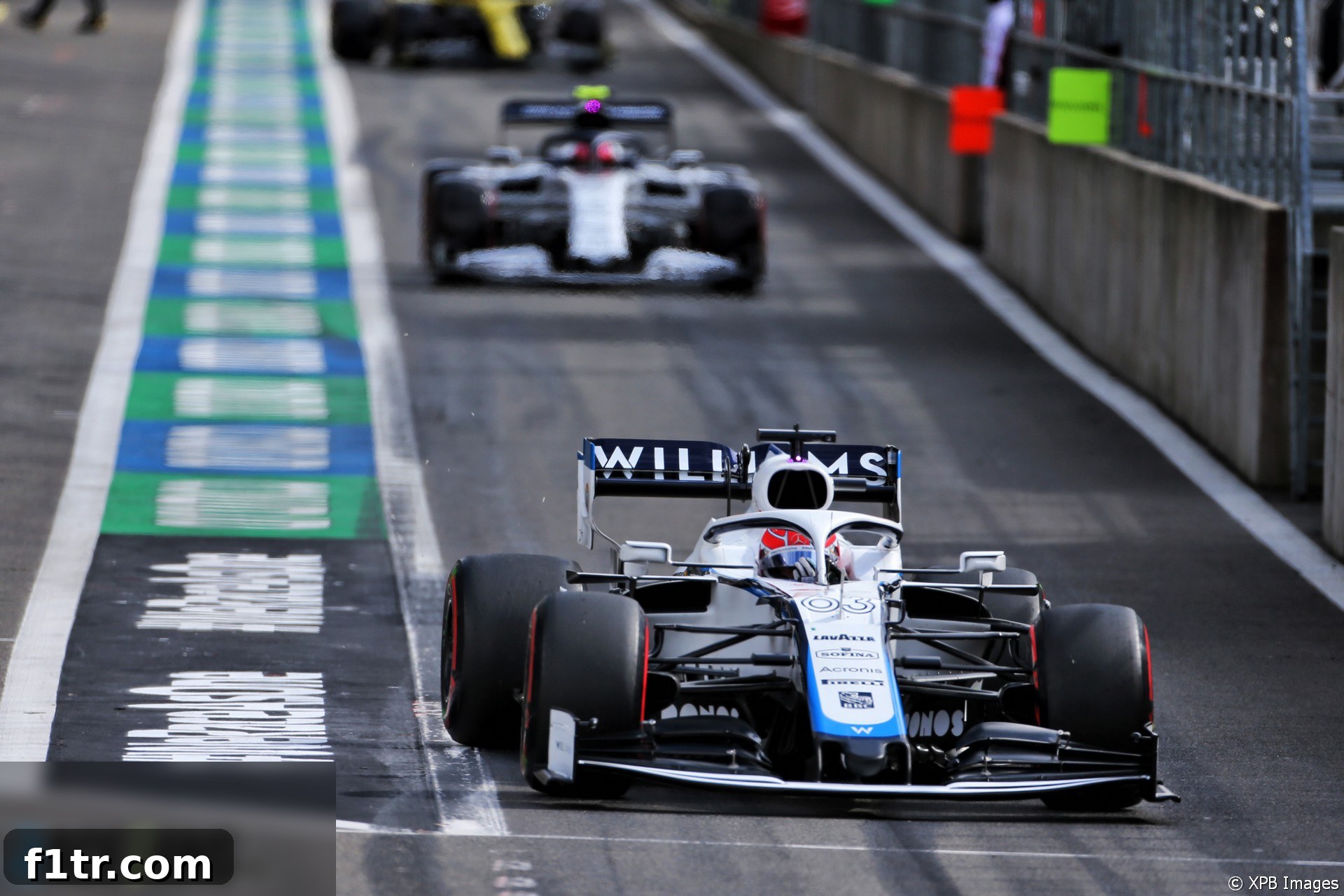
The announcement of Williams Grand Prix Engineering’s sale came within days of all ten Formula 1 teams signing the pivotal 2021-25 Concorde Agreement. This timing was no mere coincidence; it offered eventual bidders for the historic outfit crucial security, guaranteeing the third-oldest team on the grid could not only participate in the F1 World Championship but also enjoy the full financial benefits associated with its long-standing entry. This strategic alignment underscored the enduring value of an established F1 team, even one that had struggled on track in recent years.
Advert | Become a Supporter & go ad-free
Furthermore, Williams held another strategic advantage that sweetened the deal for potential investors. The stewards’ verdict in the contentious Renault versus Racing Point “copycat” design dispute had triggered a renewed determination at the FIA level to preserve the independent team model. This stance aimed to curb widespread ‘photocopy engineering’ and maintain the diversity of constructors within the sport. While the Williams name carries an immense amount of goodwill and heritage, the true crown jewels for any buyer were its fully-fledged racecar construction factory and, crucially, its long-held right to an F1 entry – an invaluable asset in a sport with limited participant slots.
The sale of Williams marked the second major F1 team transaction in as many years, following the acquisition of Force India in August 2018. However, the nature of these two deals contrasted significantly. Racing Point had only acquired the assets of the team formerly fronted by the flamboyant Vijay Mallya. It did not, critically, acquire the operation as a continuous entity or a ‘going concern’. This distinction had profound implications under F1’s complex covenants.
For Racing Point, an asset-only acquisition meant there was no automatic right of entry into the championship. This necessitated an emergency ‘new team process’ orchestrated by Formula 1 and the FIA. As a consequence, various rival teams, including Haas, argued vehemently that Racing Point, effectively a new company, should not be entitled to historical F1 revenues. This created a period of significant uncertainty and legal wrangling, highlighting the risks associated with such a fragmented acquisition model.
In stark contrast to the Force India ‘sale’ – which was messy from its forced administrative start to its hurried conclusion, with legal processes and arbitration hearings still ongoing at the time of the Williams deal – the Williams transaction was executed with remarkable precision and professionalism. The Williams family initiated a structured review process that preceded thorough due diligence. During this meticulous phase, potential bidders were rigorously vetted, eventually leading to a carefully compiled shortlist of five serious contenders.
The ultimate choice fell upon BCE Limited, an entity wholly owned by New York-based Dorilton Capital Management LLC. While mischievous factions within F1 briefly speculated last week that BCE might denote ‘Bernard (Charles) Ecclestone’ and attempted to link F1’s former ringmaster to the sale, these suggestions were swiftly dismissed by insiders and consequently ignored by RaceFans. Deputy team principal Claire Williams later unequivocally ruled out any connection between Ecclestone and the sale, emphasizing the genuine nature of the new ownership.
According to Dorilton’s official website, the private investment fund focuses on acquiring and growing middle-market businesses, typically those with EBITDA (earnings before interest, tax, depreciation, and amortisation) ranging from $5 million to $25 million. Given Dorilton’s established interests in the engineering and manufacturing sectors, Williams Grand Prix Engineering, despite its unique F1 context, presented an obvious and strategically sound fit for their investment portfolio. Their expertise in fostering growth and operational excellence in specialized industrial fields made them an attractive prospect for the Williams family seeking long-term stability.
Advert | Become a RaceFans supporter andgo ad-free
Moreover, the Williams group’s financial position had been significantly strengthened in the period leading up to the sale. Following the previous year’s divestment of a 75% stake in its subsidiary, Williams Advanced Engineering (WAE), the group’s overall debt burden was substantially reduced. Post-WAE sale, Williams Grand Prix Holdings PLC (WGPH) strategically retained 100% of Williams Grand Prix Engineering and a 25% share in WAE, alongside the freehold of its state-of-the-art Grove campus – a portion of which is leased long-term to WAE. Crucially, it also retained the all-important F1 team entry, intrinsically linked to the original company registration (01297497, incorporated February 8th, 1977). This unbroken F1 entry is an immensely valuable asset, entitling the team to a guaranteed share of Formula 1’s multi-billion-dollar annual revenues, providing a stable financial foundation for the new owners.
The transaction was structured to ensure a clean transfer of ownership. Effectively, the core F1 assets, including Williams Grand Prix Engineering and the F1 entry, will be reversed out of WGPH and directly transferred to Dorilton/BCE once the sale is completed and the proceeds distributed to shareholders. This sophisticated arrangement allows the existing holding company, WGPH, to self-liquidate efficiently, paving the way for its de-listing from the Frankfurt Stock Exchange. This elegant solution explains the remarkable speed with which the sale was agreed, reportedly within days of negotiations commencing, rather than the weeks or even months typically associated with such high-profile acquisitions.
The enterprise value of the deal was set at €152 million (£135 million), which included existing debt approximating €35 million (£31.2 million). This left a substantial sum of €112 million (£100 million) for distribution among the shareholders after accounting for transaction costs. Sir Frank Williams, the venerable founder, held the largest stake at 51%. American healthcare entrepreneur Brad Hollinger owned 12%, while former Williams technical director Patrick Head held 8%. Mercedes F1 boss Toto Wolff owned a fraction under 5%, with the remaining balance split between a 21% FSE free float and 3% held in an employee trust. (These percentages have been rounded for clarity.)
In announcing the landmark deal, Claire Williams, then Deputy Team Principal, conveyed her family’s earnest desire to find a buyer who would provide both a secure financial footing for the team and, crucially, respect its unparalleled heritage. She stated, “In Dorilton we know we have found exactly that. People who understand the sport and what it takes to be successful. People who respect the team’s legacy and will do everything to ensure it succeeds in the future. As a family we always put our team first.” This statement underscored the emotional significance of the sale for the Williams family, who sought to ensure the long-term prosperity and integrity of the institution Sir Frank had built.
Despite the transparency surrounding the transaction’s financial structure, a significant element remained shrouded in mystery: the ultimate ownership structure of Dorilton/BCE and the identities of those now behind the takeover of one of Formula 1’s most successful and revered teams have not been divulged publicly. This secrecy immediately fueled speculation and curiosity throughout the motorsport world.
However, Dorilton Capital’s LinkedIn page offered a tantalizing clue, revealing that the wealth fund invests in businesses on behalf of a “single family.” Our sources within the industry further suggested this family is British, adding another layer of intrigue. Persistent inquiries regarding their identity have consistently been met with stonewalling, reinforcing the desire for privacy. Yet, Claire Williams’ comment that the buyers are “people who understand the sport” strongly points to a previous, perhaps personal, link with Formula 1, suggesting that the new owners are not merely financial investors but individuals with a genuine connection and passion for the sport.
Indeed, one of our well-placed sources alluded to specific, previous connections with the Williams family themselves. They informed RaceFans that the investors were singularly interested in acquiring Williams and no other F1 team that might have been on the market at the time. “A targeted purchase,” he described it, further adding that there was a historical link to none other than the team’s legendary founder, Sir Frank Williams. This assertion deepened the mystery and suggested a personal motivation beyond mere financial opportunity.
Intriguingly, Dorilton Capital was advised on this pivotal acquisition by Eden Rock Group, a London-based investment management company. This firm is headed by James Matthews, a prominent figure with a compelling motorsport pedigree. Now 41, Matthews was the 1994 British Formula Renault champion and also competed as an F3 driver (both with Manor Racing). His personal life also brought him into the public eye: in 2017, Matthews married Pippa Middleton, the sister to the Duchess of Cambridge, thereby making him brother-in-law to Prince William, who is second in line to the British throne. Various financial profiles place Matthews squarely in the multi-billionaire bracket, suggesting a significant personal capacity for investment.
The Matthews family’s connection to motor racing extends beyond James himself. His father, David Matthews, Laird of the sprawling 10,000-acre Glen Affric estate in Scotland, is an accomplished ex-saloon car racer. David was once married to Anita Taylor, a celebrated female racing driver of the 1960s and sister to Trevor Taylor, Jim Clark’s F1 teammate at Lotus. Given these deep-rooted connections, it is highly probable that the Matthews and Williams clans’ paths crossed on numerous occasions throughout British motorsport history. Furthermore, James Matthews’ promising racing career in 1994 would almost certainly have placed him on the radar of teams like Williams-Renault, who were constantly scouting for young talent.
The connections don’t stop there. Beyond the involvement of James Matthews, whose family also owns the ultra-luxury Eden Rock Hotel in St. Barts (the namesake of his hedge fund), Dorilton also leveraged the advisory services of Graeme Lowdon. As the former CEO of Manor F1, Lowdon’s professional history directly links him to Matthews through their shared association with the Manor team. Lowdon, who has been linked to various start-up F1 projects since the unfortunate demise of Manor, did not respond to requests for comment regarding his role in the Dorilton acquisition, maintaining the discreet nature of the deal’s architects.
While a RaceFans source did not entirely discount the possibility of Matthews and/or Lowdon forming part of a larger syndicate alongside Dorilton/BCE, there are currently no concrete suggestions that either of their specific families control Dorilton outright. Nevertheless, the prominent presence of two wealthy and deeply entrenched motorsport entrepreneurs in the background opens up an array of intriguing scenarios for Williams’ future, especially when considering the potential, albeit unconfirmed, royal connection through James Matthews’ marriage. This confluence of financial power, motorsport experience, and high-profile associations positions the Williams acquisition as one of the most fascinating F1 stories in recent memory.
The future of Williams Racing now hangs in a tantalizing balance, ripe with possibility. Could Graeme Lowdon, for instance, make a high-profile return to Formula 1 in a senior leadership capacity with Williams under the new ownership? Might John Booth, the founder of Manor and a highly respected figure in the paddock, be brought in to head the team’s operational efforts? Only time will truly tell, just as it will eventually reveal the identity of the private family behind Dorilton Capital – and with it, the identities of the new custodians of Williams, long celebrated as the last truly independent team in Formula 1, now poised for a new chapter in its illustrious history.
Advert | Become a RaceFans supporter andgo ad-free
2020 F1 Season Related Articles
- Grosjean to make F1 test return tomorrow for first time since Bahrain horror crash
- Pictures: Wrecked chassis from Grosjean’s Bahrain fireball crash to go on display
- Bottas vs Rosberg: Hamilton’s Mercedes team mates compared after 78 races each
- F1 revenues fell by $877 million in Covid-struck 2020 season
- Hamilton and Mercedes finally announce new deal for 2021 season
Browse all 2020 F1 season articles