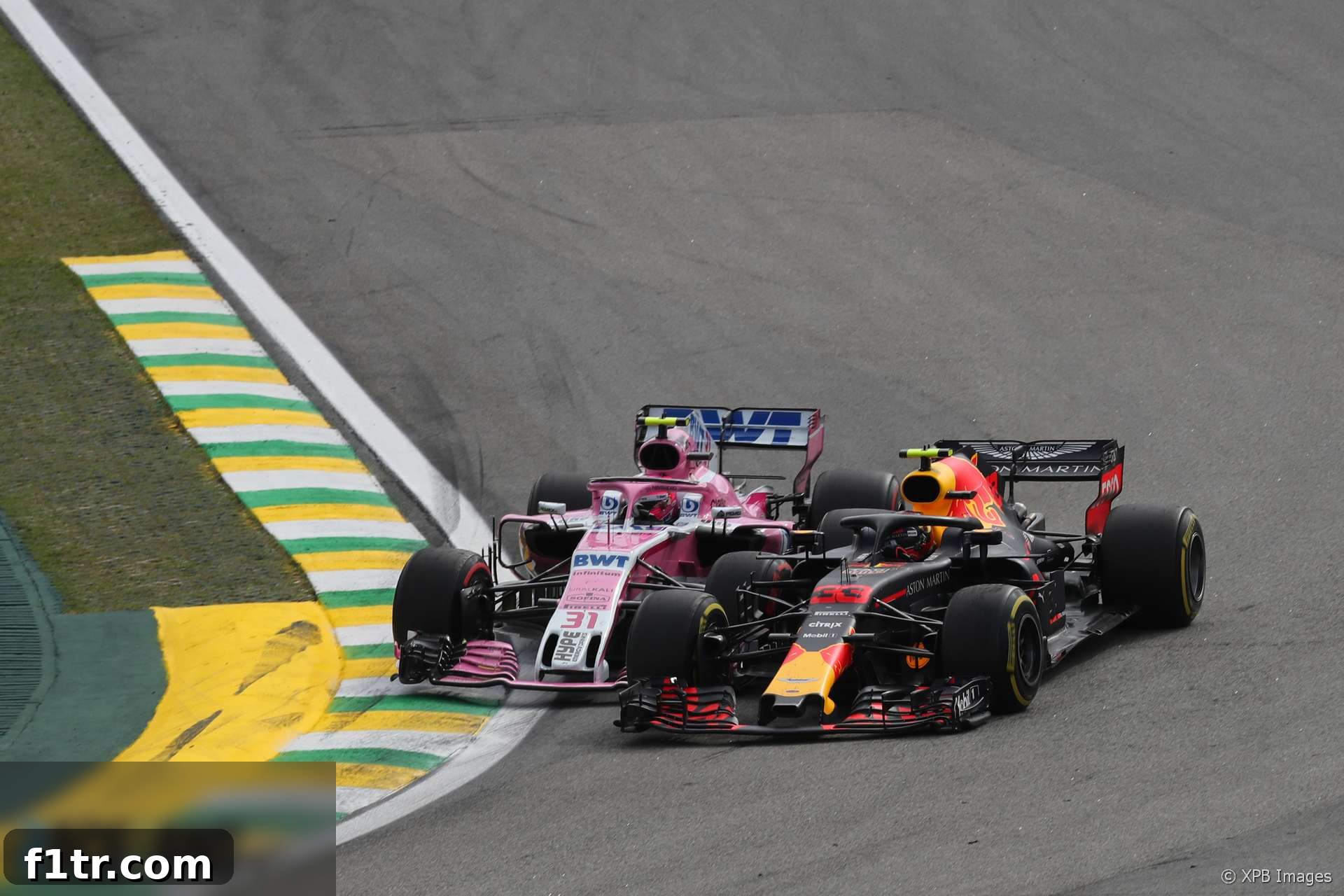
The aftermath of a dramatic Formula 1 Grand Prix often brings forth a cascade of opinions, analyses, and social media buzz, and the 2018 Brazilian Grand Prix was no exception. While the race delivered thrilling on-track action and crowned a Constructors’ Champion, one incident, in particular, sparked widespread debate: the clash between Max Verstappen and Esteban Ocon. Haas team principal Guenther Steiner didn’t hold back, publicly criticizing Esteban Ocon’s controversial attempt to un-lap himself from race leader Max Verstappen. This incident, which ultimately cost Verstappen a likely victory, ignited discussions about racing etiquette, driver judgment, and the fine line between aggression and pointless risk-taking in top-tier motorsport.
Steiner Slams Ocon’s Controversial Un-lapping Attempt at Brazilian GP
Guenther Steiner, known for his forthrightness and candid commentary, expressed strong disapproval of Esteban Ocon’s actions during the Brazilian Grand Prix. Steiner argued vehemently that Ocon’s maneuver to un-lap himself from the leading Red Bull of Max Verstappen served no strategic purpose and was an entirely unnecessary risk given Ocon’s position in the race. His pointed comments highlight a common sentiment within the Formula 1 paddock regarding the responsibilities of drivers who are out of contention for points and battling with race leaders.
“I think there was absolutely no need for Esteban to attempt that maneuver. He had nothing tangible to gain from un-lapping himself at that stage of the race. If he had something significant to gain, I’m not entirely sure how far the people were behind him who were actively fighting with him for position, but he was certainly outside the points-paying positions and quite far back in the pack. From my perspective, there was simply no benefit to be had, and that is my firm opinion on the matter.”
“Then again, perhaps Esteban viewed the situation differently; maybe he genuinely wanted to gain something, or perhaps even put up a fight against Verstappen, but in the grand scheme of the race, there was no logical or strategic need for that. In Formula 1, every decision on track carries immense weight, and this particular one, unfortunately, had significant and unnecessary repercussions for another driver’s race, potentially altering the outcome of the Grand Prix.”
Steiner’s unequivocal stance resonates with many who believe that lapped drivers, while certainly entitled to race and defend their position, should exercise an elevated degree of caution and prioritize the smooth progress of race leaders, especially when they themselves are not in a scoring position. The incident not only denied Max Verstappen a well-deserved victory but also led to a heated and highly publicized confrontation between the two drivers post-race, further intensifying the debate within the Formula 1 community about aggressive driving tactics and the tenets of sportsmanship. This controversial moment will undoubtedly be remembered as a significant flashpoint from the 2018 Formula 1 season, prompting widespread reflections on how drivers manage their race craft and temperaments under the immense pressure of grand prix racing.
Quotes courtesy of Dieter Rencken
Advert | Become a RaceFans supporter andgo ad-free
Social Media Reacts: F1 Paddock and Fans Share Opinions
The vibrant world of social media, particularly platforms like Twitter and Instagram, invariably lights up with fervent discussion after every dramatic Grand Prix, offering a real-time pulse of paddock and fan reactions. The 2018 Brazilian Grand Prix, with its unique blend of on-track drama, strategic intricacies, and post-race controversy, provided ample fodder for discussion, ranging from heartfelt tributes to motorsport legends to intense debates over driver conduct and the consistency of stewarding decisions. Here’s a glimpse at some notable posts that profoundly captured the mood and major talking points from around the F1 circuit following the race weekend.
Saw this amazing painting on the way into the Interlagos track this morning. Painted overnight. A legend. Ayrton Senna will never be forgotten. I was lucky to have worked with him twice at both Williams and Lotus. @ayrtonsenna @braziliangrandprix @InterlagosTrack pic.twitter.com/57uGOvovtx
— Ann Bradshaw (@AnnieBWansford) November 11, 2018
Ann Bradshaw’s poignant and evocative post serves as a powerful reminder of the enduring legacy of Ayrton Senna, a presence that remains especially potent and deeply felt at his beloved home circuit of Interlagos. The discovery of an “amazing painting” created overnight by a dedicated fan beautifully symbolizes the deep respect, profound admiration, and unwavering adoration that Brazilians and motorsport enthusiasts worldwide continue to hold for the triple world champion. Senna’s spirit is always palpable at the Brazilian Grand Prix, a circuit where he delivered some of his most iconic and emotionally charged performances. Bradshaw, having had the distinct privilege of working closely with Senna during his tenures at both Williams and Lotus, adds a deeply personal touch to her tribute, underscoring the profound and lasting impact Senna had on those around him and on the sport as a whole. This tweet beautifully captures the raw, emotional connection Formula 1 has with its rich history and its immortalized heroes, reminding everyone that while new dramas constantly unfold, legends like Ayrton Senna continue to inspire generations of racers and fans alike.
Seen a lot of people complaining @LewisHamilton has been treated too leniently by the stewards of late.
Go back seven years and there were loads of people complaining the stewards were too hard on him:https://t.co/rxNlzU90uK #F1 #BrazilianGP #BrazilGP
— Keith Collantine (@keithcollantine) November 11, 2018
Keith Collantine’s highly insightful observation shrewdly addresses the often-cyclical and frequently contradictory nature of fan perception and criticism, particularly when directed at highly prominent figures like Lewis Hamilton. His tweet highlights a stark and intriguing contrast in how Hamilton has been perceived by fans regarding stewarding decisions over the years. At one point in his illustrious career, a significant portion of the fanbase felt that the stewards were overtly harsh on him, scrutinizing his every move with what was perceived as undue rigor. Fast forward several years to the present, and the narrative has seemingly flipped entirely, with widespread complaints now emerging about him being treated with excessive leniency. This fascinating shift underscores the inherently subjective nature of fan opinion, which is often heavily swayed by current events, recent driver performances, and prevailing narratives. It also sparks a broader and perennial discussion about the consistency, or perceived inconsistency, of stewarding in Formula 1 and whether public perception, intentionally or unintentionally, unduly influences judicial judgments. Collantine’s historical perspective serves as a powerful and timely reminder that fan sentiments are not static but rather evolve significantly over time, and what is considered controversial today might have an inverse parallel in the past, offering a nuanced and more balanced view of the criticisms leveled against a multiple world champion.
Lewis nailed it on the head with what he said to Max. Max had more to loose and should have left room. Esteban had the right to try but should have in a less critical place. Lewis would have left room but still led on the exit. There was enough room for side by side.
— M A X Chilton (@maxchilton) November 11, 2018
Former Formula 1 driver Max Chilton offered a highly seasoned and nuanced perspective on the controversial Ocon-Verstappen incident, meticulously dissecting the blame and thoughtfully suggesting alternative outcomes that could have averted the collision. Chilton’s analysis, deeply informed by his own extensive racing experience at the pinnacle of motorsport, points towards a shared responsibility, emphasizing that both drivers could have handled the situation with greater prudence and foresight. He notes quite pointedly that Max Verstappen, as the race leader with a potential victory well within his grasp and therefore everything to lose, arguably should have exercised more caution and left sufficient room for Ocon to pass safely, even if it meant momentarily yielding a fraction of track. However, Chilton also acknowledges Esteban Ocon’s fundamental right to un-lap himself, while critically stating that the chosen location for the maneuver – a tight, fast corner – was “less critical” or simply inappropriate for such an aggressive move. His hypothetical reference to how Lewis Hamilton, the reigning champion, might have navigated such a scenario – leaving room yet still maintaining the lead on the exit – provides an interesting and high-standard benchmark for exemplary race craft. Chilton’s tweet encapsulates the inherent complexity of racing incidents, where multiple factors and split-second decisions contribute to a clash, and where different drivers might employ varied strategies to avoid contact, thereby offering fans a deeper, driver-centric understanding of the intense on-track drama.
Quote from @LewisHamilton on @Max33Verstappen:
Q: Are you afraid of him next year when he’s fighting you for the title?
LH: No. Why would I be afraid of him?
Q: He attacked another driver after the race…
LH: I haven’t got anything to say about it. It’s nothing to do with me. pic.twitter.com/2KDuBRZjlm— RaceFans (@racefansdotnet) November 12, 2018
In the immediate aftermath of the highly contentious Ocon-Verstappen incident and the regrettable physical altercation that transpired between them post-race, Lewis Hamilton, often regarded as the voice of calm and diplomacy in the paddock, was predictably questioned about his views on Max Verstappen and their rivalry. A tweet from RaceFans impeccably captures Hamilton’s measured and characteristic response when directly asked if he harbored any fear of Verstappen in prospective future title fights, or if he had any comments regarding Verstappen’s controversial post-race behavior. Hamilton’s succinct and confident “No. Why would I be afraid of him?” firmly dismisses any notion of intimidation, projecting an unshakeable confidence in his own abilities and stature within the sport. His subsequent refusal to comment on Verstappen’s actions – “I haven’t got anything to say about it. It’s nothing to do with me” – showcases his strategic and disciplined avoidance of entanglement in another driver’s controversy. This approach is highly characteristic of a multi-time champion who remains singularly focused on his own performance, objectives, and path to success, rather than engaging in potentially distracting mind games or needlessly fueling rivalries outside the confines of the cockpit. Hamilton’s response provided a cool and professional counterpoint to the heated emotions and intense discussions that followed the race, emphasizing the importance of professionalism and individual focus.
- For more official F1 accounts and immediate updates from the paddock, explore the F1 Twitter Directory
Further Motorsport Insights: Team Reports & Historical Highlights
Beyond the immediate on-track drama and the relentless social media chatter, the dynamic world of motorsport offers a continuous and rich stream of insights. These range from meticulously detailed team race reports that provide technical and strategic perspectives, to reflective pieces on significant historical moments, and breaking news from other prominent racing series. The curated links below provide a comprehensive and multifaceted look at various aspects of the Brazilian Grand Prix weekend and broader motorsport narratives, offering dedicated fans deeper analysis, diverse perspectives, and a wealth of information to enhance their understanding and appreciation of the sport.
Advert | Become a Supporter & go ad-free
Haas F1 Team Race Report: Brazilian Grand Prix Challenges
The Haas F1 Team’s official race report provides a candid and transparent assessment of their performance at Interlagos, a challenging weekend where the team openly acknowledged facing significant aerodynamic difficulties. Despite a perceived inherent lack of downforce from their chassis, the team highlighted their impressive ability to consistently maintain competitive lap times throughout the race, attributing this resilience to an “amazing job on the setup.” This particular quote powerfully reflects the constant and arduous battle in Formula 1 to optimize car performance, even when confronted with inherent design limitations or the unique track-specific struggles of a given circuit. Their ongoing efforts to extract maximum performance from their VF-18 chassis, particularly on high-downforce circuits, profoundly underscored the resilience, ingenuity, and advanced engineering prowess required to compete at the absolute pinnacle of global motorsport.
Mercedes-AMG F1 Celebrates Dominant 2018 Constructors’ Title Win
Mercedes’ official report jubilantly announced their definitive securing of the coveted 2018 Constructors’ Championship, a resounding testament to their sustained dominance in the technologically advanced hybrid era of Formula 1. While Lewis Hamilton had already sealed the Drivers’ Championship earlier in the season, the team title solidified their undeniable reign as the sport’s powerhouse. Valtteri Bottas’s comments embedded within the report offer a crucial glimpse into the intricate complexities of tire management during the race: “In the first stint, I was struggling with overheating the tyres; in the second stint, I was struggling with blistering on the mediums, so we had to stop a second time.” This detailed and honest feedback from Bottas profoundly underscores the intricate relationship between car setup, precise driver input, and the challenging characteristics of the Pirelli tires, which together form a crucial factor often dictating race strategy, performance, and ultimately, the outcome in modern Formula 1.
Red Bull Racing: Brazilian Grand Prix Race Reaction and Driver Dynamics
Red Bull Racing’s post-race reaction provides valuable insights into the high-octane battles that fiercely unfolded on track, particularly those involving their star driver, Max Verstappen. Despite the unfortunate and widely discussed incident with Esteban Ocon, the team highlighted other intense on-track moments that showcased pure racing prowess. One notable quote vividly reflects a close encounter: “The battle with Seb was cool, I think we maybe touched once or twice, but I’ve always respected him and the way he races. We’ve had some on-track battles before, at times it gets slightly heated, but I believe we know where each other’s limits are.” This powerful statement speaks volumes about the fierce yet underlying mutual respect that exists among the top drivers in Formula 1, even amidst aggressive wheel-to-wheel racing. It profoundly emphasizes the fine line between competitive spirit and overstepping boundaries, a dynamic that consistently keeps Formula 1 exhilarating and utterly unpredictable for fans worldwide.
Massa, Hamilton Look Back 10 Years to Brazil’s Unforgettable Title Thriller
A poignant look back at the iconic 2008 Brazilian Grand Prix, where the Formula 1 Drivers’ Championship was decided in arguably the most dramatic and unforgettable fashion on the very last lap, provides a timeless and captivating piece of motorsport history. This insightful article features heartfelt reflections from both Felipe Massa and Lewis Hamilton, who were at the absolute heart of that unforgettable title showdown. Massa’s candid quote, recalling his earlier season misfortunes – “In Singapore I didn’t get any points, finished 13th. In Hungary I was leading and my engine broke just two laps before the checkered flag. So at Interlagos it wasn’t really that likely I could be champion in the end” – adds a profound layer of poignant context. It vividly underscores the cruel and often unpredictable twists of fate that are inherent in F1, and how cumulative setbacks over a season can irrevocably shape a championship battle, even leading to a situation where a driver winning his home race still agonizingly falls short of the ultimate prize in the most heartbreaking way imaginable. This retrospective piece is an absolute must-read for all Formula 1 fans who truly appreciate the sport’s rich, emotional, and often dramatic narrative.
IndyCar’s Paul Tracy Addresses Controversy: NBC Job Fate Uncertain After Social Media Incident
Shifting focus to another prominent global motorsport series, this IndyStar article delves into a significant controversy surrounding former IndyCar driver and renowned television commentator Paul Tracy. Tracy faced serious accusations regarding a racially charged Facebook post, leading to considerable uncertainty and speculation about his future employment with NBC. His defense, where he initially claimed to be “the victim of fake social media accounts” and subsequently stated his “original account had been hacked,” highlights the growing and formidable challenges public figures face with online impersonation and the rapid, often uncontrollable spread of misinformation across digital platforms. This incident serves as a stark and sobering reminder of the significant and far-reaching impact social media can have on both personal and professional reputations in the public eye, extending its influence well beyond the immediate F1 paddock to encompass the broader and interconnected motorsport community.
We always endeavour to credit original sources and provide accurate information. If you have a tip for a link to feature in the next RaceFans round-up, please do not hesitate to send it in here:
- Contact RaceFans
Advert | Become a RaceFans supporter andgo ad-free
Comment of the Day: Praising Honda’s Remarkable F1 Engine Progress
Amidst the varied discussions, intense debates, and intricate post-race analyses that characterize every Formula 1 weekend, one particular topic consistently generates significant enthusiasm and keen interest: engine performance and ongoing development. Today’s featured comment brilliantly shines a spotlight on the significant and increasingly remarkable strides made by Honda, particularly impressing astute observers with their evident and sustained performance gains in Formula 1.
“What was most impressive is that I think they made the third sector as fast as the Mercedes customers, (even marginally better than Force India). This achievement places them only behind the Ferrari-powered teams, and demonstrably way ahead of Renault and McLaren. That is unequivocally an engine performance sector, highlighting sheer power and efficiency.”
“In qualifying, they clearly possess a much better engine by now compared to Renault, demonstrating superior peak power. And in race trim, they are probably even further ahead in terms of consistent performance and driveability, provided they can reliably run the engine without encountering any significant reliability issues or compromises. This marks a truly impressive comeback.”
Manuel Falcao (@Mfalcao)
Manuel Falcao’s highly insightful analysis thoughtfully highlights Honda’s remarkable and undeniable progress, a development which extends its positive impact beyond just Red Bull Racing to the broader Formula 1 landscape. His keen observation that Honda-powered cars are now consistently matching or even surpassing Mercedes customer teams like Force India in power-sensitive sectors of the circuit, such as the crucial third sector, is a very strong and tangible indicator of their significantly improved power unit output and efficiency. This elevated performance firmly places them behind only the dominant Ferrari-powered outfits, marking an extraordinary leap from their previous struggles and often-criticized performance. The comment powerfully underscores the relentless and intensely competitive engine development race that defines modern Formula 1, where every fractional tenth of a second in power delivery or fuel efficiency can ultimately make a crucial difference in the outcome of a race. Honda’s palpable ascendance signals a potential and exciting shift in the engine pecking order and fuels considerable optimism for their future collaborations, especially with Red Bull, strongly suggesting that they are rapidly and effectively closing the gap to the established engine manufacturers in both raw qualifying pace and consistent race-day reliability, assuming their remaining technical challenges are comprehensively overcome. This progress stands as a profound testament to the persistent engineering efforts, substantial investment, and unwavering determination made by the revered Japanese manufacturer.
Happy Birthday to Fellow Motorsport Enthusiasts!
A special shout-out and warmest wishes to all members of our dedicated RaceFans community who are celebrating their birthdays today. May your day be filled with immense joy, delightful celebrations, and perhaps some thrilling new motorsport memories to cherish!
Happy birthday to Christian Briddon, A-Safieldin, and Khuzai!
If you’d like to receive a well-deserved birthday shout-out on RaceFans in the future, simply let us know your special day via our comprehensive contact form or by conveniently adding your details to our dedicated list here. We absolutely love celebrating these special moments with our cherished readers and loyal community members!
On This Day in F1 History: Senna’s Final Turbo Era Pole Position
Delving into the esteemed annals of Formula 1 history, today marks a truly significant and memorable milestone:
- Thirty years ago to the very day, the legendary Ayrton Senna, showcasing his unparalleled qualifying prowess, secured a commanding pole position for McLaren at the final race of F1’s iconic and power-laden ‘turbo era’ at the challenging Adelaide Street Circuit. This remarkable achievement by Senna at the 1988 Australian Grand Prix not only profoundly underscored his consistent brilliance and formidable speed over a single lap but also symbolically marked the end of an exhilarating, high-powered, and technologically distinct chapter in Formula 1 engine regulations, ultimately paving the way for the revered naturally aspirated V10 era. It stands as a powerful and nostalgic reminder of a truly golden age of Formula 1 and Senna’s enduring and unparalleled brilliance behind the wheel.