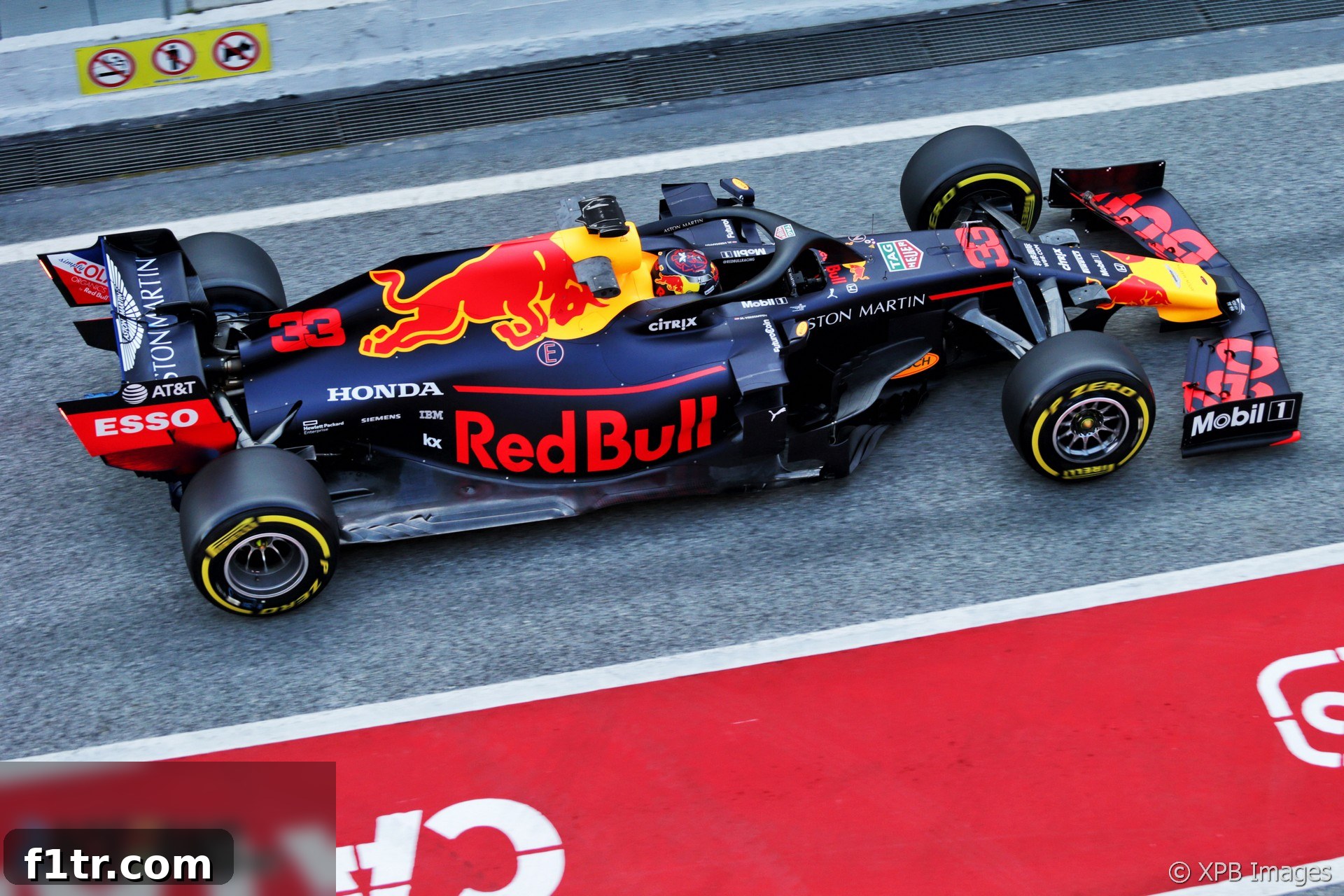
In a pivotal moment for their Formula 1 aspirations, Red Bull Racing embarked on the 2019 season with a new power unit supplier: Honda. This highly anticipated alliance marked a significant shift for the Milton Keynes-based team, moving away from a long-standing but often turbulent relationship with Renault. Christian Horner, Red Bull’s revered team principal, wasted no time in expressing his profound optimism, highlighting a dramatic improvement in the integration of the new Honda power unit compared to its predecessors. This fundamental design advantage, he revealed, was evident from the very first test session at the Circuit de Catalunya.
Red Bull’s Honda Era: A Seamless Integration Story
Speaking to media during the initial pre-season testing, Horner effusively described the new Honda power unit as an upgrade across “all aspects.” However, it was the physical integration of the engine into the RB15 chassis that truly captivated him. “Ultimately, power is a dominating factor,” Horner conceded, acknowledging the eternal quest for horsepower in Formula 1. Yet, he emphasized, “I have to say the installation of this engine into the chassis is probably the best one we’ve ever had.”
This wasn’t just a casual observation; it was a profound engineering compliment. Horner elaborated on the meticulous design work: “When you look at how neatly integrated it is into the chassis it really is a thing of beauty.” He likened the precisely packaged power unit to a finely crafted timepiece, stating, “I think the whole engineering team collectively with Honda have done a great job in terms of installing what looks like a Swiss clock into the back of our chassis.”
The Significance of Optimal Power Unit Integration
The aesthetic appeal Horner noted is not merely superficial; it carries substantial performance implications in the hyper-competitive world of Formula 1. A well-integrated power unit translates directly into aerodynamic efficiency, a cornerstone of Red Bull’s design philosophy. A more compact and streamlined engine package allows for tighter bodywork around the rear of the car, reducing drag and optimizing airflow over critical aerodynamic surfaces such as the diffuser and rear wing. This enhanced aerodynamic performance can yield significant gains in lap time, particularly on high-speed circuits.
Furthermore, superior integration can positively impact the car’s weight distribution and center of gravity. A lower and more centralized mass enhances handling characteristics, allowing for more agile changes of direction and improved traction. Cooling efficiency is another vital aspect; a well-installed engine package allows for more optimized radiator placement and ducting, preventing overheating without compromising the aerodynamic profile. This holistic approach to design and integration underscores the depth of the collaboration between Red Bull’s renowned chassis engineers and Honda’s power unit specialists, setting a promising precedent for the partnership’s future.
A True Partnership: Beyond Customer-Supplier Dynamics
Beyond the technical prowess, Horner underscored a fundamental shift in the nature of Red Bull’s relationship with its engine supplier. He proudly characterized the alliance with Honda as a “true partnership, as opposed to a customer-supplier relationship.” This distinction is crucial in Formula 1, where the level of technical support and collaborative development can significantly influence a team’s competitiveness.
Under a traditional customer arrangement, teams often receive a standard engine package with limited input on development priorities or specific integration requirements. However, a true partnership implies a symbiotic relationship, where both parties work hand-in-hand, sharing data, feedback, and development goals. This collaborative model allows Honda to tailor its power unit to Red Bull’s chassis philosophy and operational needs, and conversely, enables Red Bull’s chassis design to maximize the potential of Honda’s engine.
Unprecedented Levels of Support and Confidence
Horner highlighted tangible evidence of this elevated partnership, citing an unprecedented level of support from Honda. “It’s the first time in 12 years that our factory’s had four complete engines. That’s not happened before,” he revealed. This statement, while seemingly simple, speaks volumes about the commitment and resources Honda dedicated to Red Bull. Having access to more complete engines facilitates extensive dyno testing, allows for more aggressive development cycles, and provides crucial spares, ensuring operational flexibility throughout a demanding season. It eliminates the constraints often faced by customer teams who might have to manage fewer engine units and stricter usage policies.
This level of dedication naturally instilled immense confidence within the Red Bull camp. The decision to switch to Honda wasn’t made lightly, especially after witnessing the Japanese manufacturer’s progress with Scuderia Toro Rosso, Red Bull’s sister team, in the preceding season. “We already saw from Toro Rosso last year that great progress was made,” Horner affirmed. “And of course, our decision was based on what we could see and measure. And I have to say so far we’ve been very impressed with everything that we’ve seen.” The successful “testbed” role of Toro Rosso provided Red Bull with invaluable data and assurance regarding Honda’s potential for rapid development and reliability improvements.
Strategic Acceptance of Engine Penalties for Development
One of the more pragmatic aspects of this partnership, and a testament to Red Bull’s long-term vision, was the team’s willingness to strategically accept engine penalties during the season. In modern Formula 1, engine components are limited, and exceeding these allowances results in grid penalties – typically dropping positions on the starting grid. While usually detrimental, Red Bull and Honda viewed these penalties as a potential tool to accelerate development.
“You saw in previous years that you pick the penalties at the right venues,” Horner explained. The strategy involves introducing upgraded power unit components, even if it means exceeding the allocated quota, at circuits where overtaking is comparatively easier, or where the car’s inherent performance allows for a quicker recovery through the field. This calculated risk prioritizes the long-term performance gains from new specifications over short-term grid position. “If it’s assisting the development of the power unit then strategically you can lessen the pain,” he added.
The Max Verstappen Precedent
Horner cited a specific example involving star driver Max Verstappen to illustrate this strategy’s effectiveness. “I think in Russia last year Max was already back in the top five by lap six.” The Sochi Autodrom, with its long straights and specific layout, offers more overtaking opportunities than some tighter, more technical circuits. By taking a penalty there, Red Bull and Verstappen were able to demonstrate that even starting from the back of the grid, a competitive package could fight its way back into contention, validating the strategic approach to engine development and penalty management.
The Ever-Evolving F1 Landscape and Red Bull’s Ambition
Despite the palpable enthusiasm for Honda’s progress, Horner maintained a pragmatic awareness of Formula 1’s relentless development cycle. “I think Honda have had a good winter so far and definitely they are reducing that gap significantly but of course what you don’t know as you go through the winter is what have the others done,” he cautioned. The top engine manufacturers – Mercedes and Ferrari – are formidable competitors, constantly pushing the boundaries of performance. “If they found another 50 kilowatts then we’ve got a big issue,” Horner quipped, highlighting the continuous arms race in engine development.
However, this healthy dose of realism did not diminish Red Bull’s overall positive outlook. “But we’ve been very impressed with the approach of Honda and the progress that they’ve made,” Horner reiterated. For Red Bull, the Honda partnership represents more than just a power unit change; it is a critical component in their broader strategy for championship success. “For us it’s a vital piece of the jigsaw in order to get us into a competitive position not just for this year but next year and potentially beyond.” This statement encapsulates Red Bull’s long-term vision, positioning the Honda alliance as a cornerstone for sustained competitiveness and future title challenges.
The 2019 season marked the beginning of an exciting chapter for Red Bull Racing and Honda, driven by a shared ambition and a commitment to collaborative engineering excellence. The seamless integration, true partnership ethos, and strategic development approach outlined by Christian Horner laid a strong foundation, promising an era of fierce competition and innovation in Formula 1.
2019 F1 season
- Crying in the Melbourne car park at 2019 grand prix was my career low – Ocon
- McLaren Racing reports reduced £71 million loss in 2019
- Kvyat: Hockenheim podium last year was “my biggest achievement” so far
- How the FIA’s new encrypted fuel flow meter targets Ferrari’s suspected ‘aliasing’ trick
- “He smashed my office door”: 23 must-see moments from ‘Drive to Survive’ season two
Browse all 2019 F1 season articles