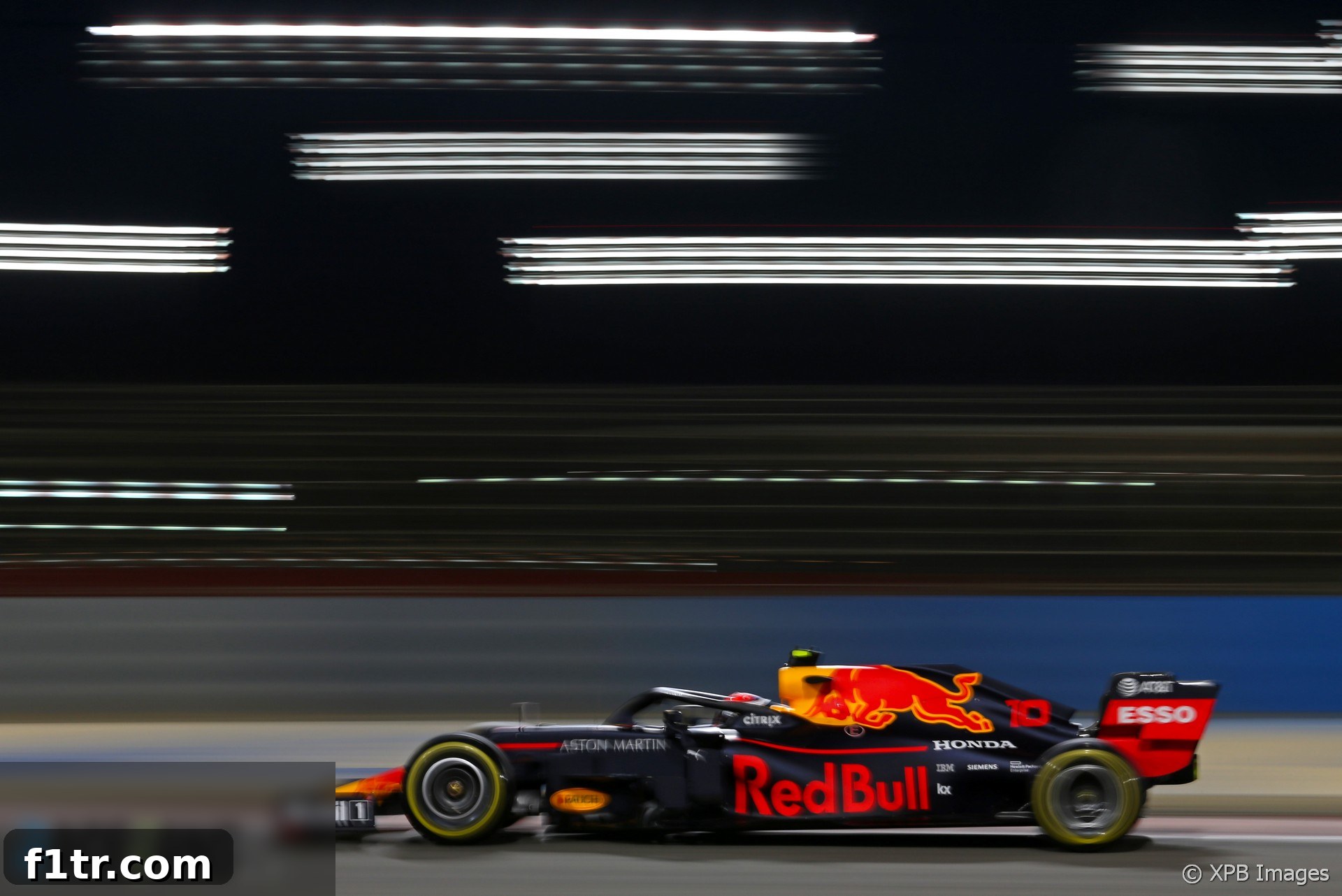
The highly anticipated 2019 Formula 1 season brought with it a significant change for Pierre Gasly, who made the formidable leap from Toro Rosso to the senior Red Bull Racing team. However, the initial races painted a challenging picture for the young Frenchman, particularly evident during the Bahrain Grand Prix qualifying session. Gasly candidly admitted his discomfort with the unpredictable handling of his Red Bull RB15, a struggle that starkly contrasted with his teammate Max Verstappen’s apparent ease and pace. This difficulty ultimately saw Gasly miss out on a coveted spot in Q3, underscoring the early season hurdles he faced.
From the moment the cars hit the track in Bahrain, Gasly found himself battling an elusive rear-end balance. This critical aspect of car setup dictates a driver’s confidence in pushing the limits, especially through high-speed corners. Gasly articulated his frustration, explaining that the car’s rear would often snap without warning, making it nearly impossible to predict its behavior and extract maximum performance. Such unpredictability is a nightmare for any F1 driver, as it erodes confidence and prevents consistent, aggressive driving necessary for competitive lap times. While Verstappen seemed to find a rhythm and push the car to its limits, Gasly was left searching for answers, trying to understand how much he could lean on the car before it became unruly.
The gap between Gasly and Verstappen was a telling indicator of the challenges. While Verstappen comfortably secured a top-five starting position, Gasly languished further down the grid, eventually qualifying 13th. The margins in Formula 1 are incredibly fine, and Gasly’s Q3 miss was by a mere six-hundredths of a second. This tiny fraction of time highlighted the fine line between success and disappointment, and for Gasly, it was a result of not being able to string together a clean, confident lap. The constant battle with wheelspin and the car’s general unpredictability meant he couldn’t “put everything together” when it mattered most. This not only affected his qualifying result but also set a daunting tone for the race ahead, starting from a less advantageous grid slot.
Delving deeper into Gasly’s struggle, it became clear that the issue wasn’t a lack of effort or talent but a fundamental mismatch between his driving style and the car’s characteristics. He described the car’s behavior as an enigma: “Sometimes I turn, nothing happens, next moment I will turn, I will lose the rear. It’s just really unpredictable at the moment.” This inconsistent response makes it impossible for a driver to build a mental map of the car’s limits, leading to hesitations and errors. The engineering team at Red Bull had reportedly tried numerous setup changes throughout the Bahrain weekend, but none provided the breakthrough Gasly desperately needed to feel more at one with the RB15. The search for a “suitable” setup that allowed him to drive with the aggression and precision required at this level continued to be a primary focus.
The contrast with his previous season at Toro Rosso was particularly poignant for Gasly. In 2018, driving for Red Bull’s sister team, he had delivered a standout performance in Bahrain, securing a superb fourth place – his best result of that season. He remembered feeling “like I could do what I wanted with the car” that year, a stark difference from his current predicament. This historical context underscored that the issue wasn’t the circuit itself or Gasly’s capability on it, but rather the specific characteristics of the Red Bull chassis and its interaction with his driving preferences. Moving into a top team often means adapting to a new car philosophy, and for Gasly, this adaptation proved more complex than anticipated in the early stages of 2019.
Understanding the F1 Car Handling Dynamics
In Formula 1, the handling characteristics of a car are paramount to a driver’s performance. An “unpredictable” car, as Gasly described, is one that does not respond consistently to driver inputs. This can manifest as sudden oversteer (the rear losing grip), understeer (the front failing to turn into a corner), or a general lack of linearity in its responses. The rear-end balance, in particular, is crucial. A stable rear allows a driver to carry more speed into a corner, apply throttle earlier, and extract maximum traction on exit. When the rear is unstable, drivers are forced to be more cautious, sacrificing corner entry speed and often struggling with power application due to wheelspin. This loss of confidence translates directly into slower lap times and a frustrating experience.
The differences in how drivers perceive and adapt to car handling are also a significant factor. Max Verstappen, known for his aggressive style and ability to drive around car imperfections, appeared to be more at ease with the RB15’s characteristics. Some drivers prefer a car with a very strong front end, allowing them to ‘point and shoot,’ while others prefer a more stable, neutral balance. It’s possible that the initial setup direction of the RB15, or its inherent aerodynamic and mechanical traits, leaned towards a setup that better suited Verstappen’s preferences, leaving Gasly struggling to find his comfort zone. This highlights the intricate challenge for teams to develop a car that caters to both drivers, or for drivers to adapt quickly to a potentially alien setup.
The Pressure Cooker of Red Bull Racing
Joining Red Bull Racing comes with immense pressure. The team consistently fights for victories and championships, and drivers are expected to perform at the highest level from day one. For Gasly, stepping into the shoes of Daniel Ricciardo, who had been a consistent front-runner, added an extra layer of scrutiny. The early struggles with car handling and the visible performance gap to Verstappen intensified this pressure, both internally and from the demanding Formula 1 media and fanbase. The mental toll of driving an unpredictable car, coupled with the need to justify his place in a top team, can be immense. Gasly’s candid comments about the car not allowing him to drive “how I want” speak volumes about his frustration and the psychological burden of his situation.
The engineering challenge for Red Bull was equally significant. Identifying the root cause of Gasly’s handling complaints and implementing effective solutions is a complex task. It involves meticulous data analysis, simulator work, and a precise understanding of driver feedback. Aerodynamic nuances, suspension geometry, differential settings, and tire management all play a role in a car’s balance. Finding the right combination of adjustments to make the RB15 more predictable and “suitable” for Gasly was critical, not just for his individual performance but for Red Bull’s overall campaign in the Constructors’ Championship. Every point counts, and having both drivers performing at their peak is essential for challenging rivals like Mercedes and Ferrari.
Looking Ahead: The Road to Adaptation and Improvement
Despite the early setbacks, Gasly’s determination to overcome these challenges remained evident. His comments about needing “a bit more time and look with the engineers what we can do to make it a bit more consistent to drive so at least I can predict what’s going to happen” emphasized his proactive approach. The process of adapting to a new car, especially one with unique handling characteristics, is often a journey of continuous refinement. This involves countless hours in the simulator, close collaboration with engineers to understand telemetry data, and incremental changes to the car’s setup during free practice sessions. Success often hinges on a driver’s ability to communicate precisely what they are feeling in the car and the engineers’ capacity to translate that feedback into effective solutions.
The 2019 Formula 1 season was shaping up to be a fiercely competitive one, with Mercedes, Ferrari, and Red Bull all vying for supremacy. For Red Bull, having two drivers capable of challenging at the front was crucial for maximizing their points tally. Gasly’s integration and performance were therefore not just personal goals but vital for the team’s aspirations. The Bahrain Grand Prix served as an early wake-up call, highlighting the urgent need for Gasly and his engineering team to unlock the car’s potential for him. The path forward involved patience, perseverance, and a meticulous approach to fine-tuning the RB15 to match Gasly’s preferences, ultimately aiming to transform an unpredictable beast into a consistent, confidence-inspiring machine.
In conclusion, Pierre Gasly’s struggles with the unpredictable handling of his Red Bull RB15 during the 2019 Bahrain Grand Prix qualifying underscored the significant challenge of transitioning to a top F1 team. His inability to find confidence in the car’s rear-end balance, a stark contrast to Max Verstappen’s performance, highlighted the critical importance of driver-car synergy. While the early season presented formidable obstacles for Gasly, his commitment to working with the Red Bull engineers offered a glimmer of hope. The journey for Gasly to tame the RB15 and unlock his full potential within the Red Bull squad was just beginning, and the world of Formula 1 watched keenly to see how this promising talent would overcome adversity.