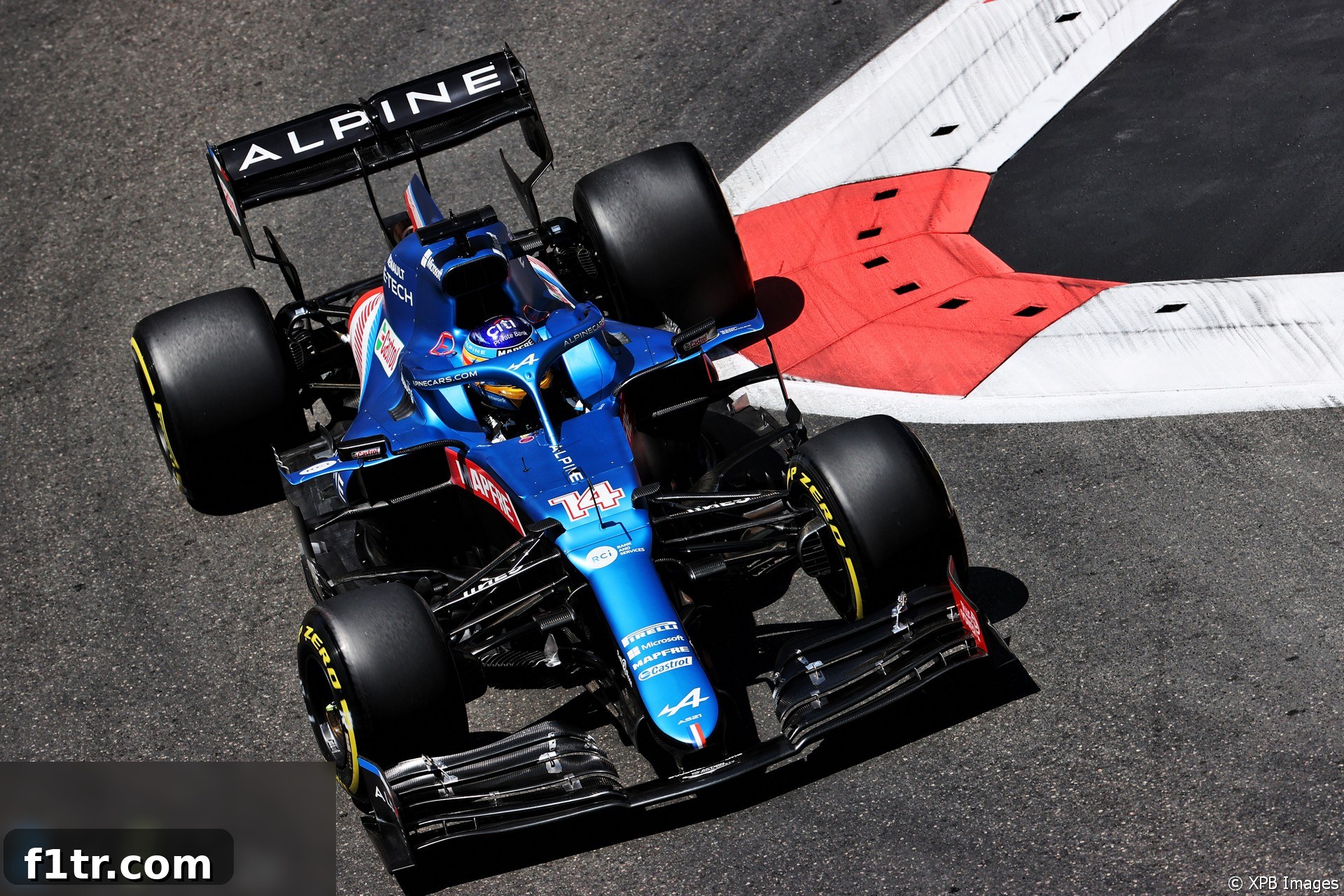
Fernando Alonso Calls for Urgent Review of F1 Qualifying Rules After Repeat Crash Incidents
Recent Formula 1 qualifying sessions have sparked significant debate, with two-time world champion Fernando Alonso leading calls for an urgent re-evaluation of the sport’s rules regarding incidents in crucial moments. The Alpine driver’s frustration reached a boiling point after successive weekends saw pole position contests marred by crashes, preventing many competitors from completing their final, decisive laps and raising critical questions about fairness and sporting integrity within the pinnacle of motorsport.
The controversy first flared at the prestigious Monaco Grand Prix and was dramatically replayed at the Azerbaijan Grand Prix, highlighting a systemic issue that F1 must address to maintain the thrilling spectacle and competitive essence of its qualifying format. As the sport continues to evolve, the impact of these incidents on both drivers and fans demands a comprehensive discussion and potential rule adjustments.
The Recurring Issue: Crashes Deciding Pole Position
The dramatic conclusion to the Azerbaijan Grand Prix qualifying session in Baku served as a stark reminder of a burgeoning problem that first gained prominence at the preceding Monaco Grand Prix. In Baku, a frantic Q3 saw multiple drivers unable to complete their final flying laps due to crashes involving their rivals. This scenario directly mirrored events in Monaco, where Ferrari’s Charles Leclerc secured pole position after crashing his own car on his final attempt, effectively red-flagging the session and denying his competitors a final chance to beat his provisional time.
Monaco’s Precedent: Leclerc’s Controversial Pole
The 2021 Monaco Grand Prix qualifying ended in contentious circumstances. Charles Leclerc, having set a blistering provisional pole lap, pushed hard on his final run but ultimately crashed his Ferrari SF21 at the swimming pool chicane. The subsequent red flag brought an immediate halt to the session, meaning no other driver could improve their times. While Leclerc legitimately held the fastest lap at that point, the incident prevented rivals like Max Verstappen from completing their flying laps, leaving many to question the fairness of a system where a driver could secure pole by crashing their car.
This incident ignited immediate discussion among teams, drivers, and fans. The essence of qualifying is to determine the fastest driver purely on pace, and the feeling that a crash could inadvertently aid a driver in securing pole position ran contrary to the spirit of pure competition. Leclerc himself expressed concern about the situation, acknowledging the problematic nature of how his pole was secured, even if it was unintentional.
Azerbaijan’s Echo: Multiple Incidents Thwart Final Efforts
Just two weeks later, the Azerbaijan Grand Prix qualifying session presented an even more chaotic and frustrating repeat. Q3 in Baku saw a series of incidents, notably crashes involving Yuki Tsunoda and Carlos Sainz in the dying moments of the session. These successive red flags meant that a significant portion of the Q3 field, including Fernando Alonso, were unable to complete their crucial final laps on fresh soft tyres. For many, this was the moment they hoped to unleash their car’s maximum potential, but fate intervened.
Alonso himself was one of eight drivers whose ultimate efforts were thwarted. The anticipation building up to the final runs in Q3, often considered the most thrilling part of a Grand Prix weekend, evaporated instantly. This pattern of incidents dictating the final grid positions, rather than pure driving prowess and speed, underscored the urgent need for a review. The frustration was palpable, not just for the drivers in their cockpits but also for the millions of viewers hoping to witness an unhindered battle for pole.
Alonso’s Stance: A Resounding Call for Fairness and Accountability
Fernando Alonso, a seasoned veteran with a deep-seated passion for competitive racing, voiced strong dissatisfaction with the current regulations. His primary concern revolves around the perceived lack of accountability for drivers who cause red or yellow flag incidents during the most critical phase of qualifying. Alonso’s outspoken criticism highlights a growing sentiment among many within the Formula 1 paddock.
“No Price to Pay Tomorrow”: The Perceived Loophole
Alonso’s poignant observation, “there is no price to pay tomorrow,” cuts to the heart of the issue. Under the current rules, a driver who causes a red flag incident in qualifying typically faces no direct sporting penalty for that incident itself, beyond potentially damaging their car. They are still allowed to start the race from the grid position they secured with their fastest lap prior to the crash. This effectively means a driver can push to the absolute limit, knowing that even if they make a mistake and crash, their previously set time remains valid and their grid slot is preserved.
The two-time world champion emphasized that while all drivers are aware of this rule before the weekend begins, its practical application creates an unfair dynamic. It allows those who err to retain a competitive advantage over others who, through no fault of their own, are prevented from completing their final, potentially faster laps. The absence of a direct sporting penalty for causing a session-ending incident is what Alonso and others find most problematic.
The Unfair Advantage for Others
The core of Alonso’s argument is the inherent unfairness meted out to drivers who do not make a mistake. “That’s a little bit unfair for the other people that didn’t make a mistake,” he stated. When a crash leads to a red flag, all other drivers on track must abort their laps. For those who were on course to improve their times, or even challenge for pole, their opportunity is instantly nullified. This effectively punishes cautious or incident-free driving by removing the chance to demonstrate superior pace.
The current framework inadvertently encourages a high-risk, high-reward strategy where a well-timed crash, even if unintentional, can solidify a driver’s position while simultaneously hindering rivals. This goes against the fundamental principle of fair competition, where pure speed and execution should be the sole determinants of grid order. Alonso’s call is for a system that more equitably weighs both performance and responsibility.
The Fan Experience and Sporting Integrity: Lost Spectacle
Beyond the immediate frustration of the drivers, Fernando Alonso also highlighted the significant negative impact these incidents have on the viewing experience for Formula 1 fans globally. Qualifying, particularly the Q3 segment, is meticulously designed to be a thrilling crescendo of speed, precision, and raw talent, with drivers extracting every ounce of performance from their cars on fresh tyres. When this spectacle is repeatedly curtailed by crashes, the sport itself suffers.
The Disappearance of the “Real Battle”
Alonso articulated the collective disappointment, stating, “I think we didn’t enjoy qualifying today from inside the cars and probably even from the outside because you are always hoping to see the real battle on the last couple of new sets of tyres in Q3 when the gloves are off and you want to see the action and you always finish with a strange [end].” He perfectly encapsulates the anticipation that builds during Q3: the strategic tyre choices, the rapid-fire lap improvements, and the ultimate duel for pole position between the fastest drivers.
When sessions conclude under red flags due to accidents, that climactic “real battle” never materializes. Fans are left with an anticlimactic and “strange end” rather than the thrilling display of driving excellence they tuned in to witness. This diminishes the entertainment value and can leave a lingering sense of unfulfillment, detracting from the overall appeal of a Grand Prix weekend. Formula 1 thrives on drama, but it should be the drama of competition, not of procedural shortcomings.
Eroding Trust in Fair Competition
Repeated incidents that prematurely end qualifying sessions and, in some cases, inadvertently secure pole positions, risk eroding public trust in the fairness and integrity of the competition. If pole position can be influenced by a driver’s crash rather than solely by their ultimate pace, it introduces an element of luck or even strategic ambiguity that is detrimental to the sport’s credibility. Fans want to believe that the driver on pole is unequivocally the fastest driver of that session, based on an unhindered performance.
The perception that a driver can “benefit” from their own mistake, or that others are unduly penalized by a rival’s error, can create cynicism. For a sport that prides itself on precision engineering and peak human performance, any rule that appears to undermine the principle of meritocracy warrants serious scrutiny. Maintaining this trust is vital for Formula 1’s long-term health and its relationship with its dedicated global fanbase.
Exploring Potential Solutions: Lessons from Other Motorsport Series
The debate following Leclerc’s Monaco crash, and amplified by the events in Baku, quickly brought to light comparisons with other motorsport categories that employ stricter rules for qualifying incidents. IndyCar’s approach, in particular, has been frequently cited as a possible blueprint for Formula 1 to consider. Examining how other series manage similar scenarios can offer valuable insights and potential pathways for reform.
IndyCar’s Precedent: Penalties for Causing Red Flags
IndyCar, North America’s premier open-wheel series, operates with a significantly different philosophy regarding qualifying incidents. Typically, if a driver causes a red flag during a qualifying session, their fastest lap time (or sometimes even all their lap times in that specific session segment) is disallowed. In more severe cases, they may even be prevented from participating further in that segment or face a grid penalty for the upcoming race. This robust system serves as a strong deterrent, encouraging drivers to push hard but within the limits of car control and track boundaries.
The logic behind IndyCar’s rule is clear: to ensure that the qualifying session proceeds fairly for all competitors and that no driver gains an unintended advantage from their own or another’s mistake. It places a direct responsibility on the driver to maintain control and avoid incidents that could disrupt the session for others. This approach ensures that the eventual pole-sitter is truly the fastest, without the shadow of a disrupted session influencing the outcome.
F1’s Unique Challenges and Tailored Solutions
While IndyCar’s system offers a compelling model, it’s crucial to acknowledge that Formula 1 possesses its own unique characteristics and challenges. The nature of F1 circuits, the extreme performance of the cars, and the inherent risks mean that a direct copy-paste of rules might not be the optimal solution. Tyre degradation patterns, the specific layout of street circuits versus purpose-built tracks, and the high-stakes environment of championship battles all play a role in how any new rule might be implemented.
Formula 1 needs a tailored solution that balances the need for accountability with the desire to encourage aggressive, edge-of-the-seat driving. The goal is to find the fine line between penalizing genuine mistakes that impact others and stifling the outright pursuit of speed that defines qualifying. Any potential rule change must be carefully deliberated to ensure it enhances competition without introducing unintended negative consequences or overly conservative driving.
The Path Forward: Talks and Improvements Are Inevitable
Fernando Alonso’s emphatic call for talks signals a broader desire within the paddock to address these issues constructively. Formula 1 has a rich history of adapting and refining its rules to enhance competition, improve safety, and continually elevate the spectacle. The current situation demands such a proactive approach, and discussions are already anticipated to be underway.
The Need for Dialogue Among Stakeholders
Alonso’s expectation that “there will be, for sure, some talks” highlights the necessity of collaborative dialogue. These crucial discussions will need to involve all key stakeholders: the drivers themselves, who intimately understand the on-track dynamics; the teams, who manage the strategic and financial implications; the FIA, as the sport’s governing body responsible for regulations; and Formula 1 management, keen to ensure an engaging product for its global audience. The goal of these talks will be to determine “how to improve” the qualifying procedure, ensuring it remains a true test of speed and skill.
These conversations should delve into the nuances of qualifying incidents, differentiating between minor excursions and significant crashes, and considering the intent and impact of such events. The complexity of modern F1 regulations means that any change must be holistic, considering its ripple effects across the entire race weekend and potentially even the championship battle.
Possible Rule Adjustments for Qualifying
Several potential rule adjustments could be considered to address the current qualifying dilemma:
- Lap Deletion for Causing Incidents: A relatively straightforward change would be to automatically delete the fastest lap (or perhaps the entire segment’s laps) of any driver who causes a red flag. This would directly penalize the driver responsible and prevent them from benefiting from their mistake. For yellow flags in critical sectors during final runs, a similar lap deletion could apply if the yellow flag was directly caused by the driver’s error and demonstrably hindered others.
- Grid Penalties for Severe Incidents: For more severe or repeated incidents deemed reckless or intentionally obstructive, a grid penalty for the subsequent race could be imposed. This would provide a stronger deterrent than just lap deletion and emphasize accountability.
- Modified Session Restart Protocols: While harder to implement, exploring alternative session restart protocols could be considered, especially for Q3, to give drivers a fairer chance to complete their laps after an incident. However, safety considerations would always be paramount.
- Review of “Intent”: While difficult to prove, discussions might also revolve around whether an incident was a genuine driving error or had elements of intentionality or reckless disregard for others’ efforts. However, this could open a subjective “can of worms” that F1 has typically avoided.
Each potential rule change carries strategic implications for teams and drivers. Any new regulation must be carefully balanced to avoid making drivers overly conservative, which could inadvertently reduce the thrilling spectacle of qualifying. The challenge is to find the sweet spot that promotes fairness and accountability without stifling the aggressive pursuit of performance that makes Formula 1 so captivating.
Historical Perspective: Formula 1’s Evolving Regulations
Formula 1’s rulebook is not a static document; it is a living entity, constantly refined and adapted over decades to address new challenges, improve safety, and enhance the overall spectacle. From major aerodynamic overhauls to detailed engine regulations, the sport has always been in a state of continuous evolution, demonstrating a willingness to change when faced with new problems.
Precedent for Significant Qualifying Rule Changes
The history of Formula 1 qualifying formats itself is a testament to this adaptability. Over the years, the sport has experimented with various structures, from the early days of open-ended sessions to one-shot qualifying, aggregate times, and the current knockout format. Each change was introduced with the aim of making qualifying more exciting, fairer, or easier to understand. This history of evolution suggests that the current discussion about incident management is part of a larger, ongoing effort to perfect the sport’s competitive framework.
The sport has also implemented numerous rules to address safety concerns and ensure fair play, such as stricter parc fermé rules and regulations concerning technical infringements. This ongoing commitment to refining its legislative framework indicates that Formula 1 is equipped to tackle the current challenge with a measured and considered approach.
The Balancing Act: Speed, Safety, Fairness, and Entertainment
The continuous challenge for Formula 1’s regulators is to strike a delicate balance between several critical factors: promoting outright speed, ensuring driver safety, maintaining competitive fairness, and delivering maximum entertainment value. Any new rule must be evaluated through these multiple lenses. A rule that enhances fairness but significantly reduces the spectacle, or vice versa, would likely be counterproductive.
The current debate around qualifying incidents underscores the complexity of this balancing act. While the safety of drivers is paramount, the integrity of the competition and the enjoyment of the fans are also vital. The outcome of the impending talks will demonstrate Formula 1’s ability to navigate these competing demands and find a solution that upholds the core values of the sport.
Fernando Alonso’s impassioned plea underscores a critical juncture for Formula 1’s qualifying format. As the sport continues to push the boundaries of technology and competition, ensuring fairness and preserving the exhilarating spectacle of pole position battles remains paramount. The discussions that Alonso anticipates will be crucial in shaping a future where the fastest driver, through skill and precision, truly earns their spot at the front of the grid, free from the shadow of incidents prematurely ending the ultimate test of speed.
The coming weeks and months will reveal whether F1’s governing bodies heed this call, potentially ushering in a new era of qualifying where every lap truly counts, and every incident carries a clear consequence. The goal is not to punish mistakes excessively, but to ensure that the competition for pole position remains the purest demonstration of pace, unmarred by disruptive events, thus safeguarding the integrity and entertainment value of one of motorsport’s most thrilling segments.