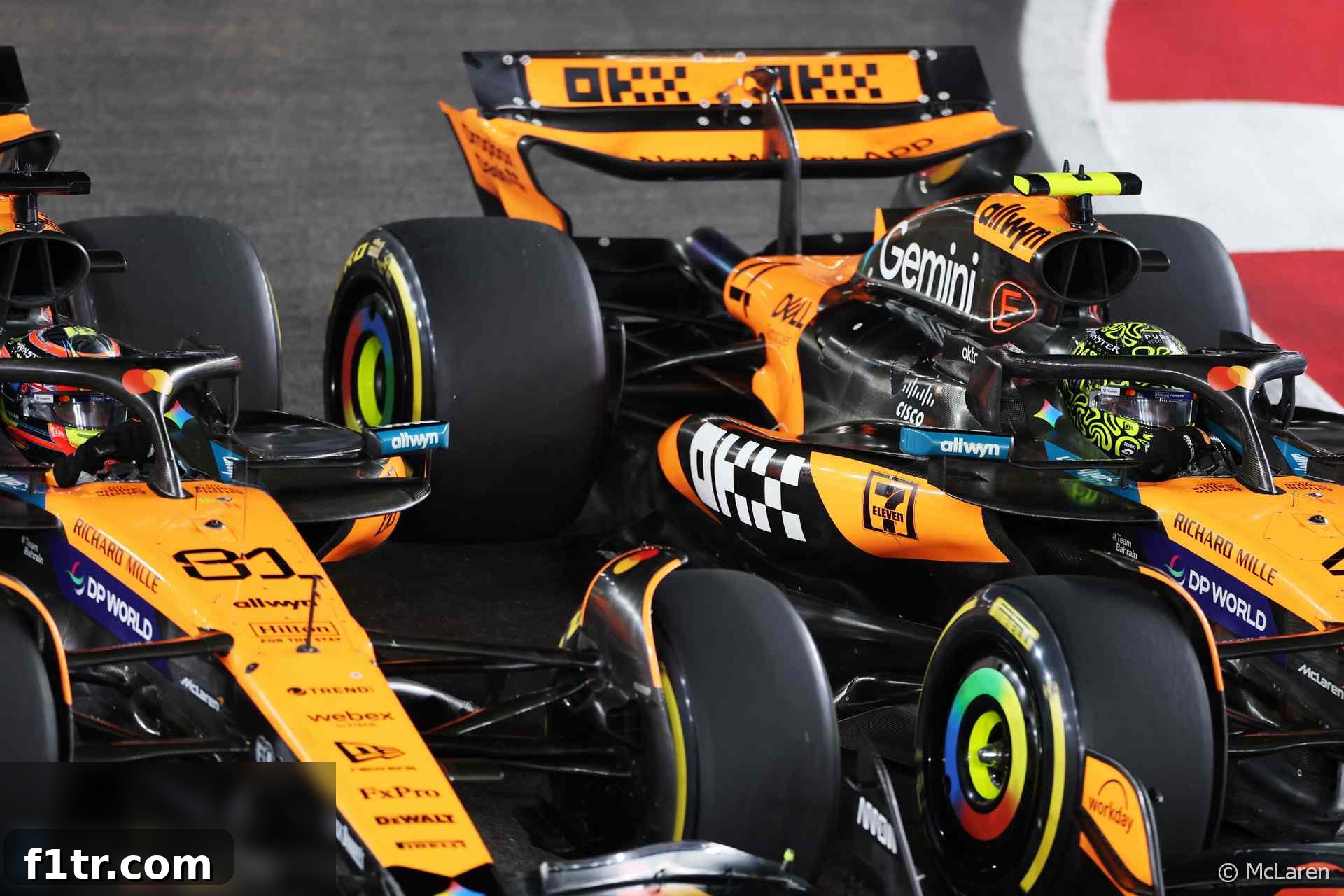
The thrilling world of Formula 1 often delivers high-stakes drama, not just on the track, but sometimes within the very confines of a team. Such was the case following the intense Singapore Grand Prix, where McLaren teammates Lando Norris and Oscar Piastri found themselves in an uncomfortable first-lap collision. While the incident initially seemed minor in the grand scheme of the race, leading to public assurances of “hard racing” from McLaren Racing CEO Zak Brown, subsequent revelations from Norris have painted a more complex picture. The British driver has confirmed that he will face internal consequences within the team for the contact, underscoring the delicate balance between fierce competition and team solidarity in the high-pressure environment of F1.
The Singapore Collision: A Deep Dive into the Incident
The pivotal moment occurred early in the Singapore Grand Prix, specifically at turn three. As both McLaren cars jostled for position in the opening stages of the race, Lando Norris made an assertive move to overtake his rookie teammate, Oscar Piastri, for third place. In the heat of the battle, contact was made between the two MCL60s. While neither car suffered significant damage that would force an immediate retirement or severely compromise their performance, the impact was enough to trigger an internal review, particularly given the potential for a much worse outcome.
Despite the slight shunt, both drivers showcased remarkable resilience and skill, managing to continue their race without major hindrance. Norris ultimately secured a commendable second-place finish, a testament to his recovery and the car’s performance. Piastri, after a strong qualifying session and a determined drive, finished in a solid seventh position. Although the outcome for the team was positive in terms of points scored, the incident itself left an indelible mark, highlighting the fine line between aggressive driving and regrettable team contact. The collision reduced Piastri’s championship lead over Norris by three points, adding another layer of intrigue to their developing intra-team rivalry.
From “Hard Racing” to Internal Repercussions: McLaren’s Evolving Stance
Immediately following the race, McLaren’s public response sought to downplay the incident. Zak Brown, the charismatic CEO of McLaren Racing, publicly described the collision as simply “hard racing” between two highly competitive drivers. This initial stance suggested a team that embraced its drivers’ fighting spirit, a refreshing outlook in a sport often marred by restrictive team orders. However, the subsequent weeks revealed that the internal discussions were far more nuanced than the initial public statements suggested.
Ahead of the next round in Austin, Lando Norris disclosed a shift in the team’s position. He candidly admitted that the incident had not been simply brushed aside and that he would, in fact, face internal consequences. Speaking to the official Formula 1 channel, Norris stated, “Of course things are reviewed and there are and will be repercussions for me to the end of the season so it’s not like I’ve got away with anything.” This statement marked a significant departure from the ‘hard racing’ narrative, signalling a deeper introspection within the Woking-based outfit regarding driver conduct and team harmony. It underscored that while a competitive spirit is valued, there are boundaries, especially when team assets and championship aspirations are at stake.
Norris on Responsibility and Risk Management
Lando Norris, known for his thoughtful and self-critical approach, elaborated on his perspective regarding the Singapore incident. He acknowledged the ‘small’ nature of the contact but emphasized the inherent risks involved. “But it was also an incident that was small and there was potential to try and avoid it,” he admitted. This reflective stance highlights a mature understanding of the consequences that even minor contact can have in a sport where split-second decisions dictate fortunes.
Norris expressed a clear aversion to such incidents, stressing the importance of avoiding contact with any rival, let alone a teammate. “It’s something I never want – I said it after the race, I can’t afford to make contact and have anything happen like what happened, because I put just as much risk on my whole championship from something going wrong as I do on whoever I might be racing against.” This sentiment perfectly encapsulates the dual pressures F1 drivers face: the need to fight for every position while simultaneously protecting their own championship hopes and the team’s overall performance. His acceptance of repercussions, though not detailed, indicates a commitment to learning from the experience and maintaining a professional relationship with his teammate, ensuring future engagements on track remain respectful and within team guidelines. Despite the internal review and its outcomes, Norris affirmed that “the engagement and how we go racing is the same as it’s always been,” implying that the fundamental approach to racing and internal communication remains unchanged.
Piastri’s Perspective: Moving Forward with Clarity
Oscar Piastri, the highly-touted rookie, also shared his insights into the aftermath of the Singapore collision, offering a complementary perspective that underlines the team’s unified approach to resolving internal issues. Piastri confirmed that the team had engaged in “very productive” discussions involving all parties concerned, emphasizing the collaborative nature of the resolution process. This indicates a transparent and open dialogue, crucial for maintaining a healthy team environment, especially when managing the intense rivalry between two ambitious drivers.
Piastri revealed the core conclusion reached by the team: “what happened in Singapore is not how we want to go racing as a team and ultimately Lando has taken responsibility for that.” This statement is critical, as it confirms Norris’s acceptance of accountability and establishes a clear directive for future on-track conduct. More importantly, Piastri assured that despite the incident, the existing framework for managing driver racing will not be altered. “The rules won’t change because of that. I think ultimately we’ve got that framework in place for a reason and there’s no reason for that to change now, so it’s been dealt with and now looking forward to the future.” This commitment to consistency in team rules is vital for driver confidence and stability, ensuring that both Norris and Piastri understand the boundaries and expectations as they continue to compete.
McLaren’s Team Ethos and Championship Aspirations
The McLaren team, a powerhouse with a rich history in Formula 1, has been experiencing a resurgence, battling fiercely for a strong position in the Constructors’ Championship. With Norris and Piastri consistently pushing the limits and delivering impressive results, the team aims to consolidate its position as a leading contender. This ambition means that every point, every race finish, and indeed, every on-track interaction between its drivers holds significant weight. While the identity of the team that clinched the Constructors’ Championship was not McLaren in Singapore, their ongoing battle for higher positions in the standings, potentially challenging for a top-three finish, makes internal harmony and efficient point-scoring paramount.
The incident in Singapore, therefore, became a crucial test of McLaren’s commitment to its stated philosophy. The team has consistently maintained a policy of providing both drivers an equal opportunity to compete and fight for the best possible results. However, this freedom comes with a significant caveat: drivers must not disadvantage the team’s overall performance or championship aspirations. The internal review and the subsequent “repercussions” for Norris serve as a clear reminder of this principle. It reinforces the idea that while individual ambition is celebrated, team success always takes precedence, especially in the cutthroat environment of the Constructors’ Championship battle where every point translates into vital financial and competitive advantages.
The Delicate Balance of F1 Team Dynamics
The situation at McLaren after the Singapore Grand Prix is a classic example of the delicate balance Formula 1 teams must strike between fostering fierce competition among their drivers and maintaining a cohesive, disciplined unit. On one hand, allowing drivers to race each other hard can extract maximum performance, leading to spectacular on-track action and pushing the team forward. On the other hand, uncontrolled rivalry can lead to costly collisions, lost points, and a detrimental impact on team morale. This is a challenge that every top F1 team faces, especially those with two highly talented and ambitious drivers.
McLaren’s handling of the Norris-Piastri incident demonstrates a mature approach. Instead of imposing immediate, draconian team orders or publicly chastising one driver, they opted for an internal review, leading to a measured outcome. Norris’s acceptance of responsibility and Piastri’s clarity about the ongoing rules indicate that the team prioritizes learning and moving forward. This strategy aims to ensure that while the drivers remain competitive, they do so within a framework that protects the team’s interests, preventing future incidents from undermining their collective goals. It’s a testament to the modern F1 team management, where open communication and clear boundaries are key to navigating the complex dynamics of high-performance sport.
Looking Ahead: Upholding Professionalism
As the Formula 1 season progresses, the focus for McLaren will undoubtedly be on maximizing their performance and securing the best possible position in the Constructors’ Championship. The lessons learned from the Singapore incident, and the internal adjustments made, are crucial for this endeavor. Both Lando Norris and Oscar Piastri are exceptional talents, and their ability to race hard yet respect team boundaries will be vital for McLaren’s success.
The transparency and resolution exhibited by the team and drivers in the aftermath of the collision are encouraging signs. It signals a team that is not afraid to address internal issues head-on, promoting accountability while striving for continued excellence. Fans can expect to see Norris and Piastri continue their intense rivalry on track, but now with a heightened awareness of the importance of disciplined racing and the collective pursuit of McLaren’s championship ambitions. The remainder of the season will be a test of their professionalism, speed, and ability to work together, even when competing against each other.