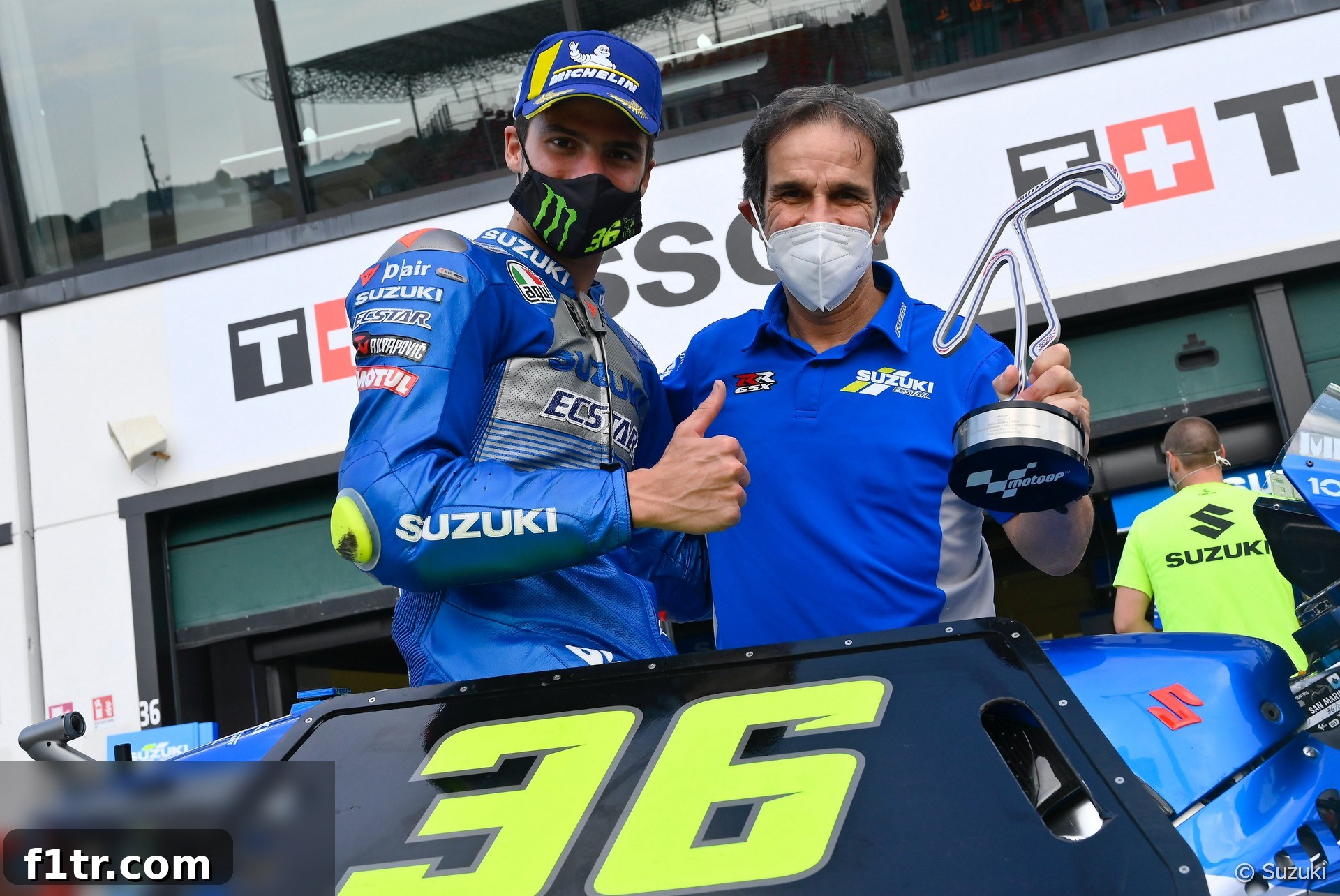
Davide Brivio’s Shock Departure from Suzuki MotoGP for Alpine F1: A Strategic Motorsport Shake-Up
The motorsport world is abuzz with the stunning news of Davide Brivio’s departure from his pivotal role as Team Principal for Suzuki’s MotoGP squad. His move sends ripples across both the two-wheeled and four-wheeled racing disciplines, as Brivio is widely anticipated to take on a significant position within Alpine’s newly rebranded Formula 1 program. This unexpected transition marks a significant strategic shift for both the reigning MotoGP champions and the ambitious F1 contender, hinting at an intriguing period of change and new direction for all parties involved.
Brivio’s tenure with Suzuki has been nothing short of transformative. Joining the team in 2013, he was instrumental in their return to the premier class of motorcycle racing and, more recently, engineered their remarkable triumph in the 2020 MotoGP World Championship. Under his astute leadership, the team not only secured the constructors’ title but also guided rider Joan Mir to an unforgettable riders’ championship, defying expectations and cementing Suzuki’s place at the pinnacle of MotoGP. The sudden announcement of his exit, therefore, has left many within the Suzuki camp and the broader motorsport community in a state of disbelief, prompting questions about the future trajectory of both Suzuki’s MotoGP project and Alpine’s F1 aspirations.
A New Chapter: Brivio’s Motivation Behind the Move
In his own words, Davide Brivio characterized his decision as a response to a compelling new professional challenge. “A new professional challenge and opportunity suddenly came to me, and in the end, I decided to take it,” Brivio stated, reflecting on the arduous process of making such a pivotal career choice. He elaborated on the emotional weight of leaving a team he helped build from the ground up: “It has been a difficult decision. The hardest part will be to leave this fabulous group of people, whom I started this project with when Suzuki rejoined the championship.”
Brivio’s sentiments underscore the deep personal connection he forged with the Suzuki team. He acknowledged the difficulty of bidding farewell to the dedicated individuals who joined the project over the years, all contributing to the creation of a truly formidable racing outfit. “It’s hard to say goodbye also to all the people who have arrived over the years to create this great team. I feel sad from this point of view, but at the same time, I feel a lot of motivation for this new challenge,” he confessed. This potent mix of regret for what he leaves behind and fervent enthusiasm for the unknown was the decisive factor, he explained, when faced with the choice between extending his successful contract with Suzuki or embarking on an entirely fresh experience. His move is not merely a change of teams but a leap across disciplines, signifying a bold and ambitious step in his distinguished career.
Suzuki’s Shock and the Quest for Continuity
The news of Brivio’s departure sent shockwaves through the Suzuki Ecstar team, particularly for Project Leader Shinichi Sahara. Sahara openly expressed his dismay, describing the announcement as “shocking news for us about Davide’s departure from Team Suzuki.” His reaction highlights the profound impact Brivio had on the team’s cohesion and strategic direction. “It feels like somebody took a part of me, because I always discussed with him how to develop the team and the bikes, and we’ve worked together for a long time,” Sahara conveyed, painting a vivid picture of their close working relationship and shared vision.
The emotional toll on Sahara is understandable, given the shared journey and the incredible success they achieved together. The 2020 season, despite the unprecedented challenges posed by the global Covid-19 pandemic, stands as a testament to their collective efforts and Brivio’s leadership. “In 2020, we achieved fantastic results despite the unusual and difficult situation due to Covid-19,” Sahara reflected. Looking ahead, the imperative for Suzuki is clear: “And 2021 will be an even more important year for us to keep the momentum.” The team now faces the daunting task of filling the void left by Brivio, a process Sahara acknowledges by stating, “Now we are trying to find the best way to cover for the ‘Davide loss’.” This search for a suitable successor will be crucial for maintaining the competitive edge Suzuki has meticulously built, ensuring their continued presence as a frontrunner in the intensely competitive MotoGP championship.
Alpine F1: A New Era and Leadership Reshuffle
Davide Brivio’s anticipated move to Alpine represents more than just a personnel change; it signals a significant strategic pivot for the Formula 1 team. Alpine, the high-performance sub-brand of Renault, is undergoing a comprehensive rebranding and restructuring for the upcoming F1 season. This transition from Renault F1 to Alpine F1 is not merely cosmetic; it embodies a renewed commitment to performance and a fresh corporate identity, aiming to leverage Alpine’s heritage in motorsport and road car development. Brivio’s appointment is expected to be a cornerstone of this new era, bringing a fresh perspective and a proven track record of championship success from a different, yet equally demanding, motorsport discipline.
While Brivio’s exact role within Alpine is yet to be officially confirmed, speculation suggests he will take on a senior leadership position, potentially as CEO or Team Principal, overseeing the operational and strategic direction of the F1 team. This move is also part of a broader internal shake-up within the Alpine/Renault F1 hierarchy. It is widely expected that Cyril Abiteboul, who has served as the Managing Director of Renault Sport Racing and Team Principal of the Renault F1 team, will transition into a more senior corporate role within the wider Renault Group, potentially overseeing the entire Alpine brand. This would allow Brivio to focus on the day-to-day running and on-track performance of the F1 team, bringing his direct racing management expertise to the forefront.
Further reinforcing this organizational restructuring, Marcin Budkowski, who has been an Executive Director at the team, was officially appointed as one of the team’s directors. This promotion sees him step into a more defined leadership capacity, filling the void left by the outgoing Jerome Stoll. Stoll had served as President of Renault Sport for an “intense five years,” and his departure, coupled with Abiteboul’s likely shift, underscores a comprehensive reshaping of Alpine’s top management. This multi-faceted change reflects a clear intent from Renault Group to inject new energy and strategic direction into their Formula 1 project, aiming to climb the competitive ladder and challenge the established frontrunners.
Brivio’s Enduring Legacy at Suzuki
Davide Brivio’s departure from Suzuki will leave an indelible mark on the MotoGP paddock. His vision for Suzuki was clear: to return the manufacturer to its former glory. When he joined, Suzuki was rebuilding, having withdrawn from MotoGP at the end of 2011. Brivio was central to their re-entry in 2015 and the meticulous process of developing the GSX-RR machine and nurturing talent. The journey was not without its hurdles, but Brivio consistently instilled belief and fostered a strong team culture. The pinnacle of this effort was the 2020 season, where Joan Mir secured the rider’s championship and the team clinched the constructors’ title, a triumph that solidified Brivio’s reputation as one of motorsport’s most effective and respected team leaders.
The success of 2020 was a culmination of years of hard work, strategic decisions, and talent management. Brivio’s ability to foster a cohesive unit, to attract and retain skilled personnel, and to guide young riders to championship glory are testaments to his profound understanding of racing dynamics and team psychology. For Suzuki, the immediate challenge will be to identify a successor who can not only maintain the current momentum but also build upon Brivio’s legacy. The team’s robust structure and the established competitiveness of the GSX-RR will provide a strong foundation, but leadership in motorsport is paramount, and finding the right fit will be critical for their aspirations in 2021 and beyond.
The Unique Challenge of a Cross-Sport Transition: MotoGP to F1
Brivio’s move from MotoGP to Formula 1 represents a fascinating cross-sport managerial transition, a relatively rare occurrence at the very top echelons of global motorsport. While both disciplines demand peak performance, meticulous engineering, and strategic brilliance, the operational structures, political landscapes, and technical intricacies differ significantly. In MotoGP, a team principal often has a very hands-on role in driver management, technical development oversight, and race strategy. Formula 1, with its larger budgets, vast personnel, and complex regulatory framework, often requires a more corporate and macro-managerial approach.
However, Brivio’s experience is not limited to motorcycle racing. He previously managed Valentino Rossi’s personal team, providing valuable insights into handling high-profile athletes and navigating commercial pressures. His strategic acumen, ability to build winning teams, and strong leadership qualities are transferable assets that Alpine will undoubtedly seek to leverage. The challenge for Brivio will be to adapt his proven methods to the unique ecosystem of Formula 1, integrating with an existing structure while simultaneously implementing his vision for success. His fresh perspective, unburdened by years of F1 conventional wisdom, could be precisely what Alpine needs to unlock its full potential and propel it towards the front of the grid.
Conclusion: A New Era for Both Suzuki and Alpine
Davide Brivio’s departure from Suzuki MotoGP marks the end of a highly successful era for the Japanese manufacturer and the beginning of an exciting, albeit uncertain, chapter for both his former team and his new destination, Alpine F1. For Suzuki, the immediate future involves a diligent search for a new leader capable of sustaining the championship-winning momentum and nurturing the talent within their ranks. The foundation Brivio helped lay is strong, but effective leadership will be key to navigating the competitive waters of MotoGP.
For Alpine, Brivio’s arrival signifies a bold statement of intent. It underscores their commitment to challenging for top honors in Formula 1 by bringing in a proven winner with a fresh perspective. Coupled with the broader management restructuring involving Cyril Abiteboul and Marcin Budkowski, Alpine is clearly charting a new course. The 2021 season promises to be a fascinating spectacle, not just on the track, but also in the management pits, as both Suzuki and Alpine embark on new journeys guided by new visions. The motorsport world will be watching closely to see how these strategic shifts unfold and whether Brivio can replicate his two-wheeled success on the grand stage of Formula 1.
Explore More in Motorsport News:
- Grosjean to make F1 test return tomorrow for first time since Bahrain horror crash
- Pictures: Wrecked chassis from Grosjean’s Bahrain fireball crash to go on display
- Bottas vs Rosberg: Hamilton’s Mercedes team mates compared after 78 races each
- F1 revenues fell by $877 million in Covid-struck 2020 season
- Hamilton and Mercedes finally announce new deal for 2021 season
Browse all 2020 F1 season articles