F1 2019 Championship Standings: A Deep Dive After the Hungarian Grand Prix
The 2019 Formula 1 season reached its summer break after a nail-biting Hungarian Grand Prix, leaving fans buzzing and the championship battles finely poised. The race at the Hungaroring delivered drama, strategic masterclasses, and phenomenal driving, significantly impacting both the drivers’ and constructors’ standings. As the grid headed into a well-deserved August recess, the picture at the top was clear, yet the underlying currents hinted at an even more ferocious second half of the season. This comprehensive analysis breaks down where every driver and team stood after thirteen thrilling races, highlighting the key narratives and potential trajectories for the remainder of the year.
F1 Drivers’ Championship: Hamilton Extends His Dominance
The Hungarian Grand Prix was a pivotal moment in the 2019 Drivers’ Championship, solidifying Lewis Hamilton’s commanding lead but also showcasing the relentless challenge emerging from Max Verstappen. Hamilton’s strategic victory at the Hungaroring, snatching the win from Verstappen in the closing laps, was a testament to his unmatched race craft and Mercedes’ tactical prowess. This triumph propelled him further ahead, demonstrating why he was firmly on track for what many predicted would be his sixth world title.
| Position | Driver | Total Points |
|---|---|---|
| 1 | Lewis Hamilton | 250 |
| 2 | Valtteri Bottas | 188 |
| 3 | Max Verstappen | 181 |
| 4 | Sebastian Vettel | 156 |
| 5 | Charles Leclerc | 132 |
| 6 | Pierre Gasly | 63 |
| 7 | Carlos Sainz Jnr | 58 |
| 8 | Kimi Raikkonen | 31 |
| 9 | Daniil Kvyat | 27 |
| 10 | Lando Norris | 24 |
| 11 | Daniel Ricciardo | 22 |
| 12 | Lance Stroll | 18 |
| 13 | Kevin Magnussen | 18 |
| 14 | Nico Hulkenberg | 17 |
| 15 | Alexander Albon | 16 |
| 16 | Sergio Perez | 13 |
| 17 | Romain Grosjean | 8 |
| 18 | Antonio Giovinazzi | 1 |
| 19 | Robert Kubica | 1 |
| 20 | George Russell | 0 |
The Frontrunners: Hamilton, Bottas, and Verstappen
Lewis Hamilton, with 250 points, held a significant 62-point advantage over his nearest competitor. His relentless consistency, coupled with Mercedes’ superior package, made him the man to beat. The Hungarian GP victory, a masterclass in tyre management and strategic execution, underscored his championship credentials. He was not just winning races; he was often outmanoeuvring his rivals, sometimes with raw pace, other times with sheer cunning.
Teammate Valtteri Bottas, in second with 188 points, had a mixed first half of the season. While demonstrating flashes of brilliance and securing wins, consistency sometimes eluded him, particularly in direct battles with Hamilton. His role was crucial for Mercedes in the constructors’ fight, but his individual championship hopes seemed to be fading as Hamilton pulled away.
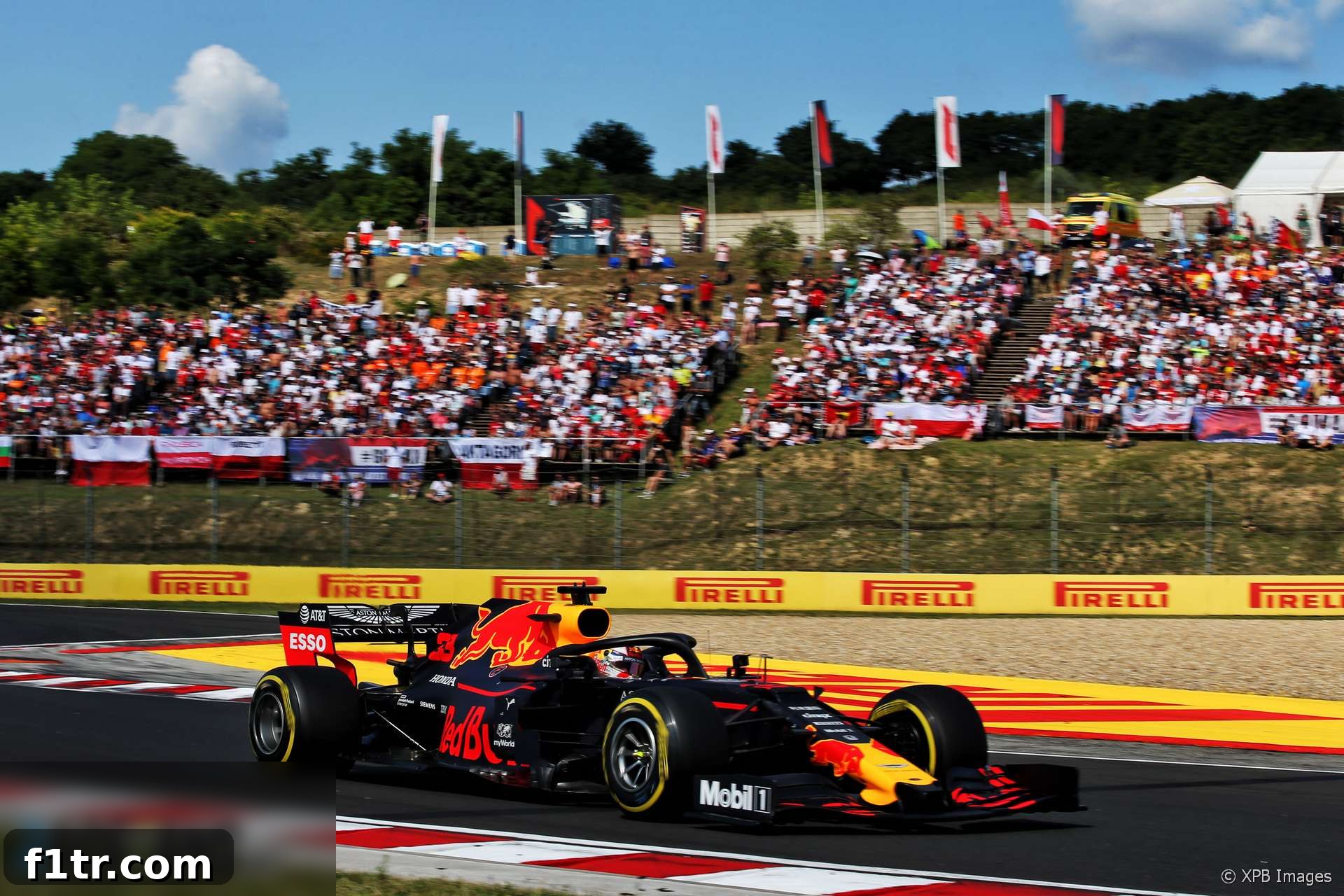
Perhaps the most exciting story of the season’s first half was Max Verstappen. With 181 points, just seven behind Bottas, the Red Bull Racing driver was enjoying a sensational run of form, having secured his maiden F1 pole position in Hungary and previously winning in Austria and Germany. His aggressive yet mature driving style, combined with Red Bull’s improved chassis and Honda’s rapidly developing power unit, made him a genuine threat. Verstappen’s performance at the Hungaroring, where he led for much of the race, proved he was ready to challenge for victories and was pushing the Mercedes duo harder than anyone expected. The gap to Hamilton, though substantial, did not diminish the excitement surrounding Verstappen’s potential to disrupt the established order.
Ferrari’s Challenge: Vettel and Leclerc
Ferrari, with Sebastian Vettel (156 points) and Charles Leclerc (132 points), found themselves in a distant fourth and fifth place respectively. The Scuderia’s season had been plagued by strategic missteps, reliability issues, and a car that struggled with tyre degradation, particularly in race conditions. While they possessed undeniable straight-line speed, their overall package often fell short of Mercedes and, increasingly, Red Bull. The internal battle between the experienced Vettel and the rapidly ascending Leclerc added another layer of intrigue, often leading to tense moments on track and further pressure on the team’s management.
The Fierce Midfield Battle
The midfield in 2019 was arguably the most competitive it had been in years, with several teams and drivers consistently battling for valuable points. Pierre Gasly, then with Red Bull, held onto sixth place with 63 points, though his performances were under intense scrutiny. Just behind him, Carlos Sainz Jnr of McLaren continued to impress, sitting in seventh with 58 points, often outperforming expectations in his resurgent McLaren. His consistency and ability to seize opportunities were major assets for his team.
Veteran Kimi Räikkönen (Alfa Romeo, 31 points) and the returning Daniil Kvyat (Toro Rosso, 27 points) proved their enduring class, securing crucial points for their respective outfits. McLaren rookie Lando Norris (24 points) showed immense promise, regularly engaging in thrilling battles and demonstrating his raw speed. Further down, drivers like Daniel Ricciardo (Renault), Lance Stroll (Racing Point), Kevin Magnussen (Haas), Nico Hulkenberg (Renault), Alexander Albon (Toro Rosso, soon to be promoted to Red Bull), and Sergio Perez (Racing Point) were locked in a tight fight for the minor points, where every single point gained could significantly influence their team’s standing.
The fight for the last point-scoring positions was truly intense, with Antonio Giovinazzi (Alfa Romeo) and Robert Kubica (Williams) each having a solitary point, highlighting the competitive nature of the field where even one point could be the difference between a forgotten season and a moment of glory. George Russell, despite strong performances in an underperforming Williams, was yet to open his points account.
F1 Constructors’ Championship: Mercedes’ Unshakeable Lead
The Constructors’ Championship told a similar story of Mercedes’ dominance, albeit with Red Bull making significant inroads to challenge Ferrari for the second spot. After the Hungarian Grand Prix, Mercedes had built an almost insurmountable lead, demonstrating the strength of their W10 challenger and their operational excellence.
| Position | Team | Total Points |
|---|---|---|
| 1 | Mercedes | 438 |
| 2 | Ferrari | 288 |
| 3 | Red Bull | 244 |
| 4 | McLaren | 82 |
| 5 | Toro Rosso | 43 |
| 6 | Renault | 39 |
| 7 | Alfa Romeo | 32 |
| 8 | Racing Point | 31 |
| 9 | Haas | 26 |
| 10 | Williams | 1 |
Mercedes, with a staggering 438 points, had established a formidable lead over their rivals. Their consistent performance, reliability, and the sheer pace of both Lewis Hamilton and Valtteri Bottas meant they were cruising towards another Constructors’ title. Their strategic calls, especially in races like Hungary, often proved to be the deciding factor, putting them a class apart.
Ferrari, despite their legacy and resources, lagged significantly in second place with 288 points. The gap of 150 points to Mercedes highlighted their struggles throughout the first half of the season. While Sebastian Vettel and Charles Leclerc fought hard, the SF90 often lacked the crucial downforce and tyre management capabilities needed to consistently challenge the Silver Arrows, especially on circuits with a mix of corners.
Red Bull Racing, with 244 points, was rapidly closing in on Ferrari. The partnership with Honda was yielding strong results, with the power unit showing significant improvements in both performance and reliability. Max Verstappen’s stellar form was the primary driver of their points tally, and the team’s development trajectory suggested they could very well snatch second place from Ferrari in the latter half of the season, adding immense pressure to the Italian squad.
The Battle for Midfield Supremacy
The fight for fourth place in the Constructors’ Championship was as intense as ever. McLaren emerged as the clear leader of the midfield pack, amassing 82 points. Their significant improvement from previous seasons was a testament to their restructured team, the capable pairing of Carlos Sainz Jnr and Lando Norris, and a much-improved car. They consistently scored points, often challenging the top three on merit.
Following McLaren, the competition was incredibly tight. Toro Rosso, with 43 points, were punching above their weight, showcasing great strategy and strong performances from Daniil Kvyat and Alexander Albon. Renault, on 39 points, faced a challenging season, struggling to consistently deliver on their ambitious goals. The French manufacturer was hoping for a stronger second half to justify their factory team status.
Alfa Romeo (32 points), Racing Point (31 points), and Haas (26 points) were clustered together, each fighting tooth and nail for every single point. Their fortunes often swung race by race, depending on circuit characteristics, strategic calls, and a bit of luck. These teams often provided some of the most thrilling on-track battles, pushing each other to the limits.
At the tail end, Williams, with a solitary point, endured a historically difficult season. Despite the efforts of George Russell and Robert Kubica, the team’s car lacked fundamental pace, highlighting the immense challenges they faced in remaining competitive in Formula 1.
The 2019 Hungarian Grand Prix: A Race to Remember
The Hungarian Grand Prix of 2019 was a fitting culmination to the first half of the season, delivering high-stakes action and strategic brilliance. Max Verstappen’s sensational qualifying performance secured his first F1 pole position, sparking hopes of a Red Bull victory. However, the race itself turned into a thrilling cat-and-mouse chase between Verstappen and Lewis Hamilton.
Hamilton, after being stuck behind Verstappen for much of the race, pulled off a daring and ultimately decisive second pit stop, switching to fresher tyres. This bold strategy, a calculated risk by Mercedes, allowed him to rapidly close the gap and execute a clinical overtake in the closing laps, securing a memorable victory. This performance not only added to his points tally but also served as a clear message to his rivals about his unwavering determination.
Ferrari, meanwhile, had a challenging race, with both Sebastian Vettel and Charles Leclerc struggling to match the pace of the leaders. Their strategic choices also came under scrutiny, as they were unable to mount a serious challenge for the win, settling for third and fourth, a significant gap behind the top two.
The race also highlighted the strong form of the midfield, with Carlos Sainz Jnr continuing his excellent run with a strong fifth place for McLaren, further solidifying their position as the leading midfield team. The Hungarian GP was a stark reminder of F1’s blend of raw speed, strategic genius, and driver skill.
Looking Ahead: The Second Half of the 2019 Season
As Formula 1 headed into its traditional summer break, the championship landscape was set for an exhilarating conclusion. While Lewis Hamilton and Mercedes held a comfortable lead, the emergence of Max Verstappen and Red Bull as consistent front-runners promised to keep the pressure on. The long straights and fast corners of circuits like Spa and Monza after the break were expected to play to Ferrari’s strengths, offering them a chance to rebound and challenge for victories.
The constructors’ battle between Ferrari and Red Bull for second place was also heating up, with Red Bull’s momentum suggesting they could overtake the Scuderia. In the midfield, every race would be crucial, as teams like McLaren, Renault, Toro Rosso, and Alfa Romeo continued their fierce competition for valuable points and higher championship positions. The second half of the 2019 season promised more twists, turns, and unforgettable moments as the fight for supremacy unfolded across the globe.