Advert | Become a Supporter & go ad-free
Lewis Hamilton Labels Monaco Grand Prix “One of the Dullest Races”
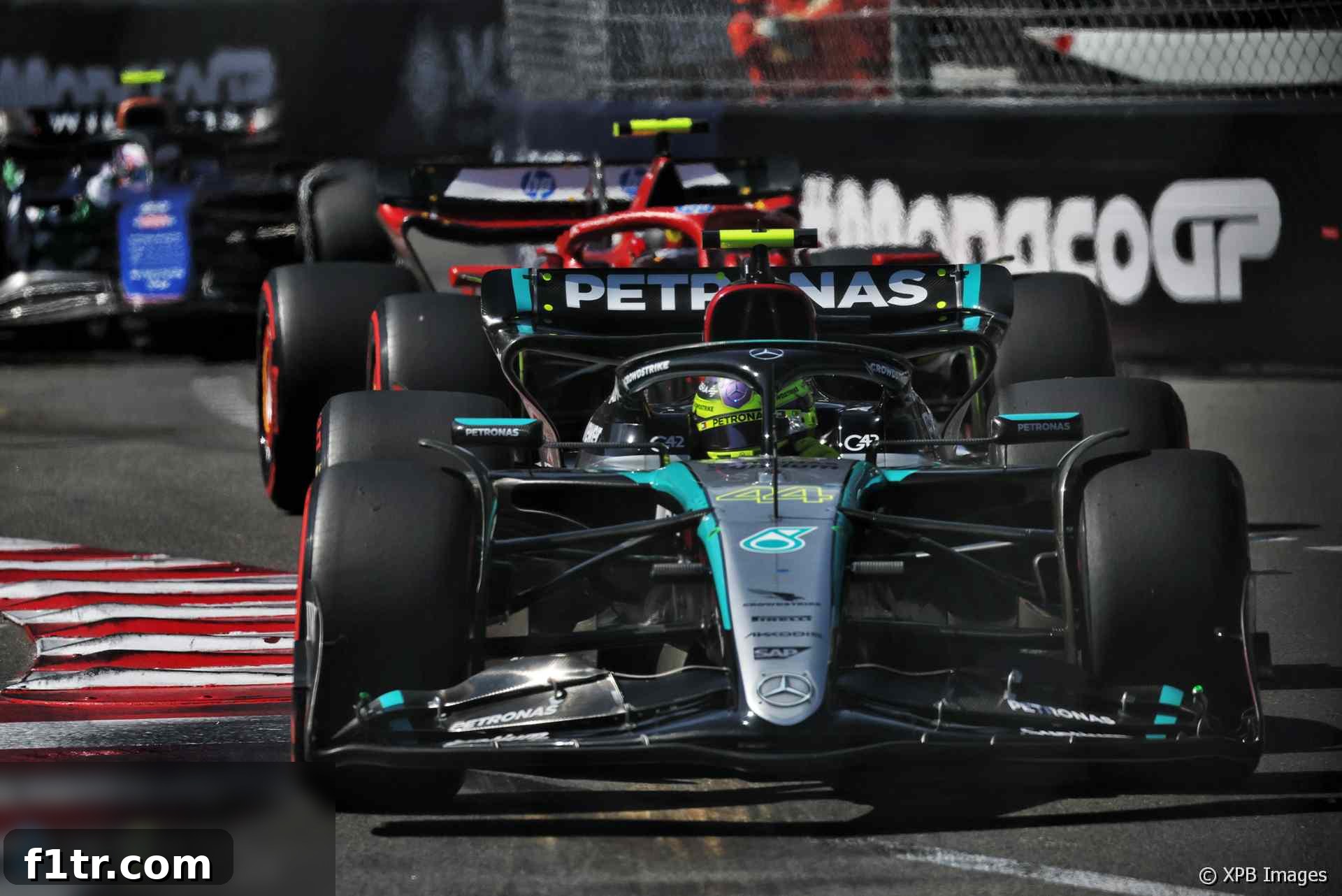
The iconic streets of Monaco, usually synonymous with glamour, high-stakes drama, and precision driving, delivered an uncharacteristically uneventful spectacle at the recent Grand Prix, prompting a strong reaction from seven-time world champion Lewis Hamilton. The Mercedes driver openly declared the 2024 Monaco Grand Prix as “one of the dullest races” he has ever participated in, a sentiment that resonated with many fans and pundits alike.
Hamilton, who started and ultimately finished the race in seventh position, found himself caught in a strategic stalemate that largely defined the event. The race began with immediate drama as a multi-car collision on the opening lap triggered a red flag. While such interventions often promise strategic intrigue and reshuffled grids, this particular red flag inadvertently locked most teams into a single-stop strategy, effectively neutralizing competitive variation for the remainder of the Grand Prix.
The Red Flag Conundrum: A Strategy Killer?
The early red flag proved to be a pivotal moment, shaping the entire complexion of the race. Following the incident involving Sergio Perez, Kevin Magnussen, and Nico Hulkenberg, race control suspended the event. This allowed almost the entire field to make their mandatory tyre change under controlled conditions, without the usual time penalty of a live pit stop. Consequently, with fresh tyres fitted, the vast majority of drivers were able to manage their medium or hard compounds for the remaining 77 laps, eliminating the need for further pit stops and, crucially, any meaningful strategic variations that could have spiced up the racing.
Hamilton, reflecting on the static nature of the race, told the official Formula 1 channel, “Because of the crash, everyone switched over to the other tyre and just managed at a really slow pace. So, it was definitely one of the dullest races I think I’ve been in. But that’s Monaco for you.” His remarks underscore the frustration felt by drivers who thrive on competition and strategic challenges, both of which were largely absent in the principality.
Mercedes’ Strategic Tightrope Walk
The early red flag presented a particularly awkward scenario for Mercedes, as acknowledged by the team’s trackside engineering director, Andrew Shovlin. Both Hamilton and his teammate George Russell had started the race on the hard compound tyres, intending to run a longer first stint. The red flag, however, forced them to switch to the medium compound much earlier than planned, committing them to an extended run on a less durable tyre choice.
Hamilton’s apparent pre-race concerns regarding this specific strategic vulnerability became evident when he reportedly told the team, “I told you so,” as he entered the pits during the red flag period. This subtle but telling comment hints at a prior discussion or apprehension about the potential pitfalls of their initial tyre choice should an early red flag occur – a scenario that unfortunately materialized.
Shovlin elaborated on the double-edged sword of their strategy: “A red flag or Safety Car intervention after the front four had stopped would have provided an opportunity to get both cars on the podium. However, a lap one red flag would prove awkward. This is exactly what befell us as the race got underway. We were therefore in a situation where we had to try and get to the end on the medium tyre.” This insight highlights the delicate balance and calculated risks inherent in Formula 1 strategy, especially on a unique circuit like Monaco.
Despite the strategic constraints, Mercedes managed the situation relatively well. Shovlin noted, “Most cars were doing a fair bit of management, so this was relatively easy to handle in the end.” George Russell, in particular, demonstrated strong pace in the latter stages of the race, expertly defending his position against Max Verstappen. This performance was a silver lining for the team, with Shovlin adding, “George seemed to have good pace in the closing stages and was able to defend well against Max, and it was encouraging to see the improvements we made in our long run since Friday.” This indicated a positive step forward in understanding their car’s performance, a crucial development for Mercedes as they continue their efforts to close the gap to the front-runners.
The Fastest Lap Attempt: A Communication Breakdown
In an attempt to salvage an additional point from an otherwise processional race, Mercedes opted to pit Lewis Hamilton late in the Grand Prix for a fresh set of soft tyres, targeting the bonus point for the fastest lap. This was a tactical decision aimed at maximizing their points haul, as his tyre wear was not a critical factor at that stage.
However, this seemingly straightforward decision was complicated by a communication error on the team’s part. Mercedes later admitted that they did not communicate correctly with Hamilton around his pit stop, leading to an unexpected consequence. Had Hamilton pushed harder on his out-lap and subsequent laps, he might have created a larger gap. As it turned out, the window created by Hamilton’s stop inadvertently allowed Max Verstappen, who was running ahead of him, to make his own pit stop without losing a position to Hamilton. This put Verstappen on fresh tyres and allowed him to apply significant pressure on George Russell in the closing laps, though the Red Bull driver ultimately couldn’t find a way past Russell.
While Hamilton did successfully secure the fastest lap bonus point, the incident highlighted the razor-thin margins and critical importance of precise communication in Formula 1. It underscored how even minor missteps can have ripple effects, impacting not just one driver’s race but potentially altering the competitive dynamics of other battles on track.
Beyond the Race: The Future of Monaco and F1 Strategy
The 2024 Monaco Grand Prix has reignited the perennial debate surrounding the circuit’s place on the Formula 1 calendar. While its historical significance and glamorous allure are undeniable, the tight, twisty nature of the track often leads to races with minimal overtaking, heavily reliant on qualifying performance and strategic early gambits. Hamilton’s outspoken criticism echoes the sentiments of many within the sport who feel that the racing spectacle often falls short of expectations.
Indeed, the managing of tyres at a “really slow pace” due to strategic inflexibility is not a new phenomenon at Monaco. However, the severity of this year’s situation, directly attributable to the lap one red flag, has prompted discussions about potential rule adjustments. Stefano Domenicali, CEO of Formula 1, has reportedly indicated that the sport will examine and address the red flag rule loophole that effectively allowed teams to make free pit stops, which many believe “ruined” the competitive element of the Monaco GP. Such changes would aim to preserve the strategic variability and excitement that fans expect from Formula 1, even on a challenging circuit like Monaco.
For Mercedes, the Monaco GP, while frustrating in terms of outright performance and strategic outcome, offered some valuable data points. George Russell’s strong defence against Verstappen and the perceived improvements in long-run pace provide a glimmer of optimism amidst a challenging season where the team is striving to get back to championship-contending form. As the season progresses, Mercedes will look to build on these positives and refine their strategic execution to maximize their potential in upcoming races.
Advert | Become a RaceFans supporter andgo ad-free
2024 Monaco Grand Prix Insights and Analysis
- Formula 1 will fix red flag rule loophole which ruined Monaco GP – Domenicali
- Magnussen ‘could have backed off but didn’t’ in Monaco crash, says team boss
- Ocon defends his driving after ‘hurtful abuse’ over Monaco GP crash with Gasly
- How the midfield’s hottest team mate rivalry boiled over
- “He’s really dangerous”: Unheard driver radio from F1’s slow show in Monaco
Browse all 2024 Monaco Grand Prix articles