Charles Leclerc Reflects on French Grand Prix: Maximum Effort, Learning from Mistakes for Sauber
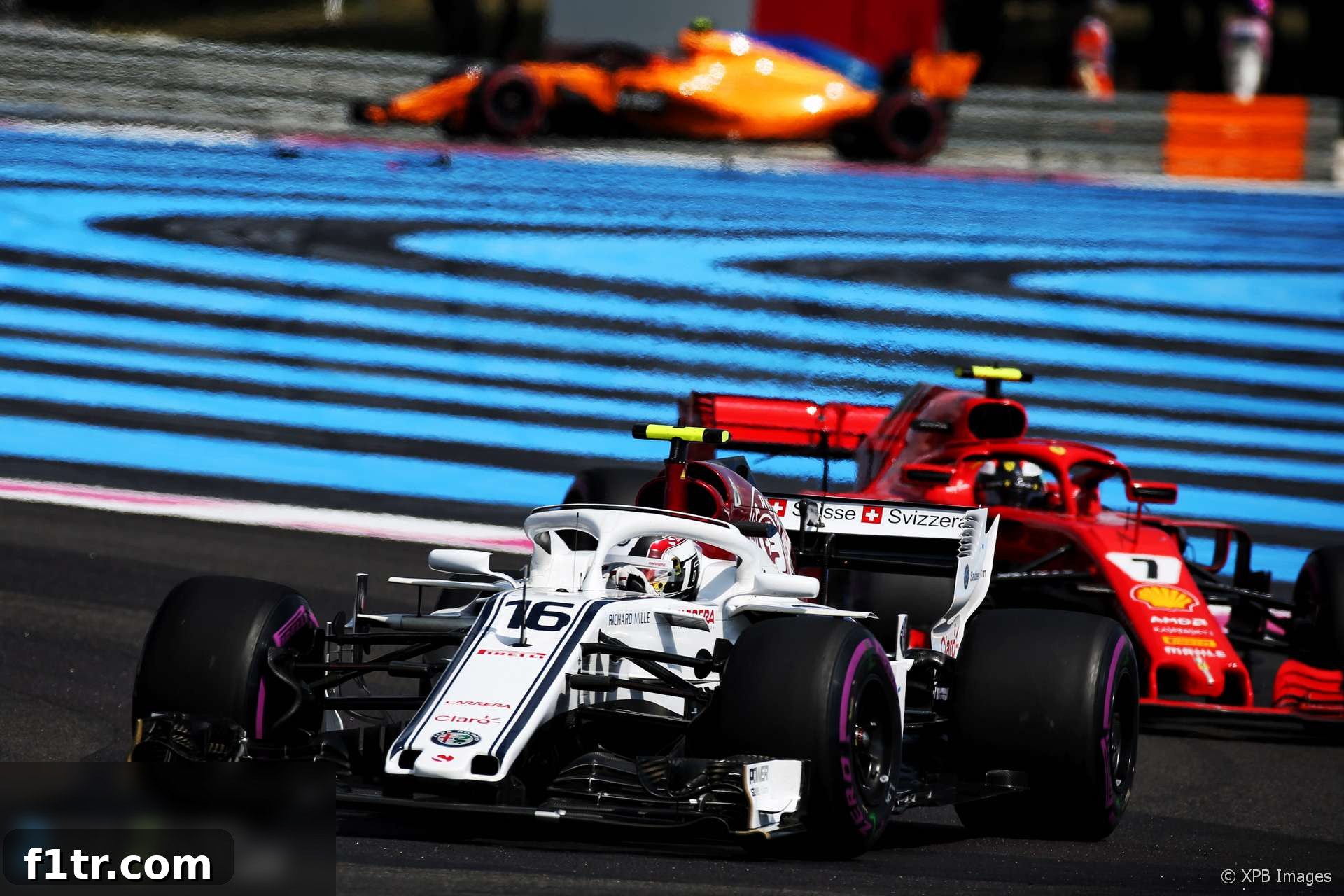
In a candid post-race interview following the 2018 French Grand Prix, rising Formula 1 star Charles Leclerc expressed a mixed bag of emotions regarding his performance and that of his team. The Monaco-born driver believed that his Sauber F1 team had successfully extracted the absolute maximum from their C37 chassis during the challenging race at Circuit Paul Ricard. However, with characteristic honesty, he also openly admitted that a personal error committed during an intense midfield battle ultimately cost the team a valuable championship point, underscoring his relentless pursuit of perfection even in his nascent rookie season.
Leclerc’s weekend in France was, by many accounts, a standout performance for both himself and the Sauber outfit. The young driver showcased his prodigious talent by guiding the C37 into the crucial Q3 qualifying session, a remarkable feat for a team still rebuilding its stature in Formula 1. This achievement was partially aided by challenges faced by both Haas cars, direct competitors in the midfield, but it was Leclerc’s raw pace and precise driving that truly earned him the opportunity to fight for a top-ten grid slot.
A Promising Start: Leclerc’s Qualifying Prowess at Paul Ricard
The qualifying session for the French Grand Prix proved to be a pivotal moment for Charles Leclerc and the Sauber F1 Team. Breaking into Q3 and securing an eighth-place starting position was a significant boost for the entire team, demonstrating the tangible progress they were making throughout the highly competitive 2018 season. While external factors, such as the unfortunate technical issues encountered by the Haas F1 team during Q3, certainly played a role in elevating Leclerc’s grid slot, his consistent performance through the initial Q1 and Q2 segments was a profound testament to his burgeoning skill and adaptability.
Outperforming several more experienced drivers and expertly guiding the Sauber C37, which was not always considered a top-tier midfield contender, into the final qualifying segment highlighted Leclerc’s extraordinary ability to extract performance and maximize the car’s potential. This strong qualifying result not only generated considerable buzz around the young driver but also set the stage for an exciting race day. It placed Leclerc in a prime position to challenge for points, a target that had become increasingly realistic for Sauber with him behind the wheel. The optimism within the team was palpable, as they looked to capitalize on this hard-earned grid position and translate it into a strong race finish, further solidifying their improved standing in the fiercely contested Formula 1 Constructors’ Championship.
Race Day Dynamics: Battling Against the Odds
As the red lights extinguished at Circuit Paul Ricard, Charles Leclerc wasted no time making his presence felt. A superb start saw him immediately challenge and successfully overtake Kimi Räikkönen’s Ferrari on the opening lap – a bold and impressive move that sent a clear signal of his intent and confidence. This early aggression was a hallmark of Leclerc’s racing style, demonstrating his fearlessness when battling against more established drivers and often faster machinery, even as a rookie.
However, as the race unfolded and tire degradation, fuel load, and strategic pit stops came into play, the inherent pace difference between the Sauber C37 and the front-running cars became increasingly apparent. Despite Leclerc’s best efforts and the team’s diligent strategic execution, the Sauber’s overall speed simply couldn’t consistently match that of the top six cars – primarily Mercedes, Ferrari, and Red Bull. Even as drivers like Sebastian Vettel and Valtteri Bottas, who had encountered incidents earlier in the race and fallen down the order, began their inevitable charge back up the grid, Leclerc found it challenging to sustain a position among the true frontrunners. The reality of Formula 1’s pecking order meant that while he could exploit initial opportunities and demonstrate flashes of brilliance, maintaining a consistent challenge against the sport’s giants over a full race distance was an arduous uphill battle for the Sauber outfit at that specific stage of their development.
Surpassing Expectations: Sauber’s Unexpected Pace and Midfield Dominance
Despite the natural limitations when compared to the sport’s elite teams, Charles Leclerc revealed a fascinating insight into Sauber’s performance during the French Grand Prix, stating that the team’s race pace had surprised even themselves. “At the end we had to respect it a little bit – as I said yesterday, the Haas were very strong, the Renault were very strong also,” Leclerc commented, acknowledging the formidable strength of their direct midfield rivals. This self-assessment indicates that pre-race expectations might have been tempered, anticipating an even tougher fight against established midfield contenders like Haas and Renault, both of whom had demonstrated formidable form throughout the preceding practice and qualifying sessions.
Yet, the reality on track unfolded differently and far more positively than anticipated. “But at the end of it I think we were more surprised than anyone, we were actually following them and putting pressure on them which we definitely did not expect today,” Leclerc admitted with a hint of genuine surprise. This unexpected ability to not only keep pace but actively challenge and pressure their midfield rivals was a significant confidence boost for the entire Sauber team. It suggested that the developments brought to the C37 for the French Grand Prix were working effectively, allowing them to compete more fiercely and consistently than initially projected. This kind of competitive performance, especially coming from a team that had struggled in recent seasons and was still very much in a rebuilding phase, was a strong indicator of their positive trajectory and the effectiveness of their car’s setup for the unique characteristics of the Paul Ricard circuit.
The Costly Mistake: A Moment of Aggression Too Far
When pressed on whether he could have achieved an even higher finish, Leclerc candidly assessed the situation, maintaining his characteristic self-critical stance: “At the end I don’t think we could have done much better – probably one point more was possible today.” This single, valuable point, however, ultimately slipped away due to a moment of aggressive driving that went slightly awry in the heat of battle. Leclerc attributed the setback directly to a mistake he made while relentlessly pursuing Kevin Magnussen of the Haas team, pushing too hard in his eagerness.
“I’m really only a bit disappointed with myself because I think overall we did a great race, in the team,” he reflected, highlighting his appreciation for the collective effort and strategic prowess demonstrated by his Sauber crew. “But I did a mistake following Kevin, I tried to get back into the DRS zone and put pressure on him and I lost the car in turn two being too close to him and then Nico Hulkenberg overtook us.” This incident vividly illustrates the incredibly fine margins that define success and failure in Formula 1. In his eagerness to regain a strategic advantage (the Drag Reduction System zone) and apply maximum pressure on a direct rival, Leclerc pushed his car just beyond its grip limit, resulting in a momentary and costly loss of control. This small but significant error had immediate and tangible consequences, allowing Nico Hulkenberg in the Renault to capitalize instantly and move ahead of the Sauber.
The immediate outcome was the loss of a crucial track position and valuable time on a circuit where regaining ground can be challenging. “So we lost quite a bit of time there and we lost one place. So it’s a bit of a shame,” Leclerc lamented, his tone reflecting genuine regret for the missed opportunity. For a team like Sauber, every single point and every hard-fought position gained or lost carries immense weight in the fiercely competitive Constructors’ Championship standings. The incident served as a stark reminder of the unforgiving nature of top-tier motorsport, where even a minor misjudgment can have a disproportionate impact on the final results and the team’s overall season objectives.
Embracing Growth: A Rookie’s Mature Perspective on Error
Despite the immediate disappointment, Charles Leclerc approached the mistake with a maturity and self-awareness beyond his years and limited experience level in Formula 1. He framed it as an invaluable learning experience, a testament to his dedication to continuous improvement and his long-term vision as a professional racing driver. “But at the end we had a very smooth run in the last four or five races, without any mistakes so sometimes it happens and I’ll try to learn from it, to get better,” he stated, demonstrating a clear understanding of the broader context of his rookie season.
This pragmatic perspective is absolutely vital for any rookie driver navigating the immense pressures and relentless demands of Formula 1. Leclerc acknowledged his recent streak of clean races and commendable performances, recognizing that occasional errors are an inevitable part of the learning curve in such a competitive and high-stakes environment. His willingness to openly admit fault, articulate his thought process, and express his commitment to meticulously analyzing and learning from the incident speaks volumes about his character, his professional approach, and his inherent drive to excel. Such an attitude is precisely what distinguishes truly promising talents from those who merely possess raw speed. For both Leclerc and the Sauber team, this incident, while frustrating in the short term, undoubtedly contributed significantly to his rapid development as a more rounded, strategic, and resilient driver, further preparing him for the countless future challenges and battles on the global stage of Formula 1.
Leclerc’s Pivotal Role in Sauber’s 2018 Campaign
Charles Leclerc’s contribution to the Sauber F1 team during the 2018 season cannot be overstated; it was truly foundational to their resurgence. His exceptional performances consistently brought the team into contention for championship points, a scenario that had been rare and often fleeting in their recent history. As of this point in the season, Leclerc had scored an impressive 11 of Sauber’s total of 13 championship points. This striking statistic powerfully underscores his critical importance to the team’s constructors’ championship aspirations and their overall revival narrative, marking him as the undisputed spearhead of their efforts.
His innate ability to consistently extract maximum performance from the Sauber C37, coupled with his aggressive yet largely controlled racing style, made him a formidable force in the competitive midfield. These points were not merely bonuses; they were absolutely vital for Sauber’s financial stability, their team morale, and their reputation within the Formula 1 paddock. For a team striving desperately to climb back up the ranks and establish itself as a consistent points scorer, having a driver who could reliably bring home tangible results was an invaluable asset, profoundly validating their investment in young talent and their meticulously planned long-term development strategy. Leclerc was not just a driver for Sauber; he was, in essence, the catalyst for their resurgence, delivering results that far exceeded initial expectations for a rookie operating within the confines of a challenging and often underfunded environment.
Conclusion: A Glimpse into a Bright Future for F1 and Charles Leclerc
The 2018 French Grand Prix offered yet another compelling chapter in Charles Leclerc’s burgeoning Formula 1 career. It was a race that encapsulated his unique blend of raw speed, tactical awareness, and an unyielding desire to push the boundaries of both his car’s capabilities and his own limits as a driver. While the sting of a lost point due to a self-admitted mistake undoubtedly lingered, his overall performance, especially the surprisingly competitive pace of the Sauber C37 and his remarkable ability to contend with more established midfield teams, painted an undeniable picture of immense potential and a bright future.
Leclerc’s eloquent and honest reflections on the race not only showcased his highly analytical approach to motorsport but also his humility and unwavering commitment to continuous learning and self-improvement. This rare blend of attributes has undoubtedly set him apart as one of the most exciting talents to emerge in Formula 1 in recent memory. For the Sauber team, his consistent and often spectacular performances were a beacon of hope, driving their progress forward and securing crucial championship points that proved invaluable throughout the season. The French Grand Prix, despite its minor setback for Leclerc personally, was ultimately a profound testament to his rapid ascent in the sport and a clear indication that he was a star firmly on the rise, destined for even greater achievements in the thrilling world of Formula 1. His journey with Sauber continued to be a fascinating and essential narrative, laying the groundwork for what would soon become a truly remarkable and celebrated career at the pinnacle of motorsport.
Related Articles: Exploring the 2018 F1 Season and Beyond
Dive deeper into the memorable 2018 Formula 1 season and other related stories that shaped the sport:
- F1 feared “death knell” for Drive to Survive after Ferrari and Mercedes snub
- McLaren staff told us we were “totally crazy” to take Honda engines in 2018 – Tost
- ‘It doesn’t matter if we start last’: How Red Bull’s junior team aided Honda’s leap forward
- Honda’s jet division helped F1 engineers solve power unit problem
- McLaren Racing losses rise after Honda split
Browse all 2018 F1 season articles