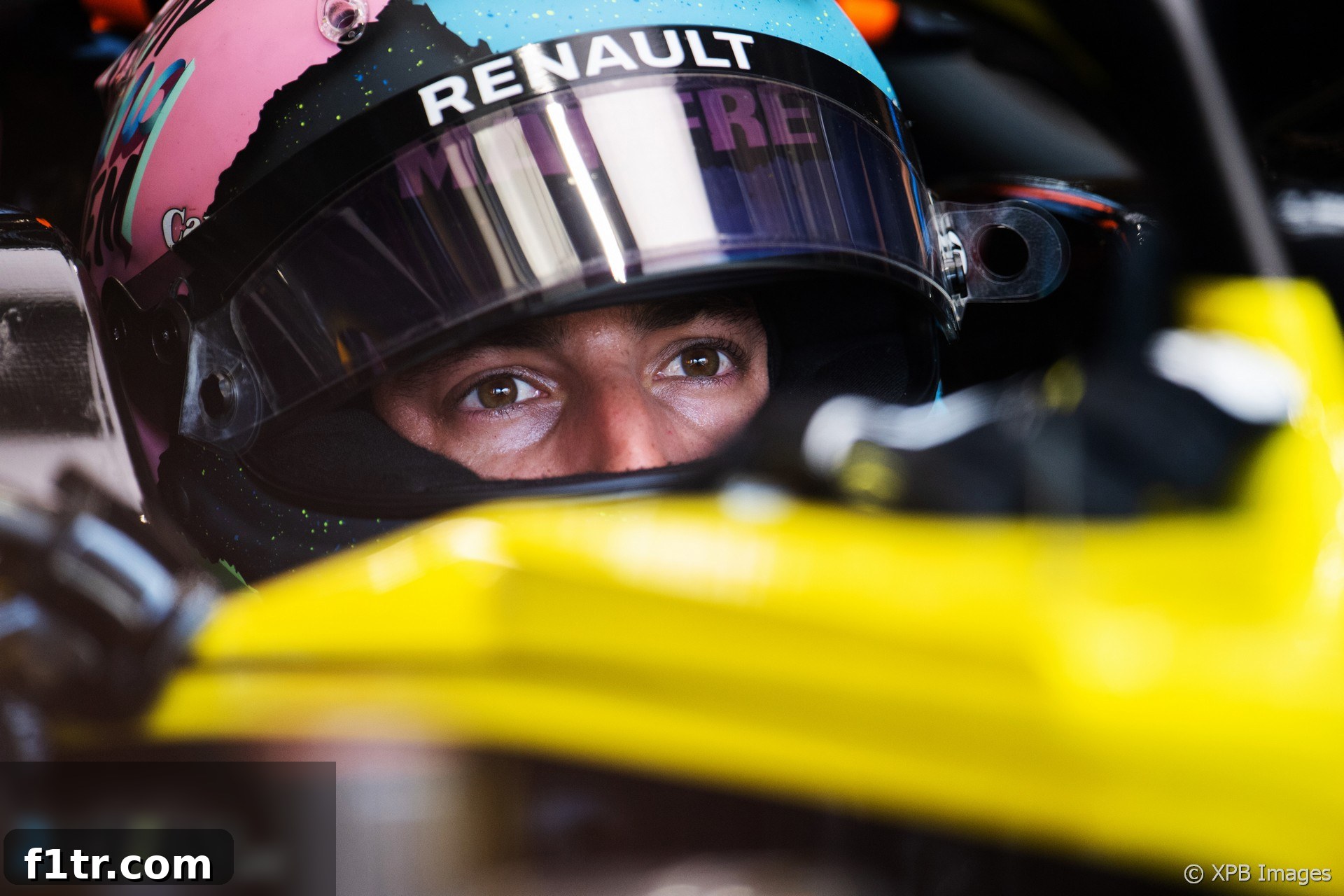
Renault’s Pivotal Upgrade Push: Ricciardo Demands Bigger Steps for 2020 Podium Ambitions
Daniel Ricciardo has issued a clear directive to his Renault team: the next wave of car upgrades must deliver a significantly larger performance boost if they are to remain on course for challenging for podium finishes in the upcoming 2020 Formula 1 season. The Australian driver, a high-profile signing for the French outfit, offered a candid assessment of his debut half-season, acknowledging a mixed bag of results that underscore the urgency of the team’s development trajectory.
Ricciardo’s Candid Mid-Season Reflection: Highs and Lows of 2019
Reflecting on the initial phase of his tenure with the Enstone-based squad, Ricciardo admitted to a rollercoaster of emotions and outcomes. “If I look at Canada, the qualifying, I’d actually say that exceeded some expectation in the first few races,” he stated, highlighting a standout moment where the RS19 showed flashes of its potential, securing a strong fourth on the grid. This performance, achieved on a demanding street circuit, offered a tantalizing glimpse of what Renault could achieve when all elements aligned.
However, the season has not been without its setbacks and disappointments. “But then obviously some other races like Austria that was lower than our expectations,” Ricciardo continued. The Austrian Grand Prix, characterized by high-altitude challenges and specific aerodynamic demands, saw Renault struggle for pace, failing to live up to their own benchmarks. These fluctuating performances paint a picture of inconsistency, a common challenge for teams navigating the competitive midfield of Formula 1.
“So we’ve bounced around in between everything really,” Ricciardo concluded, perfectly encapsulating the team’s journey through the first half of 2019. This variability in performance, while not entirely unexpected for a team undergoing a rebuilding phase, signals that a more stable and consistently competitive platform is desperately needed to contend with established front-runners and ambitious midfield rivals alike.
The Imperative for Progress: Targeting 2020 Podiums
As the Formula 1 season reaches its halfway mark, Ricciardo believes it’s a critical juncture for Renault to reassess and accelerate their development. “But now at this halfway point I think we can say alright, we need to do better. If we want to be on target for podiums in 2020 we need to start making bigger steps in the second half of the year.” This declaration underscores the ambitious targets set by Renault – a manufacturer team with a rich history in the sport and a clear desire to return to the pinnacle.
The pursuit of podiums in Formula 1 is a formidable challenge, requiring not just incremental gains but significant leaps in performance. For Renault, this means closing a substantial gap to the top three teams – Mercedes, Ferrari, and Red Bull – while simultaneously fending off the advancements of fierce midfield competitors like McLaren, Racing Point, and Toro Rosso. The second half of the season, therefore, becomes a crucial proving ground, not just for championship points but for laying the groundwork for future success.
Ricciardo’s personal expectations for the remainder of the 2019 season also reflect this desire for tangible improvement. “Up until now I’m somewhere in the middle with expectations. But I would now expect the second half of the season to have some more regular top six finishes or something.” Achieving consistent top-six results would signify a notable step forward, demonstrating improved raw pace and greater reliability – key ingredients for any team aspiring to higher honors.
Renault’s Upgrade Timeline: Anticipating Post-Summer Break Developments
The rhythm of Formula 1 development is dictated by a relentless cycle of design, testing, and production. Renault’s most recent significant car upgrade package was introduced at the French Grand Prix. While these updates offered some progress, Ricciardo acknowledges they were not transformative. “We brought some updates in France, they weren’t massive,” he commented, indicating that the impact on overall performance was modest rather than revolutionary.
The focus now shifts to the next “proper update,” which Ricciardo indicates will not arrive until “well after the summer break.” The summer shutdown period, a mandatory factory closure designed to give teams a brief respite, also serves as an intense development window for components that will be introduced in the latter stages of the season. Teams often use this time to finalize designs and begin manufacturing significant aerodynamic or mechanical revisions.
Ricciardo is clear about the need for these upcoming developments to make a more palpable difference. “But I would expect some developments. I think the next batch we bring I would expect to feel a bit more.” For a driver of his caliber, feeling a tangible difference in the car’s behavior and performance is crucial for confidence and maximizing lap times. These ‘bigger steps’ are not just about raw speed but also about improving the car’s balance, consistency, and overall driveability, which are vital for extracting peak performance over a race weekend.
The Long Game: Ricciardo’s Perspective on Renault’s Journey
Despite the challenges, Ricciardo maintains a balanced perspective, acknowledging that success in Formula 1 is rarely instantaneous. “I’m not down or anything because again I would hope that we would be doing better. But I knew that, yes we want to be there, but I knew it was going to take some time.” His move from a top-tier team like Red Bull to a rebuilding project at Renault was always understood to be a long-term commitment, requiring patience and a strategic approach to development.
However, patience has its limits, and clear progress is essential to sustain motivation and demonstrate the viability of the project. “If we stay where we are now till the end of the season then then that’s lower than what we expect.” This statement serves as a potent reminder that while Ricciardo is prepared for the journey, he also expects to see concrete evidence of the team’s upward trajectory. Stagnation is not an option for a driver of his ambition, nor for a manufacturer team with significant investments in the sport.
The latter half of the 2019 season is thus more than just a fight for championship points; it’s a critical testing ground for Renault’s 2020 aspirations. Every upgrade, every development step, and every improved performance will be scrutinized, not just for immediate gains but for its potential to propel the team towards their ultimate goal of becoming regular podium contenders. The pressure is mounting, and the stage is set for Renault to demonstrate their capability to deliver on their ambitious promises.
The Crucial Role of Development in Modern F1
In the highly competitive world of Formula 1, development never stops. Teams are constantly pushing the boundaries of engineering and design, introducing new components at almost every race weekend. The difference between a minor tweak and a “proper update” lies in the scale and impact of the changes. Major upgrades often involve significant aerodynamic overhauls, such as new front and rear wings, floor modifications, or revised bargeboards, all aimed at generating more downforce and reducing drag. Mechanical upgrades might include suspension revisions or even tweaks to the power unit architecture, though the latter is less common mid-season.
For a team like Renault, whose stated aim is to challenge the established top three, these upgrades are not just about improving current performance but also about understanding development directions for future seasons. The data gathered from new components in 2019 directly informs the design philosophy for the 2020 car, and even influences the groundwork for the significant regulation changes anticipated in 2021. Therefore, Ricciardo’s insistence on “bigger steps” is a call for more effective and impactful development, not just a series of small, incremental improvements.
The challenge for Renault is compounded by the intense competition. Rivals are also developing, meaning any progress made by the French team must be significant enough to outpace their competitors’ advancements. This perpetual arms race of engineering talent and resources makes every upgrade package a high-stakes gamble, with the potential to either elevate a team or leave them trailing in the dust. Ricciardo, with his experience from championship-winning teams, understands this dynamic implicitly, which is why his demand for substantive progress carries significant weight.
Looking Ahead: Renault’s Path to Consistent Top-Six Finishes
The ambition to achieve “more regular top six finishes” in the second half of 2019 is a realistic yet challenging target for Renault. It implies a car that can consistently qualify and race ahead of a significant portion of the midfield, occasionally disrupting the established hierarchy of the top teams. This would be a testament to the cumulative effect of their ongoing development, both in terms of car performance and operational efficiency.
For Daniel Ricciardo, a driver renowned for his aggressive overtakes and strong race craft, a more competitive car would unlock his full potential and allow him to showcase the race-winning talent he demonstrated at Red Bull. His feedback on the car’s handling, balance, and responsiveness is invaluable to the engineering teams at Enstone and Viry-Châtillon, guiding their design choices and ensuring that the upgrades delivered are truly effective on track. The synergy between driver and team is paramount, and Ricciardo’s outspokenness highlights his commitment to driving Renault forward.
The journey to Formula 1 success is a marathon, not a sprint. Renault’s current phase is about establishing a solid foundation, refining their processes, and steadily improving their competitive standing. Ricciardo’s call for bigger performance steps is not a sign of disillusionment but rather a strategic push, a clear articulation of what is required to transform a promising project into a podium-contending force. The eyes of the F1 world will be on Renault in the latter stages of 2019, eagerly anticipating whether they can deliver on this crucial imperative and set the stage for a stronger challenge in 2020.
Related Articles: 2019 F1 Season Insights
- Crying in the Melbourne car park at 2019 grand prix was my career low – Ocon
- McLaren Racing reports reduced £71 million loss in 2019
- Kvyat: Hockenheim podium last year was “my biggest achievement” so far
- How the FIA’s new encrypted fuel flow meter targets Ferrari’s suspected ‘aliasing’ trick
- “He smashed my office door”: 23 must-see moments from ‘Drive to Survive’ season two
Browse all 2019 F1 season articles