Ten years ago, the vibrant world of Formula 1 was brought to an abrupt and devastating halt. A single event served as a stark, brutal reminder of the inherent dangers lurking beneath the glamour and speed of the fastest racing machines on Earth. The sport, which had enjoyed an unprecedented period of safety, was forced to confront a reality it had hoped was relegated to history.
For two decades following the harrowing weekend at Imola in 1994, Formula 1 had embarked on a relentless pursuit of safety. Sweeping changes, driven by a united front of teams, drivers, and the governing body, the FIA, had transformed the sport. The collective resolve was clear: never again would a Grand Prix weekend witness such tragic loss of life.
These dedicated efforts fostered a generation of fans who experienced the luxury of never truly knowing the profound grief of watching a hero perish behind the wheel of an F1 car. While the sport was not entirely without incident – injuries occurred, and dedicated marshals like Paolo Ghislimberti and Graham Beveridge tragically lost their lives volunteering for the sport they cherished – driver fatalities seemed a thing of the past. Crashes, no matter how violent, typically ended with drivers either being swiftly taken to hospital and stabilized, as Mika Hakkinen was in Adelaide in 1995, or remarkably, climbing out of their mangled machines under their own power.
In this era of heightened safety, only a handful of individuals could be considered to have died from Formula 1-related accidents as drivers. In 2000, John Dawson-Damer was killed while driving a 1969 Lotus 63 at the Goodwood Festival of Speed, an incident that also claimed the life of marshal Andrew Carpenter. Later, in 2013, Marussia test driver Maria de Villota, who had suffered life-threatening head injuries from a testing crash the previous year, succumbed to suspected complications from that accident. These incidents, while tragic, were largely isolated and did not occur during competitive Grand Prix racing.
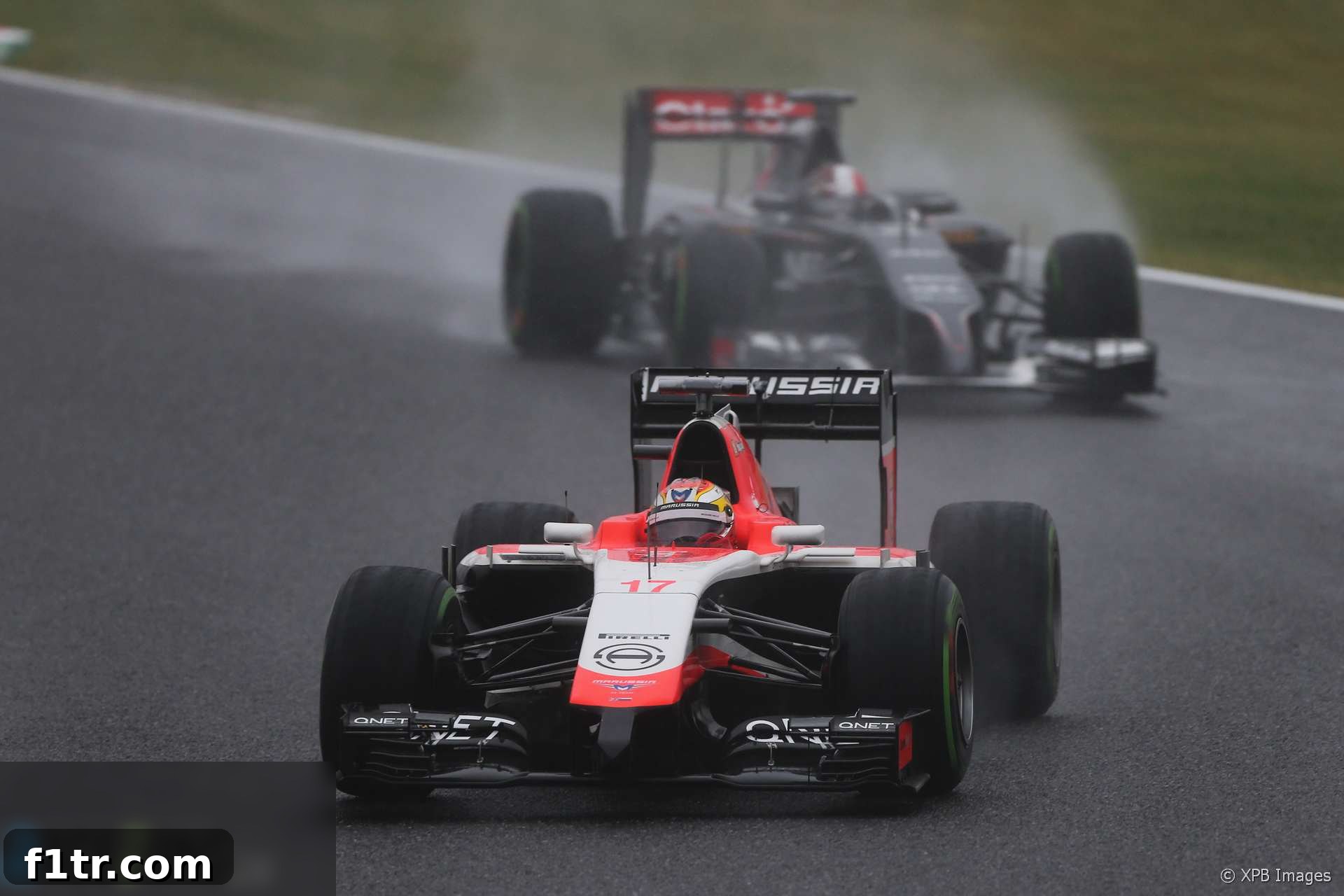
However, October 5th, 2014, marked the last day that 25-year-old Marussia driver Jules Bianchi was able to pursue his passion – a passion that captivated millions of fans worldwide. Nine months later, Bianchi’s vibrant life tragically concluded, a direct and devastating consequence of the events that unfolded on that fateful day at Japan’s Suzuka circuit.
Before the Unthinkable: A Precedent at Suzuka
The Suzuka circuit, known for its challenging layout and often unpredictable weather, had a history of close calls. Two decades prior to Bianchi’s accident, a rain-soaked race at Suzuka nearly produced a tragedy at the fast, uphill left-hander of Dunlop Curve. Footwork driver Gianni Morbidelli lost control of his car in the treacherous full-wet conditions, crashing heavily into the outside tyre barriers. The incident was initially managed under local yellow flags, with multiple marshals and two course vehicles promptly entering the track surface to attend to the stricken car.
Moments later, in a chilling precursor to future events, Martin Brundle aquaplaned off the circuit at the very same spot as Morbidelli. His car slid uncontrollably into the barrier, striking and injuring one of the marshals who was engaged in recovering the crashed Footwork. The marshal suffered a broken leg, and the race was subsequently red-flagged. Brundle later received a reprimand from the event’s stewards for “not controlling his car’s speed” in the adverse conditions. However, the driver vehemently insisted that he “was not pushing particularly hard” around the saturated track, attributing the incident to the sheer volume of standing water on the circuit.
Despite this alarming accident and Brundle’s pointed comments, the prevailing culture surrounding the deployment and interpretation of localized yellow flags remained largely unchanged over the subsequent decades. There was an implicit trust from the FIA and F1’s long-serving race director, Charlie Whiting, that the ‘best drivers in the world’ would instinctively obey yellow flags in the event of accidents. Consequently, many single-car incidents were handled by trackside marshals under local yellow flags, rather than the immediate neutralization of races with a Safety Car. This approach, while efficient in minimizing race disruption, placed significant reliance on individual driver judgment and the visibility of flag signals.
The recovery of damaged cars also frequently necessitated the deployment of recovery vehicles – often large, heavy tractors – into gravel traps or even onto the active track itself to remove wreckage. Again, these operations were predominantly covered by local yellow flags, signaling caution but not a mandatory reduction in speed across the entire circuit. At this point, Formula 1 had not yet adopted concepts like a ‘Virtual Safety Car’ (VSC) or ‘Full Course Yellow’ – systems designed to compel drivers to adhere to a track-wide speed limit, which would eventually be introduced into the FIA’s World Endurance Championship at the beginning of 2014.
However, not everyone within the sport was comfortable with the routine use of recovery vehicles under such conditions. Following a heavy crash by Tyrrell driver Tora Takagi at Hockenheim’s first corner during qualifying for the 1998 German Grand Prix, Martin Brundle, now an astute ITV commentator, openly voiced his profound discomfort. He watched as a tractor operated within the gravel trap while cars continued to lap the circuit, albeit under double-waved yellow flags.
“This always terrifies me when you get a John Deere coming into play,” Brundle muttered to his co-commentator, the legendary Murray Walker. His concern was palpable: “If one car can make it into there, all of the cars can make it that far. One day, somebody’s going to end up underneath that tractor – it really terrifies me.” Brundle’s prophetic words, spoken sixteen years before Suzuka 2014, underscored a known, yet unaddressed, vulnerability in the safety protocols.
The Bianchi Tragedy: A Prophecy Fulfilled
On lap 42 of the 2014 Japanese Grand Prix, held at a notoriously waterlogged Suzuka circuit, history tragically repeated itself. Sauber driver Adrian Sutil lost control of his car while navigating the challenging uphill Dunlop Curve, spinning off and crashing into the tyre barriers. The incident immediately triggered local double yellow flags. Marshals swiftly entered the track to attend to Sutil’s car, and a recovery vehicle, a large mobile crane, was dispatched to the scene to extract the car from the runoff area.
As Sutil’s accident unfolded on the Sky F1 broadcast, Martin Brundle, once again in the commentator’s booth, reflected with an eerie sense of foreboding. “Sutil’s seventh retirement… but where is the car? How quickly can they get it out of the way?” he mused. “Are others going to be aquaplaning or spinning off at the same point? Something that’s a bit sensitive to me, because it happened to me…”
Within seconds of Brundle uttering those chilling words, Jules Bianchi, piloting his Marussia, lost control. He aquaplaned and veered off track at the very same Dunlop Curve, almost identically to Sutil just a lap earlier, and to Brundle two decades prior. However, Bianchi’s trajectory was tragically different. His car slid directly into the side of the recovery crane that was engaged in retrieving Sutil’s Sauber. The impact was horrific: Bianchi’s helmet struck the underside of the heavy machinery at an estimated speed of 126 kph. The immense, concentrated force of this collision resulted in immediate and severe diffuse axonal injury to his brain, a devastating trauma that even the state-of-the-art protection offered by his helmet could not prevent.
The scene was one of shock and disbelief. Bianchi was carefully extracted from his wrecked car and rushed by ambulance to the Mie General Medical Center in Yokkaichi. The medical helicopter, which would typically have provided the swiftest transfer, was grounded due to the perilous weather conditions, adding precious minutes to the critical rescue operation. Two days later, Marussia issued a statement confirming Bianchi had suffered a “diffuse axonal injury” and was in a critical but stable condition, a fragile hope clinging to the edge of despair.
Several weeks later, as his condition remained unchanged, Bianchi was transferred to Le Centre Hospitalier Universitaire de Nice in his native France, where his family could be closer to him during his ongoing treatment. Despite the best medical care and the unwavering hopes of his family, team, and millions of fans, Jules never regained consciousness. In July 2015, nine agonizing months after the accident, the Bianchi family announced the devastating news: Jules had succumbed to his injuries. He was just 25 years old, a promising career and a bright future tragically cut short.
After the Tragedy: A Renewed Commitment to Safety
The horrific accident and Bianchi’s subsequent passing sent shockwaves through the entirety of Formula 1 and the FIA. Two months to the day after the incident, the FIA published a comprehensive report compiled by their specially appointed accident panel. This panel, comprised of leading figures in motorsport safety and governance, including FIA Safety Commission president Peter Wright, Ross Brawn, Stefano Domenicali, WEC race director Eduardo Freitas, F1 world champion Emerson Fittipaldi, and GPDA president Alex Wurz, meticulously outlined the key facts, observations, and recommendations stemming from the Suzuka tragedy.
The panel’s extensive investigation included an examination of nearly 400 yellow flag incidents over the preceding eight years leading up to Bianchi’s crash. Their finding was crucial yet complex: they concluded that there was “no apparent reason why the Safety Car should have been deployed either before or after Sutil’s accident” based on existing regulations and precedents. However, they also determined that the Marussia driver “did not slow sufficiently” under the double yellow flags. The report suggested that had Bianchi reduced his speed in accordance with the stringent regulations governing yellow flag zones, the immediate physical danger to himself, his fellow drivers, or the trackside marshals would have been significantly mitigated, if not entirely averted.
The report put forth several critical recommendations aimed at bolstering safety for the future. Chief among these was a proposed revision to the FIA’s yellow flag regulations, empowering race control to impose a maximum speed limit on drivers within double yellow flag zones. Other significant suggestions included adjusting race schedules to avoid the peak of regular rainy seasons and ensuring that Grand Prix starts did not occur too close to sunset, especially outside of pre-planned night races, to mitigate the risks associated with fading light and poor visibility.
Implementing these recommendations swiftly, the FIA introduced the Virtual Safety Car (VSC) into Formula 1 at the start of the 2015 season. The VSC mechanism, designed to neutralize the race across the entire circuit while recovery operations are underway, mandates a precise speed reduction for all drivers. It was first deployed in anger at that year’s sixth round in Monaco, following a crash involving Max Verstappen and Romain Grosjean, and has remained a crucial safety tool in the championship ever since, effectively eliminating the localized dangers of previous yellow flag procedures.
Even before Bianchi’s injury and subsequent death, as early as 2011, the FIA had initiated explorations into means of protecting drivers’ heads from impacts in open-cockpit cars. Bianchi’s tragedy served as a stark, ultimate confirmation of the urgent need for such protection, joining a grim list of drivers who suffered severe or fatal head injuries at speed, including Felipe Massa’s injury at the Hungaroring in 2009 and the tragic deaths of Henry Surtees and IndyCar racer Justin Wilson. Several concepts for driver head protection were proposed and evaluated, but the FIA ultimately pursued the device known as the ‘halo’.
The halo is a robust titanium ring that encases the driver’s helmet within the cockpit. Its primary function is to prevent medium-to-large sized debris, such as errant wheels or larger car components, from impacting the driver’s head while in the car. It also offers critical protection during accidents by preventing the driver’s head from hitting trackside structures or other cars. Initial tests of the halo on F1 cars were conducted throughout the 2016 season, with the FIA making the device mandatory for the world championship from 2018. Its implementation quickly extended to junior categories, being installed on the inaugural F2 car in 2018, F3 cars the following season, and F4 cars from 2021, demonstrating a holistic approach to driver safety across the motorsport ladder.
Crucially, Laurent Mekies, the FIA’s safety director at the time, stressed an important analytical finding: despite its groundbreaking protection, the halo would not have saved Bianchi from his grave injury had it been installed on his Marussia that day in Suzuka. After extensively analyzing several historical serious and fatal accidents in single-seater motorsport, which consistently showed the halo would have significantly improved safety outcomes in many ‘car-to-environment’ accidents, it was determined that the impact forces involved in Bianchi’s specific crash far exceeded the protective capabilities of the device. This finding, while sobering, underscored the extreme nature of his accident and the continuous challenge of designing for every conceivable scenario.
Although its design initially drew criticism from some drivers and fans for aesthetic reasons, the halo has since become a ubiquitous and universally accepted aspect of modern single-seater motorsport. Its efficacy is undeniable; the device has been unequivocally credited with preventing numerous driver injuries and, in several high-profile instances, saving lives since its introduction. Romain Grosjean famously attributed his miraculous survival from his horrific fiery crash in Bahrain 2020 to the halo, which deflected the barrier away from his head. Similarly, Lewis Hamilton credited the halo with preventing him from suffering injury when Max Verstappen’s Red Bull climbed over the top of his Mercedes after the pair collided at Monza in 2021, showcasing its vital role in protecting drivers during high-speed, multi-car incidents.
Suzuka Back Under the Spotlight: Echoes of the Past
When the new generation of ground effect F1 cars were introduced in 2022, they were heralded as the safest ever, boasting unprecedented driver protection reinforcements. This claim appeared to be dramatically substantiated when Alfa Romeo driver Zhou Guanyu emerged unharmed from a terrifying opening lap crash at the British Grand Prix. The halo was once again lauded for playing a critical role in Zhou’s survival from major injury while his car was upside down, despite his rollover hoop having broken upon impact – further proof of the device’s life-saving capabilities.
However, when the sport returned to Suzuka in September 2022, for the first time since the global pandemic, drivers were confronted by haunting memories and a chilling near-miss that echoed the events of eight years prior. The race, much like in 2014, had commenced in heavily wet conditions, with extremely low visibility created by the dense spray kicked up by the pack of cars. After the Safety Car was deployed following a crash for Carlos Sainz Jnr at the long right-hand Turn 12, AlphaTauri driver Pierre Gasly arrived at the scene of the accident at an alarming pace. He was attempting to catch the queue ahead after an unscheduled pit stop on the opening lap, having collected an advertising board dislodged onto the track by Sainz’s earlier crash.
As Gasly approached the incident site at approximately 200 kph, he was stunned to discover a large tractor on track, just off the racing line, engaged in recovering Sainz’s Ferrari. Gasly immediately broadcast his outrage to his team, furious that a recovery vehicle was on track, which he had passed at such speed in treacherous wet conditions without adequate prior warning beyond a local yellow flag. The parallels with Bianchi’s fatal accident were immediate and deeply unsettling for everyone involved. Gasly was subsequently handed a 20-second time penalty for speeding under a red flag along the back straight following the incident, where he reached speeds of 250 kph, further complicating the already tense situation.
The Suzuka 2022 incident prompted the FIA, now under the leadership of new president Mohammed Ben Sulayem, to launch an immediate and thorough review of the race and the actions of race director Eduardo Freitas, who was sharing duties that season with Niels Wittich. While the review acknowledged Gasly had driven too quickly into the accident scene, it also identified a critical flaw: he had been able to drive faster than intended under Safety Car conditions due to a quirk in the system that stemmed from his slow opening lap. This highlighted vulnerabilities in the system’s ability to uniformly enforce speed limits under all circumstances.
Once again, several crucial recommendations emerged from the review, many of which were swiftly implemented for the very next round in the United States. A new warning message was introduced on the FIA’s live timing system, explicitly notifying teams when recovery vehicles were active on track, with teams now obliged under the regulations to immediately relay this critical information to their drivers. The dual race director system, which had proven problematic, was abolished, with Niels Wittich assuming the role of full-time race director. Furthermore, additional wet weather tyre testing opportunities were granted to Pirelli, F1’s sole tyre supplier, coming into effect for subsequent seasons to enhance performance and safety in adverse conditions.
A key long-term objective for the FIA also emerged: reducing spray with the new ground effect cars. The governing body conceptualized and tested multiple potential solutions aimed at decreasing spray in wet conditions and significantly improving wet weather visibility for drivers. These included innovative spray guards positioned behind the wheels, tested by Mercedes reserve driver Mick Schumacher in 2023, and full wheel covers, which were trialled by Ferrari at their Fiorano test circuit earlier this season. Despite these dedicated efforts, initial tests failed to produce consistently promising results, leading to the unfortunate decision to scrap further development work on these specific spray guard concepts, underscoring the technical challenges involved.
Lessons Still to Learn: An Unending Quest for Safety
Just like the relentless pursuit of performance and speed, the FIA’s and Formula 1’s quest to make the sport inherently safer for its drivers, marshals, and spectators, without diluting the very essence of what makes the series so captivating and beloved, is a continuous and unending journey. It was easy, perhaps even comforting, to believe that driver fatalities were a thing of the past when Jules Bianchi was still competing in Formula 1. However, the subsequent years have painfully demonstrated that no one should ever make such an assumption, even in the age of advanced safety.
In the years following the profound loss of Bianchi, tragedy struck a Grand Prix weekend once more in 2019, underscoring the enduring risks. Formula 2 racer Anthoine Hubert died in a horrifying multi-car crash at Spa-Francorchamps that also resulted in serious injuries for fellow driver Juan Manuel Correa. Hubert’s death occurred despite the mandatory introduction of the halo to the series, highlighting that while the device offers critical protection, it cannot prevent all fatalities in every extreme circumstance. Just last year, Formula Regional racer Dilano van ‘t Hoff also lost his life from a crash in a wet race at Spa-Francorchamps – an incident that shared eerie and painful parallels with both Hubert’s and Bianchi’s fatal accidents, serving as a stark reminder that wet conditions, visibility, and track safety remain paramount concerns across all levels of motorsport.
Amidst the natural and necessary focus on driver safety in the aftermath of the Bianchi accident, the grave dangers faced by marshals during races were for a time largely overlooked. Yet, trackside workers have come perilously close to being struck on multiple occasions, indicating that Formula 1 has narrowly escaped further tragedy more times than many realize over the years. This highlights a critical, often understated, aspect of overall event safety.
Less than a year after Bianchi’s crash, the 2016 Singapore Grand Prix saw the race controversially restarted from a Safety Car period while a marshal was still actively collecting debris on the critical run to Turn One, putting him in immediate danger. In 2019, Racing Point driver Sergio Perez came terrifyingly close to striking two marshals in Monaco who were crossing the track as he exited the pit lane under Safety Car conditions, a near-miss that caused widespread alarm. The following year in Imola, Perez’s then team mate, Lance Stroll, passed multiple marshals sweeping the circuit on the downhill run to Acque Minerale at speeds exceeding 250 kph, again demonstrating unacceptable risks to track personnel. More recently, in 2023, Alpine junior driver Victor Martins received a drive-through penalty in a Monaco race for failing to adequately slow under yellow flags, having narrowly avoided two marshals attending to an accident. Post-race procedures were also permanently altered last year after an alarming incident at the end of the Azerbaijan Grand Prix, when Esteban Ocon pitted on the final lap, only to be greeted by a large group of photographers encroaching on the fast lane, positioning themselves for the post-race parc fermé, presenting a new and avoidable hazard.
In the direct aftermath of the Bianchi crash, the FIA’s accident panel expressed a fundamental and crucial philosophy: it was deemed “fundamentally wrong to try and make an impact between a racing car and a large and heavy vehicle survivable.” Instead, they stressed, it was “imperative to prevent a car ever hitting the crane and/or the marshals working near it.” This statement marked a significant shift in safety thinking, moving from mitigating the consequences of impacts to preventing the impacts themselves.
Ten years later, Formula 1 is demonstrably safer than ever before, with countless advancements directly attributable to the tragic events of October 5th, 2014. From the widespread adoption of the halo, which, while not able to save Jules Bianchi’s life, has undoubtedly saved many others, to increased sensitivity and more rigorous protocols around accident management and recovery operations by race control, a robust framework is now in place. These measures are designed to help ensure that no similar tragedy is ever allowed to happen again. However, the subsequent deaths of Anthoine Hubert and Dilano van ‘t Hoff serve as poignant reminders that driver safety can never be taken for granted, even in 2024. Nor can the persistent dangers posed to pit crews, marshals, or even spectators be ignored; safety remains a living, evolving commitment.
Ultimately, Jules Bianchi’s legacy in Formula 1 transcends the profound impact he had on making the sport he loved safer. Like Ayrton Senna, Roland Ratzenberger, and so many of his talented peers who came before him, Bianchi will continue to be remembered and celebrated not just for the changes wrought by his tragic loss, but also for his undeniable talent, his courage, and for what he achieved in Formula 1. He will be respected for everything he surely would have gone on to achieve, had he only been granted the chance to continue his promising journey in the sport.
Formula 1 Insights
- Controversies, Norris, Newey and more: Five new motorsport books reviewed
- One of F1’s greatest races happened 15 years ago today. Or did it?
- “Overtaking is overtaking”: Domenicali denies F1’s yo-yo racing is “artificial”
- The crashes F1 is trying to prevent may be rare – but the danger is obvious
- F1 returning to India soon after 2027 sounds like wishful thinking
Browse all Formula 1 articles