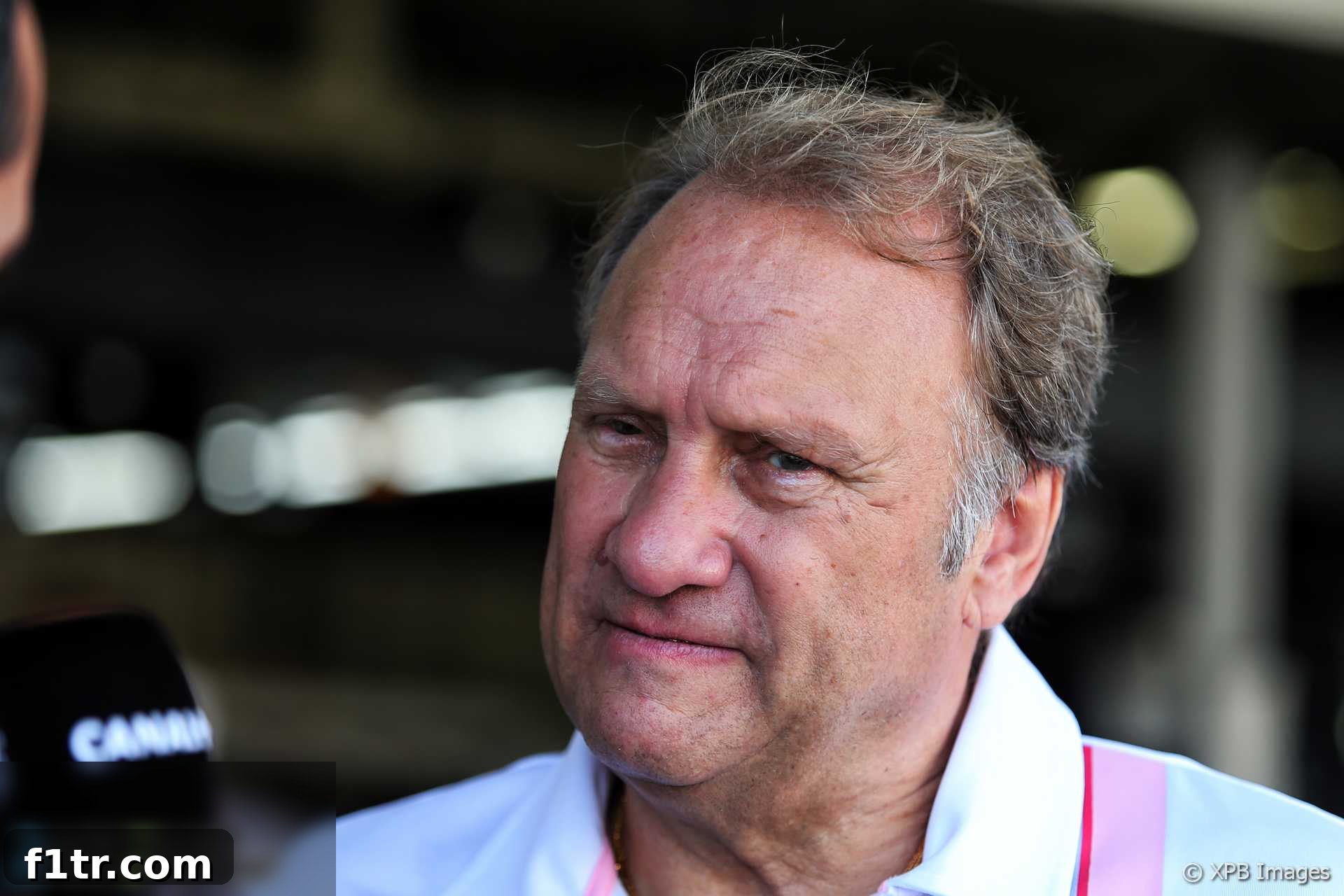
Robert Fernley: A Pillar of Motorsport and Champion of the Underdog
A Fond Farewell to a Motorsport Icon
The global motorsport community mourns the passing of Robert Fernley, a figure widely respected for his unwavering dedication, astute leadership, and candid advocacy within Formula 1 and beyond. Fernley, who served as the influential deputy team principal of Force India, passed away at the age of 70, leaving behind a profound legacy that underscored the power of efficient management and sheer determination against overwhelming odds. His contributions were instrumental in shaping the fortunes of various racing outfits, but it was his tenure at Force India where he truly cemented his reputation as a formidable force, consistently guiding the team to achievements far exceeding its available resources.
Fernley was more than just a name on an organizational chart; he was the operational backbone and strategic mastermind behind Force India for a significant portion of its 15-year journey. While officially designated as deputy, he was the principal appointee of co-owner Vijay Mallya, effectively running the day-to-day operations and long-term vision of the team. His leadership was crucial in navigating the intricate and often brutal landscape of Formula 1, allowing a relatively small independent team to compete, and often surpass, much larger, manufacturer-backed rivals. His passing marks the end of an era for many who remember his relentless spirit and his commitment to the integrity of the sport.
The Architect Behind Force India’s Miracles
Under Robert Fernley’s astute guidance, Force India transcended its status as a midfield contender to become a genuine threat to Formula 1’s established powerhouses. The team’s remarkable ability to punch above its weight was a direct reflection of Fernley’s management philosophy: lean operations, strategic decision-making, and an unwavering focus on efficiency. This approach yielded exceptional results, most notably in the 2016 and 2017 seasons, where Force India secured an astonishing fourth place in the Constructors’ Championship. This achievement was particularly significant as they finished behind only the formidable trio of Mercedes, Red Bull Racing, and Ferrari, a feat almost unimaginable for a team operating on a fraction of their budgets.
The back-to-back fourth-place finishes were not merely statistical anomalies; they were a testament to Fernley’s ability to foster a cohesive and high-performing environment. The 2017 season, in particular, saw a major overhaul of aerodynamic regulations, which typically favors teams with vast R&D budgets capable of adapting quickly. Yet, Force India, under Fernley’s stewardship, navigated these changes with remarkable agility, demonstrating a deep understanding of resource optimization and technical execution. His leadership ensured that every penny spent translated into tangible performance on track, often through smart engineering choices, meticulous race strategies, and the development of talented drivers like Sergio Perez, Nico Hulkenberg, and Esteban Ocon, who thrived under the team’s focused direction.
Fernley’s impact was deeply felt throughout the team, from the engineers to the pit crew. He instilled a culture of resilience and determination, where every team member was empowered to contribute to the collective goal. This unique blend of financial prudence and competitive drive allowed Force India to consistently overachieve, earning them the moniker of “the best of the rest” and establishing them as a beloved underdog story within the high-stakes world of Formula 1. His ability to extract maximum performance from limited resources became a benchmark for how independent teams could not only survive but also flourish in a championship increasingly dominated by mega-corporations.
Navigating Financial Storms: The End of an Era
Despite Force India’s on-track triumphs, the financial stability of the team began to waver significantly due to the mounting troubles of its then co-owner, Vijay Mallya. By 2018, Mallya’s extensive financial empire faced severe challenges, casting a long shadow over the team and ultimately plunging Force India into administration. This period was incredibly difficult for Fernley and the entire organization, as the success they had meticulously built was jeopardized by external financial pressures beyond their control. The uncertainty created a tense atmosphere, but Fernley continued to lead with steadfast resolve, striving to keep the team operational and competitive amidst the growing crisis.
The dire situation ultimately led to the sale of Force India’s assets. A consortium led by Canadian billionaire Lawrence Stroll stepped in, purchasing the struggling team and providing it with a much-needed lifeline. This acquisition, while saving the team, marked the end of Robert Fernley’s remarkable tenure in charge. The team was subsequently rebranded as Racing Point, and later, famously transformed into the Aston Martin F1 team. While this transition brought new investment and a fresh identity, it also signaled the close of a distinctive chapter in Formula 1 history – one where Fernley’s hands-on management had made an indelible mark. His departure was a significant moment, as it severed the direct link to the team’s most successful and character-defining years, leaving many to reflect on the era he had so passionately shaped.
An Outspoken Advocate: Challenging F1’s Status Quo
Robert Fernley was not only a gifted team principal but also a fearless and trenchant critic of what he perceived as systemic injustices within Formula 1. He was an outspoken champion for the smaller, independent teams, often taking on powerful figures and organizations that he believed were detrimental to the sport’s overall health and competitive balance. His advocacy was particularly intense regarding the financial disparity that plagued F1, arguing passionately for a more equitable distribution of revenues to ensure the sustainability of teams like Force India.
In 2013, Fernley launched a scathing attack on CVC Capital Partners, the private equity firm that then owned Formula 1. He accused them of “raping the sport,” a strong and memorable phrase that highlighted his deep frustration with their profit-driven approach. He controversially labeled CVC as “the worst thing that ever happened to Formula 1,” articulating a widespread sentiment among smaller teams that the sport’s commercial owners prioritized short-term financial gains over its long-term health and competitive integrity. His criticisms resonated with many who believed that F1’s financial model was creating an unsustainable two-tier system.
Fernley’s ire was not limited to F1’s owners; he also turned his attention to dominant teams, particularly Red Bull Racing. In 2015, he controversially claimed that Red Bull was responsible for the collapse of the Formula One Teams Association (FOTA). FOTA was a crucial alliance of teams formed to collectively negotiate better commercial terms and a more equitable financial framework with F1’s commercial rights holder, Bernie Ecclestone. Fernley argued that Red Bull’s decision to strike its own separate commercial arrangement with Ecclestone undermined FOTA’s collective bargaining power, leading to its eventual dissolution. He believed this action further weakened the position of independent teams, allowing the financial disparities to widen and making it even harder for outfits like Force India to compete effectively.
His willingness to challenge the status quo, even if it meant confronting powerful entities, cemented his reputation as a principled and dedicated figure. Fernley consistently championed the cause of the independent teams, advocating for measures that would promote closer competition and ensure the survival of diverse constructors on the grid. His criticisms were often sharp, but they stemmed from a genuine love for the sport and a desire to see it thrive on a level playing field, where merit and efficiency, not just immense wealth, could dictate success.
A Diverse Career Path: From IndyCar to the FIA
Robert Fernley’s illustrious career in motorsport spanned several decades and continents, showcasing his versatility and deep understanding of various racing disciplines. Before his prominent role at Force India, Fernley had already built an impressive resume in American motorsport, making significant contributions to both the IndyCar and Can-Am series. His experience in these highly competitive environments honed his skills in team management, logistics, and strategy, which would prove invaluable in his later Formula 1 endeavors. He was known for his practical approach and ability to get results, regardless of the series.
His initial foray into Formula 1, albeit in a non-championship context, was a pivotal moment. Fernley ran Ensign F1 cars, engineered by the legendary Mo Nunn, for Vijay Mallya in an Indian Grand Prix that did not count towards the world championship standings. This experience was crucial, as it forged the vital contact and professional relationship with Mallya that would eventually lead to his return to Formula 1 many years later as a key figure in the Force India project. This early connection highlights the long-standing trust and mutual respect between Fernley and Mallya, laying the groundwork for one of F1’s most compelling underdog stories.
The McLaren Chapter and Beyond
Following the significant changes at Force India and its subsequent rebranding, Robert Fernley embarked on a new challenge in 2019, joining McLaren to oversee their ambitious Indianapolis 500 entry for two-time Formula 1 World Champion Fernando Alonso. This venture was highly anticipated, with McLaren aiming to conquer the prestigious American oval race, and Fernley’s experience in IndyCar was seen as a crucial asset. However, the campaign ended in ignominy, as Alonso famously failed to qualify for the 33-car field after grappling with persistent set-up problems throughout practice. This unexpected setback, a rare public failure for both McLaren and Alonso, led to Fernley and McLaren parting ways shortly afterward, a disappointing conclusion to what promised to be an exciting chapter.
Despite the short-lived McLaren spell, Fernley’s commitment to motorsport remained undiminished. In 2020, he took on a significant role within the sport’s governing body, the FIA, assuming leadership of the FIA’s Single Seater Commission. This commission plays a vital role in overseeing and shaping the future of single-seater racing categories worldwide, from junior formulas to Formula 2 and Formula 3, ensuring a clear development ladder for aspiring F1 drivers. Fernley held this influential position until last year, leveraging his vast experience to contribute to the strategic direction and safety aspects of the sport’s foundational categories. His work here further solidified his reputation as a versatile and dedicated figure, committed not just to the pinnacle of motorsport but also to nurturing its future talent and ensuring its sustainable growth.
A Legacy Remembered: Tributes from the Motorsport World
The news of Robert Fernley’s passing sent ripples of sadness across the global motorsport community, prompting an outpouring of tributes from individuals and organizations alike. Formula 1 CEO Stefano Domenicali, who also previously headed the FIA Single Seater Commission and was Fernley’s counterpart during his time as Ferrari’s team principal, expressed his deep sorrow, stating he was “saddened” by the news. Domenicali’s words underscored Fernley’s significant impact: “He was such an important part of Formula 1 and his love and passion for the sport will live forever. My thoughts are with his family and friends at this very sad time.” This sentiment was echoed by many, reflecting the profound respect Fernley commanded.
The FIA, the sport’s governing body, along with the Aston Martin F1 team (the spiritual successor to Force India), and numerous other teams and personalities paid heartfelt tribute to Fernley’s memory. Among those who had the privilege of driving for him, Esteban Ocon, who raced for Force India during its successful years, shared his personal grief. “Sad to hear about the passing of Bob Fernley today,” Ocon posted, acknowledging the mentor he had in Fernley. “He was a great person and leader and I was lucky enough to work and learn from him during my days at Force India. Sending my thoughts and condolences to his family and friends.” These tributes highlight not just Fernley’s professional acumen but also his profound human qualities, his ability to inspire, and the lasting impression he left on those who worked with him.
Robert Fernley’s legacy is one of fierce independence, strategic brilliance, and unwavering integrity. He was a man who dared to challenge the giants of Formula 1, fighting passionately for the underdog and proving that success could be achieved through smart management and sheer force of will, even with limited resources. His contributions, from guiding Force India to unprecedented heights to his later work with the FIA, have left an indelible mark on motorsport. He will be remembered not only for his achievements but also for his character – a true champion of racing in every sense of the word.