Miami Grand Prix 2023: Unpacking the Weather, Track Dynamics, and Race Strategy
As the Formula 1 circus makes its much-anticipated return to the vibrant city of Miami for its second annual Grand Prix, scheduled for the exact same weekend as its inaugural appearance in 2022, the stage is set for a dramatically different and potentially more unpredictable experience. While last year introduced fans and teams to the unique, high-energy atmosphere of the Miami International Autodrome, it also presented a series of unforeseen challenges, particularly concerning the track surface and its impact on racing. This year, meticulous preparations and a potentially volatile weather forecast promise to reshape the competitive landscape, pushing teams and drivers to their absolute limits from the very first session.
A Transformed Track Surface: Addressing 2022’s Grip Conundrum
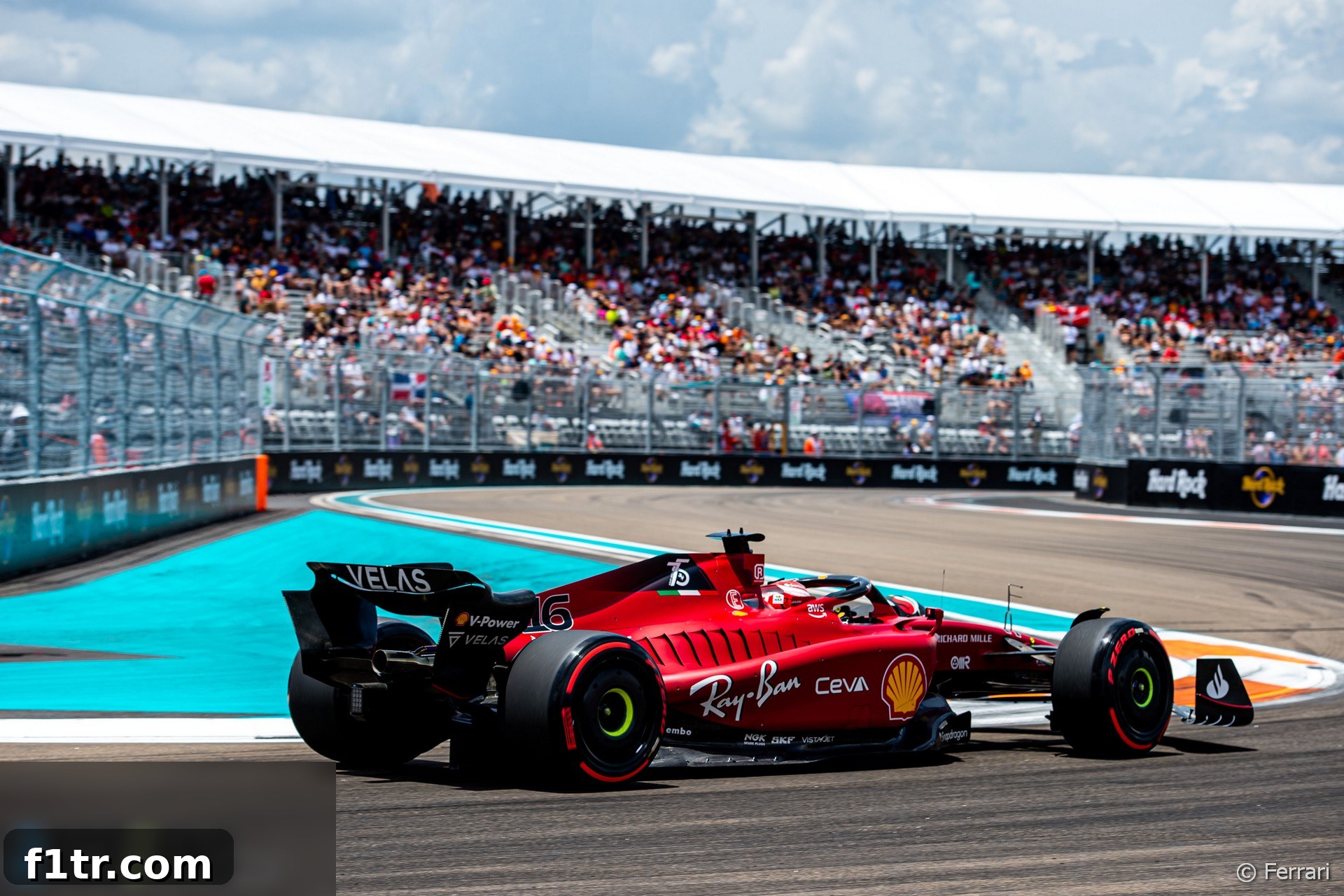
The 2022 Miami Grand Prix, despite its undeniable spectacle and celebrity allure, was significantly affected by a critical issue: the newly laid track surface on the temporary circuit struggled profoundly with grip levels, especially under the searing Floridian heat. Drivers universally reported a distinct lack of adhesion, making it arduous to push their cars to the maximum performance envelope and, for many, contributing to a somewhat processional race lacking the usual F1 thrill. To compound these difficulties, the asphalt itself began to show signs of tearing up in various sections after a weekend of intensive Formula 1 car action, raising concerns about both safety and consistency.
For the 2023 event, organizers have implemented substantial measures to rectify these critical issues. A brand-new asphalt layer has been meticulously laid across the entire 5.41-kilometer circuit. This new surface has been specifically engineered to provide vastly improved grip, aiming to offer drivers the confidence to attack corners and truly exploit the capabilities of their cutting-edge machinery. This significant investment is expected to transform the driving experience, fostering closer, more thrilling on-track battles and potentially unlocking the full competitive potential of this challenging street circuit. The enhanced grip will undoubtedly be a welcome change, promising a more engaging and faster race.
Beyond the simple act of laying new asphalt, further refinements have been incorporated. The new track surface is notably darker in color compared to its predecessor. This seemingly minor aesthetic detail holds significant implications for track temperatures. A darker surface inherently absorbs more solar radiation, meaning that if ambient temperatures climb high enough, the track itself could become significantly hotter than it was in 2022. Elevated track temperatures directly impact tire performance, often accelerating degradation and demanding even more precise management from both drivers and race strategists. Furthermore, the circuit has undergone a thorough jet-washing process. This technique effectively cleans the surface and roughens it at a microscopic level, intentionally increasing its abrasiveness. While beneficial for initial mechanical grip, this heightened abrasiveness, combined with the potential for very high track temperatures, could lead to exceptionally high tire temperatures, putting Pirelli’s compounds under immense stress and forcing teams to meticulously monitor wear throughout the demanding weekend.
Friday’s Grilling: High Heat and Gusting Winds Set the Stage for Practice
The on-track action is set to ignite on Friday, with Formula 1 cars hitting the circuit for the first free practice session at 2:00 PM local time. This specific timing is crucial, as it is projected to coincide with the hottest part of the day, with air temperatures soaring to an estimated 30 degrees Celsius. Such challenging conditions will immediately put the new asphalt and, more critically, the cars’ intricate cooling systems to a rigorous test, offering a stern first impression for drivers and engineers as they gather initial data on the transformed circuit.
Adding another intricate layer of complexity to Friday’s running will be the prevailing wind conditions. A substantial 20-kilometer-per-hour westbound wind is forecast, creating variable aerodynamic challenges across different, crucial sections of the circuit. On the pit straight and the straights situated prominently between turns eight and eleven, drivers will find themselves battling a headwind. This phenomenon can significantly affect braking points, overall stability under high speeds, and crucially, top-end speed on these long sections. Conversely, the extensive back straight, which leads into the final demanding sequence of corners, will see drivers benefit from a welcome tailwind. While this can provide a notable boost in straight-line speed, it also necessitates careful management of downforce and balance, as the car’s aerodynamic platform can behave quite differently and less predictably with a tailwind. Engineers will be diligently analyzing the telemetry and driver feedback from these early sessions to precisely understand the complex impact of the wind and begin optimizing car setups for consistency, stability, and ultimately, raw performance.
As the afternoon progresses into the second free practice session, scheduled for 5:30 PM, the air temperature is only anticipated to dip by a marginal one or two degrees, maintaining the hot conditions. Crucially, the winds are expected to maintain their considerable strength and direction. This consistency in wind conditions across both Friday sessions will provide teams with invaluable comparative data, allowing them to accurately fine-tune their aerodynamic packages and suspension settings based on a stable external factor. However, the sustained strong winds will continue to challenge drivers, demanding acute awareness, precise steering inputs, and impeccable car control, particularly in high-speed corners and under heavy braking zones. Mastering these changeable aerodynamic conditions will be absolutely key to unlocking optimal performance and building confidence ahead of Saturday’s crucial qualifying session, where every tenth of a second counts.
Saturday’s Showdown: Final Prep and the Hint of Rain for Qualifying
Saturday morning brings the final, critical opportunity for teams to dial in their setups and perform last-minute checks during the third free practice session, which commences at 12:30 PM. The forecast indicates temperatures similar to Friday, maintaining the hot, demanding conditions that have characterized the weekend thus far. Winds, however, are predicted to be slightly weaker, though still originating from the same direction, coming inland from the United States’ East Coast, a mere ten kilometers away. These subtle shifts in wind strength can still have a tangible impact on car balance and driver feel, making FP3 an incredibly vital session for performing final adjustments, testing different tire compounds, and building crucial confidence before the immense pressure of qualifying.
The afternoon culminates in the most thrilling part of Saturday: qualifying, set to begin at 4:00 PM local time. While the primary focus for every team and driver will be on raw pace and securing the best possible grid position, there’s a new, tantalizing element of unpredictability to consider: a slight but significant chance of rain. Even a brief, unexpected shower could dramatically disrupt qualifying, forcing teams to make split-second, high-stakes decisions on tire choices – switching from slicks to intermediates – and strategy. The mere threat of rain adds a tantalizing layer of drama, where a perfectly timed lap in a drying window or a strategic gamble on track conditions could spell the difference between securing pole position and facing the challenge of a mid-grid start. Drivers will need to maintain intense focus, not just on their own performance and car control, but also on the ever-evolving weather radar, ready to react to any sudden change in conditions.
Race Day Dynamics: Heating Up Early, Cooling Down Late, and the Looming Rain Threat
Sunday, the day of the Grand Prix, is poised to offer a compelling and complex mix of challenges for all involved. The race is scheduled to commence at 3:30 PM, once again aligning with what is forecast to be the hottest part of the day. This means drivers will embark on the grueling 57-lap race under peak ambient and track temperatures, placing immediate and immense stress on tires, various car components, and their own physical endurance in the cockpit. However, a significant and intriguing dynamic anticipated for race day is a gradual cooling trend throughout the event. As the sun begins its descent towards the horizon and the afternoon progresses into early evening, air temperatures are expected to steadily decrease. This cooling effect will have a direct and profound impact on tire degradation, grip levels, and aerodynamic performance, potentially allowing for longer stints on certain compounds or providing a performance advantage to cars that can better manage their tires as conditions evolve. Teams will need to meticulously factor this cooling trend into their tire strategies, predicting precisely how their chosen compounds will perform under both the initial heat and the subsequent cooler temperatures.
Crucially, Sunday’s forecast also introduces a much higher and more significant chance of rain, escalating the potential for unpredictability. Recent meteorological updates have indicated that the probability of precipitation in the local Miami area could be as high as 66%. This elevated risk means that the 2023 Miami Grand Prix could very well see the arrival of rain before the checkered flag, potentially delivering the first wet grand prix of the 2023 Formula 1 season. A wet race would unequivocally transform the entire strategic landscape. Teams would face critical, high-pressure decisions regarding tire choices – weighing intermediates versus full wet tires – managing sudden and dramatic grip changes, and navigating the increased risk of safety car periods or even red flags. For drivers, a wet Miami circuit would be an immense test of skill, car control, and nerve, promising an unpredictable and exhilarating spectacle for fans worldwide. The narrow, unforgiving confines of a street circuit combined with rain often lead to chaotic, memorable, and defining races, and Miami could be set to deliver just that, cementing its place in F1 history.
Strategic Implications: Mastering Miami’s Variable Conditions
The confluence of a new, potentially more abrasive track surface, fluctuating temperatures across the weekend, consistent strong winds, and a high probability of rain presents a formidable and multi-faceted strategic puzzle for every team on the grid. How will the new asphalt truly affect tire choice and degradation across the different Pirelli compounds? Will the darker surface lead to excessive thermal degradation, thereby favoring more conservative strategies focused on longevity, or will the increased mechanical grip allow for more aggressive pushing and shorter stints?
The variable wind conditions throughout practice and qualifying will demand meticulous aerodynamic setup work. Teams will strive to find a delicate balance that offers maximum stability and confidence in headwinds, particularly in braking zones, while simultaneously not sacrificing too much outright performance in tailwind sections where straight-line speed is paramount. Any misjudgment in this crucial area could lead to a loss of valuable tenths of a second per lap, which can be the difference between points and disappointment.
Should the rain materialize on Sunday, the entire race strategy will be thrown into a state of flux. Pit stop timing for tire changes – especially the critical decision of when to switch to intermediates or full wets, and when to switch back – becomes paramount, as does the ability of drivers to adapt instantly to treacherous, low-grip conditions. The potential for safety cars or virtual safety cars will open up entirely new strategic windows, allowing some teams to gain a significant advantage through opportune stops, while others might see their meticulously planned races unravel due to being on the wrong tire at the wrong time. Fuel management, brake wear, and even driver fatigue will also be significantly amplified by these challenging and unpredictable elements, pushing man and machine to their absolute limits.
The Spectacle of Formula 1 Returns to Miami
Beyond the myriad technical and strategic intricacies, the Miami Grand Prix is, at its very heart, a vibrant celebration of motorsport set against the backdrop of one of the world’s most dynamic and glamorous cities. The compelling combination of a revamped track, a challenging and potentially dramatic weather forecast, and the inherent, captivating drama of Formula 1 promises an unforgettable race weekend for both fervent fans and casual observers alike. Every single session, from the initial exploratory practice laps on Friday to the final, competitive moments of the Grand Prix on Sunday, will be critical. Drivers will battle not just their fierce rivals, but also the elements and the demanding, evolving nature of a circuit that is still relatively new to the high-stakes Formula 1 calendar.
The stakes are exceptionally high, and the potential for a truly iconic, defining race is palpable. Fans can expect a weekend filled with intense, wheel-to-wheel competition, daring strategic gambles, and perhaps, the kind of unpredictable, heart-stopping outcomes that only Formula 1 can truly deliver when Mother Nature decides to play a significant and influential role. Prepare for a thrilling demonstration of unparalleled speed, exceptional skill, and unwavering resilience under the glorious Florida sun – and quite possibly, under the dramatic, unpredictable Florida rain. Miami is ready to write its next chapter in Formula 1 history.
Further Reading on the 2023 Miami Grand Prix
For those eager to delve deeper into the narratives, analyses, and broader discussions surrounding this year’s Miami Grand Prix and Formula 1’s ongoing season, explore these highly relevant articles:
- Verstappen picks Miami Grand Prix as his best drive of 2023 so far
- Albon “maximised most races this year” despite single point scored to date
- A sign the upgrades worked? Ferrari see an upside to Leclerc’s Miami crashes
- Red Bull ‘surprised other teams under-delivered’ with their 2023 cars
- F1’s driver intros are right for US market but wouldn’t work at Silverstone – Horner
Explore all articles related to the 2023 Miami Grand Prix