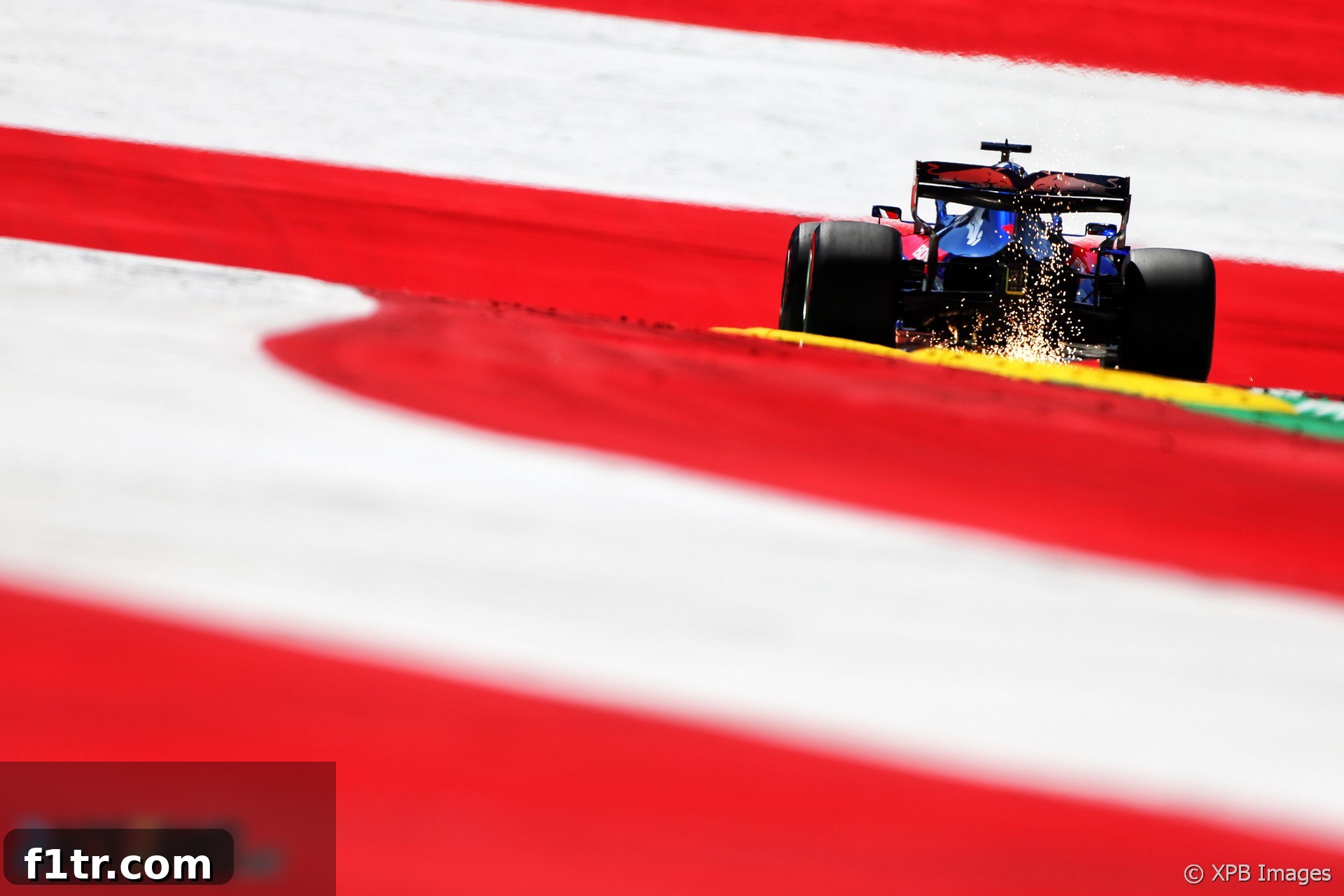
The highly competitive world of Formula 1 constantly pushes the boundaries of engineering, demanding peak performance and unwavering reliability from every component. Yet, even the most advanced machinery has limits, and strict regulations are in place to ensure fair competition and manage costs. This weekend at the 2019 Austrian Grand Prix, two prominent drivers, Carlos Sainz Jnr of McLaren and Alexander Albon of Toro Rosso, will face the consequence of these regulations, incurring significant grid penalties due to changes in their power unit components. These penalties underscore the delicate balance teams must maintain throughout a grueling F1 season, strategically managing their engine allocations to maximize performance without sacrificing valuable grid positions.
For Carlos Sainz Jnr, the penalty is substantial. The McLaren driver has opted for a complete new Renault power unit ahead of the Austrian Grand Prix. This change means he has exceeded his permitted allocation for all six critical components that make up a modern F1 power unit. These components include the Internal Combustion Engine (ICE), Turbocharger (TC), Motor Generator Unit-Heat (MGU-H), Motor Generator Unit-Kinetic (MGU-K), Energy Store (ES), and Control Electronics (CE). Under the regulations, a driver is typically allowed three ICE, TC, and MGU-H units, and two MGU-K, ES, and CE units per season. By taking a brand-new, full suite of components, Sainz has effectively taken a fourth of everything, automatically triggering a penalty that will see him start the race from the very back of the grid. This strategic decision by McLaren likely aims to introduce a fresh, potentially upgraded, power unit for the demanding Red Bull Ring circuit and the races that follow, hoping the long-term performance gain outweighs the immediate grid setback. Given Sainz’s strong performances leading up to this point in the 2019 season, including several points finishes, McLaren will be banking on his ability to carve his way through the field.
Alexander Albon’s situation with Toro Rosso also highlights the tactical nature of power unit management. Albon’s team elected not to introduce Honda’s new power unit specification at the previous round, while his teammate Daniil Kvyat did. This was a deliberate move to avoid both Toro Rosso drivers incurring penalties at the same race, a common strategy to mitigate the damage to a team’s overall points potential. At the Austrian Grand Prix, it’s Albon’s turn to take the hit, incurring penalties for installing new Internal Combustion Engine (ICE), Turbocharger (TC), MGU-H, and MGU-K units. While not a complete new power unit like Sainz’s, exceeding the allocation for these core components still results in a multi-place grid drop. Honda’s continuous development throughout the 2019 season has been crucial for both Toro Rosso and its senior team, Red Bull Racing, and these upgrades often come with a calculated penalty to gain a performance advantage. For a midfield team like Toro Rosso, every point is vital in the constructors’ championship, making these strategic calls even more critical.
Adding to the list of component changes, Valtteri Bottas of Mercedes has also changed an MGU-K on his power unit for this weekend. The MGU-K, or Motor Generator Unit-Kinetic, is a vital part of the hybrid system, responsible for recovering kinetic energy from braking and deploying it as additional power. While a single component change typically results in a smaller grid penalty (often five or ten places, depending on whether it’s the first or subsequent breach for that specific component), it still represents a challenge for a front-running team. Mercedes has been dominant in the 2019 season, and any reliability concern, no matter how minor, is meticulously managed. This change could be a preventative measure to avoid a potential failure during the race or a minor upgrade. Bottas, being in a fierce championship battle with his teammate Lewis Hamilton, will be keen to minimize any impact on his grid position and race performance.
Understanding F1 Power Unit Regulations and Penalties
The introduction of the V6 turbo-hybrid power units in Formula 1 in 2014 brought with it a significant shift in technical regulations, particularly concerning engine component allocation. Prior to this era, teams often used a new engine for almost every race. However, to curb spiraling costs, encourage reliability, and promote technological innovation, the FIA imposed strict limits on the number of power unit components each driver could use per season. These regulations dictate the maximum number of Internal Combustion Engines (ICE), Turbochargers (TC), Motor Generator Unit-Heat (MGU-H), Motor Generator Unit-Kinetic (MGU-K), Energy Stores (ES), and Control Electronics (CE) a driver can utilize before incurring penalties. Typically, this allowance is three of the first three components and two of the latter three, for a 21-race season. Exceeding these allocations leads to grid penalties, starting with a five-place drop for the first breach of a component’s limit, then ten places for subsequent breaches of a new component, and eventually a back-of-the-grid start if multiple new components are introduced at once, or if the total number of components used becomes excessive.
The complexity of these power units means that managing their lifespan is an art form. Teams must constantly monitor telemetry, analyze performance degradation, and project component reliability across multiple race weekends. Strategic penalties have become a common occurrence, where teams deliberately introduce new components at tracks where overtaking is easier, or where the penalty’s impact is less severe due to their car’s inherent pace. The Red Bull Ring, with its relatively short lap and high-power demands, can be a tricky circuit to take a penalty, yet teams sometimes gamble that a fresh engine will provide a net gain over the weekend and the subsequent races. This intricate dance between performance, reliability, and strategy adds another layer of intrigue to every Grand Prix weekend, forcing teams and drivers to think beyond just raw speed.
Engine Components Used So Far – A Glimpse into 2019 Reliability
The following table provides a comprehensive overview of the power unit components each driver has utilized up to the 2019 Austrian Grand Prix. Analyzing this data offers valuable insights into the reliability challenges faced by different teams and engine manufacturers, and predicts which drivers might be facing future penalties.
| No. | Car | Engine | Driver | ICE | TC | MGU-H | MGU-K | ES | CE |
|---|---|---|---|---|---|---|---|---|---|
| 26 | Toro Rosso | Honda | Daniil Kvyat | 4 | 4 | 4 | 3 | 3 | 3 |
| 55 | McLaren | Renault | Carlos Sainz Jnr | 4 | 4 | 4 | 3 | 3 | 3 |
| 27 | Renault | Renault | Nico Hulkenberg | 4 | 4 | 4 | 3 | 2 | 3 |
| 23 | Toro Rosso | Honda | Alexander Albon | 4 | 3 | 3 | 3 | 2 | 2 |
| 3 | Renault | Renault | Daniel Ricciardo | 3 | 3 | 3 | 2 | 2 | 2 |
| 33 | Red Bull | Honda | Max Verstappen | 3 | 3 | 3 | 2 | 2 | 2 |
| 10 | Red Bull | Honda | Pierre Gasly | 3 | 3 | 3 | 2 | 2 | 2 |
| 18 | Racing Point | Mercedes | Lance Stroll | 3 | 3 | 3 | 2 | 1 | 1 |
| 63 | Williams | Mercedes | George Russell | 2 | 2 | 2 | 1 | 3 | 3 |
| 99 | Alfa Romeo | Ferrari | Antonio Giovinazzi | 2 | 2 | 2 | 1 | 2 | 3 |
| 20 | Haas | Ferrari | Kevin Magnussen | 2 | 2 | 2 | 1 | 2 | 3 |
| 4 | McLaren | Renault | Lando Norris | 2 | 2 | 2 | 2 | 2 | 2 |
| 8 | Haas | Ferrari | Romain Grosjean | 2 | 2 | 2 | 1 | 2 | 2 |
| 7 | Alfa Romeo | Ferrari | Kimi Raikkonen | 2 | 2 | 2 | 1 | 2 | 2 |
| 5 | Ferrari | Ferrari | Sebastian Vettel | 2 | 2 | 2 | 1 | 1 | 2 |
| 16 | Ferrari | Ferrari | Charles Leclerc | 2 | 2 | 2 | 1 | 1 | 2 |
| 77 | Mercedes | Mercedes | Valtteri Bottas | 2 | 2 | 2 | 2 | 1 | 1 |
| 11 | Racing Point | Mercedes | Sergio Perez | 2 | 2 | 2 | 1 | 1 | 1 |
| 31 | Williams | Mercedes | Robert Kubica | 2 | 2 | 2 | 1 | 1 | 1 |
| 44 | Mercedes | Mercedes | Lewis Hamilton | 2 | 2 | 2 | 1 | 1 | 1 |
The table clearly shows that both Honda and Renault-powered teams have been particularly aggressive or unfortunate with component usage early in the 2019 season. Daniil Kvyat and Carlos Sainz Jnr, both on their fourth ICE, TC, and MGU-H, and third MGU-K, ES, and CE, illustrate the maximum extent of the penalties. Nico Hulkenberg of Renault is also heavily into his allocations. The Honda-powered Red Bull drivers, Max Verstappen and Pierre Gasly, along with Daniel Ricciardo, are all on their third ICE, TC, and MGU-H, meaning they are right on the limit and any further changes for these components would incur penalties. This puts pressure on these teams to maximize the longevity of their current components for the remainder of the season. In contrast, Mercedes and Ferrari-powered teams appear to be managing their allocations more conservatively, with most drivers still on their second ICE, TC, and MGU-H, and first or second MGU-K, ES, and CE. This suggests stronger initial reliability or a different development strategy from these power unit suppliers. The variance in component usage across the grid underscores the differing reliability and performance philosophies among the engine manufacturers.
2019 F1 Season Insights and Related Stories
- Crying in the Melbourne car park at 2019 grand prix was my career low – Ocon
- McLaren Racing reports reduced £71 million loss in 2019
- Kvyat: Hockenheim podium last year was “my biggest achievement” so far
- How the FIA’s new encrypted fuel flow meter targets Ferrari’s suspected ‘aliasing’ trick
- “He smashed my office door”: 23 must-see moments from ‘Drive to Survive’ season two
Browse all 2019 F1 season articles