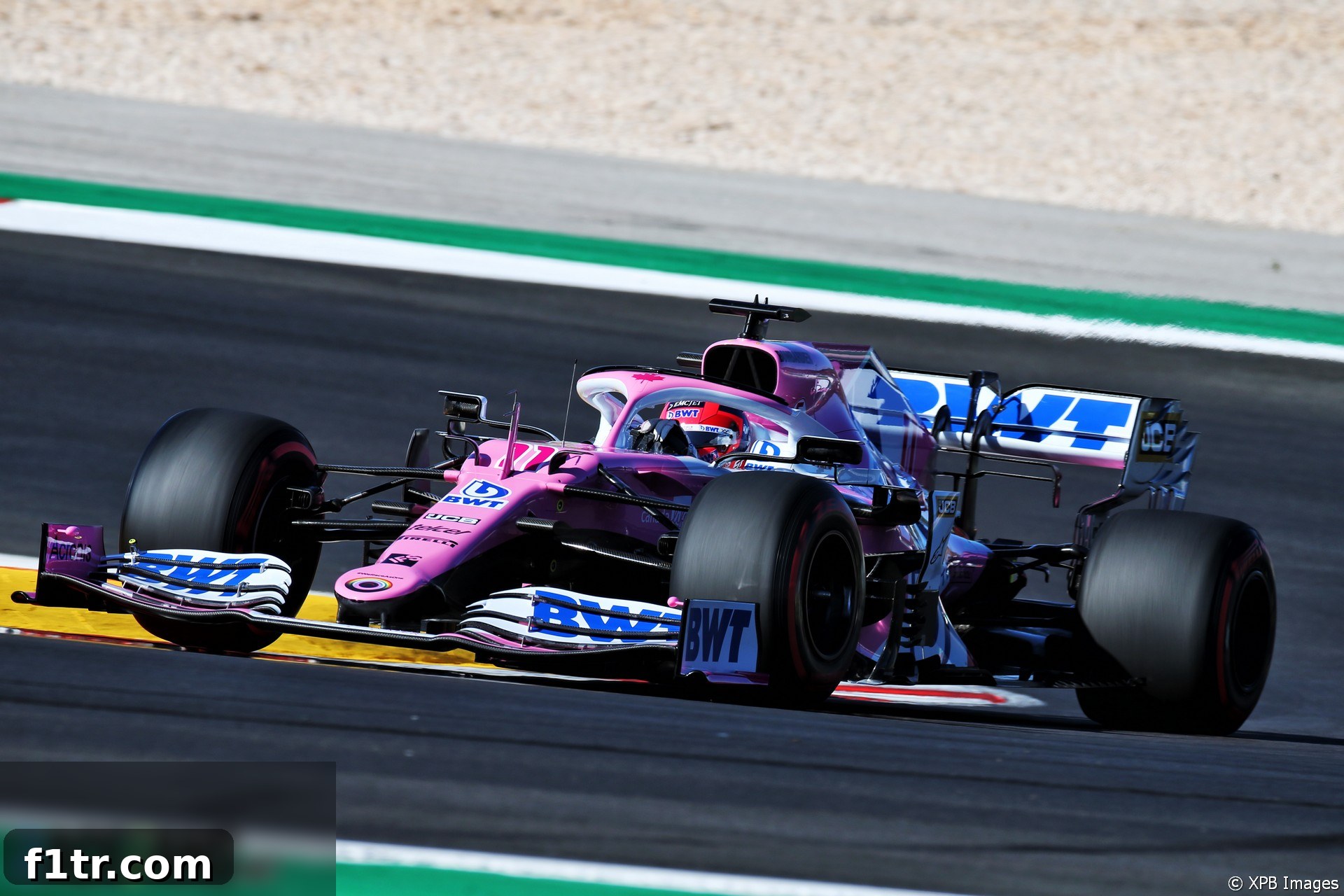
In a significant moment during the qualifying session for the Portuguese Grand Prix, Red Bull Racing driver Sergio Perez found himself under scrutiny from the FIA stewards. The Mexican driver received a formal reprimand for impeding AlphaTauri’s Pierre Gasly, an incident that underscored the tight margins and demanding nature of Formula 1 qualifying.
The incident occurred on the challenging Autódromo Internacional do Algarve circuit, more commonly known as Portimão, which was making a much-anticipated return to the F1 calendar in 2020. This track is renowned for its undulating topography and blind crests, features that played a crucial role in the stewards’ assessment of the situation.
Understanding the Incident: Perez, Gasly, and the Portimão Challenge
During the intense qualifying battle, where every tenth of a second is critical, Sergio Perez had aborted a flying lap at Turn 10. Despite having abandoned his timed attempt, he was still moving at a considerable speed. Simultaneously, Pierre Gasly was on a hot lap, pushing his AlphaTauri to its limits through the winding sections of the circuit.
The stewards’ detailed report highlighted the specific challenges presented by the Portimão circuit, particularly between Turns 10 and 13. This section of the track is characterized by significant elevation changes and limited sightlines for drivers, making it inherently difficult to anticipate traffic or approaching cars from behind. Furthermore, the short distances between these turns mean drivers have very little time to react to unfolding situations.
As Perez navigated Turn 13, his team belatedly communicated a warning via radio that Gasly was rapidly approaching at full speed. While Perez immediately attempted to move left at the exit of the corner to clear the racing line, the timing was unfortunately too late. The stewards concluded that Perez’s presence at the apex of Turn 13, as Gasly arrived, unequivocally constituted an impedance. This judgment underscores the stringent regulations in place to ensure fair play and safety during competitive sessions.
The Stewards’ Rationale: Balancing Rules with Circuit Realities
The decision to issue a reprimand, rather than a more severe penalty such as a grid drop, reflects the stewards’ careful consideration of all contributing factors. They acknowledged the inherent difficulties drivers faced at Portimão due to its unique layout. This included the limited visibility and the rapid succession of corners, which collectively reduced the margin for error and quick decision-making.
The stewards explicitly stated, “Perez had just aborted his lap at turn 10, although he was still traveling at relatively high speed. The topography between turn 10 and turn 13 is very hilly, and the drivers have very limited vision of the cars behind them. Further, the time between the turns is very limited.” They further elaborated that while Perez did react to his team’s radio warning, “at this point the fact that he was at the apex as Gasly approached definitely impeded Gasly.”
Crucially, the stewards compared this incident to others observed throughout the season, evaluating the degree to which it aligned with the definition of “unnecessary impeding” as outlined in the sporting regulations. Their final assessment was that this specific incident fell “on the very edge” of this definition, thereby warranting a formal reprimand. This nuanced judgment highlights the complexity of adjudicating racing incidents, especially when environmental factors like circuit design play a significant role.
The Impact of a Formal Reprimand on an F1 Season
For Sergio Perez, this formal reprimand marked his first of the ongoing season. While a single reprimand does not immediately incur a penalty, it carries significant implications under Formula 1’s sporting code. The regulations stipulate that if a driver accumulates three reprimands over the course of a single season, they are automatically handed a ten-place grid penalty for the next competitive race. This rule serves as a deterrent, encouraging drivers to exercise maximum caution and awareness to avoid repeat infringements.
The system of reprimands acts as a cumulative warning, escalating potential consequences for persistent minor infractions. For drivers, especially those battling for crucial championship points or contractual extensions, the accumulation of reprimands can become a source of considerable pressure. It demands heightened vigilance in all sessions, from practice to qualifying and the race itself, as any misstep could lead to a grid penalty that severely compromises their race weekend.
In Perez’s case, while the immediate impact was minimal, the reprimand served as a clear reminder of the exacting standards expected in Formula 1. It underscored the necessity for impeccable spatial awareness and prompt team communication, particularly on circuits as challenging and unforgiving as Portimão. For both drivers and teams, managing traffic effectively during qualifying is a critical skill, requiring perfect synergy between the driver on track and the engineers in the pit lane monitoring live telemetry and competitor positions.
The Broader Context of Impeding in Formula 1 Qualifying
Impeding incidents are a recurring theme in Formula 1, particularly during qualifying sessions where drivers are constantly pushing the limits on varied fuel loads and tyre strategies. The “unnecessary impeding” rule is fundamental to maintaining both fairness and safety. It ensures that drivers on a flying lap are not unfairly disadvantaged by slower traffic, and equally importantly, it prevents dangerous situations arising from significant speed differentials on track.
The role of team radio is paramount in preventing such incidents. Teams are responsible for providing their drivers with real-time updates on traffic, informing them of rapidly approaching cars or advising them when to clear the racing line. The Portimão incident involving Perez and Gasly illustrated a scenario where this communication, though eventually given, was arguably delayed, contributing to the impediment.
This incident also sparks broader discussions about circuit design and its influence on racing etiquette and safety. Tracks with numerous blind corners or significant elevation changes inherently present greater challenges for traffic management. While these features often make for exciting racing, they also demand even greater diligence from drivers and enhanced communication protocols from teams. The FIA consistently reviews such incidents to assess whether further guidelines or technological aids (like advanced warning systems) could mitigate similar issues in the future.
Looking Ahead: The Significance Beyond a Single Reprimand
While a reprimand might seem like a minor penalty, its psychological impact and cumulative potential cannot be overlooked. For Sergio Perez, a driver known for his consistent performances, this incident served as a sharp reminder of the fine line between acceptable and infringing behavior in the high-stakes environment of F1. It reinforced the message that even unintentional impedance, especially when it disrupts another driver’s crucial qualifying lap, will not go unpunished.
For Pierre Gasly, the incident potentially disrupted a critical qualifying attempt, which could have had downstream effects on his grid position and race strategy. Such disruptions, even if minor, can cascade throughout a race weekend, highlighting why the rules against impeding are so rigorously enforced.
The Portimão circuit, with its distinctive characteristics, continues to be a favorite among drivers and fans alike, but also a stern test of skill, awareness, and teamwork. The stewards’ decision regarding Perez and Gasly served as a valuable case study, emphasizing the complex interplay between driver actions, team communication, circuit design, and the strict regulatory framework that governs Formula 1. As the season progressed, all eyes would be on drivers to manage traffic judiciously, ensuring fair and safe competition on every challenging track.
Stay Connected with Formula 1 News
Don’t miss out on the latest updates and analyses from the world of Formula 1. Follow the racing action and in-depth reports by staying connected with your favorite F1 news sources.
- Join our F1 community on Facebook
- Follow F1 discussions on Twitter
- Get daily F1 email updates directly to your inbox
More from the 2020 Portuguese Grand Prix
Explore a collection of articles and reports covering all the key moments, analyses, and results from the 2020 Portuguese Grand Prix weekend.
- Browse all 2020 Portuguese Grand Prix articles
- Latest Sergio Perez News and Updates
- Latest Pierre Gasly News and Performances
- Understanding F1 Rules and Regulations