In the thrilling world of Formula 1, where split-second decisions and intricate regulations govern every aspect of racing, clarity on safety protocols is paramount. A recent incident during Sunday’s race brought into focus one such critical regulation: the use of the Drag Reduction System (DRS) under yellow flag conditions. While historically a point of contention and a source of penalties, the FIA stewards ultimately determined that no investigation was necessary, signifying a significant evolution in the interpretation of these complex rules. This decision underscores a shift towards prioritizing overall speed reduction in dangerous zones over the mere activation of aerodynamic aids.
Advert | Become a Supporter & go ad-free
The Drag Reduction System, or DRS, is a key performance differentiator in modern Formula 1, allowing drivers to open a flap on their rear wing, reduce drag, and gain a crucial speed advantage on designated straight sections of the track. Its primary purpose is to facilitate overtaking, adding an exciting dimension to the racing spectacle. However, its use is strictly controlled, particularly in situations where safety is compromised. Yellow flags, whether single or double, are deployed to signal danger on the track, requiring drivers to reduce speed and be prepared to take evasive action. The activation of DRS in such zones, which inherently increases a car’s speed and reduces downforce, has long been viewed as a potentially hazardous action, contradicting the core principle of slowing down for safety.
Indeed, in previous Formula 1 seasons, drivers found to have activated their DRS while passing through a yellow flag zone would almost certainly face a penalty. The rationale was straightforward: yellow flags demand caution and reduced speed, and any action that boosts speed or diminishes control was deemed unsafe and punishable. This rigid interpretation often led to drivers being caught out by rapidly changing track conditions, with penalties handed out even if their overall speed reduction was deemed adequate. The rule was clear, but its application sometimes felt draconian in the fast-paced, high-pressure environment of Grand Prix racing.
However, the regulatory landscape saw a significant relaxation in 2018, with further clarifications in subsequent years. The FIA, through its race director and stewards, began to shift its focus from the technicality of DRS activation to the overarching safety requirement: whether a driver had genuinely reduced their speed sufficiently upon encountering yellow flags. This nuanced approach acknowledges the complexities of modern F1 cars and the dynamic nature of race situations. It recognizes that in certain circumstances, a brief, inadvertent DRS activation might occur, but if the driver’s primary response was a clear and significant reduction in speed, the spirit of the safety rule was upheld.
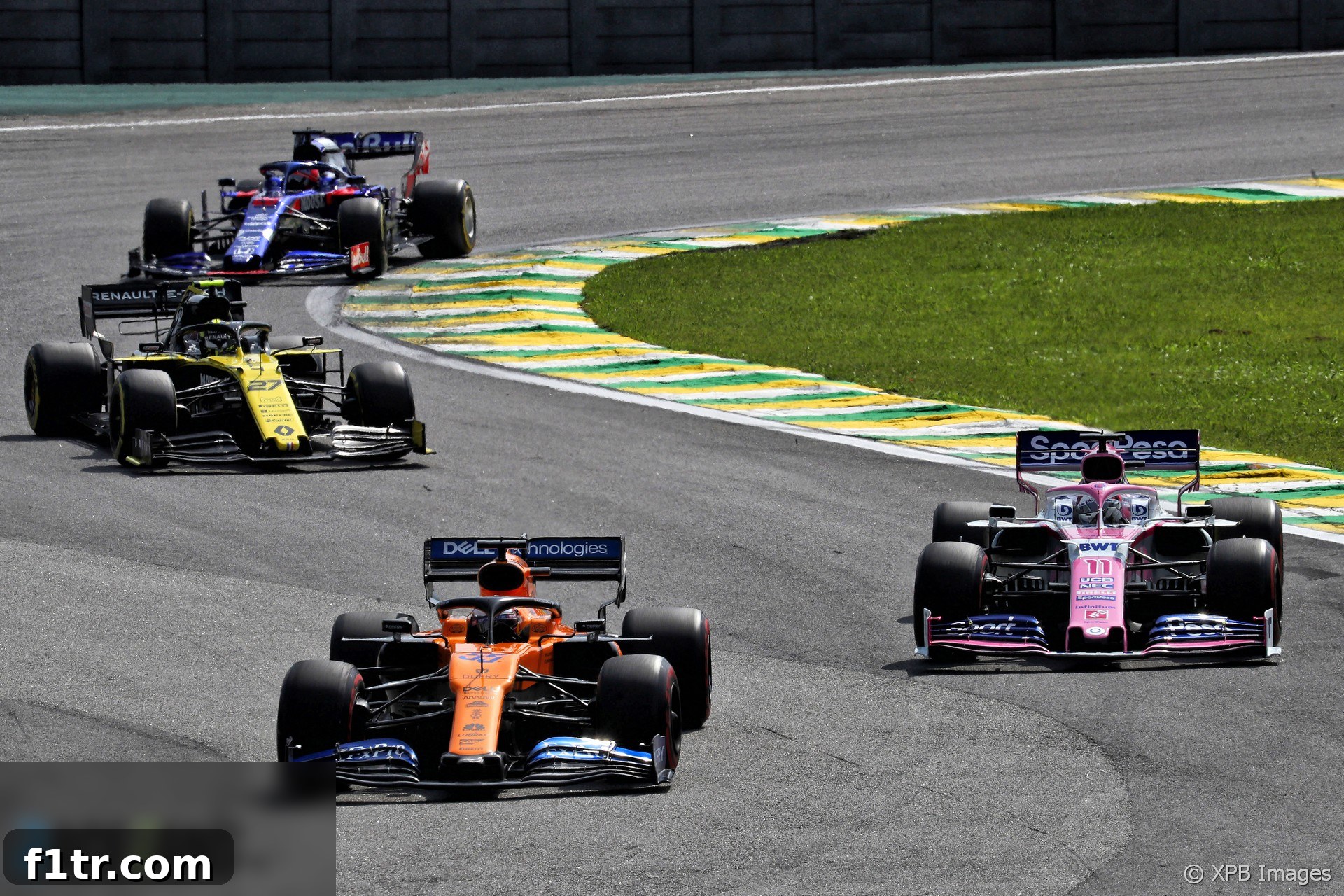
This evolving interpretation came into play during Sunday’s race when several drivers were observed activating their DRS for a short duration while traversing sections under yellow flag conditions. Race director Michael Masi addressed the matter directly, confirming that “a couple of them did activate DRS for a relatively short period of time.” Crucially, he emphasized that the stewards, after reviewing the telemetry and driver actions, were satisfied that no driver had failed to reduce their speed as mandated by the regulations. The critical determinant was not the momentary opening of the DRS flap, but the demonstrable adherence to the requirement to slow down.
Masi elaborated on the stewards’ decision-making process, stating, “The overriding factor with double yellow flags is the requirement to slow and significantly slow. That’s what we looked at with all of them and all of them complied with that.” This statement is key to understanding the FIA’s current philosophy. It highlights that the absolute imperative under yellow flags, especially double yellow flags which signify a greater hazard, is a substantial reduction in speed. The methods employed by a driver to achieve this are secondary to the ultimate outcome of ensuring safety. As long as the telemetry data confirmed a clear and appropriate deceleration, the specific mechanical action of the DRS flap was not deemed a punitive offense.
He further reiterated, “So the stewards looked at that and determined that no investigation was necessary. The overriding factor of slowing for the double yellows was absolutely complied with.” This consistent message from the highest levels of race control underscores the emphasis on pragmatic safety enforcement. It moves away from a purely prescriptive rule to one that allows for a degree of judgment based on the actual safety outcome. This approach is not about condoning risky behavior but about applying regulations in a way that truly reflects the intent of enhancing safety without unfairly penalizing drivers for minor technicalities that do not compromise the core safety objective.
When questioned about whether the rules regarding DRS and yellow flags required further clarification, Masi acknowledged the inherent challenges of legislating every conceivable scenario in motorsport. “It’s one of those things you can’t make a rule to suit every situation,” he explained. This admission speaks to the dynamic and unpredictable nature of Formula 1. Unlike static regulations, race incidents unfold in fractions of a second, with numerous variables at play. Attempting to draft a rule so granular that it covers every single nuance of driver behavior and car interaction under caution would likely result in an unwieldy and potentially unworkable regulatory framework.
Instead, the FIA places trust in the expertise and judgment of its stewards. As Masi highlighted, “It’s the reason why we have stewards to make a determination on things and they said the overriding factor is that they slow, which they all did.” The stewards, comprising experienced individuals with deep knowledge of motorsport and its regulations, are tasked with interpreting the rules in the context of real-time events. Their role is not just to apply rules rigidly but to assess the intent, context, and actual impact of driver actions. In this instance, their collective judgment concluded that while DRS was briefly activated, the more critical safety requirement of slowing down was met, rendering further action unnecessary.
This pragmatic approach by the FIA helps foster a balance between ensuring safety, promoting competitive racing, and acknowledging the human element in high-speed competition. It ensures that drivers are primarily focused on the critical task of reacting safely to hazards, rather than being overly concerned with a specific technical parameter like DRS activation, as long as their ultimate action aligns with the safety directives. This subtle but significant shift in rule interpretation provides much-needed clarity for drivers, teams, and fans, reinforcing the message that in Formula 1, safety always remains the paramount consideration, evaluated through concrete actions rather than isolated technical details.
Don’t miss anything new from RaceFans
Follow RaceFans on social media to stay updated with the latest news, analyses, and exclusive insights from the world of Formula 1. Join our vibrant community and never miss a moment of the action.
- Join RaceFans on Facebook to connect with fellow F1 enthusiasts and discuss the biggest talking points.
- Follow RaceFans on Twitter for real-time updates, breaking news, and quick takes on all things Formula 1.
- Get daily email updates from RaceFans delivered straight to your inbox, ensuring you’re always informed.
Advert | Become a RaceFans supporter andgo ad-free, enjoying an uninterrupted browsing experience while supporting independent F1 journalism.
2019 F1 Season: A Look Back at Key Moments and Decisions
The 2019 Formula 1 season was a year filled with memorable races, intense rivalries, and significant regulatory discussions. From dramatic podium finishes to crucial technical directives, the season offered plenty of talking points that shaped the sport. The evolving interpretation of rules, such as those concerning DRS and yellow flags, were part of the ongoing dialogue to refine and improve racing standards and safety. Explore more articles related to the 2019 F1 season to delve deeper into its most impactful stories and pivotal decisions.
- Crying in the Melbourne car park at 2019 grand prix was my career low – Ocon
- McLaren Racing reports reduced £71 million loss in 2019
- Kvyat: Hockenheim podium last year was “my biggest achievement” so far
- How the FIA’s new encrypted fuel flow meter targets Ferrari’s suspected ‘aliasing’ trick
- “He smashed my office door”: 23 must-see moments from ‘Drive to Survive’ season two
Browse all 2019 F1 season articles