Lewis Hamilton Questions F1’s Racing Standards for Younger Drivers After Leclerc Clash at Monza
In a candid assessment that sent ripples through the Formula 1 paddock, Lewis Hamilton, the multi-time world champion, has expressed his belief that a new generation of drivers is being afforded significantly more leeway in aggressive wheel-to-wheel racing than has traditionally been permitted. His comments underscore a growing debate about evolving racing etiquette and the consistent application of rules at the highest level of motorsport.
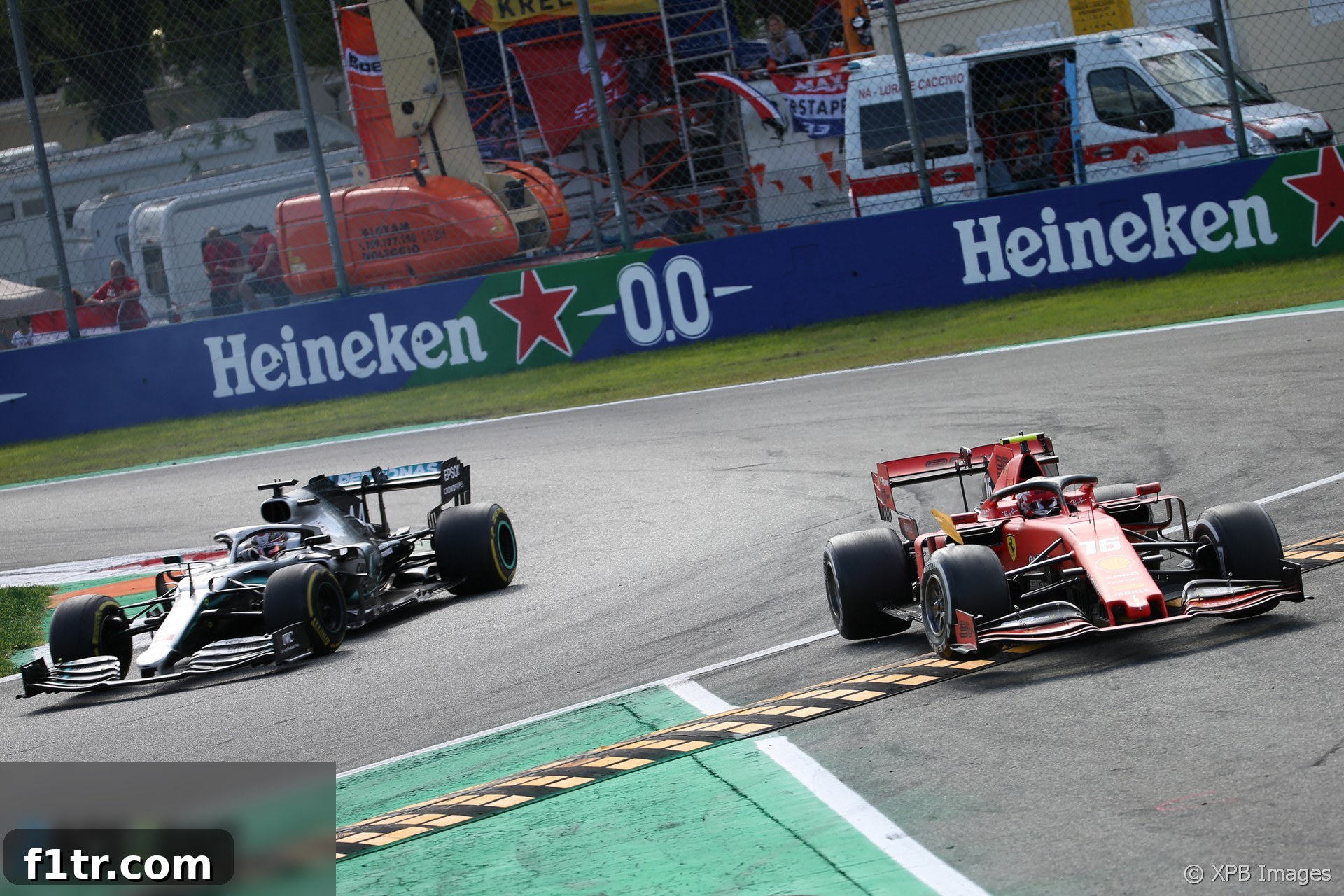
The Mercedes driver’s observations came in the aftermath of a contentious battle with Charles Leclerc during a thrilling Italian Grand Prix, an incident he vocally highlighted on his team radio at the time. The clash reignited discussions among fans, teams, and the FIA regarding the fine line between hard racing and potentially dangerous driving.
Advert | Become a Supporter & go ad-free
The Monza Showdown: Hamilton vs. Leclerc at Della Roggia
The specific flashpoint occurred at the notorious Della Roggia chicane during the 2019 Italian Grand Prix at Monza. Hamilton and Leclerc, locked in an intense battle for the lead, engaged in multiple fierce exchanges. On one particularly memorable occasion, Leclerc aggressively squeezed Hamilton wide as they approached the corner, forcing the British driver to take evasive action to avoid a collision. This move by the Ferrari driver drew the attention of race stewards, who subsequently showed Leclerc the black-and-white flag – a unique warning signal akin to a yellow card in football.
This incident, and the specific application of the black-and-white flag, was particularly noteworthy given its recently revised usage by FIA race director Michael Masi. The flag serves as a stern warning for unsportsmanlike conduct or repeated infringements, signaling that a penalty is imminent if the behavior continues. While Leclerc received a warning, Hamilton evidently felt the enforcement was too lenient for the gravity of the maneuver.
Hamilton’s Perspective: A Generational Divide in Racing Conduct
Post-race, Hamilton did not mince words regarding his perception of the stewarding and the broader trend in driver behavior. “It seems the new generation get away with a lot more in that space of how they manoeuvre their car compared to, I would say, the more experienced drivers,” Hamilton stated, highlighting what he sees as a double standard. This observation suggests a belief that seasoned veterans, perhaps including himself, are held to a different, stricter code of conduct compared to their younger counterparts who are often lauded for their aggressive and daring driving styles.
Hamilton’s comment, “But it’s good knowledge, now I know, and look forward to the next one,” carries a thinly veiled warning. It implies that if such aggressive tactics are now permissible, he might adapt his own approach in future wheel-to-wheel contests, potentially leading to even more confrontational racing on track. This stance hints at a strategic shift, where understanding the boundaries of what is allowed becomes a crucial part of racecraft.
Despite his strong feelings, Hamilton downplayed the usefulness of further discussion on the matter. “It doesn’t really matter what I think,” he remarked, suggesting a degree of resignation or perhaps a tactical move to avoid further penalties or escalating the verbal sparring. “We’ve gone over and over this multiple times and it’s pointless me bringing it up. I avoided the collision and then just kept focusing and trying to get close.” His focus remained on the immediate race outcome, which saw him narrowly miss out on a higher podium finish.
Race Outcome and Its Implications
Ultimately, Charles Leclerc went on to win the Italian Grand Prix, securing a memorable victory for Ferrari at their home race. Lewis Hamilton, despite his valiant efforts and the intense battle, eventually slipped to third place, just behind his Mercedes team mate Valtteri Bottas, who capitalized on the late-race action. The outcome further amplified the significance of the earlier clash; a different stewarding decision might have altered the final standings and, potentially, the championship narrative.
The Evolving Landscape of F1 Regulations and Driver Standards
Hamilton’s comments open a wider debate about the evolving nature of Formula 1 regulations and their enforcement. The FIA consistently grapples with the challenge of balancing thrilling, aggressive racing that captivates audiences, with the paramount need for driver safety and fair play. The black-and-white flag, recently clarified by Michael Masi, is one tool in the stewards’ arsenal to manage driver conduct without immediately resorting to time penalties or grid drops, which can often feel disproportionate to the offense.
However, subjectivity remains a constant factor in stewarding decisions. What one driver considers a legitimate racing maneuver, another might deem dangerous or unsportsmanlike. This inherent ambiguity often leads to frustration among drivers and teams, particularly when the stakes are as high as they are in Formula 1. The notion of a “racing incident” versus a penalizable offense is frequently debated, with fans and pundits often divided on specific calls.
The “new generation” drivers, often emerging from fiercely competitive junior categories, are known for their assertive and sometimes uncompromising driving styles. They are hungry for success and often prepared to push boundaries to gain an advantage. This contrasts with some more experienced drivers who, having established their careers and legacies, might adopt a more measured approach, or at least expect a certain level of respect and adherence to unspoken gentleman’s agreements on track.
This dynamic creates a fascinating tension. On one hand, F1 thrives on spectacular wheel-to-wheel action and daring overtakes. On the other, the safety of drivers and the integrity of the sport must always be upheld. The FIA’s ongoing efforts, such as the clarification of the black-and-white flag, reflect a continuous attempt to provide clear guidelines while still allowing for the raw spectacle of Grand Prix racing.
Historical Parallels and Future Implications
Discussions around driver conduct and rule enforcement are by no means new to Formula 1. Throughout its rich history, the sport has witnessed numerous controversial incidents and rivalries where aggressive driving and perceived unfairness were central themes. Legendary battles involving figures like Ayrton Senna and Alain Prost, or Michael Schumacher and Damon Hill, often pushed the limits of what was considered acceptable, frequently leading to rule changes or increased scrutiny from the governing body.
Hamilton’s remarks serve as a significant reminder that these debates continue to shape the sport. His position as a respected veteran and a leading figure in the championship lends considerable weight to his concerns. Going forward, it will be crucial to observe how these comments influence future stewarding decisions and, critically, how drivers like Leclerc and Hamilton themselves adapt their strategies in subsequent confrontations. Will the perceived leniency persist, encouraging more aggressive tactics? Or will the FIA respond by tightening its enforcement, potentially leading to more cautious racing?
The balance is delicate. Formula 1 needs its stars to push the limits, to create memorable moments of bravery and skill. Yet, it also demands a framework of rules that ensures fair competition and protects its competitors. Hamilton’s pointed observations from Monza highlight that this balance is constantly under review, shaping not just individual race outcomes but the very character of the sport for years to come.
Don’t miss anything new from RaceFans
Follow RaceFans on social media:
- Join RaceFans on Facebook
- Follow RaceFans on Twitter
- Get daily email updates from RaceFans
Advert | Become a RaceFans supporter andgo ad-free
Related Articles: 2019 F1 Season Insights
- Crying in the Melbourne car park at 2019 grand prix was my career low – Ocon
- McLaren Racing reports reduced £71 million loss in 2019
- Kvyat: Hockenheim podium last year was “my biggest achievement” so far
- How the FIA’s new encrypted fuel flow meter targets Ferrari’s suspected ‘aliasing’ trick
- “He smashed my office door”: 23 must-see moments from ‘Drive to Survive’ season two
Browse all 2019 F1 season articles