In a compelling new chapter of his illustrious career, Formula 1 legend Fernando Alonso has embarked on a multidisciplinary racing journey, immediately after concluding his remarkable tenure in Formula 1. His immediate focus has been on mastering the nuances of the Wayne Taylor Racing Cadillac, meticulously preparing for his highly anticipated return to the prestigious Daytona 24 Hours endurance race later this month. This iconic event represents another crucial step in his relentless pursuit of motorsport’s most coveted accolades, showcasing his unparalleled versatility and ambition beyond the single-seater world.
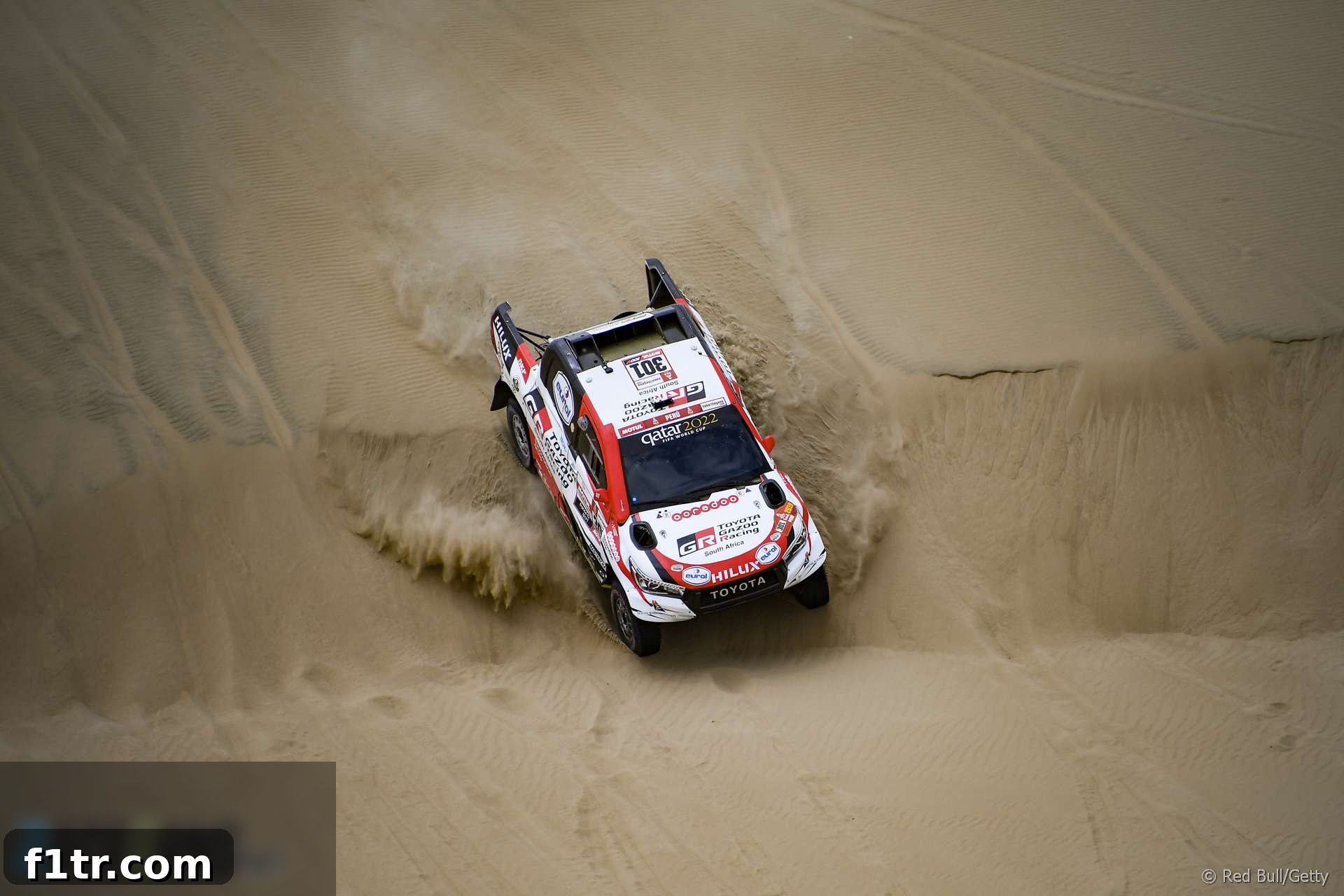
However, even as he fine-tunes his skills for Daytona, the motorsport world has been set abuzz by intriguing reports emanating from Spain. These suggest that Alonso is already contemplating an even more audacious venture into an entirely different realm of racing: the legendary Dakar Rally. According to claims made by Nasser Al-Attiyah, a two-time Dakar rally winner and a prominent figure in the rally-raid landscape, Alonso is reportedly planning to test the very Toyota Hilux that Al-Attiyah is currently piloting in this year’s arduous event, which commenced recently in Peru. This potential move underscores Alonso’s insatiable drive to explore and conquer every formidable challenge motorsport has to offer, signaling a profound shift in his post-F1 career trajectory.
Alonso’s foray into championships outside the Formula 1 circus began in earnest in 2017, marking a pivotal moment in his career. His debut at the Indianapolis 500 captivated audiences, a race he is committed to returning to later this year to complete his quest for the coveted Triple Crown of Motorsport. Following this, 2018 saw his debut at the Daytona 24 Hours, quickly followed by his participation in the World Endurance Championship (WEC) with Toyota. This partnership proved incredibly successful, culminating in a historic victory at the iconic Le Mans 24 Hours, an achievement that cemented his status as one of racing’s most adaptable drivers. This established and highly fruitful connection with the Japanese manufacturer, Toyota, provides a clear and logical pathway should he seriously consider an entry into the Dakar Rally, leveraging existing relationships and technical expertise.
The Dakar Rally is a beast unlike any other in motorsport. Spanning an exhausting two weeks and covering nearly nine thousand kilometers across some of the world’s most brutal and unforgiving terrains, it stands as the ultimate test of endurance, skill, and resilience. This grueling event, notorious for its extreme conditions, navigational complexities, and the immense physical and mental toll it exacts on participants, is not a challenge to be underestimated. Alonso, a driver celebrated for his meticulous preparation and analytical approach to racing, undoubtedly appreciates the monumental differences and the very distinct skill set that rallying demands compared to the controlled, precision-driven environment of circuit racing. It requires an instinct for off-road vehicle control, an unparalleled ability to read constantly changing landscapes, and an unwavering trust in a co-driver navigating through uncharted territory, a stark contrast to the perfectly engineered race tracks of F1.
Alonso’s prior, albeit brief, introduction to the world of rallying in 2017 offered him an eye-opening perspective on its unique demands. He had the extraordinary opportunity to sit alongside two-time World Rally Champion Carlos Sainz Snr, a true legend of the sport. Sainz Snr, who is also the father of Carlos Sainz Jnr (the driver who notably took Alonso’s place at McLaren this year), boasts an impressive record, having won the Dakar Rally twice himself, with his most recent triumph coming just 12 months prior to these swirling rumors. This experience provided Alonso with an invaluable, unfiltered glimpse into the “craziness” and unparalleled precision required to master rally-raid disciplines, offering him a firsthand understanding of the immense challenge.
Recalling that memorable ride with Sainz Snr, Alonso famously admitted, “I sat with Carlos as a co-driver a couple of times and I think I will never reach that level of precision and that level of craziness.” His comments highlighted a profound respect for the specialized skills of rally drivers. He further jested, revealing the intensity of the experience, “I thought that I could die that day! Once I survived those laps I said OK, rally is for rally drivers.” These candid remarks underscored his initial perception of rallying as a discipline demanding an almost superhuman level of instinct and bravery, far removed from his comfort zone of high-speed circuit racing. Even last year, when questioned by RaceFans about a potential Dakar entry, his stance remained cautiously humble, stating, “I don’t think so. I need to consider, I need to evaluate, there are things that I need to be honest and know that I don’t have the talent to do.” His self-assessment, while modest, reflected a deep respect for the specialists who excel in this demanding form of motorsport.
However, a significant and transformative change has since occurred in Alonso’s professional life: he has officially retired from Formula 1. This monumental decision has liberated him from the grueling and all-consuming F1 calendar, affording him an unprecedented amount of time and mental bandwidth to fully commit to new motorsports pursuits. The previous notion of “not having the talent” might be subject to re-evaluation now that he can dedicate himself entirely to learning and mastering the intricate demands of rally raid. Alonso’s entire career has been defined by his extraordinary ability to adapt and excel in various categories, often defying initial expectations and proving his critics wrong. Could this new chapter, free from the constraints and pressures of F1, be the pivotal catalyst for him to embrace the rally challenge he once deemed too formidable? His history suggests that with focused dedication, few things are truly beyond his reach.
The prospect of Fernando Alonso competing in the Dakar Rally is not only electrifying for fans globally but also incredibly appealing for potential partners within the sport. A representative from Toyota’s Dakar program, while acknowledging that no concrete plans were yet in place for Alonso to test one of their formidable cars, openly expressed their fervent enthusiasm, stating unequivocally that they “would love to have him on their team.” This mutual respect, coupled with a proven and highly successful track record with Toyota in the World Endurance Championship, strongly suggests that if Alonso ultimately decides to pursue Dakar, a factory-backed entry with the Japanese giant would be the most logical, competitive, and strategically advantageous route. Such a partnership would offer Toyota invaluable global publicity and the prestige of a world-class driver, while Alonso would gain access to top-tier machinery, unparalleled technical support, and the deepest expertise to minimize his learning curve in a vastly different racing environment.
One immediate and practical hurdle for any potential Dakar entry in the near future is the intensely demanding international motorsport calendar. The Dakar Rally traditionally unfolds in early January, a timeframe that often coincides closely with the rigorous preparations and testing schedules for the Daytona 24 Hours. This significant scheduling conflict could make it exceedingly difficult, if not impossible, for Alonso to undertake both high-profile events in the same year, particularly given the intense physical, mental, and logistical preparation required for each. However, Alonso has consistently demonstrated a remarkable capacity for strategic schedule management and optimal commitment allocation throughout his career. It might necessitate prioritizing one event over the other for a given season, or perhaps more realistically, strategically planning his Dakar debut for a slightly later year, allowing for comprehensive and focused preparation without compromising his other commitments.
Fernando Alonso has, with characteristic ambition, unashamedly declared his ultimate professional goal: to become “the best driver ever.” This ambitious pursuit transcends mere Formula 1 statistics, encompassing a comprehensive mastery of diverse racing disciplines and a relentless drive to push the boundaries of driver capability. If he achieves a strong performance, or even secures a victory, at the Daytona 24 Hours later this month, it would undoubtedly further fuel his already formidable confidence and ambition. Conquering the Dakar Rally, an event that demands a unique fusion of raw talent, immense resilience, exceptional adaptability, and profound strategic thinking, would unquestionably solidify his claim to being one of motorsport’s most versatile, accomplished, and truly legendary drivers. It would stand as the ultimate testament to his unparalleled adaptability and an unwavering drive to transcend conventional racing boundaries. Whether he ultimately takes the wheel of a Toyota Hilux and carves his path through the challenging dunes of Peru remains to be seen, but the entire racing world watches with bated breath as Fernando Alonso continues to write the thrilling next chapters of his truly extraordinary and multifaceted career.
2019 F1 season
- Crying in the Melbourne car park at 2019 grand prix was my career low – Ocon
- McLaren Racing reports reduced £71 million loss in 2019
- Kvyat: Hockenheim podium last year was “my biggest achievement” so far
- How the FIA’s new encrypted fuel flow meter targets Ferrari’s suspected ‘aliasing’ trick
- “He smashed my office door”: 23 must-see moments from ‘Drive to Survive’ season two
Browse all 2019 F1 season articles