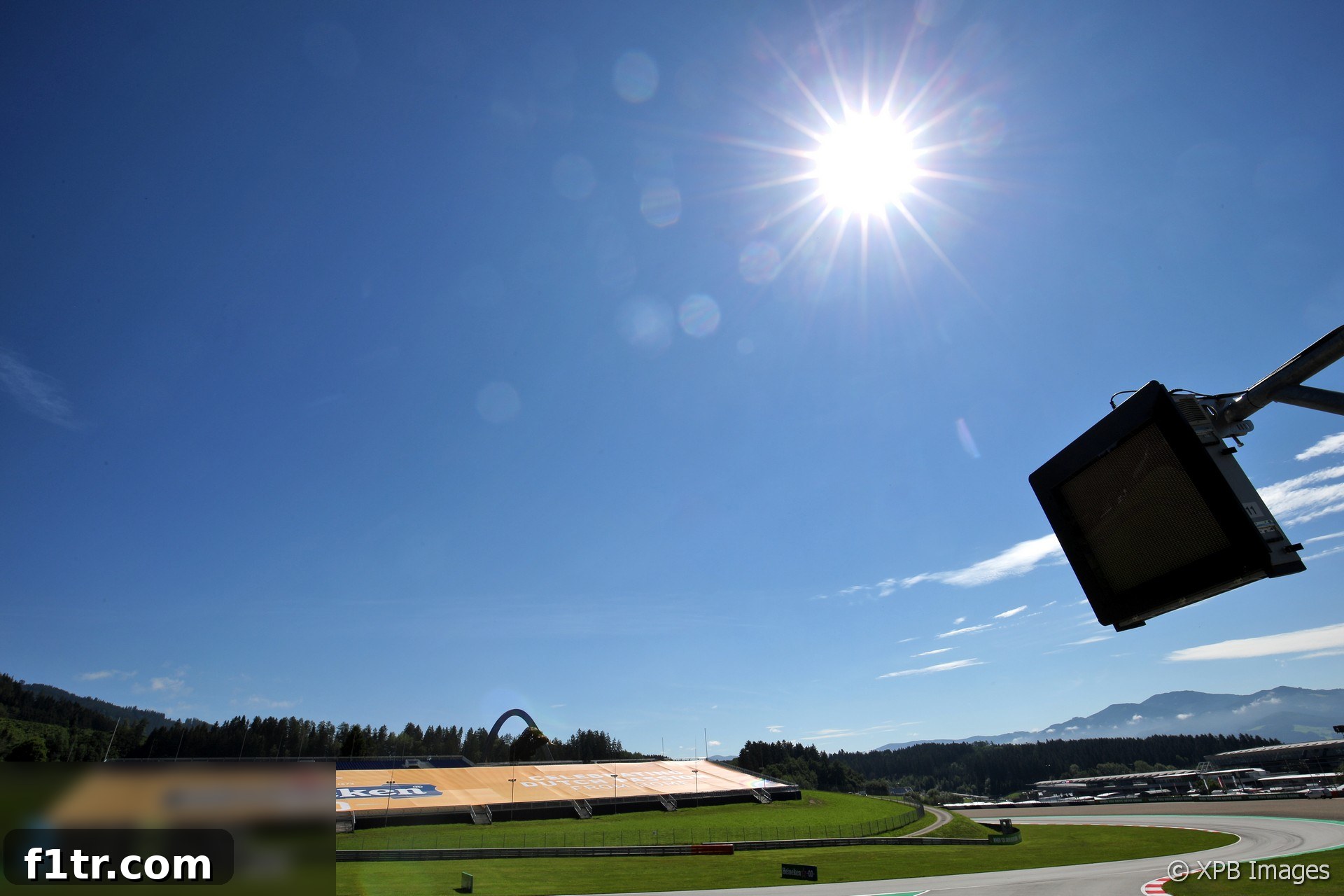
As the engines roar to life for the unprecedented start of the 2020 F1 season, all eyes are on the iconic Red Bull Ring in Austria. This unique double-header event, kicking off a season unlike any other, promises dry conditions for both race weekends. While Formula 1 will experience a gradual rise in temperatures over the course of its initial visit to Spielberg, the first Grand Prix on Sunday is set to be significantly cooler compared to last year’s scorching conditions. This shift in weather dynamics could introduce a fascinating layer of strategy and challenge for teams and drivers alike, as they navigate the unique demands of the Styrian circuit.
The Red Bull Ring: A Technical Challenge Amidst the Alps
Nestled in the picturesque Styrian mountains, the Red Bull Ring offers a short, fast, and undulating layout that drivers generally enjoy. Its relatively short lap, consisting of just ten corners, places immense pressure on cars, particularly their power units and braking systems. The circuit’s character, with its significant elevation changes, from the climb up to Turn 2, the rapid descent through the middle sector, and the final uphill run to the finish line, demands a versatile car setup. However, one of the less obvious but critical challenges presented by this venue is its comparatively high altitude. While not as extreme as the Autodromo Hermanos Rodriguez in Mexico City, which the championship often visits later in the year, the thinner air at the Red Bull Ring’s elevation still has a tangible impact on car performance. Less dense air means reduced aerodynamic downforce and less oxygen for the engines, making cooling and engine management paramount concerns for all competitors. Teams must find a delicate balance between generating sufficient downforce for cornering stability and minimizing drag on the straights, all while ensuring their power units operate within safe temperature limits.
Weather Forecast: A Weekend of Changing Conditions
The forecast for the opening race weekend paints a picture of improving weather, moving from a potentially damp start to increasingly pleasant conditions for the main events.
Friday: A Clear Start to Practice
Friday morning is expected to see light rain clearing well before the first practice session commences at 11 am local time. This early moisture might leave the track initially “green” or low on grip, but the sun’s appearance should quickly dry the surface, allowing teams to gather crucial data on a representative dry track. Air temperatures are projected to steadily rise during the course of the day, reaching a comfortable ambient temperature of around 21°C. These conditions are generally favorable for initial car setup and tire evaluation, offering a stable environment for teams to shake down their machines and begin optimizing them for qualifying and race pace. Drivers will be keen to maximize their track time to reacquaint themselves with the circuit and understand how their 2020 challengers behave under competitive conditions.
Saturday: Prime Conditions for Qualifying
The trend of gradually warmer conditions is set to continue through Saturday. Air temperatures are forecast to hit approximately 22°C. These mild and dry conditions are ideal for qualifying, where every tenth of a second counts. Cooler ambient temperatures often allow engines to run more efficiently and enable tires to perform closer to their optimal grip window without overheating prematurely. Teams will be pushing their cars to the absolute limit, aiming for pole position on a track that historically offers limited overtaking opportunities. The ability to extract maximum performance from the tires over a single lap will be critical, and the stable weather should provide a fair playing field for all.
Sunday: Race Day – Cooler Than Expected
Sunday is anticipated to be the warmest of the three days, with temperatures potentially rising as high as 26°C for the main race. While this is certainly a pleasant race day temperature, it stands in stark contrast to last year’s Grand Prix, which saw a blistering peak of 35°C ambient temperature, pushing track temperatures into the extreme range of 49-52°C. This significant difference in temperature carries substantial implications for race strategy and car performance.
The Impact of Temperatures on F1 Performance and Strategy
The shift to cooler conditions compared to the previous year is a critical factor that teams will be analyzing in depth. Temperatures play a monumental role in nearly every aspect of Formula 1 racing:
Tire Management and Degradation
Tire performance is incredibly sensitive to temperature. Last year’s extreme heat at the Red Bull Ring led to high tire degradation and blistering, forcing teams into complex multi-stop strategies and careful tire management. Cooler temperatures on Sunday could translate to less degradation, allowing drivers to push harder for longer and potentially enabling more aggressive one-stop strategies. However, finding the optimal operating window for the chosen Pirelli compounds will still be crucial. If temperatures are too low, tires might struggle to generate enough heat for maximum grip, while sustained pushing could still lead to localized overheating.
Engine and Power Unit Cooling
The Red Bull Ring’s combination of altitude and its stop-and-go nature, with several heavy braking zones followed by acceleration, puts a significant strain on power unit cooling. Last year, several teams, most notably Mercedes, encountered severe cooling issues in the sweltering heat. Mercedes drivers had to resort to extreme “lift-and-coast” techniques, where they would lift off the throttle early before braking to allow the engine to cool, thus losing valuable lap time. The less dense air at altitude already compromises cooling efficiency by reducing the mass flow of air through the radiators. Cooler ambient temperatures this year should alleviate some of this pressure, potentially allowing power units to run more aggressively for longer periods without overheating. This could be a significant advantage for teams that struggled with cooling in 2019, enabling them to unleash more of their car’s potential.
Brake Performance and Reliability
High speeds followed by heavy braking demand robust brake systems. While less critical than power unit cooling, excessive heat can still lead to brake fade or increased wear. Cooler conditions will help manage brake temperatures more effectively, ensuring consistent performance throughout the race.
Aerodynamics and Downforce
The thin air at higher altitudes means that wings generate less downforce. Teams have to compensate by running higher-downforce setups, which inevitably increases drag and reduces top speed. The balance between maximizing downforce for cornering and minimizing drag for straight-line speed is always a compromise at the Red Bull Ring. While ambient temperature doesn’t directly alter air density as much as altitude, its overall effect on the car’s thermal management can indirectly influence aerodynamic choices.
Driver Comfort and Endurance
Extreme heat can also take a toll on the drivers. High cockpit temperatures and intense physical exertion in hot conditions lead to dehydration and fatigue, impacting concentration and performance. The cooler conditions this year will undoubtedly make the physical challenge less arduous for the drivers, potentially leading to more consistent performance over the race distance.
Strategic Outlook for the Austrian Grand Prix
The forecast dry and moderately warm conditions, coupled with the Red Bull Ring’s unique characteristics, set the stage for a thrilling opening to the season. Teams will meticulously analyze every piece of data from practice to fine-tune their setups for qualifying and the race. The cooler temperatures, especially compared to last year, might lead to less aggressive tire strategies and potentially closer racing as teams might not be as constrained by thermal management issues. However, the altitude always remains a factor, demanding efficiency from both the power unit and the aerodynamic package. The ability to adapt quickly to the 2020 cars’ behavior in these specific conditions will be key to success. Fans can expect a strategic battle on track, where managing the car’s performance envelope, especially tires and power unit temperatures, will be paramount.
For instant updates on the track conditions, unfolding strategies, and all the live action during each session of the 2020 Austrian Grand Prix, make sure to keep a close eye on RaceFans Live and follow the official RaceFans Twitter account. Don’t miss a moment of this exciting start to the Formula 1 season!
2020 Austrian Grand Prix Related Coverage
- FIA issues new Austrian GP results after correcting Kvyat error
- Russell sees Mercedes as only possible alternative to Williams in 2021
- Hamilton: No “bad blood” with Albon after second collision in three races
- 2020 Austrian Grand Prix interactive data: lap charts, times and tyres
- 2020 Austrian Grand Prix Star Performers
Browse all 2020 Austrian Grand Prix articles