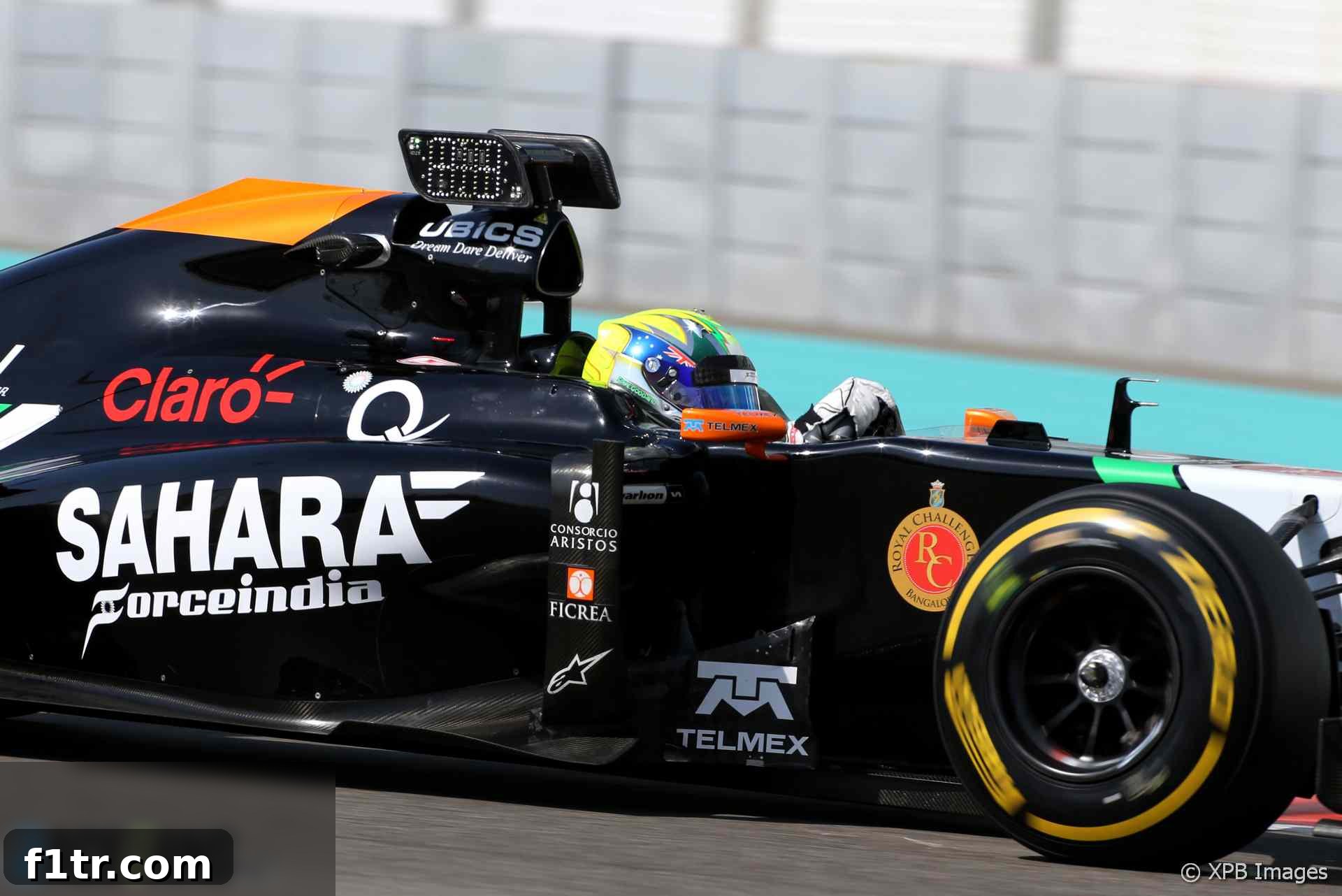
In a compelling stride towards enhancing Formula 1 fan engagement and on-track information delivery, the Force India team debuted an innovative system during testing in Abu Dhabi. Dubbed the ‘Info Wing’, this novel display technology represents a potential paradigm shift in how spectators, both at the circuit and watching remotely, consume real-time race data directly from the competing cars.
The ‘Info Wing’ concept, developed by Anthony Hamilton, father of seven-time world champion Lewis Hamilton, is designed to provide critical race information via an integrated LCD display. This pioneering system seeks to bridge the gap between the fast-paced, often complex action on track and the fan’s understanding, offering immediate insights into the unfolding drama of a Grand Prix. Its initial demonstration at the Yas Marina Circuit sparked considerable discussion about the future of interactive technology in motorsport.
Revolutionizing Fan Experience: The Promise of the ‘Info Wing’
The core objective behind the ‘Info Wing’ is to elevate the fan experience by making Formula 1 more accessible and transparent. For years, F1 has grappled with the challenge of conveying the sport’s intricate strategies and fleeting moments of significance to a broad audience. While television graphics and commentary have improved dramatically, direct, car-mounted displays offer a unique, immersive perspective. Imagine being trackside, watching a car speed past, and instantly knowing its current race position, or the critical tyre compound it’s running – information that previously required looking at a screen or listening to a broadcast.
This innovative wing could display a variety of crucial data points. Foremost among them is the driver’s current position in the race, offering immediate clarity as cars battle for supremacy. Beyond simple positioning, the system is designed to communicate which tyre compound a driver is currently utilising, a vital piece of information given the strategic importance of tyre choice and degradation in modern F1. Furthermore, the ‘Info Wing’ could highlight which driver has just set the fastest lap, adding an exciting layer of real-time performance tracking that enriches the live viewing experience.
Design and Implementation: A Glimpse into F1 Innovation
The physical integration of the ‘Info Wing’ is remarkably clever. Mounted atop the car’s airbox, a prominent feature on any Formula 1 machine, the system features LCD displays facing both left and right. This dual-sided design ensures visibility for spectators on either side of the track, maximising its impact across various circuit layouts. The choice of the airbox location is strategic, offering a relatively unobstructed view while minimising aerodynamic disruption – a critical consideration in F1 where every aerodynamic surface is meticulously engineered for performance.
The initial deployment of the ‘Info Wing’ took place on the Force India VJM07 car during the second and final day of post-season testing at Yas Marina in 2014. It was during this session that Richard Goddard, a test driver, had the opportunity to put the innovative system through its paces, allowing engineers and designers to evaluate its practical application and gather crucial feedback. This testing phase is fundamental in motorsport, allowing for real-world assessment of novel technologies before any potential regulatory approval and widespread adoption.
The Broader Impact: F1’s Continuous Quest for Innovation and Engagement
The introduction of the ‘Info Wing’ underlines Formula 1’s enduring commitment to innovation, not just in performance but also in enhancing the spectator experience. Historically, F1 has been a pioneer in technological advancements, from aerodynamics to hybrid power units. This initiative shifts that focus slightly towards interactive fan technology, seeking to make the sport more digestible and exciting for its global fanbase.
Formula 1 is a sport of intricate details and split-second decisions. Understanding tyre strategy, pit stop windows, and fluctuating race positions often requires a deep knowledge of the sport or constant monitoring of additional screens. The ‘Info Wing’ offers a solution to this complexity, providing instant visual cues that can significantly improve comprehension for casual viewers and avid fans alike. It transforms passive observation into an active, informed engagement with the race.
Challenges and Opportunities for Future Adoption
While the potential benefits of the ‘Info Wing’ are clear, its widespread adoption would undoubtedly face several hurdles. The most significant would be regulatory approval from the FIA (Fédération Internationale de l’Automobile), the sport’s governing body. Any addition to a Formula 1 car must undergo rigorous scrutiny to ensure it doesn’t compromise safety, fairness, or the fundamental sporting principles. Key considerations would include the aerodynamic impact of the displays, the weight implications, and the robustness of the system to withstand the extreme forces of F1 racing.
Furthermore, the cost of implementing such technology across the entire grid would need to be factored in, particularly for smaller teams operating on tighter budgets. Issues such as power consumption for the displays and ensuring their visibility in varying light conditions – from bright sunshine to floodlit night races – would also require meticulous engineering. Despite these challenges, the ‘Info Wing’ presents exciting opportunities, including new avenues for sponsorship and branding, as well as a fresh way for teams and the sport to connect with their audience.
The involvement of figures like Anthony Hamilton in conceptualising such innovations highlights a broader movement within motorsport to think creatively about the future. Beyond the fierce competition on track, there is a constant drive to ensure Formula 1 remains a captivating spectacle, relevant to new generations of fans. Initiatives like the ‘Info Wing’ are crucial steps in that direction, pushing the boundaries of what is possible in combining high-performance engineering with interactive spectator technology.
Looking Ahead: The Evolution of F1’s Display Technology
Although the ‘Info Wing’ as initially tested by Force India didn’t become a standard feature on all F1 cars, its trial in Abu Dhabi served as a vital proof of concept. It demonstrated a tangible desire within the F1 community to experiment with car-mounted displays to enhance the fan experience. The spirit of this innovation continues to influence discussions around how real-time data can be presented more effectively to fans, whether through augmented reality experiences, advanced broadcast graphics, or future iterations of on-car displays.
The very existence of the ‘Info Wing’ test underscores that Formula 1 is not just about raw speed; it’s also about presenting a compelling narrative, making the complex understandable, and ultimately drawing fans closer to the heart of the action. As technology continues to evolve, the ideas pioneered by concepts like the ‘Info Wing’ will undoubtedly continue to shape how we experience the pinnacle of motorsport, ensuring that the thrill of Formula 1 remains as engaging and accessible as ever.
2014 F1 season
- Which was F1’s best down-to-the-wire title fight?
- Fear of rules change led Mercedes to run dominant 2014 engine in “idle mode”
- Mercedes’ Bahrain battle “too dangerous” – Warwick
- Streiff’s comments on Bianchi crash investigation prompts legal action from FIA
- Is stewarding improving? Analysing 2014’s penalties
Browse all 2014 F1 season articles