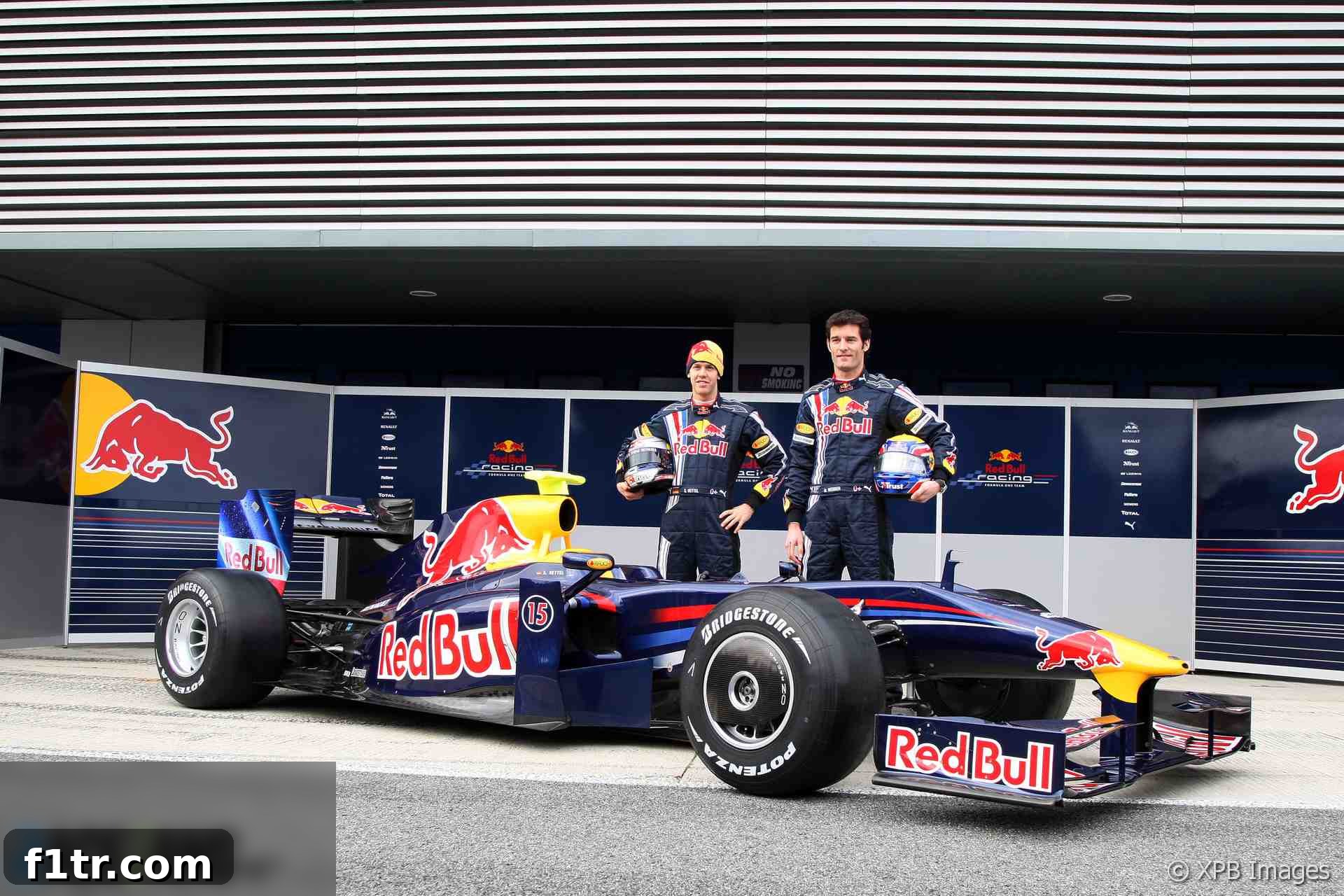
The highly anticipated Red Bull RB5 Formula 1 car was officially unveiled today, marking the seventh challenger revealed for the transformative 2009 season. This momentous occasion, held in Jerez, Spain, generated immense excitement among Formula 1 enthusiasts and pundits alike, as teams grappled with a radically revised set of technical regulations. Designed by the legendary Adrian Newey, the RB5 represented a pivotal step for Red Bull Racing, a team eager to establish itself as a front-runner in the fiercely competitive world of Grand Prix racing.
The Dawn of a New Era: F1’s 2009 Regulations
The 2009 Formula 1 season ushered in one of the most significant overhauls of technical regulations in recent memory. The primary objective was to improve overtaking by reducing the aerodynamic “dirty air” generated by cars, allowing competitors to follow more closely. Key changes included a wider, lower front wing and a narrower, higher rear wing. Critically, aerodynamic appendages like bargeboards and winglets, which had proliferated on F1 cars in previous years, were severely restricted or banned. Furthermore, the sport reintroduced slick tires after more than a decade of grooved tires, promising a substantial increase in mechanical grip. Kinetic Energy Recovery Systems (KERS) also made their debut, offering a temporary power boost to drivers, adding another layer of strategic complexity.
These sweeping changes presented a blank canvas for designers, particularly challenging engineers to rethink their approach to aerodynamics. The common consensus was that the team that best understood and exploited these new rules would gain a significant advantage. It was a true test of ingenuity and adaptability, and all eyes were on how engineering maestros like Adrian Newey would interpret the new rulebook.
Adrian Newey’s Vision for the RB5
Adrian Newey, widely regarded as one of Formula 1’s greatest technical minds, was at the helm of the RB5’s design. Known for his ability to find innovative solutions within restrictive regulations, Newey’s approach to the 2009 rule changes was eagerly awaited. His philosophy often centered on achieving maximum aerodynamic efficiency through elegant and aggressive packaging. For the RB5, Newey focused on recovering downforce lost due to the new regulations and minimizing drag, while also paying close attention to the car’s mechanical balance given the return of slick tires. The car’s distinctive lines and meticulous attention to detail were hallmarks of Newey’s work, promising a machine that was not only fast but also visually striking.
The RB5 was an embodiment of Red Bull Racing’s ambition. After joining the sport in 2005, the team had steadily progressed, securing its first podium finish in 2007. With Newey leading the technical charge and a burgeoning talent pool of drivers, 2009 was poised to be a breakout year. The RB5 was designed not just to compete, but to truly challenge the established order, leveraging Newey’s unparalleled understanding of aerodynamic principles.
Introducing the Red Bull RB5: Design and Features
The Red Bull RB5 broke cover with an aggressive and purposeful aesthetic, immediately signaling its intent. Underneath its sleek bodywork lay a host of advanced engineering solutions tailored for the 2009 season. The car featured a prominent, wider front wing designed to generate significant downforce at the front, balancing the reduced downforce from the narrower rear wing. The packaging of the exhaust and engine cover was also crucial, influencing airflow over the rear of the car and into the diffuser area. While the ‘double diffuser’ concept would later become a hot topic and a key performance differentiator for other teams (notably Brawn GP), Newey’s initial interpretation for the RB5 focused on maximizing the potential of the prescribed diffuser area.
Powering the RB5 was a Renault RS27 V8 engine, known for its reliability and competitive performance. This engine package, combined with the new KERS system (which Red Bull initially chose not to run at the start of the season before later introducing it), aimed to provide the drivers with a robust and responsive power unit. The transition back to slick Bridgestone tires also demanded a revised suspension setup to cope with the increased grip levels, and Newey’s team worked tirelessly to ensure the RB5 offered optimal mechanical balance and driver feel.
The Driver Line-up: Vettel and Webber
The RB5 was entrusted to an exciting driver pairing: the young, sensationally fast Sebastian Vettel and the experienced, highly respected Mark Webber. Sebastian Vettel, having joined Red Bull’s sister team Toro Rosso in 2007, had already demonstrated his immense talent, famously securing a shocking victory at the 2008 Italian Grand Prix. His move to the senior Red Bull Racing team for 2009 was highly anticipated, with many predicting he would quickly become a championship contender. Mark Webber, in his third season with Red Bull, provided a crucial blend of speed, technical feedback, and invaluable experience. The dynamic between the two drivers, both ambitious and capable, was expected to be a significant asset for the team.
Together, Vettel and Webber formed a formidable duo, ready to push the RB5 to its limits. Their insights and feedback during testing and development would be critical in refining the car’s performance throughout the challenging 2009 season. The launch saw both drivers present, exuding confidence and expressing their optimism for the new car and the team’s prospects.
The Launch Event in Jerez
The official launch of the Red Bull RB5 took place at the Jerez circuit in Spain on February 9, 2009. This event was not merely a static unveiling; it also included a shakedown run, allowing the car to hit the track for the first time in front of the media and fans. The atmosphere was charged with excitement as the striking blue and red livery of the RB5 rolled out of the garage. Christian Horner, Team Principal, along with Adrian Newey, Sebastian Vettel, and Mark Webber, addressed the gathered press, outlining their aspirations for the season ahead.
The shakedown provided the first glimpse of the RB5 in action, offering early indications of its handling characteristics. While initial performance figures are always guarded, the sight of the car on track, meticulously designed and engineered, fueled the anticipation for the opening Grand Prix. The launch was a statement of intent, showcasing Red Bull Racing’s determination to challenge the sport’s elite.
Early Insights: The RB5’s Technical Innovations
Prior to its official physical unveiling, enthusiasts had already caught a glimpse of the Red Bull RB5. A promotional video released by Red Bull Racing offered a sneak peek of the car and, more importantly, delved into the key technical changes mandated for the 2009 season. This video highlighted Adrian Newey’s approach to the new regulations, showcasing how the team aimed to recoup lost downforce and optimize the car’s performance despite the significant restrictions on aerodynamic devices. It underscored the team’s meticulous attention to detail in areas such as brake cooling, suspension geometry, and the overall packaging of the car to ensure maximum efficiency.
The video served as an excellent primer, preparing fans for the aesthetic and engineering marvel that was the RB5. It emphasized the challenge posed by the new rules, particularly the reduction in overall downforce and the reintroduction of slick tires, which necessitated a complete re-evaluation of the car’s fundamental setup. Newey’s design philosophy was evident: to create a mechanically sound and aerodynamically clean car that could adapt to varying track conditions and driver preferences. This commitment to fundamental excellence would prove crucial as the season unfolded.
The Legacy of the RB5: Paving the Way for Dominance
While the 2009 season saw Brawn GP unexpectedly dominate and claim both championships, the Red Bull RB5 played a crucial role in establishing Red Bull Racing’s credentials as a top-tier team. It was highly competitive, particularly in the latter half of the season, securing six victories – four for Sebastian Vettel and two for Mark Webber – and nine pole positions. This performance marked Red Bull’s first Grand Prix wins and firmly cemented their place among the sport’s elite. The RB5 demonstrated Adrian Newey’s unparalleled ability to adapt to new regulations and extract performance, laying the foundational design principles that would lead to an era of unprecedented success for Red Bull Racing.
The lessons learned, the data gathered, and the experience gained with the RB5 directly fed into the development of its successor, the RB6, which would go on to win Red Bull’s first Constructors’ and Drivers’ Championships in 2010. The RB5 was more than just a car for a single season; it was the genesis of a dynasty, a testament to innovative engineering, strategic vision, and the raw talent of its drivers and design team. Its impact resonated far beyond 2009, shaping the future trajectory of Red Bull Racing in Formula 1.
Advert | Become a RaceFans supporter andgo ad-free
Explore More Formula 1 Content
- Controversies, Norris, Newey and more: Five new motorsport books reviewed
- One of F1’s greatest races happened 15 years ago today. Or did it?
- “Overtaking is overtaking”: Domenicali denies F1’s yo-yo racing is “artificial”
- The crashes F1 is trying to prevent may be rare – but the danger is obvious
- F1 returning to India soon after 2027 sounds like wishful thinking
Browse all Formula 1 articles