Formula 1 2021 Pre-Season Testing: Unpacking the Bahrain Showdown
The highly anticipated 2021 Formula 1 pre-season testing concluded yesterday, wrapping up a condensed three-day session at the Bahrain International Circuit. This year’s abbreviated schedule, the shortest in F1 history, presented an unprecedented challenge for teams and made drawing definitive conclusions about ultimate pace and competitive order exceptionally difficult. Nevertheless, the intense three-day stint offered crucial insights into each team’s preparations, technical innovations, and potential strengths and weaknesses ahead of what promises to be an thrilling F1 season.
While the true pecking order will only become apparent once the racing begins, some teams undeniably enjoyed more productive sessions, showcasing robust reliability and positive performance trends. Others, however, faced an uphill battle, grappling with unforeseen issues or struggling to adapt to the significant aerodynamic regulation changes. This comprehensive review delves into each team’s performance, driver feedback, and the technical intricacies that emerged from the sandy confines of Sakhir.
McLaren: A Promising Start with Mercedes Power
McLaren entered the 2021 season with arguably the most significant overhaul, transitioning from Renault to Mercedes power units. This switch, coupled with integrating new driver Daniel Ricciardo, presented a formidable challenge during the off-season. Yet, the initial signs from their MCL35M were remarkably encouraging, hinting at a potentially strong season for the Woking-based outfit. McLaren was not only the first team to unveil their new car but also the first to conduct a filming day at Silverstone, demonstrating their eagerness and preparation.
One of McLaren’s most notable revelations during testing was their innovative solution to F1’s new diffuser restrictions. This unique design, which surprisingly seemed to have gone unnoticed by their rivals, points to a clever interpretation of the regulations and a potential aerodynamic advantage. Early images of the car even featured rudimentary ‘Photoshopping’ to conceal these sensitive areas, underscoring the team’s commitment to competitive secrecy.
Despite their innovative design and frequent appearances at the top of morning session timesheets in Bahrain, McLaren’s final mileage tally of just under 1,800 kilometres ranked only eighth among the ten teams. This lower mileage might initially seem concerning for a team integrating a new power unit, as extensive running is crucial for validation. However, technical director James Key reassured fans that the team completed its intended program. “There’s no negative reason for the lap count we’ve got,” Key explained, attributing it to the daily driver swaps and a strategic balance between data gathering and accumulating mileage. He emphasized that the comprehensive program “ticked a lot of boxes that we needed to tick,” suggesting quality over sheer quantity of laps. Driver Daniel Ricciardo echoed this sentiment, expressing his satisfaction with the team’s progress:
McLaren’s smooth integration of the Mercedes power unit and their ingenious aerodynamic solutions position them as strong contenders in the midfield battle, with potential to challenge for podiums. The team’s ability to maximize their limited track time suggests a well-executed testing plan and a solid foundation for the season ahead.
Alpine: Fernando Alonso’s Triumphant Return and Bold Aerodynamics
All eyes were on Alpine, particularly on two-time world champion Fernando Alonso, returning to Formula 1 after a two-year hiatus. Any lingering concerns about his jaw injury, sustained in a cycling accident, were swiftly dispelled as the Spanish veteran showcased impressive stamina and pace, tallying over 200 laps in just a day and a half. Alonso’s swift adaptation and strong performance underscored his enduring commitment and readiness for the rigours of F1.
The Alpine A521 immediately captured attention with its “spectacularly bulky” and unusually wide engine cover. Executive director Marcin Budkowski light-heartedly noted the car was being “body-shamed” but explained that this design was a deliberate choice to significantly reduce the size of the sidepods, thereby enhancing aerodynamic performance. This bold design choice highlights Alpine’s innovative approach and their willingness to push boundaries in pursuit of speed.
Budkowski expressed his belief that the competitive midfield has become even tighter this year, attributing this to teams like Alfa Romeo, Haas, and Williams closing the gap to the established middle group, rather than the latter significantly reducing the deficit to Mercedes and Red Bull. Alpine’s testing program was described as “intense,” aiming to pack “six days of testing into three.” The team successfully met their target of 130 laps per day and reported “decent performance improvements” over the three days, despite their best lap time being 1.9 seconds off their 2020 Bahrain best. Budkowski concluded that Alpine had a “very solid test,” laying a strong foundation for the season.
Alfa Romeo: Remarkable Progress and Ferrari Power Boost
Alfa Romeo emerged from pre-season testing as one of the most pleasantly surprised teams. Their C41 chassis, coupled with an upgraded Ferrari power unit, demonstrated impressive reliability and pace. Technical director Jan Monchaux proudly announced that 422 laps over three days constituted a new record for the team, signifying excellent reliability and a productive testing program.
The team strategically invested its development tokens into a redesigned nose, opting for a sleeker, Mercedes-style front end over their previous Ferrari-esque bluff design. This aerodynamic revision, combined with a significant boost from Ferrari’s new power unit, appears to have paid dividends. Veteran driver Kimi Raikkonen confirmed a “noticeable improvement from the motor” and confidently stated that the C41 is “already quicker than the team’s 2020 car,” despite the restrictive new regulations. After a disappointing eighth-place finish in 2020, Alfa Romeo now has realistic ambitions of rejoining the competitive midfield, a significant step forward that could see them fighting for points more consistently.
Ferrari: Reclaiming Straight-Line Speed and Optimism
Twelve months ago, pre-season testing painted a grim picture for Ferrari, as their inability to improve on previous lap times at the Circuit de Catalunya foreshadowed their worst campaign in decades. A critical lack of straight-line speed, attributed by team principal Mattia Binotto to both their controversial power unit and high drag levels, plagued them throughout the 2020 season. However, this year’s testing in Bahrain offered a beacon of hope for the Tifosi.
The long straights of Bahrain revealed that Ferrari has made substantial gains in straight-line performance. Binotto confidently declared that the team is “no longer at a disadvantage on the straights,” a stark contrast to their previous struggles. He further added that the SF21 has “improved in many areas compared to last season.” These positive developments provide ample reason for the Tifosi to believe that Ferrari’s target of returning to third place in the championship is not just aspirational but realistically achievable. The revitalized power unit and aerodynamic refinements suggest a stronger and more competitive Ferrari ready to reclaim its position among the front-runners.
Haas: A Season of Learning for Rookies and 2022 Focus
Haas embarked on the 2021 season with a unique approach: an entirely new driver lineup featuring two rookies, Mick Schumacher and Nikita Mazepin. This bold decision, especially with only three days of pre-season testing, makes their task exceptionally challenging. While Schumacher has prior F1 experience through the Ferrari Driver Academy, and Mazepin reportedly completed private tests in a Mercedes, the compressed schedule leaves little room for error or extensive acclimatization.
Dubbed the VF-21, Haas openly admitted to making only minor changes to last year’s car, opting not to use their development tokens. This decision underscores their strategic focus on the 2022 chassis, when new regulations will usher in a completely redesigned car. Consequently, the VF-21’s performance was significantly off the pace, more than a second slower than the next slowest car. Team principal Guenther Steiner acknowledged the performance deficit but hinted at potential, stating, “We just need to see that we find some more speed, but there will be something coming.” It remains to be seen if persistent issues, such as the rear suspension overheating problem from 2020, have been adequately addressed. For Haas, 2021 appears to be a transitional year, a learning curve for their young drivers, and a crucial development period for their 2022 aspirations.
Red Bull: A Strong Contender Emerging
If Haas appears set for the back of the grid, Red Bull Racing, on the other hand, seems poised to challenge for the front row. Their performance in Bahrain testing was notably strong, suggesting they might finally be in a genuine championship fight with Mercedes. Max Verstappen, while acknowledging Red Bull’s “very positive” start compared to previous years, remained cautious, highlighting Mercedes’ unparalleled record of seven consecutive championships as a testament to their status as clear favourites.
However, Verstappen then went on to set the fastest time of the entire test, a clear statement of intent. He admitted the car felt “good” and expressed eagerness to discover their true pace in Q3 of the first race. Perhaps the most encouraging aspect for Red Bull was the RB16B’s improved rear stability, a characteristic that troubled Alexander Albon throughout 2020. This newfound predictability should significantly benefit new teammate Sergio Perez, who takes over from Albon.
Perez, despite running an identical program to Verstappen on the final day, was 1.2 seconds slower, though rapidly evolving track conditions in Bahrain undoubtedly played a role. Perez candidly stated it would take him “five races to get the best out of his new car and team,” indicating a realistic approach to adapting. The entire package, including Honda’s latest power unit – originally slated for 2022 but brought forward due to Honda’s announced F1 departure – ran reliably. This reliability, combined with improved handling, positions Red Bull as a genuine threat to Mercedes’ dominance.
AlphaTauri: Yuki Tsunoda’s Blazing Debut and Strong Form
AlphaTauri’s performance was equally impressive, highlighted by rookie Yuki Tsunoda’s sensational showing on the final day. Tsunoda briefly traded fastest lap times with Max Verstappen, stunning observers with his raw speed. While sharp-eyed fans noted he was opening his DRS earlier than typically permitted in race conditions (a common practice during testing), which likely shaved a few tenths, his overall pace and confidence were undeniable. Tsunoda’s adaptability to F1’s extreme grip levels was particularly noteworthy.
Team mate Pierre Gasly completed the most laps of any driver during the test, underscoring the AT02’s excellent reliability. Gasly expressed confidence that AlphaTauri is in significantly better shape heading into the new season compared to 12 months ago. The combination of strong reliability, impressive pace, and the exciting talent of Tsunoda makes AlphaTauri a team to watch in the midfield, potentially challenging for higher points finishes.
Williams: Prioritizing Downforce and Battling the Elements
Williams Racing, under new ownership and management, focused their 2021 efforts on maximizing downforce with their FW43B, even acknowledging that this might compromise performance in windy conditions. Driver George Russell described the car as a “handful” in the gusty Bahrain conditions, suggesting it will be highly dependent on circuit characteristics.
Williams was the only team to utilize a test driver, Roy Nissany, on Friday, leaving their race drivers with just one full day each to prepare. Despite this limited time, both Russell and Nicholas Latifi covered more than two race distances per day, highlighting the FW43B’s reliability. Russell expressed satisfaction with this, emphasizing that “to finish first, first you have to finish,” referencing the attrition seen in races. He remains realistic about his pace, despite ending testing just 0.092 seconds slower than Lewis Hamilton’s Mercedes, attributing it to differing team programs and “sandbags” from other teams. Williams hopes their high-downforce philosophy will pay off at specific venues, allowing them to compete for points.
Aston Martin: A Challenging Debut for Sebastian Vettel
Aston Martin, formerly Racing Point, arrived in Bahrain with high expectations and a refreshed identity. However, their pre-season test was anything but smooth. The AMR21 spent a significant amount of time in the garage, plagued by gearbox and turbo boost pressure issues, both seemingly related to Mercedes-supplied components. This unreliability severely hampered their running, especially for new driver Sebastian Vettel.
Vettel, who covered the fewest laps of any race driver, openly expressed his disappointment at losing crucial track time needed to acclimatize to his new team and car. He acknowledged a “steep learning curve” ahead, but demonstrated a seasoned perspective: “Maybe it’s the age, maybe it’s the experience, but probably 10 years ago I would slightly panic now. But then again if I were to panic now, would it help? Probably not.” He emphasized the importance of using the time they had, finding his final laps “super-useful” despite the setbacks. The lack of mileage for Vettel, mirroring Sergio Perez’s situation at Red Bull, raises questions about how quickly he can extract the maximum from the AMR21. The performance comparison between Aston Martin and the Mercedes-powered McLaren, whose testing was significantly smoother, will be particularly fascinating as the season unfolds.
Regarding the front-running battle, Vettel, with his extensive experience, confidently predicted Mercedes and Red Bull to be the primary contenders. He observed that Mercedes “didn’t have the mileage miracle that they had in the last years,” but remained certain they would be “alright at the first race,” while Red Bull is “doing what they are supposed to do, challenging.”
Mercedes: Uncharacteristic Struggles and a Looming Challenge
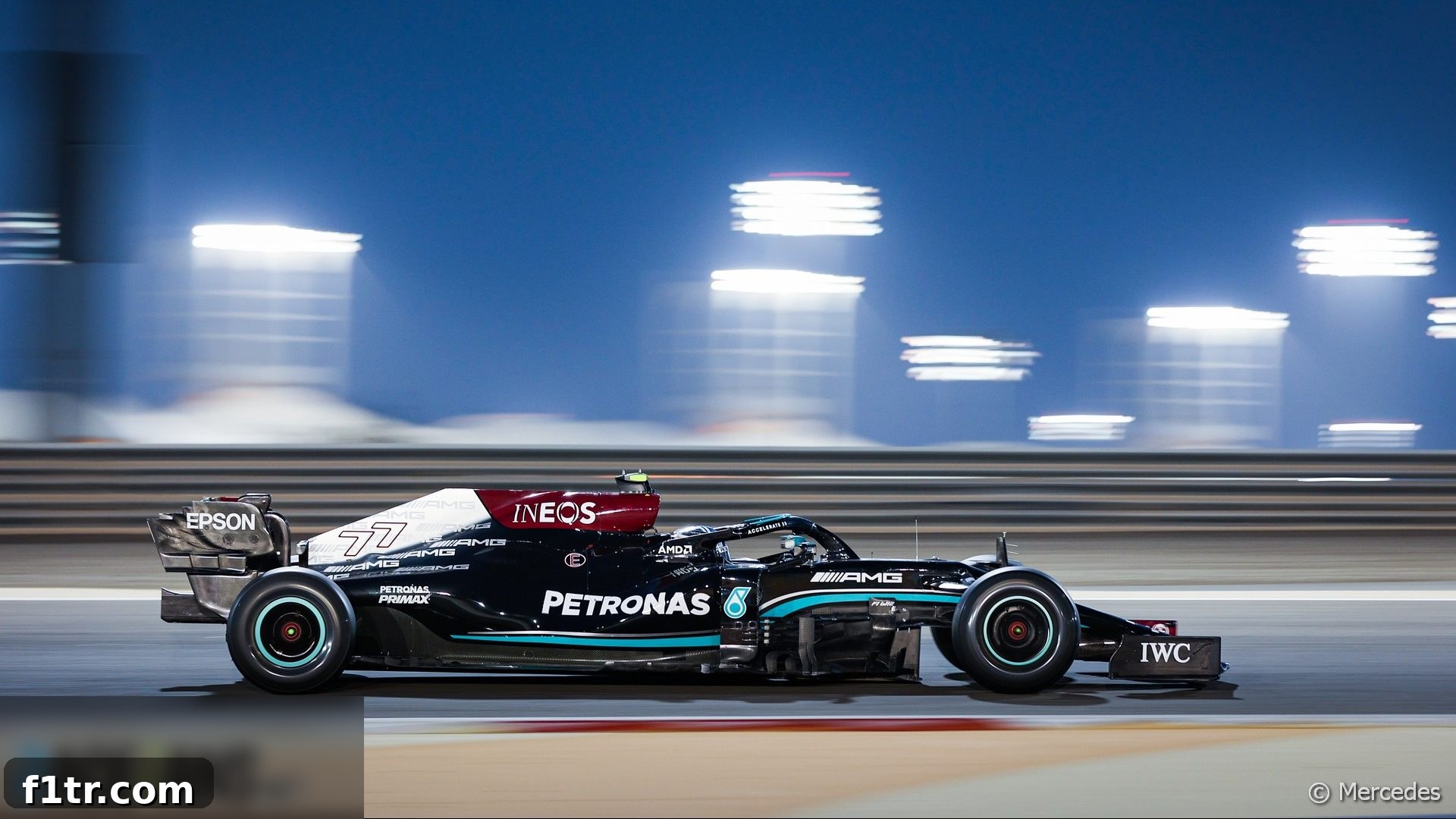
For those eager to see the dominant Mercedes team face a serious challenge, their troubled start to pre-season testing provided an unexpected dose of optimism. Unlike previous years, Mercedes opted against an initial filming day, and their test began with a significant setback: a gearbox problem on day one cost them valuable track time. Historically the busiest team in testing, Mercedes surprisingly found themselves at the bottom of the mileage chart by Sunday evening.
While their total mileage of 1,634 kilometres was only about one race distance short of the field’s average, the more pressing concern for the team was the reported balance issues with their W12. Both Lewis Hamilton and Valtteri Bottas complained about the car’s handling. The new regulations, which reduced the rear floor, diffuser, and brake duct winglet dimensions, appear to have impacted Mercedes more severely than their rivals. Mercedes’ adherence to a “low rake” aerodynamic philosophy, in contrast to Red Bull’s “high rake” approach, might be making them more susceptible to the loss of rear downforce caused by these rule changes. Hamilton, who experienced a session-stopping spin, explicitly linked the new regulations to the shift in his car’s handling, stating that rear grip “doesn’t feel too great.”
Mercedes’ trackside performance engineer Andrew Shovlin candidly admitted the car’s “lack of pace compared to several rivals, especially Red Bull” on Sunday evening. He assured that the team had “planned a programme of work to try and understand some of our issues and will be leaving no stone unturned in our efforts to find some more speed over the next ten days.” In previous seasons, Mercedes has demonstrated an unparalleled ability to introduce complex upgrades and quickly unlock their potential. The question remains whether they are planning a similar maneuver on the eve of the 2021 season, perhaps deploying a significant upgrade during their upcoming filming day in Bahrain. The “testing war” may have concluded, but the battle for supremacy on track is only just beginning.
Conclusion: The Stage is Set for an Electrifying F1 Season
The 2021 Formula 1 pre-season testing, despite its brevity, has set the stage for what promises to be an electrifying championship. The condensed schedule amplified the pressure on teams to perform, with each lap carrying immense weight. While Mercedes faced uncharacteristic challenges, Red Bull showcased formidable pace and reliability, signaling a potential shift in the competitive landscape. McLaren’s seamless transition to Mercedes power and innovative design, alongside strong performances from AlphaTauri, Alpine, and Alfa Romeo, suggest a significantly tighter midfield battle.
Ferrari’s recovery of straight-line speed offers renewed hope for their passionate fanbase, while Aston Martin’s early reliability issues present a hurdle for Sebastian Vettel. Haas, with their rookie lineup, embarks on a learning year with an eye on future regulations. The varying fortunes and technical intricacies observed during testing underscore the dynamic nature of Formula 1. With less than two weeks until the lights go out for the Bahrain Grand Prix, the teams will be working tirelessly to refine their packages. The true competitive order and the impact of the new regulations will soon be revealed, ensuring an unmissable start to the 2021 F1 season.
2021 F1 season
- Masi ‘basically gifted the championship’ to Verstappen says 2021 FIA steward Sullivan
- Las Vegas race backers looking to extend F1 deal beyond 2025
- Why Mercedes put ‘a reminder of joy and pain’ on display in their factory lobby
- Verdict on error in GT race suggests Mercedes would have lost 2021 Abu Dhabi GP appeal
- Title ‘stolen’ from Mercedes made us ‘underdogs people cheer for’ – Wolff
Browse all 2021 F1 season articles