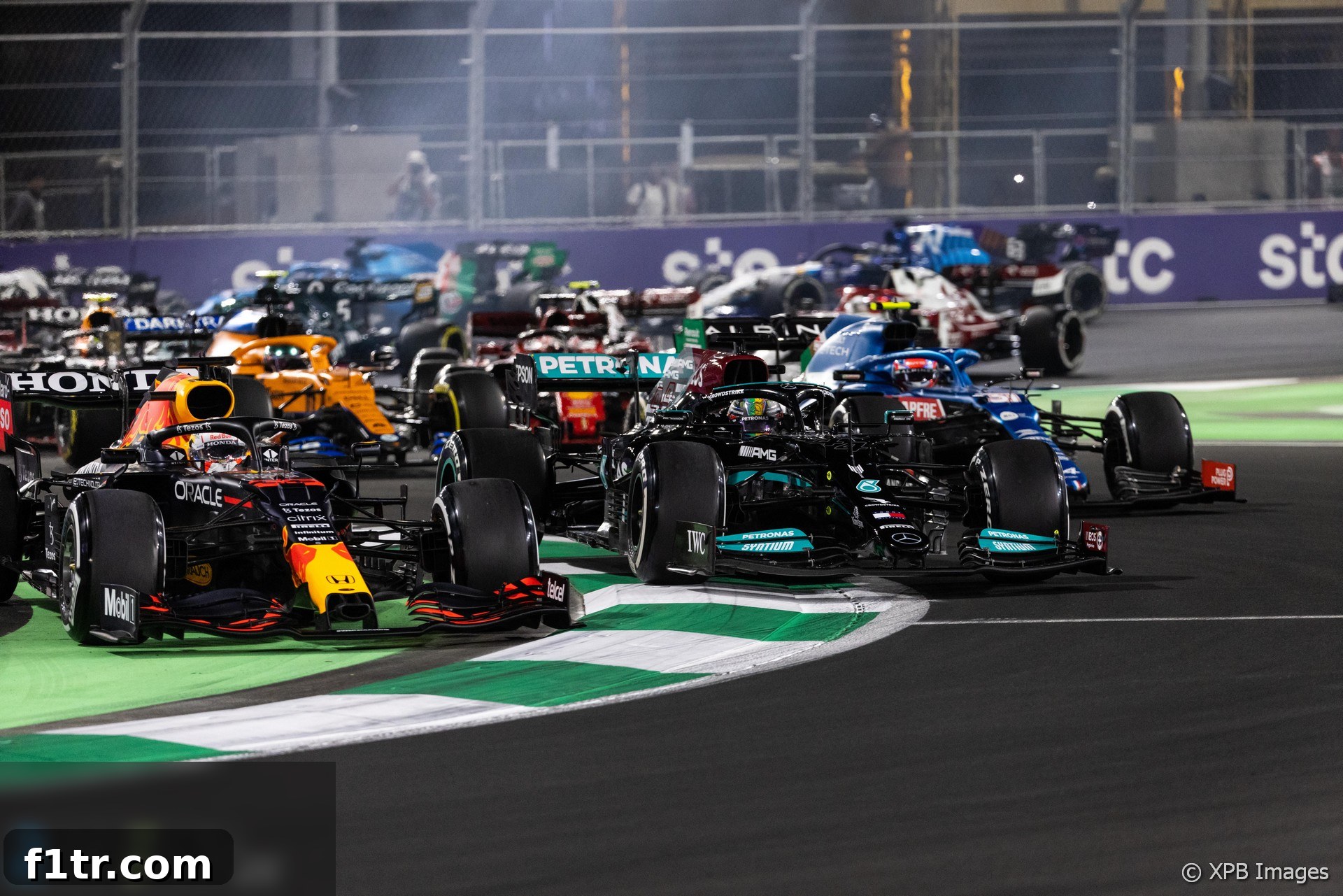
Formula 1 is ushering in a new era of race control, with revised guidelines designed to simplify incident resolution and empower drivers to police themselves on track. This significant shift has been largely welcomed by the sport’s elite, who believe it could lead to more straightforward and authentic racing. However, the practical application of these new rules has also sparked debate and raised valid queries among the drivers regarding their effectiveness in the heat of competition, highlighting the complexities inherent in high-stakes motorsport.
Advert | Become a Supporter & go ad-free
Streamlining Incident Resolution: A New Mandate for Formula 1 Drivers
The updated framework for incident management was presented to Formula 1 drivers by the new FIA Race Director, Niels Wittich, who is sharing the pivotal role this season with Eduardo Freitas. This dual leadership itself signifies an effort to bring fresh perspectives and enhance consistency in decision-making, an area that has often been a focal point of discussion in recent seasons. The core of these revised guidelines lies in a notable departure from previous practices, particularly concerning track limits and situations where an unfair advantage is gained.
Historically, race directors often played a more direct role, frequently advising teams to instruct their drivers to return any positions gained illegally by going off-track. This system, while attempting to maintain order, often led to delays and sometimes confusion during races. The new approach dramatically shifts this dynamic, placing the onus squarely onto the drivers themselves. Under the revised rules, drivers are now expected to voluntarily relinquish any places or lap time they might have gained through an unfair advantage, whether it’s by cutting a corner, going wide, or any other deviation from the legal racing line. This self-policing mechanism is intended to foster a more immediate and transparent resolution process.
The implications of this shift are clear: if a driver fails to comply with this expectation and does not voluntarily give back a gained advantage, they risk immediate investigation by the stewards. Such investigations can lead to significant penalties, ranging from time penalties and grid drops to, in severe cases, disqualification from the race. This proactive approach aims to reduce the need for race control intervention, accelerate decision-making, and promote a stronger sense of responsibility among competitors, aligning with the FIA’s broader goals for a more consistent and fairer sport.
Driver Reactions: A Blend of Welcome and Concern
Carlos Sainz Jnr: Advocating for ‘Real Racing’ and Immediate Action
Ferrari’s Carlos Sainz Jnr was among the first to express strong support for the new direction, viewing it as a significant step towards more authentic and dynamic racing. “I think it is the right approach because it’s more real racing,” Sainz commented, emphasizing the directness and efficiency of the new system. “There is no [time] penalty and it can happen more immediately.” His optimism is rooted in the idea that drivers will now have a clearer directive to correct their own errors, fostering a spirit of fair play and direct, in-race consequences for infringements.
However, Sainz also articulated a crucial concern regarding the promptness of these self-imposed corrections. He pointed out the potential for drivers to strategically delay the return of a position, especially if stewards require time to deliberate on the incident. “It needs to happen immediately. You cannot lose three or four laps, then have to give up the position,” Sainz stressed. This highlights a critical challenge: while the intent is for quick resolution, the reality of race dynamics and the potential time lag for stewards to identify and confirm an infringement could create a window for tactical maneuvering. Sainz’s point underscores the necessity for the rulebook to be “super-clear” and “applied in a moment that there’s any friction,” emphasizing that prompt and decisive action is key to preventing further complications or the exploitation of unfair advantages, maintaining the integrity of the competition.
Charles Leclerc: Seeking Guidance in Ambiguous Scenarios
Sainz’s Ferrari teammate, Charles Leclerc, also acknowledged the merits of the new approach, particularly in straightforward cases. “I think in some cases it’s very clear what the drivers shall do,” he stated, indicating that simple track limits violations or clear-cut advantages should be relatively easy for drivers to self-correct. This aspect aligns well with the FIA’s overarching goal of empowering drivers and minimizing unnecessary micro-management from race control, allowing the race to flow more naturally.
However, Leclerc’s primary concern revolves around incidents that are far from clear-cut, especially those involving multiple cars and complex racing situations where the sequence of events can be difficult to unpick in real-time. He vividly referenced the start of the 2021 Mexican Grand Prix as a prime example, where a pile-up in the opening corners led to several cars going off circuit, gaining and losing positions in a highly confusing and chaotic sequence of events. “There are also quite a bit of a situation where it’s not clear,” Leclerc explained. “If you look, for example, my start last year in Mexico. I think it was a good example of things just being very messy. You’re gaining positions but you don’t really know what you need to do.”
In such chaotic and ambiguous scenarios, Leclerc hopes that the support and guidance of the race director will still be available and utilized. “So in those cases I hope we still will have the support of the race director, because this is important in the tricky situations, especially.” He believes that while drivers should be “clever enough to give back the position” in simple, undeniable instances, the inherent nuances and unpredictable nature of racing demand an overarching authority to provide clear guidance or make definitive calls when interpretations vary wildly among competitors. This highlights the inherent tension between promoting driver autonomy and ensuring fair, consistent outcomes in the most ambiguous and high-pressure moments of a Formula 1 race.
Kevin Magnussen: The Unseen Influence of Team Communication
Kevin Magnussen offered a pragmatic perspective on the new guidelines, suggesting that despite the FIA’s intent to place the onus solely on drivers, Formula 1 teams would likely continue to play a crucial, if unofficial, role in guiding their competitors during races. “I still think they will tell the drivers to give it back,” said the Haas driver, reflecting on the deep integration of teams into strategic decision-making and real-time incident management. He further elaborates, “It’s just I think they are expecting more from the drivers in terms of giving back the position if you’ve gained an advantage.”
Magnussen’s viewpoint acknowledges that while the official directive may be for drivers to act voluntarily and autonomously, the strategic advice and instantaneous assessments from the pit wall often heavily influence driver decisions, particularly in high-pressure situations where championship points and competitive positions are at stake. This raises pertinent questions about the degree of genuine autonomy drivers will truly exercise versus how much they will still rely on the real-time, data-driven assessments and instructions from their race engineers and strategists.
Furthermore, Magnussen astutely touched upon the inevitable disagreements that arise from racing incidents, which are often subject to different interpretations. “There’s going to be cases where it’s like one driver will feel he got pushed off, the other one will feel he cut the track, and so there’ll be some discussion there.” This anticipated friction underscores a fundamental challenge for the new guidelines: the subjective nature of many racing incidents. What one driver perceives as a forced off-track excursion, potentially warranting a penalty for a competitor, another might see as a legitimate overtaking maneuver that inadvertently led to a perceived, but not necessarily intentional, unfair advantage. In these contentious scenarios, the role of the stewards, who will ultimately be tasked with adjudicating penalties if drivers fail to self-correct or if disputes arise, becomes even more critical in upholding the sporting regulations.
The FIA’s Broader Vision: Consistency, Transparency, and Driver Responsibility
The introduction of two race directors, Niels Wittich and Eduardo Freitas, itself marks a significant structural change within the FIA, aimed at distributing the immense workload and potentially bringing fresh perspectives and greater consistency to stewarding decisions. The new guidelines are a direct extension of this broader effort to refine race control operations, particularly in the aftermath of a highly controversial end to the 2021 season, which intensely scrutinized the application of rules and the communication protocols between race control and teams.
By effectively shifting the responsibility for rectifying unfair advantages to the drivers, the FIA hopes to achieve several key objectives. Firstly, it aims to reduce the time spent by race control on minor infringements, allowing them to focus on more significant or complex incidents. Secondly, it seeks to encourage cleaner driving standards and greater adherence to track limits from the outset. Lastly, the goal is to ensure that penalties, when they are ultimately applied, are universally understood, accepted, and seen as a direct consequence of a driver’s failure to self-correct, thereby enhancing the transparency and fairness of the sport. The emphasis on “immediate” action, as Sainz pertinently pointed out, is crucial here; if drivers hesitate or if there’s any ambiguity, the efficiency and perceived fairness of the entire system could be compromised.
The ultimate success of these new guidelines will undoubtedly hinge on several critical factors: the absolute clarity of communication from the FIA regarding their expectations, the consistent and impartial application of the rules by stewards across different circuits and varying track conditions, and perhaps most importantly, the interpretation and compliance by the drivers themselves. The line between a genuine racing incident and an intentionally gained unfair advantage can be incredibly fine, requiring a heightened level of self-awareness, integrity, and decisive action from every competitor in the heat of battle.
Navigating the Grey Areas: The Future of F1 Incident Management
While the sentiment behind simplifying incident resolution in Formula 1 is overwhelmingly positive and aims to enhance the spectacle, the concerns raised by seasoned drivers like Carlos Sainz, Charles Leclerc, and Kevin Magnussen are vital and cannot be overlooked. Formula 1 is a sport characterized by high stakes, split-second decisions, and immense pressure, where every tenth of a second and every position can alter the course of a championship.
The expectation for drivers to instantly and accurately assess whether they’ve gained an unfair advantage, and then to act upon that assessment to relinquish a position, is a considerable one. Especially in the chaos of a multi-car battle, a crucial overtaking maneuver, or a frantic race start, distinguishing between an unavoidable off-track excursion and a deliberate attempt to gain an advantage can be exceedingly difficult to discern in real-time. These “messy situations” as Leclerc described, represent the acid test for the new regulations, as they push the boundaries of driver judgment and self-policing.
The new guidelines represent a bold and progressive step towards a more self-regulating sport, with the potential to lead to fewer time penalties, quicker resolutions, and ultimately, clearer racing for both participants and fans. However, they also introduce new complexities and potential areas for debate, particularly in those ambiguous scenarios where immediate clarity is elusive. The coming races of the Formula 1 season will serve as a critical proving ground for these updated regulations, revealing how effectively they stand up to the dynamic, unpredictable, and fiercely competitive nature of top-tier motorsport. The ongoing dialogue and collaboration between drivers, teams, and the FIA will undoubtedly be crucial as the sport continues its relentless pursuit of the ultimate balance between thrilling competition and absolute fairness.
Advert | Become a RaceFans supporter andgo ad-free
Related Coverage: 2022 Saudi Arabian Grand Prix and Beyond
For more in-depth insights and the latest news from the captivating world of Formula 1, including crucial developments and analysis from the 2022 season, explore these related articles:
- Vettel Will Return to Race for Aston Martin at Australian Grand Prix
- Mercedes “A Second Per Lap” Off Red Bull’s Pace – Russell
- Transcript: How Verstappen Fought Leclerc on His Radio and on the Track in Jeddah
- F1 Intends to Keep Racing in Saudi Arabia Despite Missile Attack
- Paddock Diary: 2022 Saudi Arabian Grand Prix
Browse all 2022 Saudi Arabian Grand Prix articles