Mercedes’ Zandvoort Puzzle: Unpacking George Russell’s Dutch Grand Prix Plunge
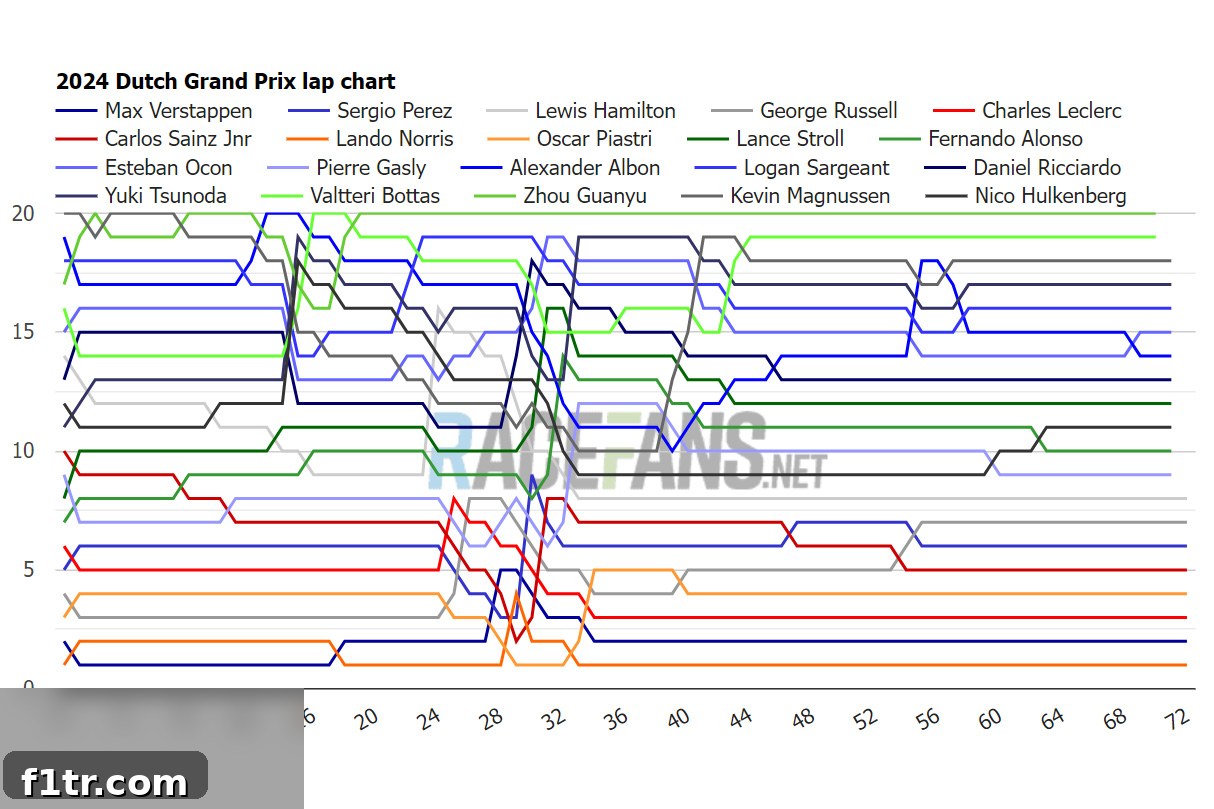
The 2024 Dutch Grand Prix promised an exciting spectacle at the challenging Zandvoort circuit, and for Mercedes-AMG Petronas F1 Team, hopes were particularly high. Coming off a formidable run of three victories in the preceding four races, the Silver Arrows arrived with significant momentum. Early in the race, George Russell looked set to continue this impressive streak, quickly moving into a strong third position. After a stellar start, he expertly navigated his way ahead of McLaren’s Oscar Piastri and meticulously held onto that crucial podium spot throughout the initial stint of the race. The early signs pointed towards another celebratory champagne spray for the young Briton, but the complex dynamics of Formula 1 racing, combined with strategic challenges and tyre performance woes, had other plans.
Despite his commanding start, Russell’s race began to unravel in dramatic fashion, culminating in a seventh-place finish. This was a stark contrast to the podium aspirations, especially considering his teammate, Lewis Hamilton, who started P14, finished just one place behind him. What transpired between Russell’s promising third place and his eventual P7 descent? The answer lies in a confluence of factors, primarily centred around tyre management, pit stop execution, and the inherent characteristics of the Mercedes W15 on the Zandvoort circuit.
The Initial Setbacks: Pit Stop Pace and Strategic Disadvantage
The first crack in Russell’s armour appeared during his initial pit stop. A slightly slower-than-ideal stop, coupled with a delayed pit call, cost him valuable track position. He pitted a lap later than Ferrari’s Charles Leclerc, an seemingly minor delay that ultimately allowed the Ferrari driver to ‘undercut’ him and seize a position. This momentary lapse, though not catastrophic on its own, set a precedent for the strategic challenges that would plague Mercedes throughout the race.
Following this, the race truly began to go awry. Having successfully fended off Oscar Piastri in the first stint, Russell found himself vulnerable when the McLaren re-emerged in his mirrors. Piastri, benefiting from eight-lap fresher tyres, wasted no time in making the overtake. Russell, despite his best efforts, simply couldn’t hold off the charge. At this critical juncture, Russell’s car appeared to lack the ultimate pace of the other front-runners, struggling to maintain the competitive edge he had demonstrated earlier. While he managed to cut the deficit somewhat after lap 43, the damage had already been done, and the Mercedes seemed increasingly susceptible to the pressure from behind.
The Controversial Second Pit Stop and Tyre Degradation
As the Grand Prix entered its decisive final stages, Russell’s lap times, which had shown signs of recovery, began to climb again. This critical drop in performance coincided with increased pressure from behind. Carlos Sainz Jr. of Ferrari, having masterfully passed Sergio Perez, was rapidly closing the gap to Russell. With Sainz edging dangerously close to DRS range, Mercedes faced a difficult decision: keep Russell out and risk losing multiple positions on track, or bring him in for a second pit stop and sacrifice track position immediately. The team opted for the latter, pulling Russell in for fresh tyres. However, this strategic call proved to be a gamble that didn’t pay off, as Russell never managed to regain the positions he lost to both Sainz and Perez.
This decision sparked considerable debate. Was the second pit stop a mistake, or an unavoidable consequence of the car’s performance? Could Russell have nursed his hard tyres to the finish, potentially holding off Sainz? Mercedes’ Trackside Engineering Director, Andrew Shovlin, shed light on the team’s rationale, stating, “Today we were lacking the speed to fight for much more than we achieved. We were not generating good grip and, consequently, were sliding around on the tyre. That led to higher degradation than our competitors and forced us into a two-stop race.” This candid admission highlighted Mercedes’ fundamental struggle with tyre management and grip levels at Zandvoort, a factor that ultimately dictated their strategic choices and hampered Russell’s race.
Lewis Hamilton’s Contrasting Fortunes and Strategic Choices
In contrast to Russell’s early promise, Lewis Hamilton experienced a very different race trajectory. Starting from a challenging 14th position on the grid, Hamilton initiated his race on soft tyres, making swift progress through the field. His aggressive early stint saw him overtake several cars before switching to hard tyres for his second stint. Mercedes might have been influenced to pit Russell again after observing Hamilton’s impressive pace following his own second pit stop.
For Hamilton, a second pit stop for a fresh set of soft tyres carried minimal risk, as he had established a sufficient gap behind him to maintain his position. However, Hamilton himself revealed that a one-stop strategy might have been on the cards for him, had it not been for a minor but critical error. “I had a small lock-up on my hard tyre, which made doing a one-stop not really viable,” he explained to Viaplay. “If I hadn’t had that, maybe I could have eked out that one-stop and maybe finish one place ahead. But I don’t think it would have made a big difference.” This insight suggests that Mercedes’ cars were on the knife-edge of tyre performance, with even a small mistake having significant strategic ramifications.
Hamilton’s pace in his third stint was notably strong, largely due to the advantage of a fresh set of soft tyres. While Russell was given a used set for his final push, Hamilton benefited from new rubber, allowing him to demonstrate impressive speed, even mounting a serious challenge for the fastest lap of the race. This difference in tyre allocation for their final stints further highlighted the strategic complexities and the differing fortunes within the Mercedes garage that weekend.
Mercedes’ Zandvoort Conundrum and Missed Opportunities
After a series of strong performances in previous races, Mercedes found it challenging to consistently find the ‘sweet spot’ for their cars at Zandvoort. Russell seemed more comfortable with the car’s balance in qualifying, securing a strong grid position, whereas Hamilton reported better race pace. The outcome saw both drivers converge on seventh and eighth place finishes, positions that were undeniably below par for a team with Mercedes’ recent form and aspirations. This dual outcome suggested a fundamental difficulty in optimising the W15 for the unique demands of the Dutch circuit, where tyre degradation and precise handling are paramount.
Adding to the team’s frustration, it’s plausible that both drivers might have achieved better results with single-stop strategies, had the tyre degradation issues not been so pronounced, or had Hamilton avoided his lock-up. A particularly bitter pill to swallow for Hamilton was losing the fastest lap to Lando Norris on the final lap. After being asked if he needed to push harder to improve his time and being told it wasn’t necessary, the McLaren driver ultimately snatched the bonus point, further underscoring a weekend of mixed messages and missed opportunities for the Silver Arrows.
Race Statistics and Key Insights
The challenging nature of the Dutch Grand Prix for Mercedes is further illuminated by the race statistics. Analyzing lap times, pit stop durations, and tyre strategies offers a deeper understanding of the team’s struggles and the strategic decisions made under pressure.
2024 Dutch Grand Prix Fastest Laps
Here’s a breakdown of each driver’s fastest lap, showcasing the peak performance during the race:
| Rank | # | Driver | Car | Lap time | Gap | Avg. speed (kph) | Lap no. |
|---|---|---|---|---|---|---|---|
| 1 | 4 | Lando Norris | McLaren-Mercedes | 1’13.817 | 207.71 | 72 | |
| 2 | 44 | Lewis Hamilton | Mercedes | 1’13.878 | 0.061 | 207.54 | 62 |
| 3 | 63 | George Russell | Mercedes | 1’13.927 | 0.110 | 207.4 | 57 |
| 4 | 55 | Carlos Sainz Jnr | Ferrari | 1’14.117 | 0.300 | 206.87 | 40 |
| 5 | 81 | Oscar Piastri | McLaren-Mercedes | 1’14.237 | 0.420 | 206.53 | 36 |
| 6 | 23 | Alexander Albon | Williams-Mercedes | 1’14.434 | 0.617 | 205.99 | 71 |
| 7 | 16 | Charles Leclerc | Ferrari | 1’14.585 | 0.768 | 205.57 | 62 |
| 8 | 11 | Sergio Perez | Red Bull-Honda RBPT | 1’14.587 | 0.770 | 205.56 | 69 |
| 9 | 1 | Max Verstappen | Red Bull-Honda RBPT | 1’14.752 | 0.935 | 205.11 | 30 |
| 10 | 14 | Fernando Alonso | Aston Martin-Mercedes | 1’14.758 | 0.941 | 205.09 | 34 |
| 11 | 10 | Pierre Gasly | Alpine-Renault | 1’14.855 | 1.038 | 204.83 | 54 |
| 12 | 20 | Kevin Magnussen | Haas-Ferrari | 1’14.954 | 1.137 | 204.56 | 42 |
| 13 | 3 | Daniel Ricciardo | RB-Honda RBPT | 1’15.222 | 1.405 | 203.83 | 52 |
| 14 | 18 | Lance Stroll | Aston Martin-Mercedes | 1’15.255 | 1.438 | 203.74 | 51 |
| 15 | 31 | Esteban Ocon | Alpine-Renault | 1’15.390 | 1.573 | 203.37 | 50 |
| 16 | 2 | Logan Sargeant | Williams-Mercedes | 1’15.539 | 1.722 | 202.97 | 26 |
| 17 | 22 | Yuki Tsunoda | RB-Honda RBPT | 1’15.552 | 1.735 | 202.94 | 16 |
| 18 | 27 | Nico Hulkenberg | Haas-Ferrari | 1’15.657 | 1.840 | 202.66 | 59 |
| 19 | 24 | Zhou Guanyu | Sauber-Ferrari | 1’15.724 | 1.907 | 202.48 | 67 |
| 20 | 77 | Valtteri Bottas | Sauber-Ferrari | 1’15.822 | 2.005 | 202.22 | 45 |
2024 Dutch Grand Prix Pit Stop Times
Efficient pit stops are crucial for success in Formula 1. Here’s how each team performed during their stops, highlighting any potential gains or losses:
| Rank | # | Driver | Team | Complete stop time (s) | Gap to best (s) | Stop no. | Lap no. |
|---|---|---|---|---|---|---|---|
| 1 | 1 | Max Verstappen | Red Bull | 20.785 | 1 | 27 | |
| 2 | 55 | Carlos Sainz Jnr | Ferrari | 20.84 | 0.055 | 1 | 30 |
| 3 | 16 | Charles Leclerc | Ferrari | 20.841 | 0.056 | 1 | 24 |
| 4 | 22 | Yuki Tsunoda | RB | 20.88 | 0.095 | 2 | 32 |
| 5 | 3 | Daniel Ricciardo | RB | 20.942 | 0.157 | 1 | 29 |
| 6 | 81 | Oscar Piastri | McLaren | 20.969 | 0.184 | 1 | 33 |
| 7 | 31 | Esteban Ocon | Alpine | 21.015 | 0.23 | 1 | 30 |
| 8 | 23 | Alexander Albon | Williams | 21.016 | 0.231 | 2 | 54 |
| 9 | 44 | Lewis Hamilton | Mercedes | 21.026 | 0.241 | 2 | 48 |
| 10 | 77 | Valtteri Bottas | Sauber | 21.095 | 0.31 | 1 | 15 |
| 11 | 63 | George Russell | Mercedes | 21.159 | 0.374 | 2 | 54 |
| 12 | 44 | Lewis Hamilton | Mercedes | 21.168 | 0.383 | 1 | 23 |
| 13 | 24 | Zhou Guanyu | Sauber | 21.214 | 0.429 | 1 | 18 |
| 14 | 22 | Yuki Tsunoda | RB | 21.249 | 0.464 | 1 | 14 |
| 15 | 23 | Alexander Albon | Williams | 21.258 | 0.473 | 1 | 12 |
| 16 | 77 | Valtteri Bottas | Sauber | 21.273 | 0.488 | 2 | 43 |
| 17 | 14 | Fernando Alonso | Aston Martin | 21.348 | 0.563 | 1 | 31 |
| 18 | 18 | Lance Stroll | Aston Martin | 21.385 | 0.6 | 1 | 30 |
| 19 | 20 | Kevin Magnussen | Haas | 21.403 | 0.618 | 1 | 40 |
| 20 | 4 | Lando Norris | McLaren | 21.536 | 0.751 | 1 | 28 |
| 21 | 27 | Nico Hulkenberg | Haas | 21.619 | 0.834 | 1 | 14 |
| 22 | 63 | George Russell | Mercedes | 21.846 | 1.061 | 1 | 25 |
| 23 | 2 | Logan Sargeant | Williams | 22.03 | 1.245 | 1 | 22 |
| 24 | 24 | Zhou Guanyu | Sauber | 22.044 | 1.259 | 2 | 51 |
| 25 | 10 | Pierre Gasly | Alpine | 22.646 | 1.861 | 1 | 32 |
| 26 | 11 | Sergio Perez | Red Bull | 22.934 | 2.149 | 1 | 29 |
The 2024 Dutch Grand Prix served as a stark reminder of the unpredictable nature of Formula 1. For Mercedes, it was a weekend that promised much but delivered less than expected, highlighting persistent challenges with tyre management and circuit-specific car performance. While George Russell initially showed incredible pace, strategic missteps and underlying car characteristics led to his unfortunate slide down the order. Lewis Hamilton, starting from further back, demonstrated commendable recovery drive and strong race pace, but also faced his own set of challenges, including losing the fastest lap by a whisker. As the season progresses, Mercedes will undoubtedly be analyzing this race in detail, aiming to iron out these inconsistencies and return to their winning ways. The tight margins in Formula 1 mean that even the smallest details, from a slightly slower pit stop to a brief tyre lock-up, can dramatically alter a driver’s fate.