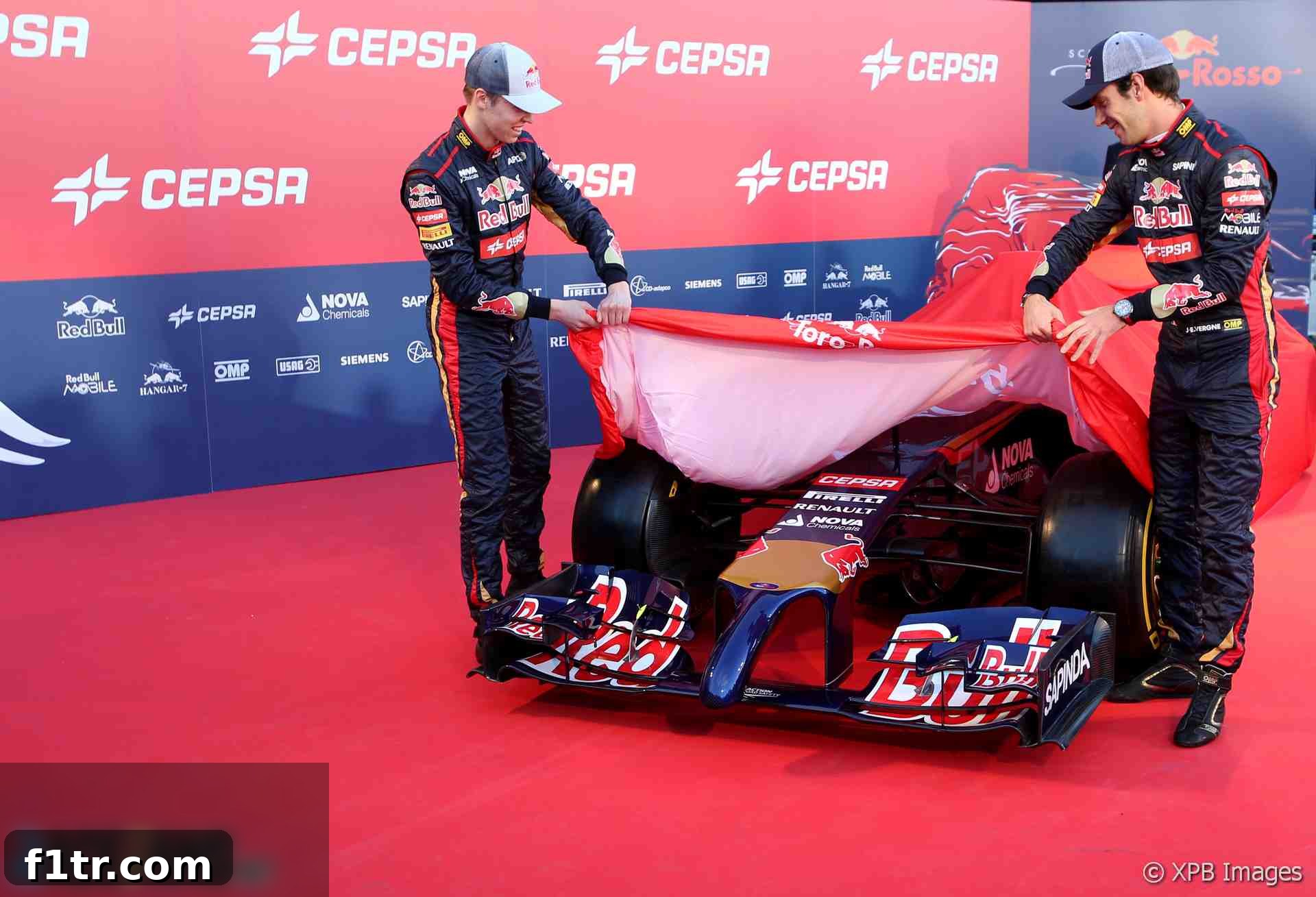
Toro Rosso Unveils the STR9: Ushering in a New Hybrid Era for the 2014 F1 Season
The dawn of the 2014 Formula 1 season marked a pivotal moment in the sport’s history, characterized by a radical overhaul of its technical regulations. Amidst this backdrop of unprecedented change, Scuderia Toro Rosso confidently launched its contender, the STR9, at the Jerez circuit in Spain. This machine represented not just a new car, but a significant strategic shift for the Italian outfit, as it was their first Formula 1 challenger to be powered by a Renault energy recovery system. The unveiling generated considerable buzz, offering the first visual insights into how the team interpreted the new rulebook and integrated their new engine partner.
The 2014 season was set to be a true test of engineering prowess and adaptability for every team on the grid. With a completely redesigned powertrain concept and stringent new constraints, the stage was set for a dramatic reshuffle of the pecking order. Toro Rosso, as a constructor with a reputation for nurturing young talent and punching above its weight, aimed to leverage this regulatory reset to make a substantial step forward. The STR9 was therefore more than just a race car; it was a symbol of ambition, innovation, and a fresh start in the highly competitive world of Formula 1.
The Revolutionary 2014 Formula 1 Regulations: A Paradigm Shift
The 2014 Formula 1 regulations were arguably the most significant in decades, introducing a seismic shift from naturally aspirated V8 engines to highly complex 1.6-liter V6 turbocharged hybrid power units. This monumental change fundamentally redefined how Formula 1 cars were designed, driven, and raced. Key elements of this new regulatory framework included:
- Turbocharged V6 Engines: A return to turbocharging after more than two decades, combined with a reduction in engine size and cylinder count.
- Enhanced Energy Recovery Systems (ERS): The introduction of a more powerful ERS, consisting of two motor-generator units (MGU-H and MGU-K) designed to recover energy from both exhaust gases and braking. This energy could then be deployed for a significant power boost per lap, making strategic energy management crucial.
- Strict Fuel Limit: Cars were limited to 100 kilograms of fuel per race, a drastic reduction from previous seasons. This necessitated extreme fuel efficiency from the power units and sophisticated race strategies to manage consumption.
- Reduced Fuel Flow Rate: A maximum fuel flow rate of 100 kg/hour further emphasized efficiency over raw power at all times.
- Aerodynamic Changes: While the engine rules dominated discussions, significant aerodynamic changes were also in effect, including revised nose cone designs, lower chassis, and new front wing dimensions, all impacting airflow and downforce generation.
These regulations presented an immense challenge for engine manufacturers and chassis designers alike. Reliability was predicted to be a major hurdle, with teams scrambling to understand and optimize the intricate interplay between the internal combustion engine, turbocharger, and the advanced ERS units. Cooling demands soared, while the tight packaging required for these complex systems tested the limits of engineering ingenuity. For Toro Rosso, this new era also meant navigating a crucial new partnership.
Toro Rosso’s Strategic Shift: Embracing Renault Power
For several seasons leading up to 2014, Toro Rosso had been powered by Ferrari engines. The switch to Renault power for the STR9 marked a significant strategic decision, aligning the junior team more closely with its senior counterpart, Red Bull Racing, which had enjoyed immense success with Renault engines in the preceding years. This alignment was expected to bring several advantages, including shared technical expertise, greater synergy in engine development, and a more streamlined communication channel with a single power unit supplier for both Red Bull-owned teams.
The integration of a new power unit is never a simple task in Formula 1. It requires meticulous planning, design adjustments, and a deep understanding between the chassis manufacturer and the engine supplier. Toro Rosso’s technical team had to work tirelessly to adapt the STR9’s design to accommodate the Renault V6 turbo-hybrid unit, focusing on aspects such as engine mounting, cooling systems, electrical architecture, and the complex ERS components. This fundamental change meant that much of the car’s design philosophy had to be re-evaluated, making the development cycle for the STR9 particularly intensive.
Franz Tost on Preparation and Ambition
Team Principal Franz Tost, a veteran of Formula 1, provided valuable insights into the team’s monumental efforts during the STR9 launch. He highlighted the early start made on the new car, emphasizing the extraordinary challenges presented by the 2014 regulations. “In 2014 the key parameters for success will be finding the best balance between deploying the power of the engine and managing the 100kg fuel limit per race, the use of the two energy recovery systems and, just as in the past, the tyres,” Tost explained. This statement underscored the multi-faceted nature of the new technical demands, where sheer power was no longer the sole determinant of success, but rather an intricate blend of efficiency, reliability, and strategic energy management.
Tost also openly addressed the implications of their new engine partner: “Apart from the new rules, at Toro Rosso we have also had to adapt to a new engine partner and we are looking forward to working with Renault.” This marked a fresh chapter for the team, signifying a commitment to building a strong relationship with Renault to maximize the performance potential of the new power unit. The transition required a substantial investment of time and resources, not just in engineering, but also in establishing effective communication and collaboration channels between the two organizations.
The STR9: A Glimpse into its Design and Engineering
While specific technical details of the STR9 were, as always, guarded secrets, the launch offered a visual representation of how Toro Rosso approached the 2014 regulations. Like many cars that year, the STR9 featured a distinctively low nose, a common design solution mandated by the new front crash structure rules. The packaging of the new, bulkier power unit and its extensive cooling requirements were visibly integrated, showcasing the engineering compromises and innovations made to fit everything within the car’s compact footprint. The rear of the car would have been particularly critical, with the exhaust outlet design and its interaction with the rear wing playing a vital role in aerodynamic performance under the new rules.
The car’s overall philosophy likely focused on achieving a balance between aerodynamic efficiency and mechanical grip, while prioritizing reliability – a paramount concern in a year with such complex and untested technology. Teams were aware that simply having the fastest car wouldn’t be enough; finishing races consistently would be crucial for scoring points. The STR9, therefore, embodied a blend of cutting-edge technology and pragmatic engineering, designed to tackle the unique challenges of Formula 1’s turbo-hybrid era.
A Dynamic Driver Lineup: Kvyat and Vergne
Beyond the technical novelties, Toro Rosso’s 2014 driver lineup itself was a talking point, symbolizing the team’s core mission: to blood promising young talent. The STR9 was entrusted to Jean-Eric Vergne and the highly anticipated rookie, Daniil Kvyat.
Daniil Kvyat’s Debut
Daniil Kvyat, a product of the revered Red Bull Junior Team program, was making his much-anticipated Formula 1 debut. His rapid ascent through the junior categories, including winning the GP3 Series title in 2013, had marked him as an exceptional talent. Tost expressed confidence in his new recruit: “One final new element for us is on the driver side, as Daniil Kvyat joins us to race alongside Jean-Eric Vergne. Both are very talented and we expect good things from them.” Kvyat’s raw speed and aggressive driving style were expected to bring a fresh dynamic to the team, although the learning curve for a rookie in such a technically demanding year would be incredibly steep.
Jean-Eric Vergne’s Role
Jean-Eric Vergne, entering his third season with Toro Rosso, brought valuable experience to the team. Having raced in F1 since 2012, he had accumulated crucial mileage and understanding of the demands of Grand Prix racing. His role would be vital in providing consistent feedback to engineers on the new power unit and chassis, as well as acting as a benchmark for his rookie teammate. Vergne’s steady development and ability to score points in previous seasons made him a solid and reliable asset in a year where stability and clear direction would be paramount.
First Impressions from Jerez: Pre-Season Testing Kicks Off
The launch of the STR9 at Jerez coincided with the start of the first pre-season test session, a critical period for all teams. These early tests were not about setting blistering lap times, but rather about fundamental data collection, system checks, and ensuring basic reliability of the immensely complex new power units. Teams aimed to complete as many laps as possible to gather information on engine performance, ERS functionality, cooling efficiency, and fuel consumption under real-world conditions. Franz Tost’s comments about the difficulty in setting targets for the season were particularly pertinent during these initial test days, where every team faced a steep learning curve.
The Jerez test sessions were fraught with challenges for many teams, including widespread reliability issues, limited running, and drivers getting to grips with the new torque characteristics and energy management requirements. For Toro Rosso, their objective would have been to systematically iron out any initial kinks with the Renault power unit and gather foundational data to inform subsequent development. Every lap would count in building a comprehensive understanding of the STR9’s behavior and unlocking its potential for the long season ahead.
Navigating the Future: Toro Rosso’s 2014 Aspirations
With all these profound changes – the new regulations, a new engine partner, and a new driver – Franz Tost candidly admitted the difficulty in making precise predictions or setting definitive targets for the 2014 season. “However, it is clear we have to improve our performance and make a step forward,” he stated. This sentiment encapsulated the cautious yet determined approach of Toro Rosso. For a midfield team, “making a step forward” could mean consistently challenging for points, reducing the gap to the front-runners, or improving their constructor’s championship position. The focus would undoubtedly be on understanding the new package, developing it rapidly throughout the season, and capitalizing on any opportunities presented by the anticipated unreliability of other teams.
The synergy between the chassis and the Renault power unit would be critical. Strong communication and joint development efforts between Toro Rosso’s engineers and Renault Sport F1 would dictate how quickly the team could adapt and optimize the STR9. The talent and feedback from Vergne and Kvyat would also play an indispensable role in guiding this development, shaping the car to be both competitive and drivable under the new, demanding regulations.
Toro Rosso STR9 pictures
Conclusion: A Season of Transformation
The launch of the Toro Rosso STR9 at Jerez marked the beginning of an exhilarating and unpredictable 2014 Formula 1 season. With its new Renault power unit, a fresh design conforming to revolutionary regulations, and a dynamic driver lineup featuring the experienced Jean-Eric Vergne alongside rookie sensation Daniil Kvyat, Toro Rosso was poised for a period of significant transformation. The challenges were immense, from mastering the intricacies of the turbo-hybrid power units and energy management to ensuring robust reliability and rapidly developing the car throughout the year.
Franz Tost’s message was clear: while targets were difficult to define in such a volatile environment, the imperative was to “make a step forward.” This ambition, coupled with the inherent excitement of a new era in Formula 1, positioned the STR9 as a car of great potential and interest. The 2014 season promised a true spectacle of engineering, strategy, and driving talent, and Toro Rosso, with its STR9, was ready to embrace the future of Grand Prix racing head-on.