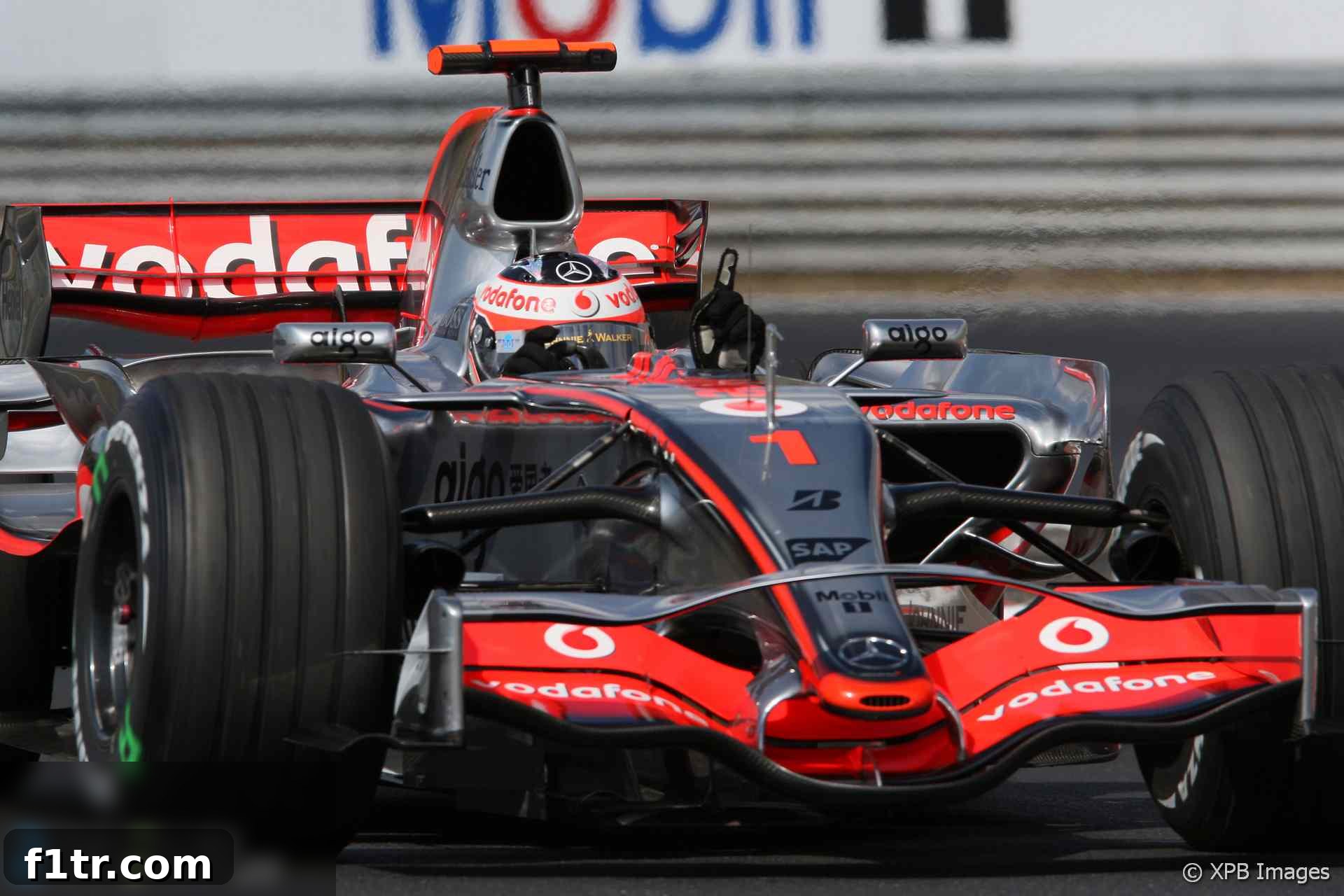
Fernando Alonso has reignited his long-standing criticism of former team McLaren, stirring fresh debate among Formula 1 enthusiasts.
Fernando Alonso, a two-time Formula 1 world champion, has once again brought to the forefront the contentious details of his 2007 season with McLaren. In a series of recent interviews, the Spanish driver has made several pointed remarks about the team, drawing parallels to past F1 figures known for their candid and sometimes critical assessments, such as Niki Lauda and David Coulthard. This renewed scrutiny sheds light on the complex relationship between drivers, team principals, and the intense pressures of top-tier motorsport, a dynamic often veiled in mystery and non-disclosure agreements.
Alonso's Persistent Grievances Towards McLaren
The core of Alonso's recent statements often revolves around his perception of equality, or lack thereof, within the McLaren team during his tenure and beyond. Prior to the Hungarian Grand Prix, Alonso expressed his views to the press:
Last year again it is true that I had a possibility to fight for the championship and it was okay. I knew that this year it was not possible any more. But if I was racing for McLaren now at this moment maybe I would be in the same position as I am now without the possibility to win.
This statement is particularly telling. Alonso seems to imply that while he was permitted to contend directly against Lewis Hamilton for the championship in 2007, he believes Heikki Kovalainen, Hamilton's teammate in the subsequent season, was not afforded the same opportunity. This suggestion directly challenges McLaren's long-held assertion of absolute equality between its drivers – an assertion that the team, particularly through its then-boss Ron Dennis, has vehemently denied since Kovalainen joined their ranks. Alonso’s perspective hints at a deeper dissatisfaction, suggesting that despite outwardly appearing to have a fair shot, the internal dynamics of the team might have been stacked against him.
Ron Dennis's Staunch Defence of Team Equality
In response to Alonso's continued critiques, McLaren team principal Ron Dennis offered a robust defense of his team's philosophy. His statements aimed to dispel any notions of favoritism or predefined hierarchies, asserting McLaren's unwavering commitment to equal treatment for all its drivers. When questioned about Alonso's latest remarks, Dennis articulated his stance:
You can’t see any strings leading to Heikki’s shoulders and he’s an honest guy. He will more than convince anyone who talks to him that this is a team absolutely committed to equality. It always has been, and it always will be.
People will point to the [2008 German] Grand Prix and say it’s absolutely obvious there were team orders in that event because it was clear that Heikki moved over and let Lewis past. The essential fact was that throughout that race Lewis was nearly seven-tenths of a second faster than Heikki and he knew that, he was told that. He was not told to let Lewis past.
But when you are in a team and you know that your teammate has the opportunity of winning the race and you don’t, if you have the right values and values that are not lodged solely and exclusively in your own motives, your own objectives and your own selfishness, then you take a decision. Which is allow the driver past to have a chance of winning the race – which he did.
Dennis's explanation delves into the nuanced reality of on-track decisions, drawing a clear distinction between explicit "team orders" and a driver's strategic choice to facilitate a faster teammate. He highlights that while Lewis Hamilton was indeed quicker than Heikki Kovalainen at the 2008 German Grand Prix, Kovalainen's decision to allow Hamilton past was presented not as an instruction, but as a voluntary act stemming from an understanding of the team's broader objectives and the relative pace difference. This perspective suggests a team environment where drivers are expected to make rational decisions for the collective good, especially when a championship is at stake.
Furthermore, Dennis underscored that such strategic maneuvers are not unique to McLaren. He cited comparable situations, such as BMW's exchange of positions between Nick Heidfeld and Robert Kubica in Canada, and Ferrari's arrangement for Kimi Raikkonen to move ahead of Felipe Massa in Brazil during the previous year. These examples serve to normalize McLaren's actions, positioning them as common strategic practices in Formula 1 rather than evidence of preferential treatment.
The Veil of Non-Disclosure: An Agreement of Silence
Adding another layer of complexity to the ongoing saga, Ron Dennis also revealed the existence of a non-disclosure clause, a standard practice in high-stakes professional sports, which was integral to the termination of Alonso's contract with McLaren. This agreement legally binds both parties to a certain level of silence regarding the specifics of their separation. Dennis emphasized this point:
When the contract with Fernando was terminated there were pre-conditions which determined the behaviour of both parties post-termination. We have no intention of breaching that agreement. His opinion is his opinion – I’m not going to voice my opinion about anything that Fernando has done or said.
The non-disclosure agreement (NDA) effectively acts as a legal muzzle, preventing either Alonso or Dennis from publicly divulging potentially sensitive information about their tumultuous 2007 season. This legal constraint fuels speculation and leaves much of the true story shrouded in mystery, allowing fragmented accounts and personal interpretations to fill the void. For F1 fans, it means that many of the behind-the-scenes tensions and controversies from that dramatic year, particularly those surrounding the events of the 2007 Hungarian Grand Prix (an incident discussed at length previously), may never be fully revealed until or unless the NDA expires or is mutually waived. This contractual silence perpetuates the intrigue and ensures that Alonso's periodic criticisms, though perhaps incomplete, continue to resonate with significance.
A History of Personality Clashes: The Ron Dennis Factor
Beyond contractual obligations and on-track strategies, the enduring friction between Fernando Alonso and McLaren, particularly with Ron Dennis, appears to stem from a deeper issue: a clash of personalities and perceived managerial favoritism. While Dennis maintains McLaren's commitment to equality, his own history with star drivers suggests a more nuanced reality where personal bonds and long-term projects can subtly influence team dynamics. Dennis's assertion that "The proof of the pudding is in the eating. You could go back through the entire history of McLaren, you could talk to any driver that has driven for McLaren and you will not find anyone – save for one – who will not verify that this team always runs on the basis of equality and always will," clearly identifies Alonso as that solitary dissenting voice.
While mechanical equality – ensuring both cars are identical in specification – is a fundamental principle, Alonso, and indeed other former McLaren drivers, have often highlighted a different kind of disparity: personal preference or emotional investment from the team principal. David Coulthard, in his autobiography "It is what it is," vividly recounted his experiences during his tenure at McLaren, which often mirrored Alonso's later sentiments:
Over the forthcoming seasons [after he joined in 1996] I gradually started to sense the tinge of favouritism was actually becoming far more tangible, until it was clear – to me – that Ron blatantly favoured Mika. That’s not a subjective favouritism, as in he preferred Mika socially; I am talking about professionally, on the track, in testing, at the headquarters.
Coulthard's account details how this favoritism wasn't just social but manifested professionally, potentially impacting resource allocation, strategic focus, or even the subtle psychological support offered to each driver. Dennis's well-documented affection for Mika Hakkinen was rooted in a profound emotional bond, solidified after the Finnish driver's near-fatal crash at Adelaide in 1995. This deep personal connection naturally fostered a different relationship dynamic. It requires little imagination to see how a similar, if not stronger, bond would develop between Dennis and Lewis Hamilton, whom Dennis had mentored since Hamilton's karting days – effectively his "pet project" – a relationship far deeper than that with an established, yet transient, champion like Fernando Alonso. This inherent difference in relationship dynamics, rather than overt sabotage, could easily be perceived as favoritism by a competitive driver like Alonso, fueling feelings of paranoia and distrust.
Alonso and Coulthard were not the first high-profile drivers to experience friction with Ron Dennis. The legendary Niki Lauda, in his autobiography "To Hell and Back," provided a glimpse into Dennis's often cold and pragmatic management style following a crash in Belgium in 1985:
Ron Dennis reacts just the way I would expect him to. As if I had been daydreaming and simply let the car go. There is one consolation – I won’t have to put up with Ron all that much longer.
Lauda's recollection underscores a perception of Dennis as a demanding, results-driven leader who, at times, lacked a more empathetic approach, further illustrating a pattern of personality clashes that extended beyond Alonso's turbulent year. These historical accounts suggest that while McLaren's commitment to mechanical equality might be genuine, the human element of team principal-driver relationships can significantly shape a driver's experience and perception of fairness.
The Hungary 2007 Incident: A Brush with Dismissal
Despite the constraints of the non-disclosure agreement, tantalizing new details occasionally emerge about the dramatic events of the 2007 Hungarian Grand Prix. This incident, marked by a controversial qualifying session, represented a significant low point in the Alonso-McLaren relationship, threatening to terminate his tenure prematurely. In a recent article for Autocar, veteran F1 journalist Alan Henry claimed:
McLaren sources have since revealed that the Spanish driver was almost fired on the spot after deliberately blocking Hamilton during qualifying for the 2007 Hungarian Grand Prix.
The incident in question involved Alonso deliberately holding up Hamilton in the pit lane during qualifying, preventing Hamilton from completing a crucial final flying lap. This act, seen as a blatant violation of team protocol and an attempt to gain an unfair advantage, reportedly enraged Ron Dennis and the McLaren leadership. The severity of the transgression, almost resulting in Alonso's immediate dismissal, highlights the depth of the internal strife and animosity that had festered within the team. The question then arises: if the breach was so egregious, why wasn't Alonso fired?
Several compelling reasons likely prevented McLaren from taking such a drastic step. Firstly, immense pressure from sponsors would have played a critical role. Firing a reigning world champion mid-season, especially one with Alonso's global appeal, could have caused significant reputational damage and financial repercussions for McLaren, potentially alienating key commercial partners. Secondly, and perhaps more crucially, was the looming specter of the "Spygate" scandal. Alonso had reportedly threatened to reveal what he knew about McLaren's alleged possession of Ferrari's technical documents. In such a high-stakes scenario, dismissing Alonso for his actions in Hungary could have been perceived as an act of retribution, painting McLaren in an even more negative light and lending credibility to any damaging information Alonso might subsequently disclose. This complex web of legal, commercial, and ethical considerations likely compelled McLaren to retain Alonso, albeit under strained circumstances, until the natural conclusion of their contentious partnership.
Memory, Perception, and the Elusive Truth: Alonso's "Fourths and Fifths"
One of the more peculiar aspects of Alonso's ongoing commentary on his McLaren stint is the apparent divergence between his recollections and the verifiable facts. The longer the time elapsed between an event and its recounting, the more susceptible the narrative becomes to memory distortion, personal bias, or even deliberate exaggeration. This phenomenon appears to be at play in Alonso's discussion of his performance at the tail end of the 2007 season. Asked during a radio interview for Cadena Ser whether he would rather be fourth with Renault or second with McLaren, Alonso asserted:
Yeah, yeah. I don’t think I would have been second with McLaren. I’m [saying that] based on the last few races of the past season, when I was finishing fourth and fifth.
This statement immediately raises an obvious question: when exactly did these frequent fourth and fifth-place finishes with McLaren occur? A review of his complete finishing record for the 2007 season paints a very different picture, showcasing a remarkably consistent performance that belies his current recollection:
2nd - 1st - 5th - 3rd - 1st - 7th - 2nd - 7th - 2nd - 1st - 4th - 3rd - 1st - 3rd - Crash - 2nd - 3rd
Alonso's actual record reveals only one fourth-place finish (Italian Grand Prix) and two fifth-place finishes (Malaysian and British Grand Prix) throughout the entire season. Crucially, none of these occurred in "the last few races of the past season" as he claimed, particularly not with the frequency he suggested. His final races were dominated by podium finishes. This discrepancy highlights the potential impact of emotional context on memory. It’s plausible that the intense pressure, the perceived injustices, and the lingering resentment from his McLaren experience could have led to a distorted recall of events, perhaps to justify his current perspective. Alternatively, it could be a rhetorical device, an exaggeration aimed at underscoring his narrative of not being given a fair shot at the title despite his actual strong performances.
It seems likely that Alonso will continue to take these "pot-shots" at McLaren until his non-disclosure agreement finally runs out, whenever that may be. Only then might the full extent of his grievances and perceptions come to light, potentially reshaping the narrative of one of F1's most infamous seasons.
Revisiting the Core Argument: Paranoia or Calculated Preference?
Ultimately, the core of Fernando Alonso’s arguments against McLaren may not lie in a belief that he received inferior equipment. The data suggests his car was highly competitive, enabling him to fight for the championship until the very last race. Instead, the persistent conflict likely stemmed from the intricate human dynamics within the team. Just as Ron Dennis reportedly showed a preference for Alain Prost over Niki Lauda, and later for Mika Hakkinen over David Coulthard, Alonso probably perceived that Dennis had a more vested interest in his protégé, Lewis Hamilton. This deep-seated bond and the long-term investment in Hamilton created an undeniable imbalance in the emotional and psychological support within the team.
This subtle, yet powerful, preference, combined with Hamilton's immediate and impressive performance on track – consistently running neck-and-neck with a two-time world champion – likely instilled a significant level of paranoia and resentment in Alonso. In the high-pressure cooker of Formula 1, where every fraction of a second and every perceived advantage counts, even the slightest hint of favoritism can be magnified into a full-blown crisis for a fiercely competitive driver. Alonso's talent was never in question, but his tenure at McLaren serves as a powerful reminder that in elite sports, the psychological battlefield can be as decisive as the technical one, shaping not just race results but also enduring legacies.
What are your thoughts on Fernando Alonso's latest remarks and the enduring controversy surrounding his time at McLaren? Do you believe his perceptions are justified, or is it a case of a competitive spirit clashing with complex team dynamics?
More on Alonso and McLaren:
- Some drivers are more equal than others
- Alonso is not the victim of a McLaren conspiracy
- Hungary 2007: the whole story