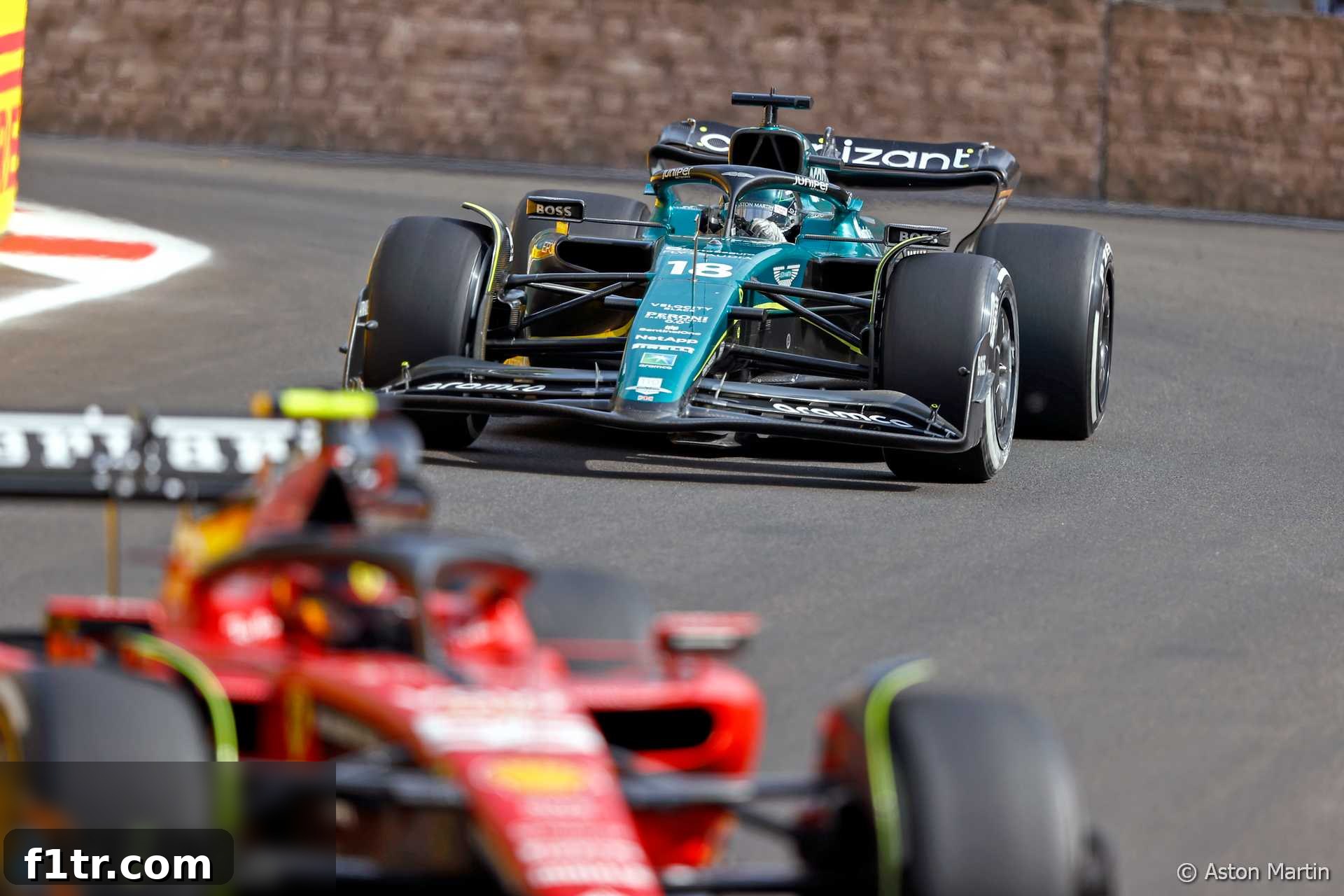
Aston Martin Overcomes Baku DRS Glitches, Eyes Solid Performance in Miami
The exhilarating run of consecutive podium finishes for Fernando Alonso and Aston Martin faced an unexpected challenge at the Azerbaijan Grand Prix. While the Spanish maestro couldn’t extend his podium streak in Baku, the weekend concluded with a significant reason for optimism within the team, particularly concerning a persistent Drag Reduction System (DRS) malfunction that had plagued their AMR23 cars throughout the event.
Despite the initial frustrations, Alonso’s post-race comments highlighted a crucial turnaround: “It worked today. A lot of speed, I’ve never been that fast down a straight for the whole weekend!” This sentiment underscored the substantial progress made by the Aston Martin engineering team to mitigate a complex technical issue under the intense pressure of a revised F1 Sprint weekend format.
Advert | Become a Supporter & go ad-free
The Baku DRS Conundrum: A Weekend of Technical Headaches
The streets of Baku are notorious for their demanding layout, featuring several long straights where the DRS system is not merely an advantage, but an absolute necessity for competitive lap times and overtaking. Unfortunately, for the Aston Martin drivers, Fernando Alonso and Lance Stroll, the system proved to be an inconsistent ally during the critical qualifying sessions held on Friday.
The team’s struggles with the DRS failing to open reliably meant both drivers were unable to extract the maximum performance from their cars when it mattered most. This led to a relatively subdued qualifying performance for the main Grand Prix, with Alonso lining up sixth and Stroll ninth on Sunday’s grid. For a team that had, to that point, been the season’s most pleasant surprise package, consistently challenging the front-runners, these grid positions represented their worst qualifying outing of the year. The impact was similarly felt in qualifying for the Sprint Race, where they secured only eighth and ninth positions respectively, grappling with the very same mechanical impediment.
The estimated performance deficit was not insignificant. When queried about the potential lap time impact, Lance Stroll acknowledged the disadvantage, stating, “I don’t think we would have been on pole… It’s always hard to say. For sure we would have been a couple positions ahead on the grid.” Team analysis suggested that Stroll might have gained two grid positions with an improvement of just a third of a second, while Alonso could have broken into the top four with an additional quarter of a second. On a circuit where milliseconds dictate significant shifts in grid order, these figures highlight the tangible cost of the DRS malfunction.
Team’s Proactive Solutions and FIA Collaboration
Despite the restrictive parc fermé conditions – which were imposed a full day earlier than usual due to F1’s revised Sprint event format – Aston Martin’s technical team sprang into action. Working diligently and in close collaboration with the FIA, a solution was not only identified but also successfully implemented. This swift action demonstrated the team’s engineering depth and their ability to adapt under pressure, a crucial trait for any aspiring championship contender.
Team Principal Mike Krack initially downplayed the overall impact of the fault, characterizing it more as a “distraction than a genuine disadvantage.” He explained that the DRS was primarily failing in only one of the two activation zones. “The DRS was working on the back straight. So it was obviously a small penalty, but in both sprint and in the race, it worked,” Krack clarified. He further pointed out that qualifying analysis showed their main time loss in Sector Two, which is not a DRS zone, suggesting the psychological and operational distraction played a larger role than the direct aerodynamic loss during qualifying itself. Nevertheless, the priority was clear: to eliminate any variable that could impede performance or concentration.
Advert | Become a RaceFans supporter andgo ad-free
The process of implementing the fix was entirely transparent and approved by the governing body. “We did everything with the FIA,” Krack confirmed. “The FIA was very helpful on this. You will have seen that we have changed one flap on Fernando’s car. It was after a routine check, basically because if you pull all the time on the flap, and it is not moving, then you’re putting stress on it. So for safety, we wanted to change it.” This proactive approach underscored the team’s commitment to safety and reliability, especially when dealing with stressed components after repeated, albeit unsuccessful, activation attempts.
Stroll’s Race-Long Battle and Evolving Team Strategy
While Fernando Alonso’s car received a physical flap change, Lance Stroll’s AMR23 did not. This meant Stroll had to manage the lingering issue throughout both the Sprint Race and the Grand Prix itself. His race engineer, Ben Michell, provided continuous and evolving guidance over the radio, instructing Stroll on how to mitigate the risk of a DRS malfunction.
Initially, Michell’s instructions offered some flexibility: Stroll could use DRS freely if he was actively attempting to overtake on a given lap. However, as the race progressed and the team continued to monitor the system’s behavior, the guidance became significantly more restrictive. The primary instruction shifted to activating DRS “late” down the main straight, well past the official activation line. The rationale behind this was to minimize the time the mechanism spent under strain before the rear wing would naturally close at the end of the straight, thereby reducing the chance of a complete failure to open.
Advert | Become a RaceFans supporter andgo ad-free
The radio communications reveal the team’s careful management of the situation:
| Lap: 19/51 | |||||||||||||||||||||||||||||||||||||||||||||||||||
| Michell | We think late press at the DRS line is preferred at the moment. You have early press if you want to attack. | ||||||||||||||||||||||||||||||||||||||||||||||||||
| Lap: 26/51 | |||||||||||||||||||||||||||||||||||||||||||||||||||
| Michell | Late press only at the DRS line. Late press only at the DRS line. Tyre feedback when you can. | ||||||||||||||||||||||||||||||||||||||||||||||||||
| Lap: 28/51 | |||||||||||||||||||||||||||||||||||||||||||||||||||
| Michell | So we need late press only at the DRS line, Lance. We can’t be pressing early and cancelling. It doesn’t help us. | ||||||||||||||||||||||||||||||||||||||||||||||||||
| Michell | Late press at the DRS line only. | ||||||||||||||||||||||||||||||||||||||||||||||||||
| Lap: 45/51 | |||||||||||||||||||||||||||||||||||||||||||||||||||
| Michell | Late press only, late press only, we need to get to zero. | ||||||||||||||||||||||||||||||||||||||||||||||||||
These messages underscore the delicate balance between maximizing performance and ensuring the reliability of a critical component. Stroll’s disciplined execution of these instructions, despite the added mental load, allowed him to secure a respectable seventh-place finish in the Grand Prix, complementing Alonso’s strong fourth.
Advert | Become a RaceFans supporter andgo ad-free
Looking Ahead: Confirming the Fix for Miami
While the solutions implemented in Baku proved effective enough for both the 17-lap Sprint Race and the 51-lap Grand Prix, Team Principal Mike Krack maintained a cautious optimism. “It’s the difference between working for one lap, or working for 17 plus 51. So that is also why we were a bit careful in saying we have fixed it,” Krack stated, reflecting the engineering mindset of needing robust, long-term verification.
However, by Sunday’s end, confidence had clearly grown: “I think today we can say we have fixed it. But if you would have asked me before the sprint, I was not so confident.” The team now aims to fully confirm the efficacy of their DRS solution ahead of the upcoming race at the Miami International Autodrome. Miami, with its own blend of technical sections and long straights, presents another crucial test for the system.
Krack, ever the pragmatist, acknowledged the need for thorough analysis: “I’m not an aerodynamicist, so I need to be careful to jump to a conclusion before we have done the full analysis.” Yet, when pressed on whether the fix would be confirmed for Miami, his response was confident: “I think so.” This anticipation sets the stage for Aston Martin to return to full strength and continue their impressive challenge at the sharp end of the grid.
The Azerbaijan Grand Prix served as a stern test of Aston Martin’s resolve and engineering capabilities. Confronting a significant technical hurdle in a high-stakes environment, the team not only found immediate solutions but also managed to extract strong points finishes from both cars. This resilience, combined with the proven pace of the AMR23, bodes well for their championship aspirations as the F1 season progresses, especially as they aim to leave the DRS issues firmly behind them in Miami.
Bringing the F1 news from the source
RaceFans strives to bring its readers news directly from the key players in Formula 1. We are able to do this thanks in part to the generous backing of our RaceFans Supporters.
By contributing £1 per month or £12 per year (or the equivalent in other currencies) you can help cover the costs involved in producing original journalism: Travelling, writing, creating, hosting, contacting and developing.
We have been proudly supported by our readers for over 10 years. If you enjoy our independent coverage, please consider becoming a RaceFans Supporter today. As a bonus, all our Supporters can also browse the site ad-free. Sign up or find out more via the links below:
- Become a RaceFans Supporter
- RaceFans Supporter FAQ
2023 Azerbaijan Grand Prix Related Articles
- Aston Martin radio messages reveal how “older brother” Alonso helps Stroll
- How slashing practice to a single hour in Baku tripped up F1 teams
- Bottas: “Rapid improvement needed” at Alfa Romeo
- Red Bull could become first team to score 1,000 points in a season
- Aston Martin hoping DRS fix works in Miami after Stroll manages fault in race
Browse all 2023 Azerbaijan Grand Prix articles