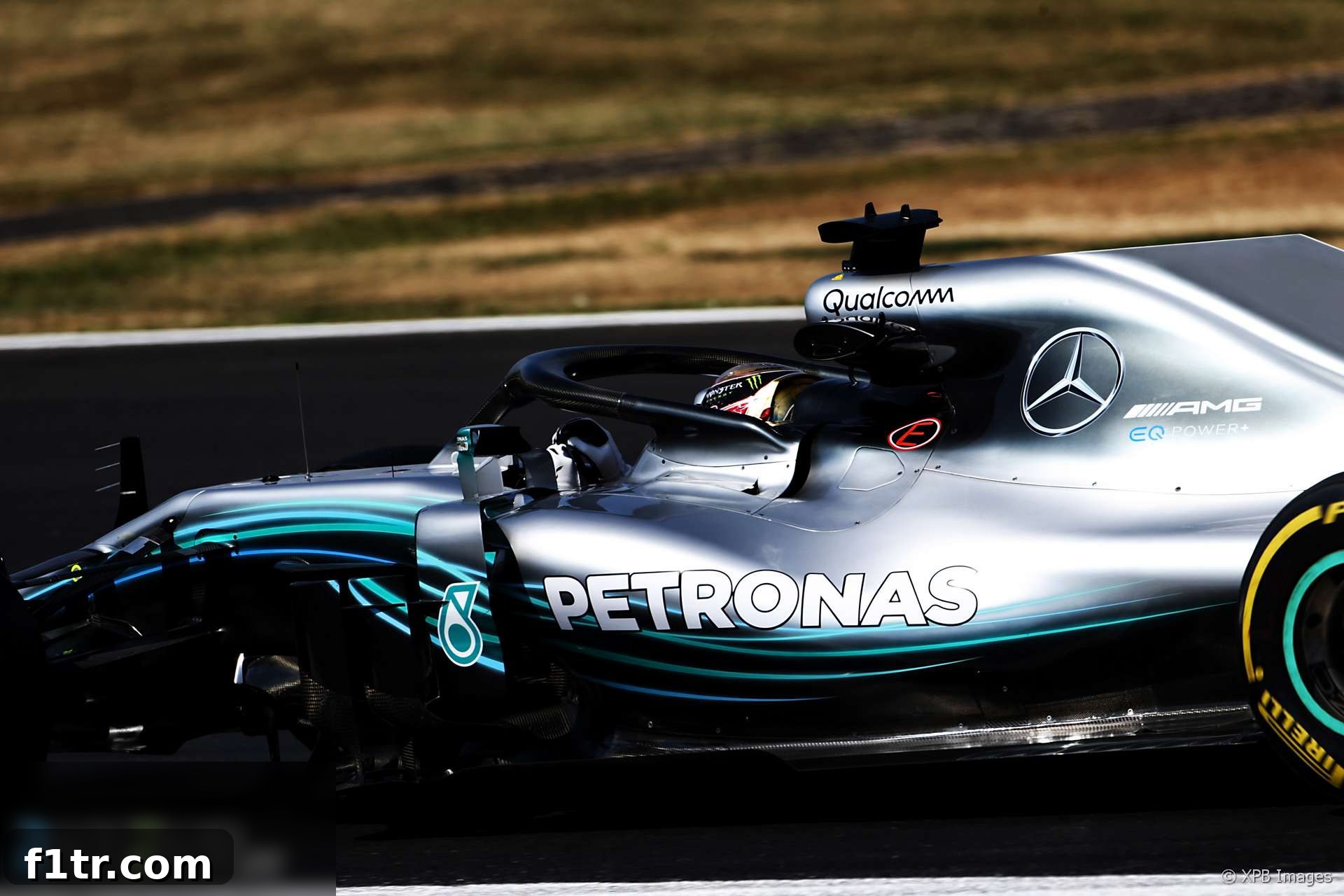
Mercedes’ Relentless Pursuit: Unlocking Hidden Performance in Formula 1 Engines
In the high-stakes world of Formula 1, where milliseconds dictate victory and defeat, the pursuit of performance is relentless. Mercedes-AMG Petronas F1 Team, a dominant force in the hybrid era, continually seeks to gain an edge, often finding crucial performance enhancements from its power units between races without even introducing new physical components. This ingenious strategy highlights the depth of engineering and strategic thinking required to succeed at the pinnacle of motorsport.
The Tightrope Walk: Performance, Reliability, and Regulations
Modern Formula 1 regulations impose stringent limitations on teams, most notably restricting them to a maximum of three complete power units per car for an entire season. This constraint means that individual engine components – including the Internal Combustion Engine (ICE), Turbocharger (TC), Motor Generator Units (MGU-H and MGU-K), Energy Store (ES), and Control Electronics (CE) – must endure unprecedented mileage. The challenge for engine manufacturers is immense: design units capable of exceptional durability while simultaneously delivering blistering, race-winning power. This regulatory framework significantly curtails opportunities for introducing upgraded parts mid-season, making every development step and every ounce of extracted performance incredibly valuable.
Mercedes’ Strategic Mastery: The Dyno-Driven Advantage
Mercedes has cultivated a sophisticated approach to circumvent these limitations and consistently improve its power unit performance. Their strategy centers on a dual-phase development cycle: initially running engines conservatively during races to ensure reliability, while concurrently subjecting more aggressive power unit settings to rigorous testing on their state-of-the-art dynamometers. This methodical process allows them to meticulously explore the outer limits of their engine’s capabilities in a controlled environment, translating those findings into optimized race performance.
The Art of Dyno Testing: From Reliability to Raw Power
A dynamometer, or dyno, is an indispensable tool in engine development, simulating race conditions to measure an engine’s output and durability. Mercedes employs a highly calibrated, two-stage process on their dynos. As Mercedes themselves explained, “At the beginning of the season, the team wants to make sure that the power unit runs reliably. As the reliability has to be proved on the dyno, we will usually start a little more conservative to have a product that can run the required mileage.” This initial phase is crucial for establishing a robust, dependable foundation for the power unit, ensuring it can withstand the arduous demands of a full Grand Prix season without premature failure.
Once this reliable base has been firmly established, the focus shifts dramatically. “Once a reliable base has been established, all subsequent long runs of the engine will focus on trying to extract more power. In those runs, the team will be more willing to push the [power unit] a bit harder on the dyno,” Mercedes elaborated. This aggressive testing phase involves systematically increasing engine parameters, pushing RPMs, optimizing fuel mixtures, and refining ignition timings. The goal is to identify and exploit every possible avenue for performance gain. This iterative process is not about introducing new hardware but about unlocking latent potential through software refinements, mapping adjustments, and deeper understanding of the engine’s operational envelope.
This “well-calibrated process” involves a delicate balance: “We aim to find the exact limits of the [power unit] without overstepping them – but knowing that if we overstep the mark, there is still a proven configuration on the track.” The data gleaned from these intense dyno runs informs subtle but significant software updates and mapping changes that can be deployed for subsequent races, enhancing power output, fuel efficiency, or responsiveness, all without triggering the “new component” rule.
The Perilous Path of Development: Valtteri Bottas’s F1 Engine Challenges
The pursuit of performance, however, is not without its risks. A stark illustration of this came earlier in the season when Mercedes had planned to introduce a significant power unit upgrade in time for the Canadian Grand Prix. Unfortunately, a critical problem emerged during one of their aggressive dyno runs, forcing the team to abandon the planned deployment of the new specification. This incident underscored the fine margins involved and the rigorous validation required before any upgrade makes it to the track.
The upgraded power unit was eventually introduced at the following race in France. However, the subsequent round saw both Mercedes drivers retire from the British Grand Prix with technical problems. This unfortunate turn of events had significant ramifications, particularly for Valtteri Bottas.
Following the reliability issues, Mercedes was compelled to replace Bottas’s engine, turbocharger, MGU-H, and MGU-K. This early replacement of core components places Bottas in a precarious position for the remainder of the season. He is now effectively committed to using these specific components until the final race of the year to avoid incurring grid penalties for exceeding his allocation. This situation creates a strategic disadvantage, as he might be unable to benefit from any further minor upgrades or fresh, less-worn components that his rivals – or even his teammate, depending on their allocation status – might be able to introduce later in the season. The constant threat of a penalty looms, making every mile on his current power unit a careful calculation between performance and preservation.
The Shifting Sands of Power: Ferrari’s Ascendancy and the Competitive Landscape
Mercedes has been the undisputed leader in Formula 1 power unit development since the introduction of the V6 hybrid turbo regulations in 2014. Their engines have consistently set the benchmark for both power and efficiency, contributing significantly to their multiple championship successes. However, the competitive landscape in F1 is ever-evolving, and no advantage lasts forever.
Following a particular British Grand Prix, Red Bull team principal Christian Horner made a significant claim, stating that Ferrari had now emerged as the new benchmark in F1 power unit performance. This assertion, coming from a rival team boss, signaled a notable shift in the pecking order and intensified the rivalry at the front of the grid. Ferrari’s apparent gains meant that Mercedes could no longer rest on its laurels, needing to redouble its efforts to maintain its competitive edge.
The battle for engine supremacy in Formula 1 is a continuous arms race, where manufacturers pour immense resources into R&D. Ferrari’s challenge not only puts pressure on Mercedes to find even more performance but also highlights the incredible progress made by their competitors. This dynamic contest ensures that every race weekend is a showcase of cutting-edge technology and strategic acumen, as teams vie for the smallest advantages that can make all the difference in a championship fight.
Strategic Outlook: Navigating the Remainder of the Season
For Mercedes, the remainder of the season presents a complex strategic challenge. They must continue their innovative dyno-testing program to extract every possible performance gain through software and mapping optimizations. Simultaneously, they must carefully manage Valtteri Bottas’s power unit allocation, balancing the need for maximum performance with the imperative of avoiding costly grid penalties. This could mean adjusting engine modes, optimizing fuel usage, and implementing conservative operational strategies during certain parts of race weekends for Bottas.
The pressure on Mercedes’ engineers and strategists is immense. They are tasked with responding to Ferrari’s formidable challenge while managing the inherent risks of pushing the limits of their highly complex hybrid power units. The ability to find performance “between races” without new parts – through sophisticated software and detailed calibration – will be more crucial than ever in determining the outcome of both the Constructors’ and Drivers’ championships.
2018 F1 season Insights
- F1 feared “death knell” for Drive to Survive after Ferrari and Mercedes snub
- McLaren staff told us we were “totally crazy” to take Honda engines in 2018 – Tost
- ‘It doesn’t matter if we start last’: How Red Bull’s junior team aided Honda’s leap forward
- Honda’s jet division helped F1 engineers solve power unit problem
- McLaren Racing losses rise after Honda split
Browse all 2018 F1 season articles
Conclusion
Mercedes’ ingenious approach to extracting performance from its Formula 1 engines exemplifies the blend of cutting-edge engineering, strategic foresight, and meticulous management that defines success in modern motorsport. By leveraging advanced dyno testing and iterative software optimization, they continue to push the boundaries of what’s possible within the sport’s restrictive regulations. While challenges, as seen with Valtteri Bottas’s component replacements, highlight the inherent risks, Mercedes’ unwavering commitment to innovation ensures they remain at the forefront of the F1 power unit battle. As the season progresses, the ability to find “hidden” performance will undoubtedly be a key factor in the ongoing fight for championship glory against formidable rivals like Ferrari.