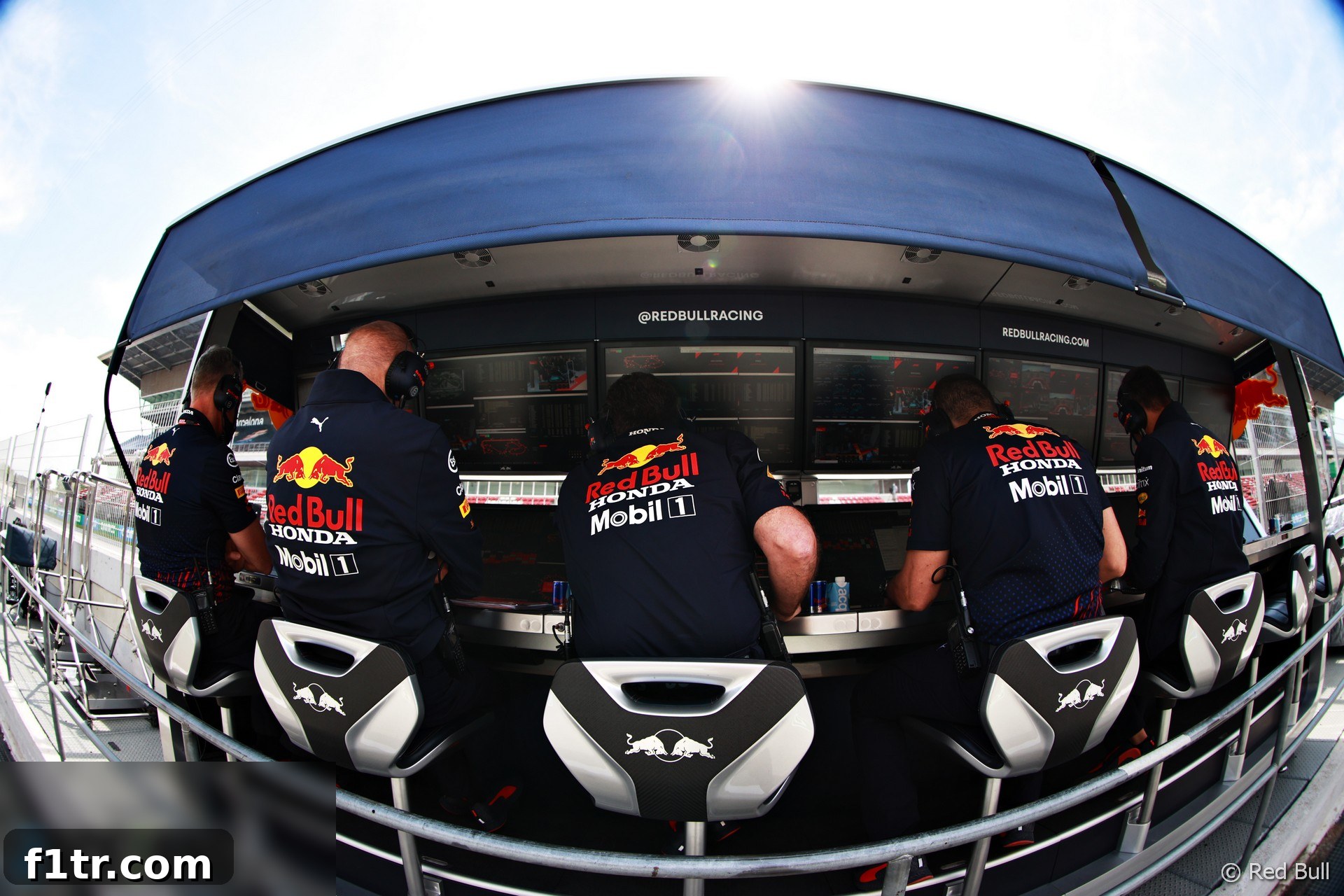
As the Formula 1 circus made its vibrant return to Spain for the fourth round of the championship, the paddock was alive with an unprecedented level of chatter. Dominating conversations was Red Bull Racing’s ambitious raid on Mercedes-AMG High Performance Powertrains, a strategic move designed to staff up its newly formed Red Bull Powertrains division. This bold step signalled a seismic shift in the sport’s power dynamics, indicating Red Bull’s intent to become a fully integrated engine manufacturer, challenging the established order.
Advert | Become a Supporter & go ad-free
Yet, beneath the surface of this high-stakes engineering battle, more fundamental questions lingered. Were Formula 1’s diligently implemented COVID-19 compliance standards beginning to unravel within the paddock? And what led to the sudden requirement for apologies regarding drivers’ candid language during press conferences aimed at written media? These intriguing storylines, along with insights from inside the sport’s exclusive circles, were brought directly from the bustling paddock by our reporter, Dieter Rencken.
Thursday: Navigating Protocols and Paddock Buzz
The journey from Portimão to Barcelona proved remarkably smooth, a pleasant contrast to the usual logistical challenges of the Formula 1 calendar. After the previous weekend’s race in Portugal, I headed southeast, enjoying two nights in a resort situated in an ‘amber’ region, which afforded the simple pleasures of open shopping and dining – a welcome respite from stricter regulations. From there, it was a straightforward drive north to Lisbon, where I caught an early Wednesday flight to the vibrant city of Barcelona.
Upon my arrival in Spain, however, a sense of bemusement quickly set in. The contrast between the country’s official entry requirements and the reality on the ground was stark. Passengers were subjected to stringent paperwork and a highly circuitous routing through the airport, meticulously designed to ensure absolutely zero contact between arriving and departing travellers. This demonstrated a serious commitment to preventing viral transmission. Yet, strangely, in the bustling car rental offices just outside, life appeared to operate under a distinct set of rules. While signs proudly proclaimed that car keys had been sanitised, attendants moved freely from vehicle to vehicle, often without a mask or glove in sight. This apparent disconnect raised concerns; if any F1 personnel were to contract COVID-19 during this leg of the journey, this lax environment in public areas would undoubtedly be the first place to start tracing potential exposures.
The Circuit de Catalunya has, over the years, faced its fair share of criticism from fans and drivers alike, often labelled as a track that struggles to produce thrilling races. Despite this, I have always held a soft spot for my visits here. The weather is generally superb, regardless of the time of year, offering a pleasant backdrop to the racing action. Furthermore, Spain provides a wide choice of accommodation, whether one prefers the urban charm of Barcelona or the tranquil beauty of the coastal towns. The local people are exceptionally friendly, and the culinary scene is, as always, a delight. Historically, one of the few downsides has been the persistent issue of crime in media car parks, leading to anxieties about equipment safety. However, this year, with the complete absence of spectators due to pandemic restrictions, I was reassured that our gear should be safe. We would, of course, discover the full truth by Sunday evening.
In the preceding days, I had been inundated with emails and messages, some from surprisingly influential quarters, including individuals within broadcasting and those directly employed by Formula 1. All expressed strong support for my recent suggestion that F1 could profitably return to free-to-air television, rather than continuing its exclusive reliance on pay channels. Remarkably, I hadn’t received a single word of criticism, underscoring a genuine appetite within the industry for a broader reach. This resolve was only strengthened by a rather telling incident during one of the official press conferences.
Advert | Become a RaceFans supporter andgo ad-free
The FIA moderator felt compelled to apologise to TV audiences, fearing that young ears might inadvertently hear Valtteri Bottas utter the word “bullshit” before the UK’s 9 pm watershed for adult language. The crucial fact is that the Mercedes driver emotively uttered the word in response to tough, probing questions during a closed FIA press conference, a setting traditionally reserved for direct and unfiltered interactions with written media. And in my view, that is precisely how it should be: allowing for raw, unedited emotions in a passionate, high-stakes sport. The sanitisation of language for live television, while understandable for broadcasters, risks eroding the authenticity of F1. If Sky, or any other broadcaster, chooses to take the live TV feed, then delayed broadcasts offer ample time to edit out any strong language deemed unsuitable for pre-watershed viewing. The expectation for print journalists to receive only pre-vetted, censored quotes fundamentally misunderstands the role of unfiltered media interaction.
During a lighter moment in the conference, I once again enjoyed some familiar banter with Lewis Hamilton. With a characteristic twinkle in his eye, he jokingly suggested that I should occasionally don a colour other than my customary orange attire. He had made similar, good-natured remarks during the FIA Awards conference back in December, and I am seriously considering surprising him sometime soon by appearing in purple or perhaps even a vibrant lime green, just to keep him on his toes and continue our playful rapport.
The evening brought a sudden change of plans. I had to rush off to my hotel in Mataró because an exclusive interview I had meticulously arranged with Red Bull CEO Christian Horner had been unexpectedly pulled forward a day. I was keen to ensure our conversation remained private and discreet, away from the bustling and often ear-pricking environment of the media centre. Our discussion covered a multitude of pivotal topics, including the profound implications of Red Bull’s aggressive engine recruitment drive – a clear statement of intent regarding their future independence in engine manufacturing. We also delved into the contentious issue of structured voting amongst teams with technical or commercial links, a practice that raises significant questions about the true independence of team decisions within the sport’s governance framework.
I expressed my sincere delight to Christian that Red Bull had taken the monumental step towards full engine integration, moving away from a long-standing reliance on external engine suppliers. This strategic pivot, I believe, positions Red Bull for unparalleled control over its destiny and removes a critical dependency. While it may seem unconventional for a company primarily known for its energy drinks to own two Formula 1 teams and venture into engine manufacturing, Dietrich Mateschitz’s Red Bull empire has diversified massively over the years, demonstrating an incredible breadth of vision. Beyond F1, the group encompasses its own TV station (ServusTV), a global events company, the commercial rights for the World Rally Championship (WRC), a comprehensive magazine publishing arm, the AlphaTauri fashion brand, and even a mobile phone network. In this vast and eclectic portfolio, what truly is an F1 engine operation amongst that lot? It is, in fact, a logical extension of a brand built on extreme sports, cutting-edge technology, and pushing boundaries.
Advert | Become a RaceFans supporter andgo ad-free
Friday: Fading Vigilance and Future Uncertainties
Arriving at the circuit on Friday, I quickly caught up with a number of colleagues, some of whom I hadn’t seen since the start of the year. This particular race marked a significant milestone: the first fully-subscribed media centre of the season, albeit still operating with reduced capacity to maintain necessary social distancing. It was an encouraging sign, indicating that things were indeed beginning to head in the right direction, slowly returning to a semblance of normality.
However, this positive trend was tempered by a growing concern. It appeared increasingly evident that F1 personnel within the paddock were gradually becoming blasé about the stringent COVID-19 restrictions. From our vantage point in the media centre corridor, situated directly above the paddock with windows offering clear views along the pit lane, an increasing number of photos documenting protocol breaches were being discreetly shared amongst the media. These images depicted individuals in close proximity, masks incorrectly worn or absent entirely, and a general relaxation of vigilance that was clearly causing frustration among those still meticulously adhering to the rules, particularly those “banished” from the inner sanctum of the paddock. The patience of many was wearing thin, highlighting a dangerous complacency that threatened the integrity of the entire F1 bubble.
During the team principals’ press conference, I seized the opportunity to pose a critical question to Frederic Vasseur regarding Alfa Romeo’s future in Formula 1. Unlike other manufacturer-branded teams, Alfa Romeo’s involvement with Sauber is, in essence, a livery and naming partnership, with the current deal set to expire at the end of the season. When this agreement was initially struck in 2019, there were high hopes that the brand’s association with F1 would boost car sales to an ambitious 250,000 units per year. The reality, however, has been far less optimistic, with the company struggling to sell even a quarter of that figure in a good year. This significant discrepancy raises serious doubts about the long-term viability of the partnership.
Whispers in the paddock suggest that at least one team will undergo a renaming for the next season, and Alfa Romeo, given its current situation, has to be considered a prime candidate for such a change. Another team occasionally mentioned in this context is Williams, though I would be most surprised if their name were to change. Their new owners, Dorilton Capital, made a point of retaining the iconic Williams name after their acquisition, recognising the immense heritage and brand equity it holds. Why, after all, would one invest in such a storied legacy only to discard it? Still, stranger things have indeed happened in the unpredictable world of Formula 1, and team identities are often fluid.
After the second practice session, a thought struck me that was as unsettling as it was perplexing: I realised I hadn’t heard an F2 car run in anger since the season opener in Bahrain, a staggering six weeks prior. Even more concerning, the next round of the championship was scheduled for Monaco in another fortnight. This meant a substantial eight-week gap without any racing for a championship positioned just one rung below Formula 1, ostensibly designed to keep young drivers sharp and competitive. More perturbing still was a closer examination of the calendar itself: it listed just three weekends in Europe and three in the Middle East, with the remaining two legs scheduled for Baku and Sochi. Eight race weekends spread across a ten-month period for a crucial feeder series seemed extraordinarily sparse and, frankly, very screwy. Such an erratic schedule severely hinders driver development, impacts fan engagement, and places immense financial strain on the teams trying to sustain a professional racing operation.
Following a final catch-up with colleagues and a quick dinner – a simple but satisfying salad, chicken baguette, and fruit – I hit the road, heading for the hotel. My evening concluded by listening to a recording of Liberty Media’s Q1 2021 investor call. It was heartening, amidst all the paddock uncertainties, to note that at least the numbers were significantly up on a year ago, a testament to F1’s resilience and its ability to rebound strongly from the unprecedented challenges of the previous season.
2021 Spanish Grand Prix
- Two reasons why Catalunya may not predict the championship – at least this year
- McLaren to keep “drip-feeding” updates onto 2021 car
- Working group tackling F1’s track limits problem
- ‘We’ll discuss what went wrong’: Hamilton and Verstappen team radio transcript analysis
- 2021 Spanish Grand Prix Star Performers
Browse all 2021 Spanish Grand Prix articles