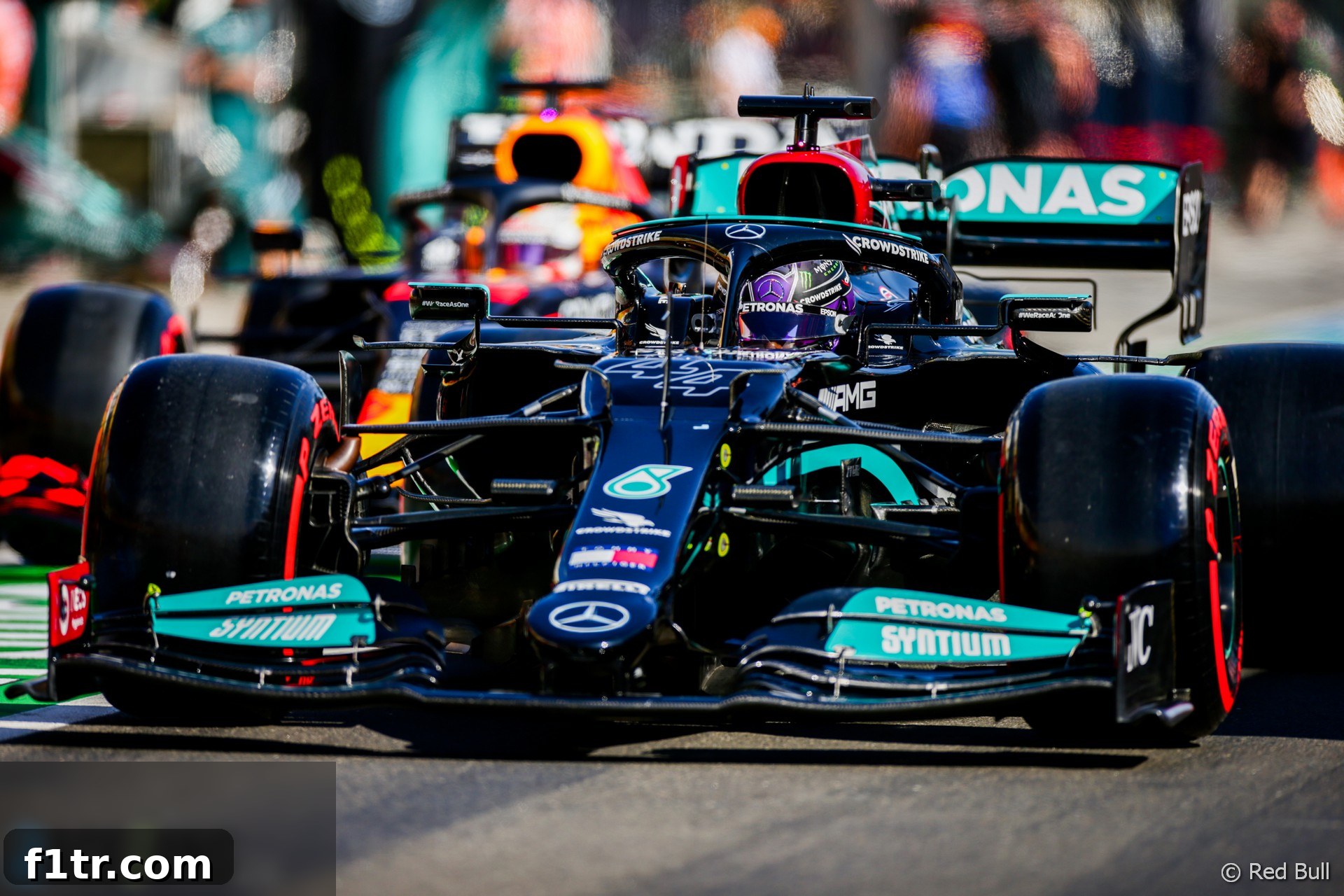
The exhilarating drama of Formula 1 qualifying often hinges on fractions of a second and strategic track positioning. At the 2021 Hungarian Grand Prix, a critical moment in Q3 saw Red Bull Racing driver Sergio Perez miss the chequered flag, denying him a final flying lap. This incident sparked immediate speculation, particularly regarding the actions of Mercedes-AMG Petronas F1 Team’s Lewis Hamilton, who was driving ahead of the Red Bull cars. However, Perez himself was quick to dismiss claims that Hamilton deliberately slowed down to impede his progress, offering a nuanced perspective on the chaotic closing stages of the session.
Perez Dismisses Hamilton’s Intentional Hindrance Claims After Missed Q3 Lap
In the high-stakes environment of Formula 1’s third qualifying session (Q3), every driver is fighting for optimal track position, clear air, and the perfect tyre temperature to set their fastest lap. The 2021 Hungarian Grand Prix qualifying was no exception, culminating in a tense finale where several drivers found themselves caught in a challenging ‘train’ of cars. Sergio Perez was notably affected, unable to cross the start/finish line before the chequered flag was shown, effectively ending his chances of improving his grid position on a crucial final run.
The Critical Q3 Incident: A Matter of Timing and Track Position
The incident unfolded as both Red Bull cars, piloted by Perez and his teammate Max Verstappen, exited the pit lane to embark on their final attempts in Q3. Ahead of them on track were the two Mercedes drivers, Valtteri Bottas and Lewis Hamilton. The timing of their release meant the Red Bulls were directly behind the Mercedes duo, creating a scenario ripe for potential strategic manoeuvres or, as it often proves, unintended consequences due to track congestion.
As the final seconds ticked away, the pace of the cars on their out-laps became a central point of discussion. Drivers aim to warm their tyres effectively without going too fast, which can overheat the rubber, or too slow, which risks missing the window to start a flying lap before the session concludes. This delicate balance, especially with multiple cars vying for position, frequently leads to bottlenecks and frantic dashes to the line.
Perez ultimately fell victim to this intricate dance, failing to pass the chequered flag in time. While many immediately pointed fingers at Hamilton, suggesting a deliberate tactic to hold up the Red Bulls and protect Mercedes’ provisional pole position, Perez himself was not convinced by these allegations.
Sergio Perez’s Perspective: “I Just Paid the Price”
Following the session, a visibly frustrated but pragmatic Sergio Perez shared his thoughts on the matter. “I haven’t looked in detail,” he stated, “but to be honest, I think Lewis had a sensible gap to Bottas, who was ahead of him.” This initial assessment from the Red Bull driver directly countered the popular narrative of intentional slowing, indicating that from his vantage point, Hamilton’s actions appeared within reasonable bounds.
Perez elaborated on what he believed truly caused the timing issue. He suggested that the problem originated further up the chain of cars. “Something must have happened, someone had dropped back massively from [Pierre] Gasly, I think, and I don’t think [it was] towards the end,” he explained. This implied a ripple effect, where an earlier driver’s significant slowdown created a compressed train of cars, forcing those behind to react and further reduce their speed.
Ultimately, Perez attributed his missed opportunity to an unavoidable consequence of his position in the queue. “I think [Hamilton] had a normal gap,” he concluded, “I just paid the price by being the last car of the train.” This perspective highlights the inherent risk drivers face when they are at the tail end of a group during a critical qualifying run, where even marginal delays ahead can have significant, race-defining repercussions.
The Out-Lap Dilemma: Hamilton’s Explanation and Mercedes’ Stance
The focus quickly shifted to Lewis Hamilton, who was at the centre of the controversy. He provided his own explanation for the pace of his out-lap, emphasizing the complexities of tyre preparation and traffic management in Q3. Hamilton articulated that his primary objective was to create a sufficient gap ahead of him to ensure he had clean air and optimal conditions for his own flying lap, rather than to deliberately impede his rivals.
“We were one of the last cars out,” Hamilton recounted. “I knew that ahead of those guys, ahead of Valtteri and whoever was ahead of him, would all bunch up to the end of the lap. So I tried to make as big a gap as possible. And then, even still, with that at the end of the lap, we still had to all back off and wait for everyone to get going.” This statement illustrates the difficult predicament drivers face: pushing to create a gap, only to find the cars ahead slowing even more, forcing a collective slowdown.
“I was just trying to make sure that I had the best gap ahead of me,” Hamilton continued. “But ultimately, I think none of us probably had the best tyre prep for that because everyone was going slow.” This points to a common issue in F1 qualifying: when a ‘train’ forms, the collective slowing to manage gaps and tyre temperatures can compromise everyone’s preparation, leading to sub-optimal performance for all involved, not just those at the back.
Sportsmanship in the Spotlight
Perhaps the most compelling part of Hamilton’s defence was his emphasis on sportsmanship, particularly concerning his main championship rival, Max Verstappen. “I had my team mate ahead, obviously I felt like respecting Max was important and I’m sure he would have done the same with me,” Hamilton asserted. “It’s very unfair to the guy ahead to do something like that. That’s my point of view.” This declaration speaks to the unwritten code of conduct among elite drivers, where deliberate interference, especially in such a high-profile session, is generally frowned upon.
Mercedes reinforced Hamilton’s claims, stating that his final out-lap in Q3 was, in fact, quicker than other out-laps he had completed during the same session, including his previous run in Q3. This data point further supported the argument that Hamilton was not intentionally driving slowly to obstruct the Red Bulls, but rather navigating a challenging traffic situation as efficiently as possible.
The Broader Implications of Qualifying Traffic
The incident at the 2021 Hungarian Grand Prix qualifying serves as a potent reminder of the intricate dynamics at play during F1 sessions. Qualifying is not just about raw pace; it’s a strategic ballet of timing, tyre management, track position, and navigating other competitors. The consequences of even slight misjudgements or unforeseen traffic can be severe, impacting a driver’s grid position and, by extension, their entire race strategy.
While accusations of deliberate slowing are not uncommon in F1 history, especially when championship battles are tight, the drivers’ own testimonies often shed light on the genuine complexities involved. The ‘train effect’ and the desperate scramble for clear air and optimal tyre temperatures can create situations that appear suspicious but are, in reality, a product of the rules, the track layout, and the immense pressure of the moment. For Perez, it was a bitter pill to swallow, costing him a potentially stronger starting position. For Hamilton, it was a moment requiring careful explanation to maintain his reputation for fair play.
Ultimately, the Hungarian Grand Prix qualifying incident underscores how fine the margins are in Formula 1. A fraction of a second, a slight change in pace from a competitor, or being the “last car of the train” can dramatically alter a driver’s weekend, highlighting the unrelenting challenge of extracting maximum performance under extreme conditions.
Related 2021 Hungarian Grand Prix Coverage
- Ocon congratulated by past French F1 aces after breakthrough win
- Alpine doubt first win signals a performance breakthrough
- Vettel disqualification hearing to take place on Monday
- Why no one received a Grosjean-style race ban for the Hungarian GP pile-up
- Ocon’s “beautiful” late-stint pace was other key to Alpine’s breakthrough win
Browse all 2021 Hungarian Grand Prix articles