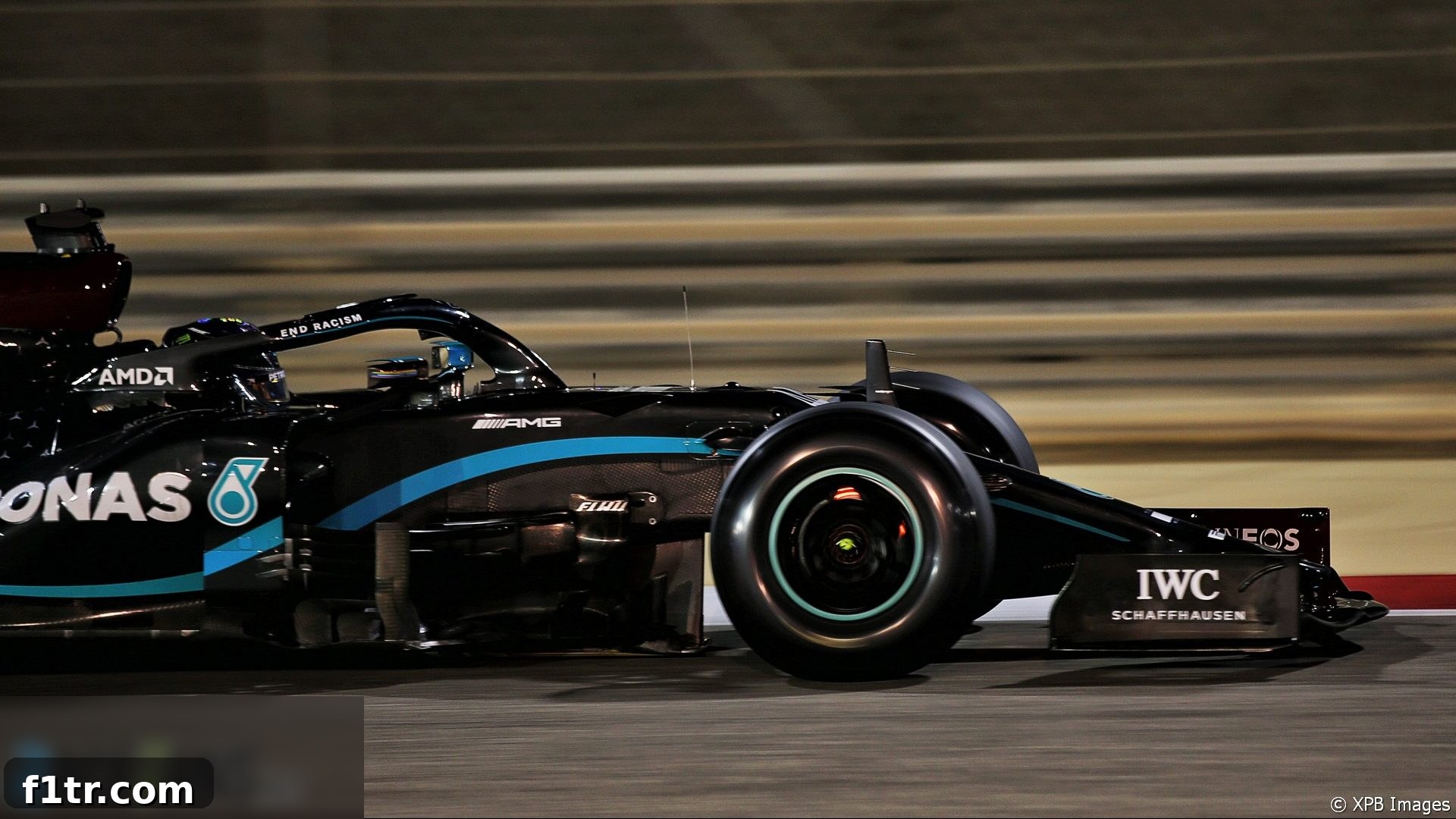
The 2020 Formula 1 Bahrain Grand Prix delivered an eventful and unpredictable Second Practice session, with Lewis Hamilton of Mercedes-AMG F1 ultimately emerging at the top of the timings. However, the session was notably marked by significant disruptions, including a heavy crash involving Red Bull Racing’s Alexander Albon and an extraordinarily rare appearance by an unexpected four-legged spectator on the iconic Sakhir International Circuit. These incidents added layers of drama and complexity to a critical practice hour, as teams focused on fine-tuning their setups and evaluating the experimental 2021 Pirelli tire compounds under the floodlights. The combination of high-stakes performance, unexpected events, and crucial development testing made FP2 a session packed with talking points, setting the stage for an intriguing weekend of racing in Bahrain.
Enhance your F1 experience: Become a Supporter & go ad-free
The incident involving Alexander Albon occurred early in the session, sending shockwaves through the paddock. As the Red Bull driver pushed the limits of his RB16, he ran wide at the notoriously challenging final corner, a high-speed right-hander that demands immense precision and commitment. Losing control on the extensive run-off area, Albon’s car snapped violently sideways, an unfortunate precursor to making heavy, unavoidable contact with the concrete barrier. The impact was significant and brutal, inflicting considerable damage to his car, particularly to the right-rear section, a critical area for both aerodynamics and suspension integrity. The force of the crash visibly mangled the rear of the RB16, raising immediate concerns for both the driver and the car’s structural integrity.
In the immediate aftermath, Albon was quick to confirm his physical well-being over the team radio, a reassuring sign given the severity of the crash. Nevertheless, due to the immense G-forces experienced during such a high-speed impact – a testament to the safety standards of modern Formula 1 cars – medical protocols dictated that he be taken to the medical centre for precautionary checks. His safety was paramount, and the prompt response from track marshals and medical teams ensured he received immediate attention. The mangled remains of his RB16 necessitated an immediate red flag, bringing the session to a complete halt while recovery crews meticulously cleared the track of debris and recovered the heavily damaged car. This early stoppage significantly impacted Red Bull’s valuable practice time, posing an immediate challenge for the team ahead of qualifying and potentially requiring a chassis change, adding to the pressure on Albon and his crew.
Remarkably, the track disruptions were far from over. Almost immediately after the session resumed following Albon’s crash, the red flags flew again, this time for an altogether more unusual and frankly charming reason. Despite the circuit having been meticulously cleared of all car debris, a dog had somehow managed to find its way onto the live track. The incredible sight of a canine wandering across an active Formula 1 circuit quickly brought the cars back to the pits, ensuring the safety of both the animal and the high-speed racing machinery. The unexpected visitor caused a brief but memorable pause as the dog was safely guided off the track at Turn Two by vigilant marshals, highlighting the unpredictable nature of live sporting events and the unwavering vigilance required by track officials to manage any unexpected intrusion, no matter how small or cute.
Once the bizarre interlude concluded and the track was declared green for the second time, Max Verstappen initially took command of the timing screens. The prodigious Red Bull driver looked exceptionally strong, consistently setting competitive lap times and appearing to be the benchmark for much of the session, particularly in the mid-section. His sustained pace hinted at Red Bull’s potential to challenge the dominant Mercedes. However, the closing 15 minutes witnessed a decisive turn of events, a characteristic late-session burst from the reigning World Champion. Lewis Hamilton, showcasing the potent pace and supreme balance of his Mercedes W11, unleashed a blistering lap. Utilizing the soft compound Pirelli tires, Hamilton powered to a 1’28.971, eclipsing Verstappen’s best effort by an impressive margin of almost three and a half tenths of a second. This late surge underlined Hamilton’s exceptional ability to extract maximum performance when it truly mattered, setting a clear, formidable marker for the rest of the field and reaffirming Mercedes’s formidable form.
A significant and mandatory component of this particular Free Practice 2 session was the comprehensive evaluation of the experimental 2021 Pirelli C3 compound tires. All participating teams were under strict instruction to complete a minimum of six timed laps on these prototype compounds, a critical exercise designed to gather invaluable data for the development of next season’s tire specifications. Most teams, including the powerhouse Mercedes squad, opted to complete this test run early in the session, often right from the very beginning. This introduced an interesting dynamic, as lap times were inevitably somewhat skewed by these mandated runs, where drivers were not necessarily pushing for ultimate single-lap pace but rather focusing on providing detailed feedback on tire behaviour, degradation, and overall feel. Consequently, both Mercedes cars, normally found right at the sharp end of the leaderboard, found themselves unusually far down the order during this initial phase, providing a slightly misleading picture of their true performance potential when compared to their actual competitive pace on race-spec tires.
Feedback from drivers regarding the new 2021 C3 compound was varied but largely converged on a common theme: a noticeable prevalence of understeer. This characteristic became a point of extensive discussion across multiple teams, indicating that Pirelli has significant work to do in fine-tuning the compounds for the following year to meet the demanding performance requirements of Formula 1. Valtteri Bottas, Hamilton’s Mercedes teammate, faced a particularly challenging session, compounding the difficulties of the tire test. From the moment he left the pit lane at the start, Bottas was vocally concerned about significant issues with his steering, reporting repeatedly over the radio that it was pulling “right down.” This persistent problem severely hampered his ability to find a consistent rhythm or extract meaningful performance from his car, forcing him to drive slowly on his out lap and even briefly run off track. Such fundamental handling issues undoubtedly affected his data gathering, overall confidence, and ability to challenge for the top spots, making it a frustrating hour for the Finnish driver despite ultimately securing third place on the final timesheets, a testament to his resilience.
Following the completion of the mandated 2021 tire runs and with teams switching back to their optimal race weekend compounds, the conventional pecking order began to re-establish itself. Early in this competitive phase, Carlos Sainz Jnr of McLaren, Max Verstappen, and Ferrari’s Charles Leclerc showcased strong form, momentarily topping the timesheets with impressive laps. Verstappen, in particular, demonstrated exceptional consistency and raw speed, progressively lowering his lap times and maintaining the top spot for almost the entire remaining duration of the session. His commanding performance underscored Red Bull’s genuine pace and their unwavering ambition to challenge the dominant Mercedes. However, as previously noted, it was Lewis Hamilton’s late-session charge on the softer tires that ultimately dethroned the Dutchman, solidifying Mercedes’s familiar position at the head of the field and reaffirming their benchmark status.
Beyond the front-runners, the midfield battle proved to be as intense and unpredictable as ever, with several teams demonstrating impressive pace. Racing Point, a team that had already demonstrated encouraging form in the earlier First Practice session, continued to impress under the floodlights. Sergio Perez delivered a stellar performance, securing the fourth-fastest time. His lap was incredibly close to the top three, edging out Daniel Ricciardo’s Renault by less than a tenth of a second, highlighting the razor-thin margins and fierce competition prevalent in the midfield. This strong showing from Perez and Racing Point reinforced their potential to be “best of the rest” contenders, a crucial fight for championship positions and constructors’ points. McLaren’s Lando Norris and Racing Point’s Lance Stroll also featured in the top ten, further illustrating the tight contest among these competitive teams.
Conversely, the AlphaTauri garage experienced a more mixed session, reflecting the complexities of car setup and driver feedback. Daniil Kvyat struggled significantly throughout the hour, frequently communicating with his engineer via radio to request adjustments and report persistent handling issues. It appeared to be a challenging period for the Russian driver, as he grappled with the car’s balance and setup, unable to find the sweet spot required for optimal pace on the Sakhir circuit. His teammate, Pierre Gasly, while ultimately finishing in a respectable sixth place, was also similarly vocal over the radio, expressing frustration at being held up by other drivers on several occasions, which impacted his ability to put together a clean, representative lap. Despite these complaints, Gasly’s ability to pull out a strong lap time demonstrated his inherent speed and the underlying potential of the AlphaTauri package when given a clear run, underscoring the contrasting experiences within the same team on a demanding circuit like Bahrain.
Support independent F1 journalism: Become a RaceFans supporter andgo ad-free
2020 Bahrain Grand Prix Second Practice Results
| Pos. | No. | Driver | Car | Best lap | Gap | Laps |
|---|---|---|---|---|---|---|
| 1 | 44 | Lewis Hamilton | Mercedes | 1’28.971 | 28 | |
| 2 | 33 | Max Verstappen | Red Bull-Honda | 1’29.318 | 0.347 | 34 |
| 3 | 77 | Valtteri Bottas | Mercedes | 1’29.336 | 0.365 | 30 |
| 4 | 11 | Sergio Perez | Racing Point-Mercedes | 1’29.403 | 0.432 | 32 |
| 5 | 3 | Daniel Ricciardo | Renault | 1’29.462 | 0.491 | 27 |
| 6 | 10 | Pierre Gasly | AlphaTauri-Honda | 1’29.551 | 0.580 | 36 |
| 7 | 4 | Lando Norris | McLaren-Renault | 1’29.841 | 0.870 | 30 |
| 8 | 18 | Lance Stroll | Racing Point-Mercedes | 1’29.871 | 0.900 | 32 |
| 9 | 26 | Daniil Kvyat | AlphaTauri-Honda | 1’29.900 | 0.929 | 34 |
| 10 | 23 | Alexander Albon | Red Bull-Honda | 1’30.014 | 1.043 | 17 |
| 11 | 31 | Esteban Ocon | Renault | 1’30.085 | 1.114 | 30 |
| 12 | 5 | Sebastian Vettel | Ferrari | 1’30.110 | 1.139 | 35 |
| 13 | 55 | Carlos Sainz Jnr | McLaren-Renault | 1’30.271 | 1.300 | 33 |
| 14 | 16 | Charles Leclerc | Ferrari | 1’30.407 | 1.436 | 30 |
| 15 | 99 | Antonio Giovinazzi | Alfa Romeo-Ferrari | 1’30.627 | 1.656 | 33 |
| 16 | 20 | Kevin Magnussen | Haas-Ferrari | 1’30.849 | 1.878 | 27 |
| 17 | 7 | Kimi Raikkonen | Alfa Romeo-Ferrari | 1’30.928 | 1.957 | 34 |
| 18 | 6 | Nicholas Latifi | Williams-Mercedes | 1’30.973 | 2.002 | 32 |
| 19 | 8 | Romain Grosjean | Haas-Ferrari | 1’31.119 | 2.148 | 28 |
| 20 | 63 | George Russell | Williams-Mercedes | 1’31.636 | 2.665 | 29 |
Second Practice Visual Gaps
Lewis Hamilton – 1’28.971
+0.347 Max Verstappen – 1’29.318
+0.365 Valtteri Bottas – 1’29.336
+0.432 Sergio Perez – 1’29.403
+0.491 Daniel Ricciardo – 1’29.462
+0.580 Pierre Gasly – 1’29.551
+0.870 Lando Norris – 1’29.841
+0.900 Lance Stroll – 1’29.871
+0.929 Daniil Kvyat – 1’29.900
+1.043 Alexander Albon – 1’30.014
+1.114 Esteban Ocon – 1’30.085
+1.139 Sebastian Vettel – 1’30.110
+1.300 Carlos Sainz Jnr – 1’30.271
+1.436 Charles Leclerc – 1’30.407
+1.656 Antonio Giovinazzi – 1’30.627
+1.878 Kevin Magnussen – 1’30.849
+1.957 Kimi Raikkonen – 1’30.928
+2.002 Nicholas Latifi – 1’30.973
+2.148 Romain Grosjean – 1’31.119
+2.665 George Russell – 1’31.636
Drivers more than ten seconds off the pace are omitted for clarity.
As the sun set over the Sakhir desert, casting long shadows across the circuit, the second practice session provided a fascinating glimpse into the competitive landscape of the 2020 Bahrain Grand Prix. While Lewis Hamilton ultimately stamped his authority at the top of the leaderboard with a masterclass in pace, the session was far from straightforward. The dramatic crash for Alexander Albon served as a stark reminder of the inherent risks in Formula 1, underscoring the relentless demands placed on drivers and machinery. Meanwhile, the unexpected animal intrusion injected an element of levity and sheer unpredictability into an otherwise intense evening of racing preparation. The crucial 2021 tire test also offered valuable insights, highlighting the development challenges Pirelli and the teams face in preparing for the future. With these numerous variables in play, Saturday’s Free Practice 3 and the all-important qualifying session promise even more thrilling action and strategic intrigue as teams strive to optimize their packages for Sunday’s main event and gain a crucial edge on the Sakhir International Circuit.
Get closer to the action: Become a RaceFans supporter andgo ad-free
Related Articles: 2020 Bahrain Grand Prix
- Grosjean reunited with helmet which saved him from huge fire in 2020 Bahrain crash
- Pictures: Wrecked chassis from Grosjean’s Bahrain fireball crash to go on display
- Grosjean reveals extent of burns to right hand
- ‘I put both my hands in the fire’: Grosjean describes his 28 seconds trapped in an inferno
- “Thank you for saving my life” Grosjean tells crash scene marshals
Browse all 2020 Bahrain Grand Prix articles