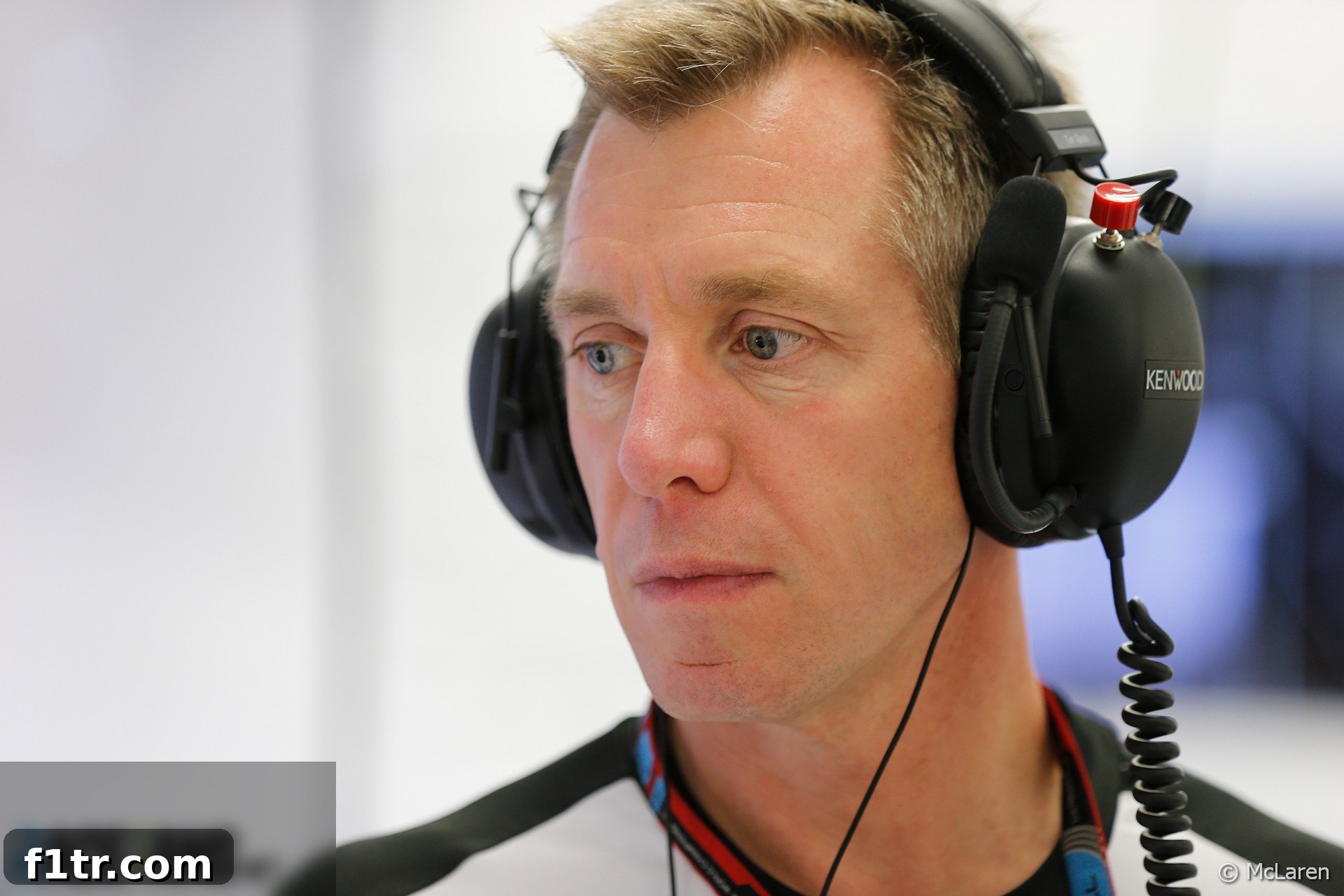
Former McLaren Engineering Maestro Tim Goss Joins FIA, Shaping Future of Formula 1
The highly respected engineering veteran, Tim Goss, who dedicated nearly three decades to McLaren’s Formula 1 team, has officially joined the FIA’s technical department. His appointment marks a significant move, bringing invaluable trackside experience and deep technical expertise to the sport’s governing body at a pivotal time of regulatory evolution.
Advert | Become a Supporter & go ad-free
The 57-year-old F1 technical guru recently assumed the crucial role of Deputy Head of Single Seater Technical Matters within the FIA. This position places him at the forefront of the sport’s technical direction, with one of his primary responsibilities being the meticulous implementation of the revolutionary new technical regulations slated to redefine the F1 landscape for the 2022 season. These regulations herald some of the most profound changes to car design and aerodynamics seen in decades, promising a fresh era for the pinnacle of motorsport.
A Powerful Partnership: Goss and Tombazis Reunited at the FIA
In his new capacity, Goss will collaborate closely with Nikolas Tombazis, the FIA’s Head of Single Seater Technical Matters. This pairing brings together two formidable minds, both with extensive backgrounds in Formula 1 engineering. Their professional relationship is not new; Goss and Tombazis previously worked side-by-side at McLaren during the mid-2000s, fostering a deep understanding and synergy that will undoubtedly benefit their joint efforts at the FIA. This reunion of experienced technical leaders signals the FIA’s commitment to robust and insightful leadership in its technical departments.
Tracing a Storied Career: Tim Goss’s Journey Through McLaren
Tim Goss’s departure from McLaren in 2018 concluded an almost three-decade-long tenure, a testament to his dedication and profound impact on one of Formula 1’s most iconic teams. His journey with the Woking-based outfit began in 1990, where he joined as a design engineer, laying the groundwork for a career characterized by innovation and technical excellence. Over the years, Goss steadily climbed the ranks, accumulating a wealth of experience across various critical engineering roles.
Following a significant period at the helm of McLaren’s highly active test team – a vital component of F1 development in that era – Goss transitioned to become their Chief Powertrain Engineer. It was during this period, in 2005, that McLaren introduced the groundbreaking seamless-shift gearbox on their MP4-20 chassis. This technological marvel was a true game-changer in Formula 1, dramatically improving gear change times and driver experience, setting a new benchmark for other teams to follow. Goss’s involvement in such pivotal innovations underscores his significant contribution to the sport’s technological advancement.
His exceptional contributions and leadership qualities eventually saw him ascend to the esteemed position of Chief Technical Officer at McLaren. This role placed him in charge of the entire technical direction and performance of the team’s F1 car development programs. His departure in 2018 coincided with a particularly challenging period for McLaren, as the team grappled with a disappointing start to its campaign following a crucial power unit switch from Honda to Renault. Navigating the complex technical landscape of Formula 1, especially during periods of significant change and performance struggles, requires immense skill and resilience, qualities Goss demonstrated throughout his time at McLaren.
Spearheading the 2022 F1 Technical Regulations: A New Era for the Sport
Goss’s primary focus at the FIA will revolve around the new technical regulations – a comprehensive overhaul designed to make Formula 1 racing more competitive and exciting. These regulations were initially slated for introduction in 2021 but were prudently postponed by a year as a critical cost-saving measure in response to the unprecedented challenges posed by the global Covid-19 pandemic. The decision to delay allowed teams a much-needed financial breather and time to regroup during uncertain economic times.
Amidst the complexities of implementing such transformative changes, rumors surfaced earlier in the year suggesting a potential further delay of these rules to 2023. However, these reports were swiftly and unequivocally dismissed by an F1 spokesperson as “wrong,” reaffirming the sport’s commitment to the 2022 timeline. This clear stance highlights the critical importance placed on these regulations and the FIA’s determination to push forward with its vision for the future of Formula 1.
Understanding the Impact of the 2022 Regulations on F1 Car Design
The 2022 technical regulations represent a radical departure from previous F1 car design philosophies. The most significant changes target aerodynamics, with a strong emphasis on reintroducing ground effect to generate downforce. This shift is intended to drastically reduce the “dirty air” turbulence that current F1 cars create, which notoriously makes it incredibly difficult for a trailing car to follow closely and overtake.
Under the new rules, cars will feature simplified front wings and innovative underbody channels designed to create a powerful vortex effect, effectively “sucking” the car to the track. The goal is to allow cars to race in closer proximity, increasing wheel-to-wheel action and enhancing the spectacle for fans worldwide. This represents a fundamental rethinking of how F1 cars generate performance, moving away from complex, fragile aerodynamic appendages that are highly sensitive to airflow disruption. The challenge for teams will be to maximize performance within these new parameters, while Goss and his team at the FIA ensure fair and consistent application of the rules across all constructors.
Beyond aerodynamics, the regulations also introduce standardized components and a budget cap, aimed at leveling the playing field and promoting greater sustainability within the sport. These measures are designed to curb excessive spending, encourage ingenuity within financial constraints, and ultimately create a more balanced and exciting championship where success is less dependent on sheer financial might and more on clever engineering and operational efficiency.
Why Goss’s Expertise is Crucial for F1’s Future
The appointment of someone with Tim Goss’s extensive practical engineering experience is a strategic masterstroke for the FIA. Having spent nearly three decades designing, developing, and optimizing Formula 1 cars at the highest level, he brings an invaluable “real-world” perspective to the regulatory body. This experience is critical for several reasons:
- Practical Implementation: Goss understands the intricate challenges teams face in translating theoretical regulations into tangible car designs. His insight will be vital in ensuring the rules are not only technically sound but also practically implementable and enforceable.
- Anticipating Loophole: With his deep knowledge of F1 car architecture, Goss is uniquely positioned to identify potential loopholes or unintended consequences within the regulations, allowing the FIA to pre-emptively address them before they can be exploited by cunning designers.
- Bridging the Gap: He can effectively bridge the gap between the philosophical intent of the regulations (e.g., closer racing) and the specific technical prescriptions needed to achieve those goals.
- Maintaining Fair Competition: His integrity and understanding of competitive dynamics will be crucial in ensuring the regulations foster genuine competition and prevent any single team from gaining an unfair advantage through technical interpretations.
His role in shaping and policing the future technical landscape of Formula 1 cannot be overstated. With the sport aiming for a more sustainable, competitive, and thrilling future, having an expert like Goss overseeing the technical framework is a significant asset.
Don’t miss anything new from RaceFans
Follow RaceFans on social media and stay updated with the latest Formula 1 news, insights, and analysis:
- Join RaceFans on Facebook
- Follow RaceFans on Twitter
- Get daily email updates from RaceFans
Advert | Become a RaceFans supporter andgo ad-free
Explore More from the 2021 F1 Season
Delve deeper into the events and discussions from a memorable season. The 2021 Formula 1 season was a spectacle of intense competition, controversial moments, and remarkable performances. Find related articles below:
- Masi ‘basically gifted the championship’ to Verstappen says 2021 FIA steward Sullivan
- Las Vegas race backers looking to extend F1 deal beyond 2025
- Why Mercedes put ‘a reminder of joy and pain’ on display in their factory lobby
- Verdict on error in GT race suggests Mercedes would have lost 2021 Abu Dhabi GP appeal
- Title ‘stolen’ from Mercedes made us ‘underdogs people cheer for’ – Wolff
Browse all 2021 F1 season articles