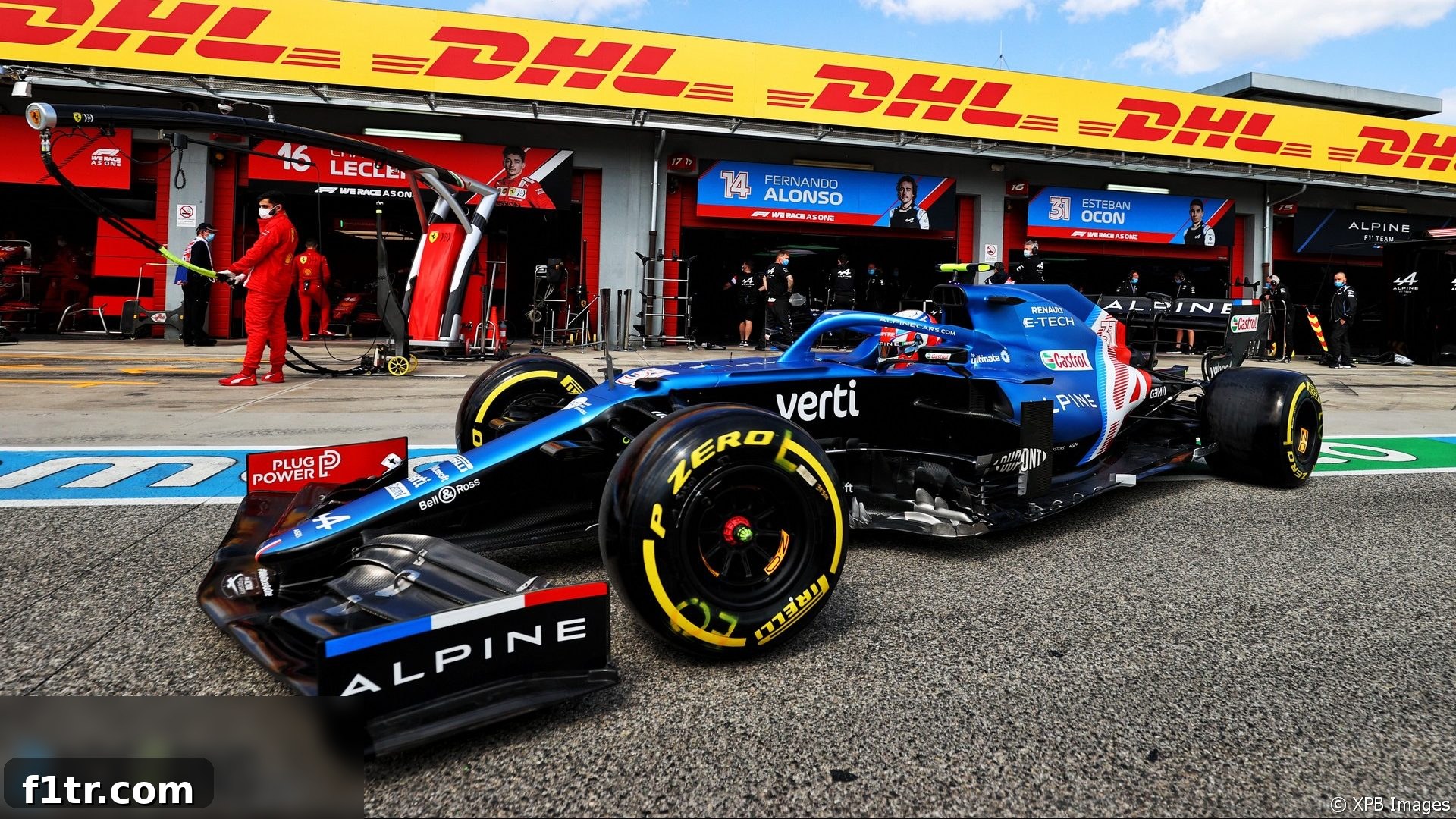
The fast-paced world of Formula 1 relies heavily on cutting-edge technology and seamless communication. However, during the crucial first practice session of the 2021 Emilia Romagna Grand Prix at Imola, teams found themselves plunged into chaos when a major systems failure struck, effectively leaving them “blind” and significantly impacting operations both on and off the track.
Advert | Become a Supporter & go ad-free
Advertisement
The technical glitch wasn’t limited to the pit garages; television viewers across the globe also experienced its disruptive effects. Live pictures from the iconic Autodromo Enzo e Dino Ferrari circuit were briefly interrupted, and coverage remained limited for the remainder of the session, depriving fans of the intricate details and high-speed action they expect from an F1 broadcast. This dual impact underscored the widespread nature and severity of the outage.
Haas team principal Guenther Steiner was quick to confirm the widespread nature of the problem, stating, “Everybody had issues. I think it was communicated quite quickly that everybody’s radio wasn’t working.” This immediate acknowledgement from a leading team figure highlighted the unprecedented challenge facing the entire paddock. The core communication systems, vital for relaying critical information between drivers, engineers, and strategists, had failed.
The problems extended far beyond mere radio silence. Teams also lost access to their GPS data, a cornerstone of modern Formula 1 strategy and safety. Without GPS, engineers couldn’t track car positions with precision, making it impossible to warn drivers about approaching quicker cars or potential traffic situations. This created a perilous environment on a circuit where cars often operate at close quarters and at immense speeds.
“Everybody knew that nobody could see, so even the people which were behind cars knew that the guy in front of him didn’t get advice, so that helped a little bit,” Steiner elaborated, hinting at a collective understanding among drivers that they were all in the same boat, navigating the track without their usual digital lifelines. “But it shows how important it is to have this communication.” His words echoed the sentiment across the pit lane: while drivers adapted with an unspoken code, the incident served as a stark reminder of how deeply reliant modern F1 has become on advanced telemetry and constant communication.
Advertisement
The Unforeseen Impact: A Wake-Up Call for F1 Teams
Aston Martin CEO Otmar Szafnauer openly admitted that the scale of the problem caught his team off guard. “Until you lose that kind of data I think you don’t realise how much you rely on it,” he confessed. This statement encapsulated the unexpected vulnerability that the systems failure exposed within the highly advanced F1 ecosystem. For years, teams have built their operations around instant data analysis and continuous communication, making any interruption deeply impactful.
Szafnauer continued, painting a vivid picture of the situation: “It was like we were blind at the pit wall. Even driver communication wasn’t working and it made things much more difficult.” The pit wall, typically a hive of activity where strategists make split-second decisions based on live feeds and data, became a place of anxious guesswork. The inability to speak with drivers meant that critical instructions regarding car settings, tire management, or even potential hazards could not be relayed, forcing drivers to make decisions in isolation and without the benefit of their team’s oversight.
Safety Compromised: The Perez-Ocon Collision
The most tangible consequence of this communication vacuum was a collision between Sergio Perez of Red Bull Racing and Esteban Ocon of Alpine. The stewards, following their investigation, explicitly confirmed that the team radio problems had contributed to the incident, highlighting the direct link between the technical failure and on-track safety. Such incidents, while part of racing, are typically mitigated by prompt warnings and clear instructions from the pit wall, something that was entirely absent on this occasion.
Ferrari team principal Mattia Binotto echoed the universal concern, branding the loss of data and communication as “a big problem” for his iconic team. In a sport where fractions of a second and millimeter-perfect precision are paramount, the absence of real-time feedback can lead to significant strategic disadvantages and, more critically, safety concerns.
Binotto emphasized the multi-faceted importance of communication: “Communicating with drivers from the pits is always very important for safety, functionality, reliability. It’s not only performance it is really making sure that everything is running smoothly.” His comments highlighted that the pit-to-driver channel isn’t just about optimizing lap times; it’s fundamental to operating complex machinery safely and reliably at racing speeds.
Specific Challenges for Ferrari and Charles Leclerc
For Ferrari, the systems failure presented unique challenges, particularly for their star driver, Charles Leclerc. “For us it was very difficult, especially Charles [Leclerc], no way of communicating to him,” Binotto explained. This lack of contact meant that when a minor issue arose with Leclerc’s car, the team was unable to provide immediate guidance, leading to the difficult decision to abort his first run prematurely. This interruption in a crucial practice session directly impacts the team’s ability to gather data and optimize the car’s setup for qualifying and the race.
The absence of GPS data and radio communication also severely hampered the team’s ability to manage traffic on the circuit. Binotto pointed out, “It’s difficult because you cannot give him advice on car following, so that means there can be impeding situations which are not [desirable] at all, but very difficult for the drivers as well to know who is coming behind.” Impeding other drivers is a serious offense in F1, often resulting in penalties. Without the pit wall providing continuous updates on traffic, drivers are left guessing, increasing the risk of penalties and compromising the laps of other competitors.
Adding another layer of complexity, Binotto explained that Ferrari had to exercise extra caution with their car. At this early stage in the season, teams frequently run components in practice that are designated for race use, especially critical elements like the power unit. “We are running our race power unit because the power units are the ones we fit in Bahrain and are used for the entire weekend,” he stated. “So if you’ve got any problems, you don’t know how to react and to communicate. So those types of problems are serious.” The inability to monitor the power unit’s health or relay urgent instructions in case of an anomaly could lead to costly damage, jeopardizing the entire race weekend and potentially impacting the allocation of power unit components for future events.
Modern F1’s Reliance on Technology and Lessons Learned
The 2021 Emilia Romagna Grand Prix practice session served as a potent demonstration of how interconnected and technologically dependent modern Formula 1 has become. From aerodynamic simulations to tire degradation models, and from real-time telemetry to sophisticated race strategy algorithms, every aspect of an F1 team’s operation is underpinned by vast amounts of data and constant communication. The systems failure at Imola highlighted that while technology propels the sport forward, it also introduces new vulnerabilities.
Teams now train extensively not just on driving and engineering, but also on how to react when these intricate systems fail. This incident likely spurred a comprehensive review of backup communication protocols and contingency plans across the paddock. For Formula 1, a sport constantly pushing the boundaries of engineering and human performance, ensuring the robustness of its core operational systems is as critical as the performance of the cars themselves. The “blind” practice session at Imola was a stark, yet invaluable, lesson in resilience and adaptation in the face of unexpected technological setbacks.
2021 Emilia-Romagna Grand Prix
- Poor Imola pace was “100% tyres”, says Bottas
- Bottas says Imola crash is “history” after reading Russell’s apology
- ‘Lewis and Valtteri are team mates to me as Nicholas is’ says Russell after ‘private’ Wolff talks
- ‘Hamilton didn’t break the rules by reversing’ shouldn’t be a story
- 2021 Emilia-Romagna Grand Prix Star Performers
Browse all 2021 Emilia-Romagna Grand Prix articles