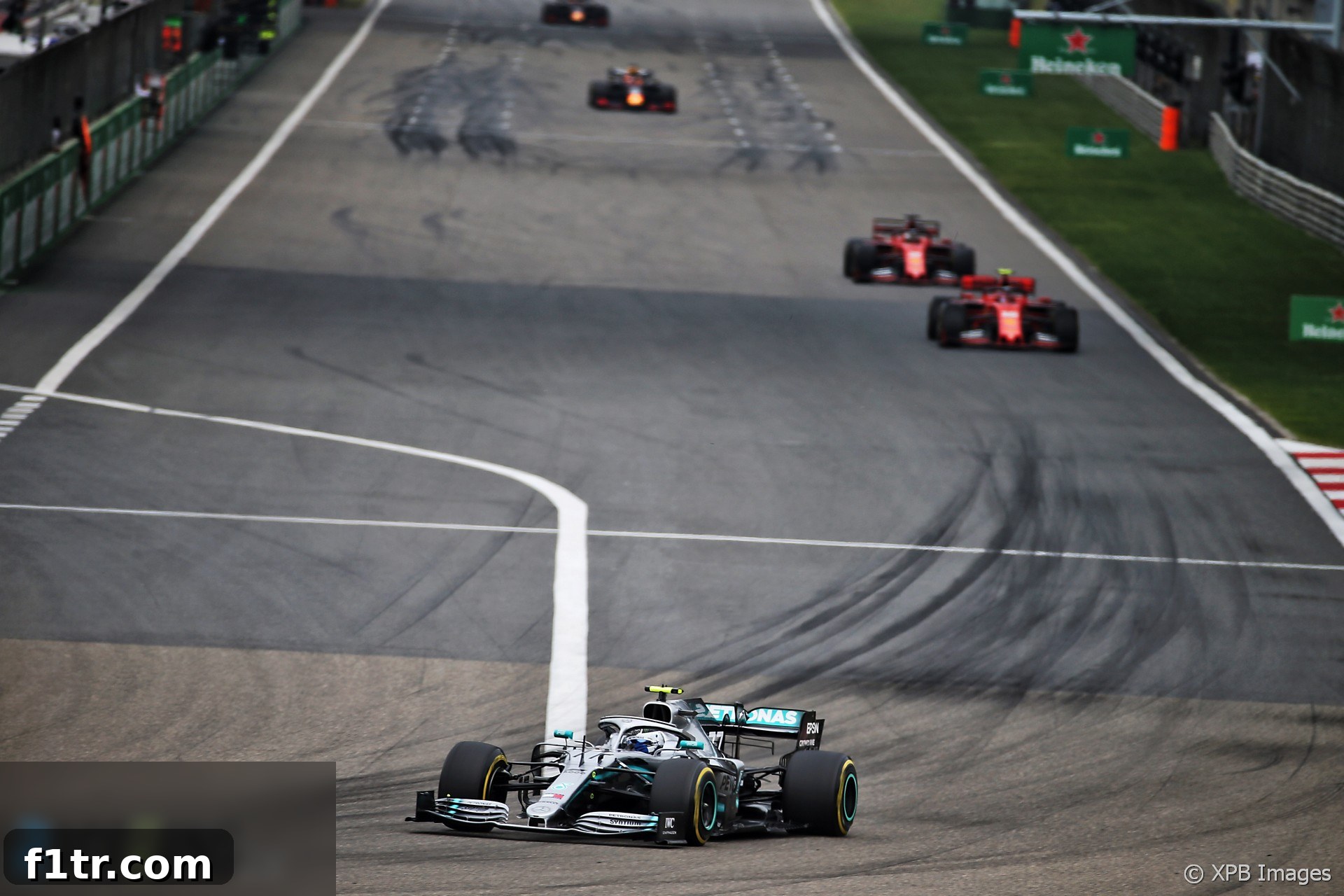
In the high-stakes world of Formula 1, every race weekend brings new insights and unexpected turns. The 2019 Chinese Grand Prix, a significant milestone as the 1000th Formula 1 World Championship race, provided a fascinating early-season benchmark. Mercedes, a team synonymous with excellence, emerged victorious, but not without some intriguing observations from their esteemed team principal, Toto Wolff. Wolff candidly admitted his surprise at Ferrari’s inability to mount a stronger challenge, particularly given their perceived straight-line speed advantage on the long Shanghai straights. This revelation sparked considerable discussion about the delicate balance between outright power and overall car performance in modern F1.
Wolff’s Surprising Assessment: Ferrari’s Missing Threat in Shanghai
Heading into the 2019 Chinese Grand Prix, the expectation among many, including Mercedes team principal Toto Wolff, was that Ferrari would pose a significant threat. The Prancing Horse had demonstrated impressive straight-line prowess in previous rounds and during qualifying sessions, suggesting that the long back straight of the Shanghai International Circuit would play directly into their hands. Wolff’s pre-race analysis factored in this advantage, especially anticipating its impact during the crucial opening laps and once the Drag Reduction System (DRS) became active, potentially allowing Ferrari to close in and challenge the leading Mercedes cars.
However, as the race unfolded, the anticipated battle never truly materialised. Despite Ferrari’s superior top speed figures, which were evident on the 1.2-kilometre-long back straight, the red cars were unable to seriously threaten the Silver Arrows. This unexpected turn of events left Wolff surprised. “I believed that their straight-line advantage, especially in the opening laps, would be a danger for us and, once DRS was enabled, even more,” Wolff reflected after the race. “And we didn’t see them coming anywhere near.” This stark contrast between expectation and reality underscored Mercedes’ comprehensive performance and Ferrari’s struggle to convert raw speed into race-winning pace.
The Ferrari Straight-Line Advantage: Qualifying vs. Race Pace
Wolff’s observations highlighted a critical nuance in Ferrari’s performance profile during the 2019 season: their straight-line speed seemed more pronounced in qualifying trim than in race conditions. While Ferrari often topped the speed charts on Saturdays, their ability to maintain that advantage through a full race stint, particularly against Mercedes, appeared diminished. “I haven’t seen the numbers yet but their straight-line performance is still very strong in the race, not as strong as in qualifying, it’s been very impressive,” Wolff commented. This distinction is vital in Formula 1, where outright pace in a single lap can differ significantly from sustained performance over many laps with degrading tyres and fuel load changes.
The discrepancy between qualifying and race pace often boils down to several factors, including engine modes, fuel management, tyre degradation, and aerodynamic setup. In qualifying, teams can deploy maximum engine power for short bursts, and tyres are at their freshest. In a race, engine modes are conserved, fuel is heavy at the start, and tyre management becomes paramount. Ferrari’s strategy in 2019, which initially seemed to prioritise low-drag setups to maximise straight-line speed, perhaps came at the expense of cornering performance and tyre longevity, making it harder to challenge Mercedes consistently over a race distance.
Mastering the Shanghai International Circuit: Mercedes’ Strategic Edge
The Shanghai International Circuit is a challenging blend of technical corners and incredibly long straights, making it a true test of an F1 car’s all-around capabilities. Its most prominent features include the demanding Turn 1-4 complex, a series of decreasing radius corners that require precision and excellent front-end grip, followed by the daunting Turn 13, which leads directly onto the kilometer-plus back straight. This particular corner, a sweeping right-hander, is crucial for gaining momentum before unleashing full power down the straight.
Mercedes’ performance in Shanghai demonstrated a superior understanding of how to extract optimal performance from their W10 chassis on this unique track. Wolff specifically credited Mercedes’ exceptional exit from Turn 13 as a key factor in neutralising Ferrari’s straight-line threat. “I think our exit onto the main straight out of turn 13 was very good. We were able to put a little gap there so they were never close enough,” he explained. A strong exit from this corner allows a car to carry significantly more speed onto the straight, reducing the effective length of the straight where a pure power advantage can be leveraged. Even with DRS, if the gap created at the corner exit is substantial, it becomes exceedingly difficult for the following car to bridge it by the braking zone.
This highlights Mercedes’ prowess in aerodynamic efficiency and mechanical grip. While Ferrari might have had a higher theoretical top speed, Mercedes’ ability to maintain higher cornering speeds and accelerate more effectively out of crucial turns meant they could create a buffer. This ‘gap’ not only prevented Ferrari from utilising their straight-line speed for overtakes but also allowed Mercedes to manage their own race, control tyre wear, and execute their strategy without undue pressure from behind. It underscores that F1 is not just about raw power but the holistic performance of the car package, driver, and strategy.
The Intricate Balance: Drag, Downforce, and Power in F1 Design
Toto Wolff’s insights into Ferrari’s performance naturally led him to discuss one of the fundamental dilemmas in Formula 1 car design: achieving the right balance between drag, downforce, and engine power. “As with every team you need to get the balance right between the drag, power and downforce level,” Wolff stated. This trilemma is at the heart of every F1 car’s development, as improving one aspect often comes at the expense of another.
- Downforce: Essential for generating grip through corners, allowing cars to take bends at higher speeds. High downforce typically means more stable handling and better tyre management in high-speed sections. However, more downforce usually comes with increased aerodynamic drag.
- Drag: The aerodynamic resistance a car experiences as it moves through the air. High drag reduces top speed on straights. Teams aim to minimise drag while retaining necessary downforce.
- Power: The output from the engine and hybrid system. A powerful engine can help overcome drag and accelerate faster, but even the most powerful engine cannot completely negate excessive drag without compromising efficiency or leading to overheating.
The challenge for engineers is to find the optimal compromise for each specific circuit. A track like Monaco demands maximum downforce, while Monza, with its long straights, necessitates a low-drag setup. Shanghai, being a hybrid of both, requires a delicate equilibrium. Wolff’s comment underscores that while Ferrari had impressive straight-line speed (suggesting a lower-drag philosophy), they might have struggled to find the perfect balance that allowed them to be dominant in corners and manage their tyres effectively over a race distance. Mercedes, conversely, seemed to have mastered this balance, allowing them to perform strongly across all aspects of the circuit, thereby negating Ferrari’s peak straight-line advantage.
Implications for the 2019 Championship Battle
The 2019 Chinese Grand Prix was an early indicator of the season’s trajectory. Mercedes’ dominant performance, particularly in managing Ferrari’s straight-line speed, set a clear precedent. It demonstrated that while Ferrari possessed outright power, Mercedes’ overall car package – combining superior aerodynamics, mechanical grip, strategic execution, and driver performance – was proving to be the more potent force. This trend continued throughout the 2019 season, with Mercedes ultimately securing both the Constructors’ and Drivers’ Championships.
Wolff’s post-race analysis not only shed light on the specific dynamics of the Shanghai race but also offered a glimpse into the ongoing engineering arms race in Formula 1. The constant pursuit of the perfect car, one that excels in every facet of performance, is what defines the sport. For Mercedes, their ability to create a car that could effectively nullify an opponent’s key strength was a testament to their engineering depth and strategic foresight. For Ferrari, it highlighted areas where they needed to improve to transform their qualifying pace into consistent race victories.
Conclusion: Mercedes’ Dominance and Ferrari’s Quest for Balance
The 2019 Chinese Grand Prix served as a compelling chapter in the Formula 1 narrative. Toto Wolff’s surprise at Ferrari’s inability to challenge Mercedes, despite their evident straight-line speed, was a defining moment. It illustrated that in Formula 1, raw power is only one piece of a complex puzzle. Mercedes’ strong corner exit from Turn 13, their superior aerodynamic balance, and overall race strategy proved more decisive than Ferrari’s pure top-end speed on the straights. Wolff’s comments about the critical balance between drag, downforce, and power encapsulated the technical challenges inherent in F1 car design and highlighted Mercedes’ mastery of these intricate elements.
As the season progressed, Mercedes continued to demonstrate their all-around strength, while Ferrari often struggled to translate their formidable qualifying pace into race-winning results. The lessons learned from races like Shanghai underscored the importance of a holistic car package that performs consistently across all aspects of a circuit. For F1 enthusiasts, Wolff’s insights provided a valuable look behind the scenes, revealing the continuous strategic and engineering battles that define the pinnacle of motorsport.
Stay Connected with F1 Insights
Don’t miss anything new from RaceFans. Follow us on social media for the latest updates, analysis, and breaking news from the world of Formula 1:
- Join RaceFans on Facebook
- Follow RaceFans on Twitter
- Get daily email updates from RaceFans
Explore More from the 2019 F1 Season
Delve deeper into the events and stories that shaped the 2019 Formula 1 season with our curated articles:
- Crying in the Melbourne car park at 2019 grand prix was my career low – Ocon
- McLaren Racing reports reduced £71 million loss in 2019
- Kvyat: Hockenheim podium last year was “my biggest achievement” so far
- How the FIA’s new encrypted fuel flow meter targets Ferrari’s suspected ‘aliasing’ trick
- “He smashed my office door”: 23 must-see moments from ‘Drive to Survive’ season two
Browse all 2019 F1 season articles