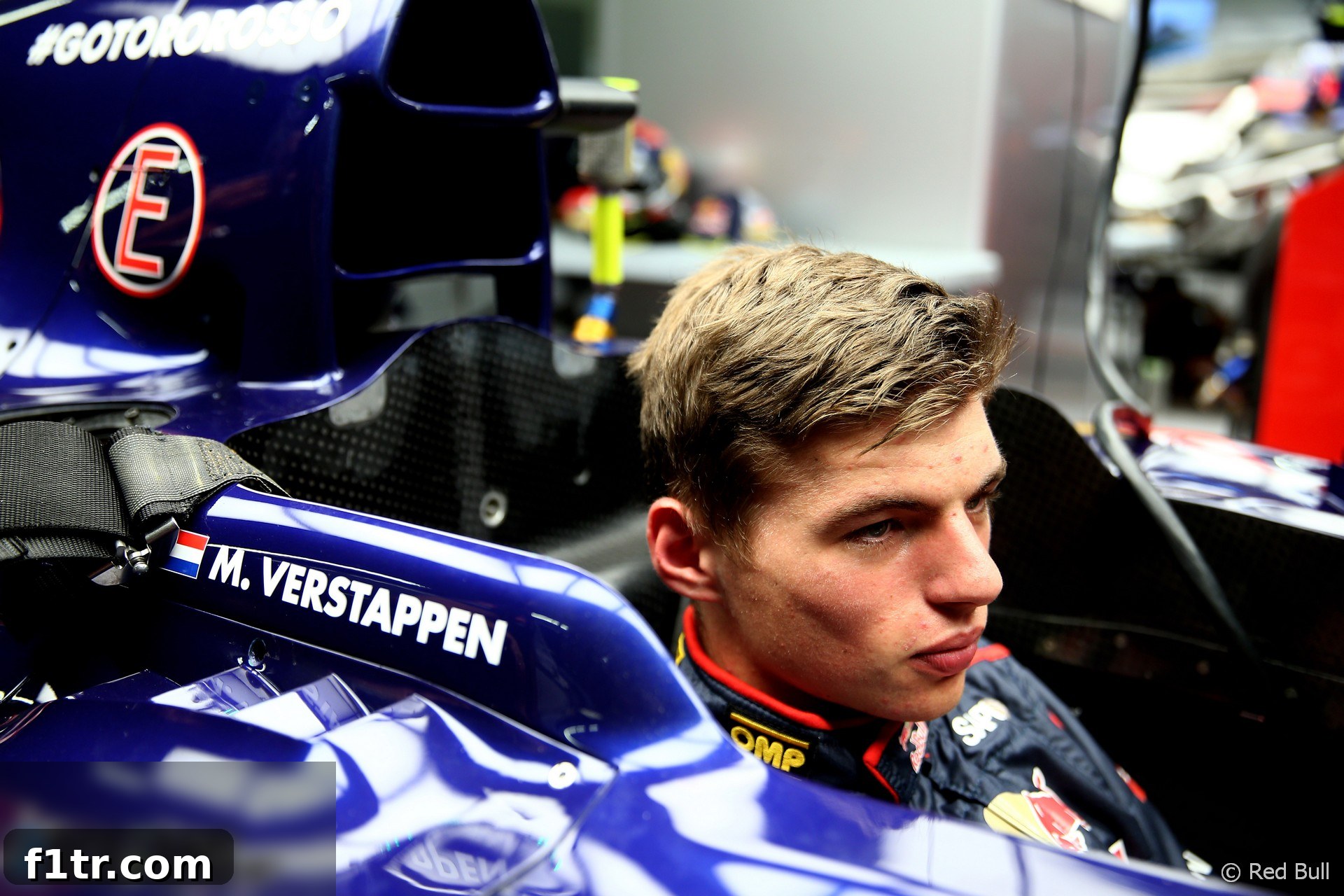
Formula 1 has always been a stage for the exceptional, but few debuts have left an impact quite like that of its most recent world champion. At a mere 17 years of age, he stepped into the pinnacle of motorsport, instantly setting tongues wagging. The following year, Max Verstappen etched his name into the history books, becoming Formula 1’s youngest ever winner by a significant margin at just 18 years and 228 days. His meteoric rise was a testament to raw talent and audacious spirit. However, despite Verstappen’s unprecedented breakthrough, the sport hasn’t witnessed a subsequent wave of teenage sensations making similar waves in the world championship. This intriguing anomaly prompts a deeper look into the intricate ecosystem of junior single-seater racing and the regulatory and financial shifts that have reshaped the journey to Formula 1.
The FIA Superlicence: A Redefinition of the Path to F1
Verstappen’s unique entry into Formula 1, almost directly from a single season in the European Formula 3 championship after karting, prompted a swift and decisive response from the FIA. Recognizing the extraordinary nature of his progression, the governing body moved to revise the qualification requirements for an F1 superlicence. These changes were designed to prevent future drivers from replicating Verstappen’s rapid ascent, primarily by addressing two key elements that made his F1 arrival so unique: his age and his limited car racing experience.
The revised FIA regulations now mandate that all drivers applying for a superlicence must have “completed at least 80% of each of two full seasons” in recognized championships. Crucially, the minimum age requirement was set at 18 years. Beyond these fundamental experience and age criteria, a stringent points system was introduced. This points system acts as a quality filter, ensuring that only drivers who have consistently performed at a high level in feeder series can qualify for the coveted licence. While the intention behind these changes was largely rooted in safety and ensuring drivers were adequately prepared for the demands of Formula 1, they inadvertently created a more structured, and in some ways, more challenging pathway for young talent.
The Evolution of Driver Development: From ‘Super Managers’ to Team Academies
Before driver academies became a ubiquitous feature of Formula 1 teams, the landscape of talent development was markedly different. In the late 1990s and early 2000s, McLaren was a pioneer with one of the few formalized structures for supporting young talents. However, it was Red Bull that truly revolutionized the concept. Part of their motivation for not only expanding their driver development programme but also acquiring an F1 team by 2005 stemmed from a desire to gain greater control over driver recruitment. They often found themselves with limited negotiating power against the influential ‘super managers’ and those who could bring significant budgets to the table.
A prime example of this dynamic can be seen in 2000. Red Bull had earmarked a Sauber seat for their protégé, Enrique Bernoldi. Yet, Sauber ultimately opted for the relatively unknown Kimi Raikkonen, who had competed in Formula Renault 2.0. Raikkonen’s exceptional test performances certainly convinced Peter Sauber, but it was also the influence of his managers, Dave Robertson and his son Steve, that played a pivotal role. Dave Robertson, who sadly passed away in 2014, had previously brought Jenson Button onto the grid in a similarly surprising manner the year prior. Button, a British Formula 3 racer, was chosen over the more experienced Formula 3000 winner Bruno Junqueira. While commercial appeal has always been a significant factor for F1 teams when signing drivers, the success of managers who had already placed future superstars in Formula 1 amplified their influence during this era.
Nicolas Todt later built a similar formidable reputation, masterminding Felipe Massa’s journey to Ferrari and many others thereafter. However, the current landscape has shifted. With multiple Formula 1 teams now operating extensive young driver programmes, often featuring as many as 10 juniors, there’s a more direct route for talents to gain exposure within the paddock. While commercial value remains important, it’s not the sole determinant, as these academies actively champion their proteges.
Red Bull’s Enduring Influence and the Cautious Approach of Rivals
Red Bull has long maintained a stronghold in driver development with its de facto B-team, initially Toro Rosso and now AlphaTauri. This sister operation currently fields grand prix winner Pierre Gasly and Yuki Tsunoda. While Tsunoda enjoyed a rapid ascent with just a year each in F3 and Formula 2 before securing his F1 berth, Gasly’s journey was more arduous, requiring a GP2 title, a near-repeat in Super Formula, and even a stint in Formula E before finally reaching Formula 1.
Dr. Helmut Marko, Red Bull’s motorsport consultant, remains at the helm of their junior programme, known for his uncompromising approach to talent. Red Bull’s rapid promotion strategy has indeed been effective in identifying and elevating talent, with six of the 20 youngest F1 racers of all time having debuted with Toro Rosso. However, only half of those drivers remain on the grid today, a statistic that has prompted rivals to adopt a more cautious approach when moving drivers up the single-seater ladder, particularly at the final, crucial step into Formula 1.
The Modern Dilemma: Oscar Piastri’s Limbo and the Cost of Success
Reigning Formula 2 champion Oscar Piastri serves as a poignant example of the complexities and frustrations inherent in the modern driver development system. After winning the 2019 Formula Renault Eurocup, he was signed to what is now the Alpine Academy, a typical pathway designed to support drivers through junior categories. His plan envisioned two years each in F3 and F2. However, Piastri’s extraordinary talent saw him win both titles on his first attempt. This remarkable success, ironically, placed him in limbo, as FIA regulations prohibit champions of its certified junior series from competing in them the following year.
Piastri’s career is jointly managed by former Red Bull driver Mark Webber and the Alpine F1 team. Despite Webber’s considerable stature in the F1 paddock, both as a former racer and a respected talent spotter, even he lacked the necessary promotional power to secure an F1 seat for his protégé. Piastri’s achievement of winning the two most significant titles on the FIA pathway to F1 back-to-back should have been a golden ticket, but the intricate web of regulations, team dynamics, and financial pressures prevented immediate progression.
The COVID-19 pandemic further exacerbated these challenges. The lack of face-to-face meetings and the period of economic instability led some teams to finalize their 2021 line-ups much earlier than usual, narrowing opportunities. Furthermore, the spiraling costs of racing have fundamentally altered the role of managers like Webber. Previously, a manager could act as a dedicated PR machine, tirelessly promoting their driver’s brilliance to F1 teams. Today, their primary focus often shifts to sourcing the millions required just to secure a competitive seat in a high-end junior series. This financial imperative means that discussions about F1 marketing and promotion often take a backseat until the substantial budget for junior categories is secured. Moreover, the current superlicence system effectively obliges most drivers to compete in Formula 2 if they are to have a realistic chance of accumulating the necessary points for F1 eligibility.
Even when Piastri was leading the F2 championship, Webber’s immediate priority was securing the budget to ensure his continued presence in a top F2 seat for 2022. This crucial financial consideration left little room or opportunity to actively market the 20-year-old’s exceptional skills to other Formula 1 teams, highlighting the pervasive influence of money at every stage of a driver’s career.
Another compelling case study emerged last year, where it appeared that Alfa Romeo, operated by Sauber, would promote their protégé, Theo Pourchaire, to a race seat. Pourchaire, an 18-year-old, had delivered eye-opening F2 wins in Monaco and Monza as a rookie, impressing many within the paddock. However, despite being a Sauber junior, he ultimately lost the coveted seat to Alpine junior Guanyu Zhou. Pourchaire’s rapid progression had seen him rocket up to F2 after F4 title success and a rookie runner-up finish in F3. For any aspiring driver to replicate such a trajectory today, they must secure a spot in a top team in F4, then realistically be picked up by an F1 team that can facilitate their direct move into F3 – ideally with another top team – bypassing Formula Regional. The same accelerated progression is then often expected when moving to F2 after just one season, irrespective of the results achieved.
The Rising Costs and Strategic Testing: The Elephant in the Room
The pervasive influence of money in junior single-seater racing is arguably the “elephant in the room.” Its impact is felt profoundly, long before a young driver even contemplates stepping into the office of a Formula 1 team. To truly make an impact in categories like F4, extensive testing is not just an advantage, it’s a necessity. To match the preparation of rivals, drivers often need to complete 40 or more testing days per year. This level of activity demands substantial financial investment, a sum that even F1 teams are reluctant to commit to a junior driver whose prospects of remaining under contract with them eight years later are statistically very low. Consequently, private testing, a critical component of early development, often remains the preserve of the wealthy.
While wealth alone doesn’t guarantee F1 calibre, it undeniably provides a significant advantage. Drivers from affluent backgrounds have greater scope for continuous improvement, thanks to more track time, better equipment, and extensive coaching. This inherent disparity in budget creates a long-term advantage that drivers without such financial backing can rarely overcome.
To accumulate the minimum 40 points required for a superlicence, the most straightforward approach is to compete in as many series as possible. This, again, translates directly into higher costs. However, it also means that a driver who has competed in two or three championships annually since their car racing debut is likely to be a far less “sensational” signing by the time they reach F1 compared to the likes of Raikkonen or Verstappen, who made an impact with less experience. The FIA now permits superlicence points to be earned from two non-clashing series within a calendar year, allowing drivers to combine winter and summer championships. Winter series offer a crucial head-start for the main campaign, particularly if the same car is used, and also provide a significant benefit in securing a competitive seat for the primary season.
Securing a seat with a top team for a series like the Formula Regional Asian Championship, which typically runs in winter, often provides first refusal for a similar seat in the Formula Regional European Championship (FREC). Conversely, a signed FREC deal frequently comes with an option for FRAC. These desirable seats often sell out early, sometimes as far back as the previous summer, inherently favoring those with the financial means to commit early. Moreover, participating in both series allows a driver to work with the same engineer and mechanic, providing unparalleled continuity and preparation that far outweighs what is available to a driver operating on a more limited budget.
Even when moving up to F3, a driver can still compete in FRAC as a secondary series, a practice previously extended to F2 drivers as well. Nikita Mazepin and Zhou effectively utilized this strategy to facilitate their moves into Formula 1. In F3, it is not uncommon for drivers to undertake ten or more private test days in older GP3 cars. While these tests may technically contravene FIA rules, they often go unobserved due to their integral role in the market for selling seats in the F1 support paddock. A similar scenario plays out in F2, although figures like the late Adrian Campos were known to sign drivers who personally impressed him, even those with limited budgets.
Conclusion: The Over-Prepared and the Price of Entry
The overhaul of the superlicence system in 2015 was ostensibly aimed at preventing drivers from making a rapid impact at a very young age, thereby limiting underprepared talents from reaching Formula 1. However, the unintended consequence has been the creation of an environment where only those who are exceptionally over-prepared, boasting thousands of kilometres of additional testing and racing, hold a realistic chance of a rapid ascent up the motorsport ladder. This rigorous and financially demanding pathway means that when these drivers finally do secure a spot in Formula 1, it is often accompanied by a substantial financial contribution they must provide to the team. The dream of a teenage prodigy replicating Max Verstappen’s stunning debut remains, for now, largely confined to history, replaced by a system that prioritizes extensive preparation and, more critically, significant financial backing.