F1 Flexible Rear Wings: McLaren Demands Swift FIA Action Amidst Fair Play Concerns
The contentious issue of flexible rear wings in Formula 1 has ignited a fresh debate, with McLaren team principal Andreas Seidl voicing profound frustration over the FIA’s perceived sluggishness in addressing the matter. Seidl asserts that the current delay in implementing stricter tests unfairly penalizes teams diligently adhering to the regulations, while those exploiting loopholes gain a significant, ongoing competitive edge.
Advert | Become a Supporter & go ad-free
The “Bendy Wing” Controversy: A Competitive Edge Exposed
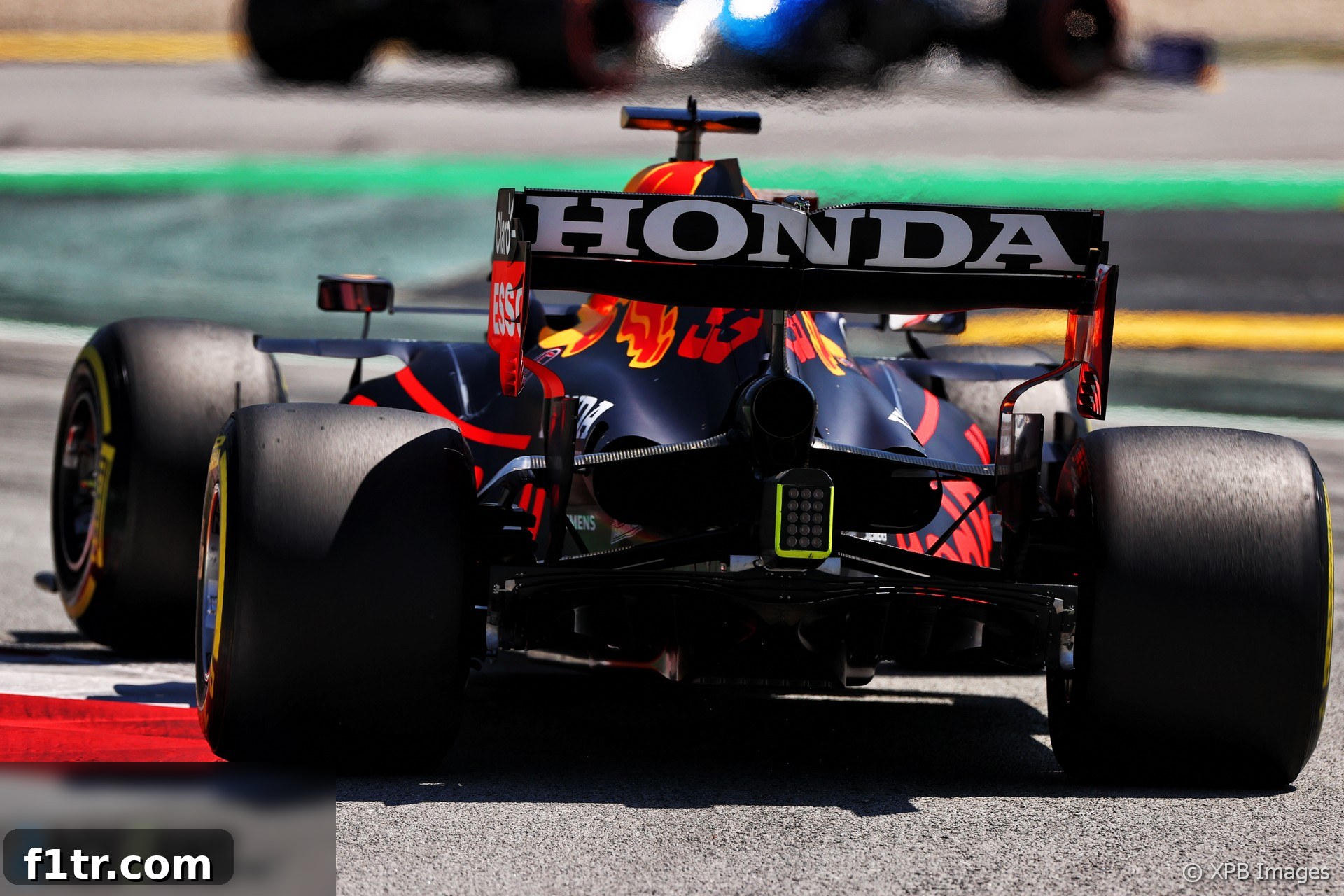
The controversy gained prominence during the Spanish Grand Prix weekend when seven-time world champion Lewis Hamilton specifically highlighted the unusual flexing observed on certain cars, notably the Red Bull. The strategic design of these rear wings allows them to bend backwards at high speeds, effectively reducing aerodynamic drag on straights. This flexibility translates into higher top speeds, a crucial performance advantage, particularly on circuits featuring long straights.
In response to growing concerns and visual evidence, the FIA announced a new, more stringent stiffness test for rear wings. However, the timing of its introduction has become a major point of contention. The enhanced checks are not scheduled to come into force until June 15th, and even then, teams will be granted a 20% tolerance period for the first month of its implementation. This phased approach has drawn criticism from teams like McLaren, who argue it prolongs the unfair advantage enjoyed by non-compliant designs.
McLaren’s Stance: Welcoming the Directive, Opposing the Delay
Andreas Seidl reiterated McLaren’s support for the fundamental content of the FIA’s new technical directive. “When you see all the videos and pictures from Barcelona, it’s pretty clear what was happening there,” Seidl stated, underscoring the undeniable visual evidence. He added, “Therefore, we welcome the reaction from the FIA with a technical directive, which we are also happy with, the basic content.”
However, Seidl made it unequivocally clear that McLaren “strongly disagree with the timing of the implementation.” The delay means that teams currently utilizing these flexible wing designs will be able to continue doing so for several more races, including the prestigious Monaco Grand Prix and the subsequent round in Azerbaijan. This extended period of non-compliance, in McLaren’s view, represents an unacceptable prolongation of an unfair competitive landscape.
“From our point of view, there is no reason after not just one team – we talk about more teams here – had already the advantage of doing things which, in our point of view, are clearly against the regulations,” Seidl explained. “They had the advantage already for several races, which is something we’re obviously not happy with. But now allowing them to have further advantage for some more races is clearly something we strongly disagree with, and we’re already in conversation with the FIA.”
Baku and Beyond: Amplified Advantage on High-Speed Tracks
The implications of this delayed enforcement are particularly stark for upcoming races. Seidl highlighted the next championship round in Azerbaijan as a prime example, where the Baku City Circuit is renowned for its incredibly long straight sections and typically records the highest top speeds of the season. On such tracks, the drag-reducing benefits of a flexible rear wing are significantly amplified, offering a substantial performance boost.
“It is clear with having flexible wings in place, obviously, you have a big advantage, especially on tracks like Baku,” Seidl elaborated. “You simply can run a lot more downforce instead of compromising on top speed.” This ability to run a higher downforce setup for cornering while still achieving competitive straight-line speeds is a major competitive differentiator. It’s a core reason why teams consistently explore aerodynamic boundaries, often leading to such controversies. “Which is why this topic keeps coming back every now and then. But again, there are regulations in place, and every car has to comply with the regulations, simple as that,” Seidl concluded, emphasizing the need for strict adherence.
The Spirit vs. The Letter of the Law: A Regulatory Conundrum
A critical aspect of Seidl’s argument revolves around the distinction between passing current flexibility tests and genuinely complying with the spirit of the regulations. He firmly insisted that merely passing the existing, less stringent tests does not automatically render a design legal if its operational behavior clearly violates the underlying principles of the rules.
“The tests that are mentioned in the regulations at the moment are in place to additionally support the FIA in order to check in a straightforward way if the cars are complying with the regulation. But it doesn’t mean that only this test is the criterion if the car is legal or not,” Seidl clarified. This statement underscores a fundamental challenge in Formula 1 regulation: engineers are constantly pushing boundaries, designing components that might pass static checks but behave differently under dynamic race conditions.
The visual evidence from Barcelona, showing noticeable flexing, is, in McLaren’s view, sufficient to raise questions about legality irrespective of current static test results. “With the footage that is available from Barcelona, I think it’s pretty clear what’s going on there, and we simply hope that FIA shows a very strong hand now on this because, in our point of view, it’s simply not acceptable because it puts teams that comply with the regulations at a big disadvantage,” Seidl stressed, calling for decisive action from the governing body.
McLaren’s Path Forward: Dialogue Over Protest
Despite their strong disagreement and the perceived unfairness, Seidl indicated that McLaren does not intend to immediately protest any of the teams using these flexing wings during the upcoming Monaco Grand Prix weekend. While protesting is a tool available to teams, McLaren seems to prefer a direct and constructive dialogue with the FIA to ensure a lasting and fair resolution.
“In principle, I’m not a big fan of protesting other teams and cars and so on,” Seidl stated, outlining McLaren’s preferred approach. “So all I can say at the moment is we are in dialogue with the FIA to understand what they will put in place in order to make sure that teams that are having designed devices or parts that allow things that we have seen in Barcelona simply can’t use these devices or parts any more from now onwards. And then we’ll take it from there.” This suggests McLaren is seeking a commitment from the FIA for immediate and effective enforcement rather than engaging in potentially divisive and drawn-out protest procedures.
The situation highlights the continuous cat-and-mouse game between F1 teams and regulators, where innovative interpretations of rules constantly test the boundaries of legality. The FIA’s challenge lies in ensuring a level playing field while allowing for technical innovation, a balance that is often difficult to strike. This flexible wing controversy serves as a stark reminder of the intense competition and the high stakes involved in Formula 1, where even minor aerodynamic advantages can significantly impact championship outcomes.
The Ongoing Pursuit of Fair Competition in Formula 1
The flexible rear wing saga is not an isolated incident in the annals of Formula 1 history. The sport has seen numerous instances where teams have exploited technical grey areas, from the “double diffuser” of 2009 to the “F-duct” systems and, more recently, Mercedes’ Dual-Axis Steering (DAS). Each case sparked similar debates about legality, fairness, and the spirit of the regulations. These past controversies underscore the inherent difficulty for the FIA to craft rules that are simultaneously clear, comprehensive, and future-proof against ingenious engineering interpretations.
For the integrity of the sport, consistent and timely enforcement is paramount. Delays in tackling perceived rule infringements can erode trust among teams and alienate fans who expect a fair contest. As the championship progresses, every point becomes critical, and the advantage gained by potentially non-compliant components could ultimately sway the outcome. McLaren’s firm stance reflects a broader sentiment within the paddock that regulations, once established, must be upheld without compromise or undue delays.
Ultimately, the resolution of this issue will depend on the FIA’s willingness to act decisively and implement measures that prevent any team from gaining an unfair advantage, both now and in the future. The conversation between McLaren and the FIA is crucial, and the outcome will set a precedent for how similar technical controversies are handled going forward, reinforcing the FIA’s authority and ensuring Formula 1 remains a competition decided on skill, innovation within bounds, and fair play.
2021 Monaco Grand Prix Articles
- ‘I need that point, we’ve lost a ton’: Hamilton team radio transcript analysis
- Perez sees Austrian double-header as valuable chance to master his RB16B
- No fun to be had in Monaco Grand Prix even if you’re winning, says Hamilton
- Mercedes explain Bottas’ Monaco pit stop failure
- F1 will consider adopting “intelligent” IndyCar rule in wake of Leclerc crash
Browse all 2021 Monaco Grand Prix articles